
Crafting a compelling research assistant resume is about demonstrating your ability to gather, analyze, and present data precisely. Show employers you can dive deep into research tasks, use advanced methodologies, and communicate findings effectively. We’ll show you how to create a resume that leaves no doubt about your research skills, showcasing the most impressive accomplishments of your career to date.
“Research assistant resumes should reflect study design, data collection, and academic collaboration. Show how you support meaningful findings.”

How AI Shifted What Research Employers Now Screen For
Research assistants supporting academic, clinical, and industry research programs are working in environments where AI-powered literature review tools, AI-assisted data analysis platforms, and automated data collection systems are increasingly part of how research is conducted. Candidates who name the research management and data analysis platforms they have worked in and show any experience with AI-assisted research tools are standing out at labs and research organizations that have adopted them. Strong research methodology knowledge, data accuracy, and scientific integrity remain central to every research assistant search, but technology fluency in AI-integrated research environments is increasingly part of what competitive candidates need to demonstrate.
- Research management and data analysis platforms you use by name (SPSS, R, Python, REDCap, NVivo, ATLAS.ti)
- AI-assisted literature review, automated data collection, or AI-integrated research analysis tools in your work
- Research contributions: experiments supported, publications co-authored, and any grant or protocol outcomes
- Relevant research certifications (CITI, IRB training), statistical analysis skills, and GCP or lab safety credentials
- Research protocol adherence, data accuracy, and scientific communication quality with principal investigators
Most Popular Research Assistant Resumes
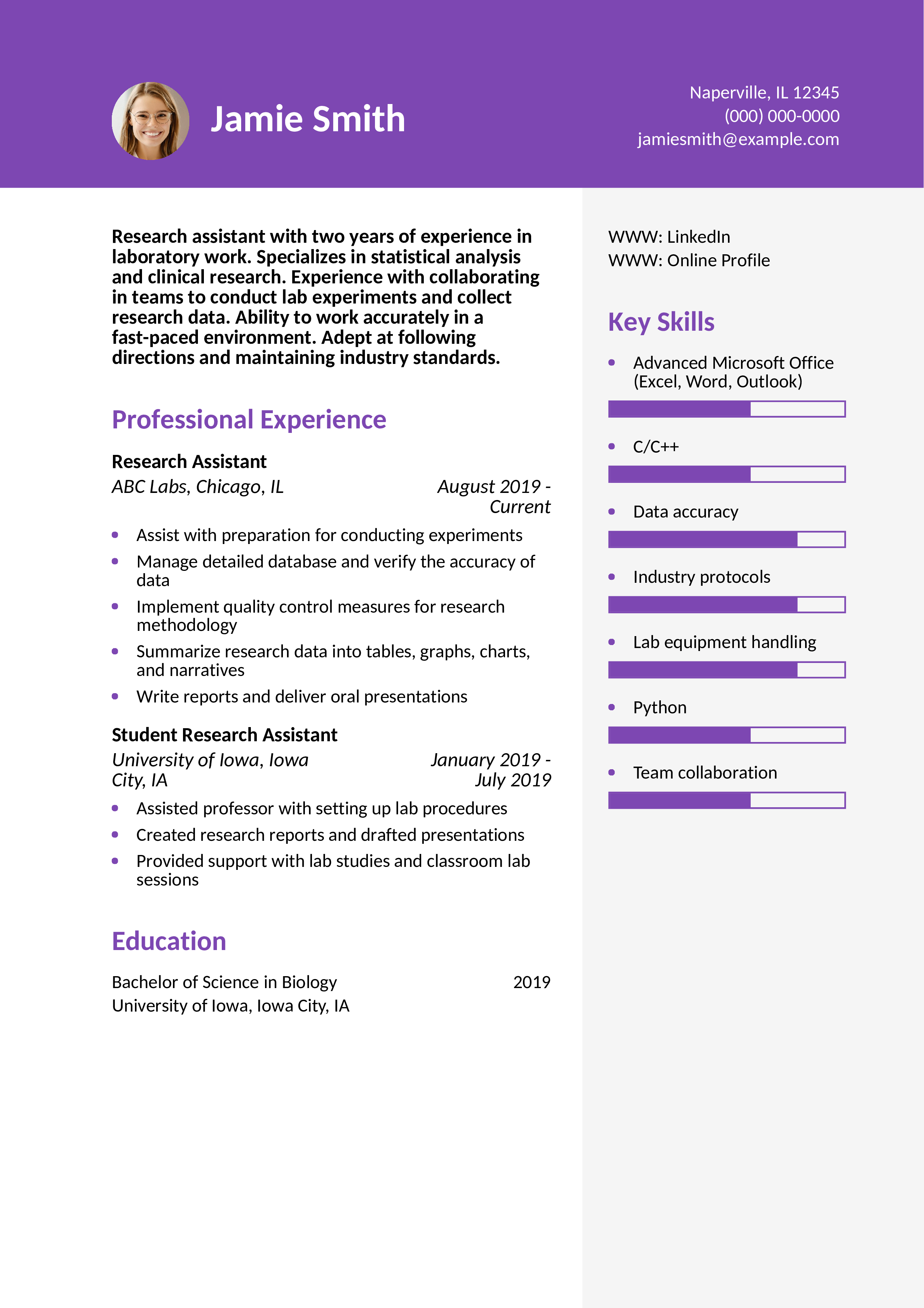
Biology Research Assistant Resume
Why This Resume Stands Out
This resume is good because it presents hands-on biology research experience in academic and lab settings. It includes specific tools and programming skills, which are valuable in modern labs.
Psychology Research Assistant Resume
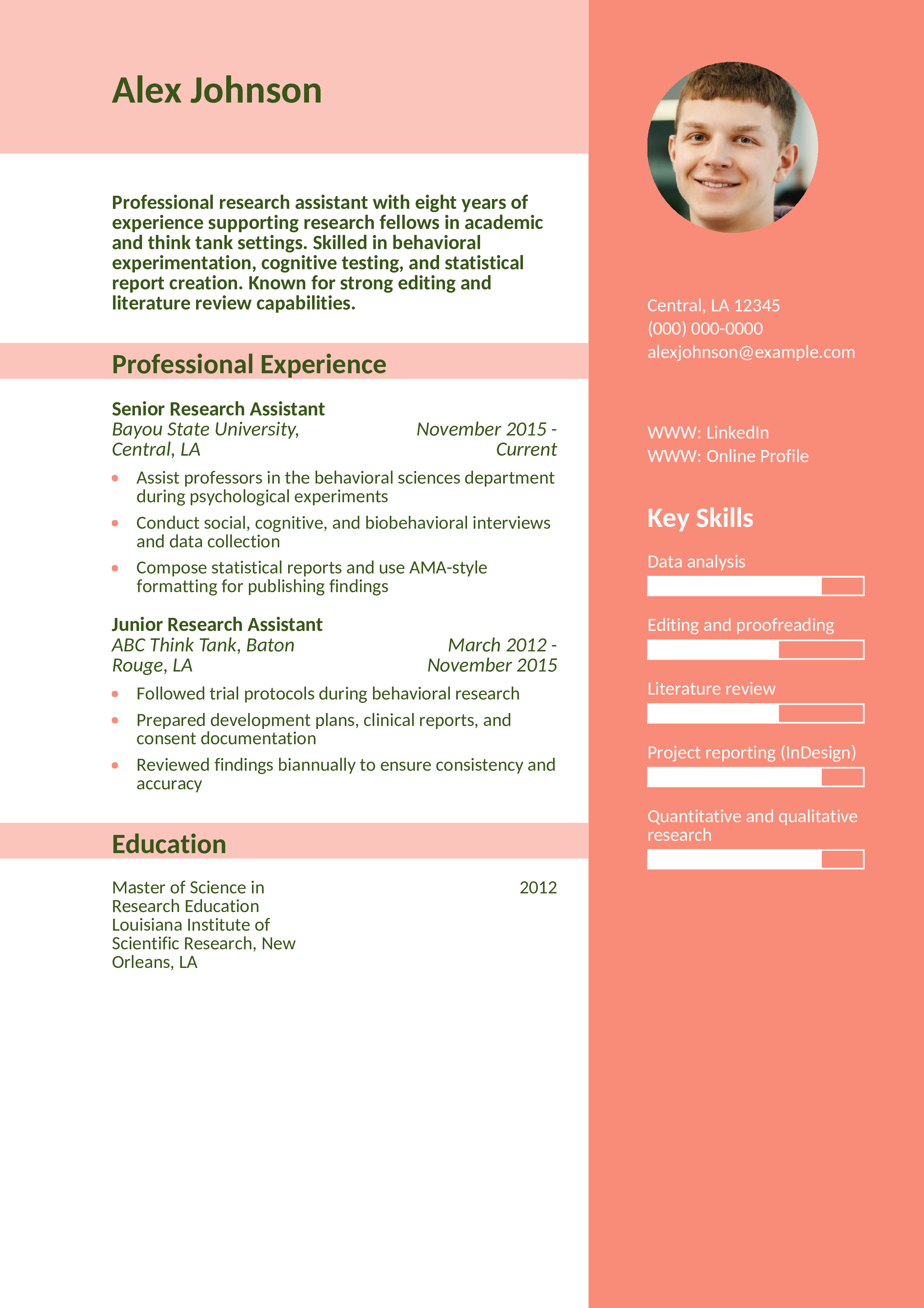
Why This Resume Stands Out
This resume is good because it demonstrates long-term expertise across academic and policy-focused research settings. It includes both hard and soft research skills.
Clinical Research Assistant Resume
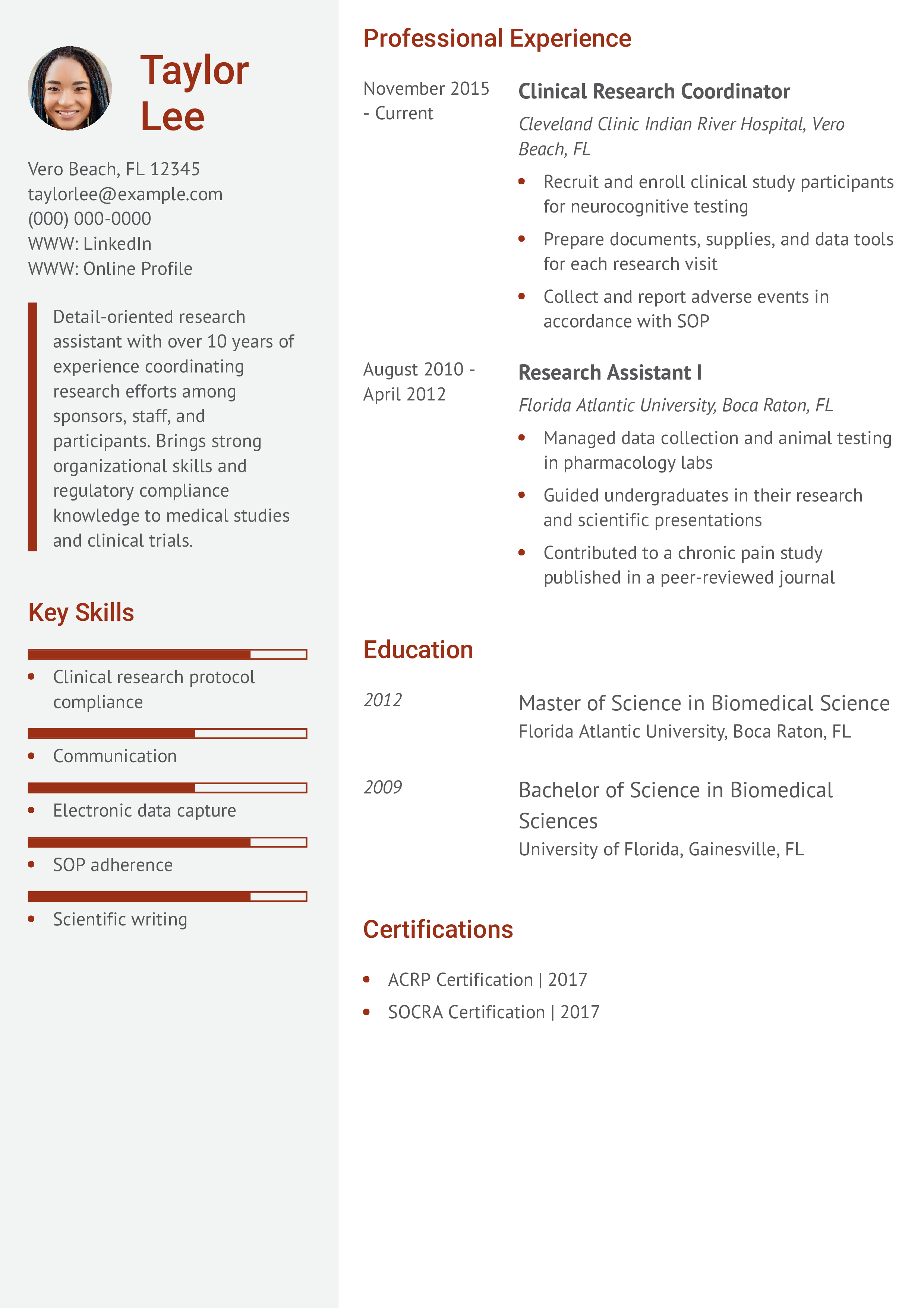
Why This Resume Stands Out
This resume is good because it blends scientific expertise with clinical operations. It also includes professional certifications that establish credibility.
Undergraduate Research Assistant Resume
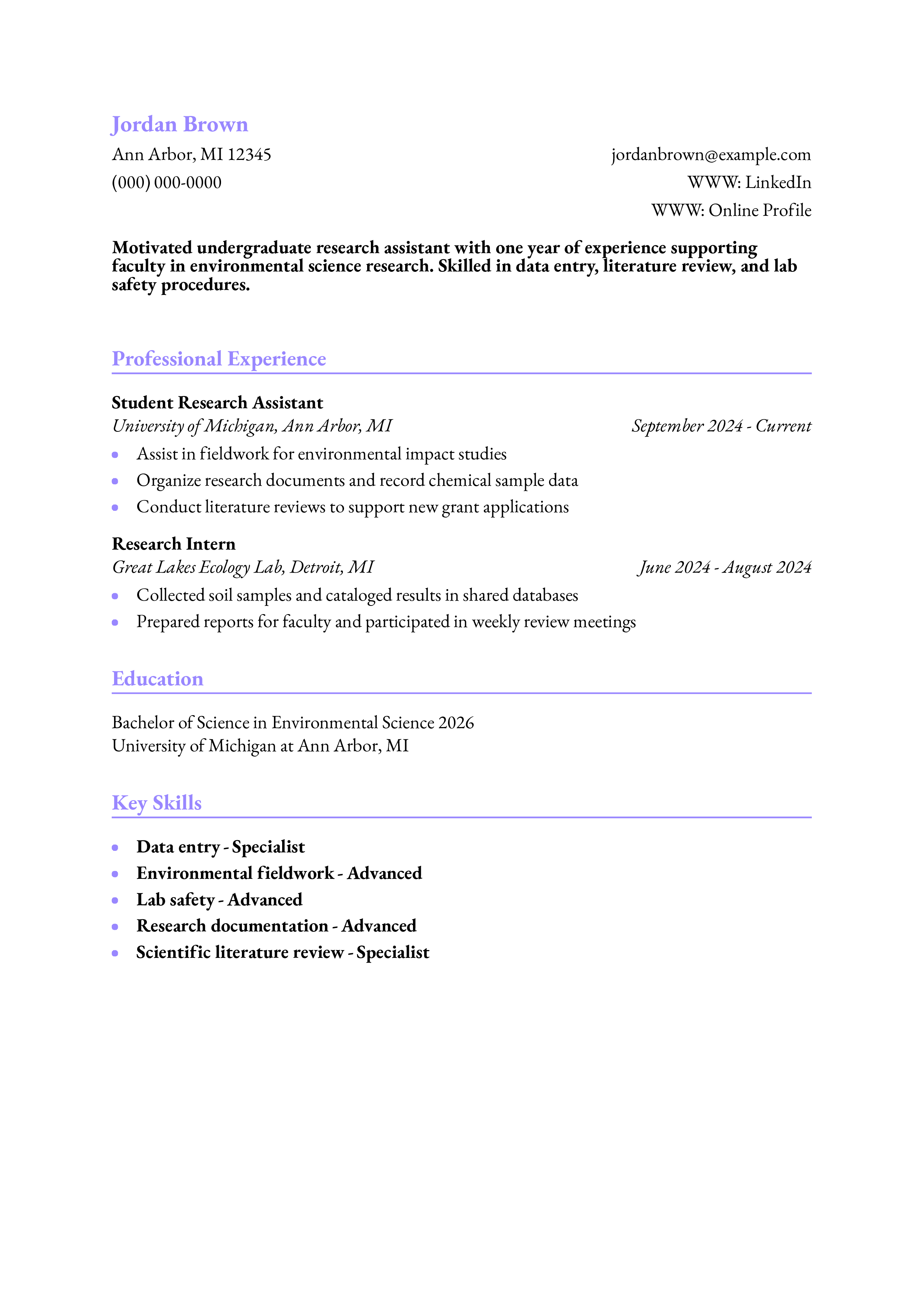
Why This Resume Stands Out
This resume is good because it provides a strong early foundation for students new to research. It demonstrates initiative and exposure to both lab and fieldwork.
Medical Research Assistant Resume
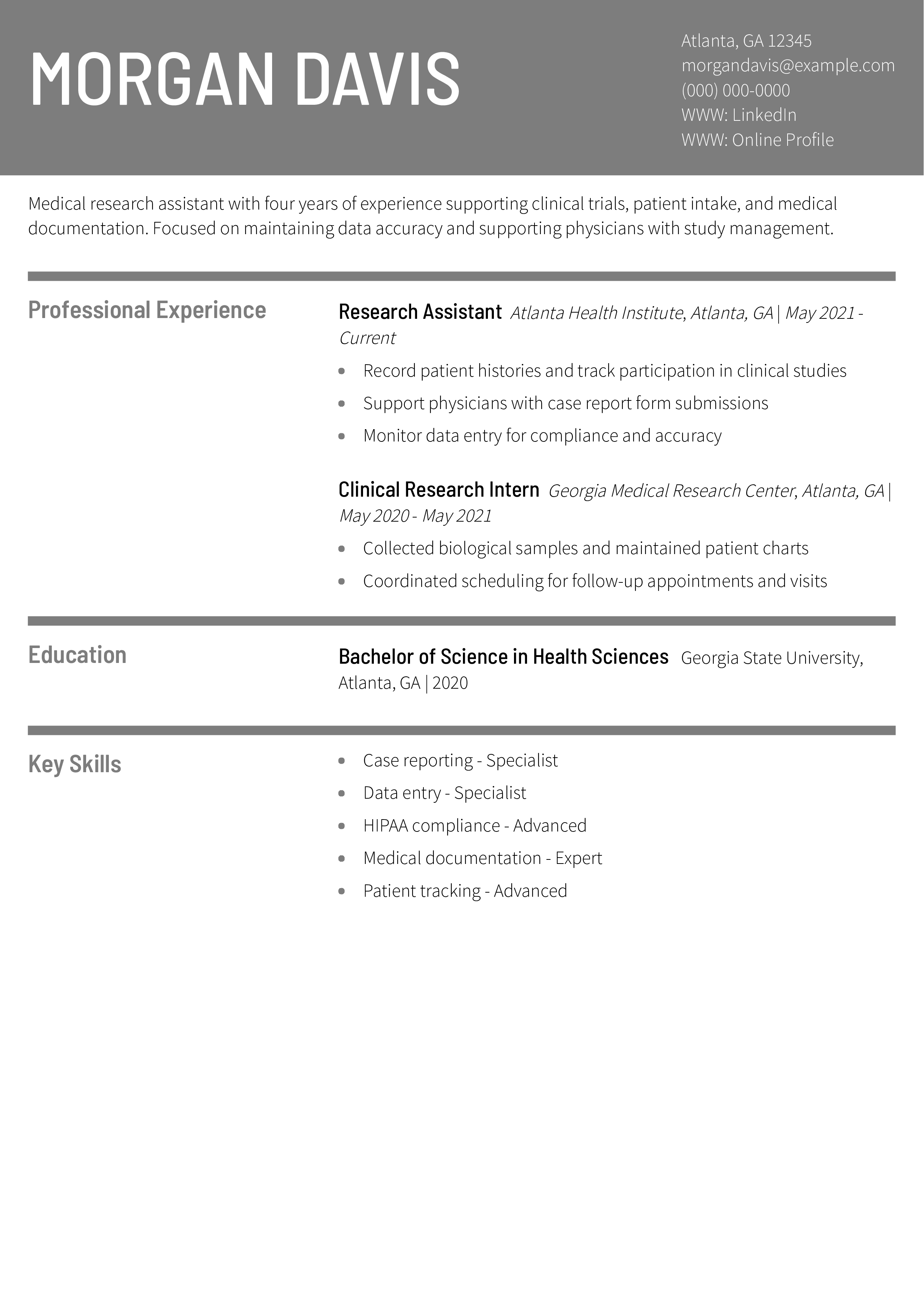
Why This Resume Stands Out
This resume is good because it focuses on key responsibilities for medical trials and includes patient-facing and backend tasks.
Legal Research Assistant Resume
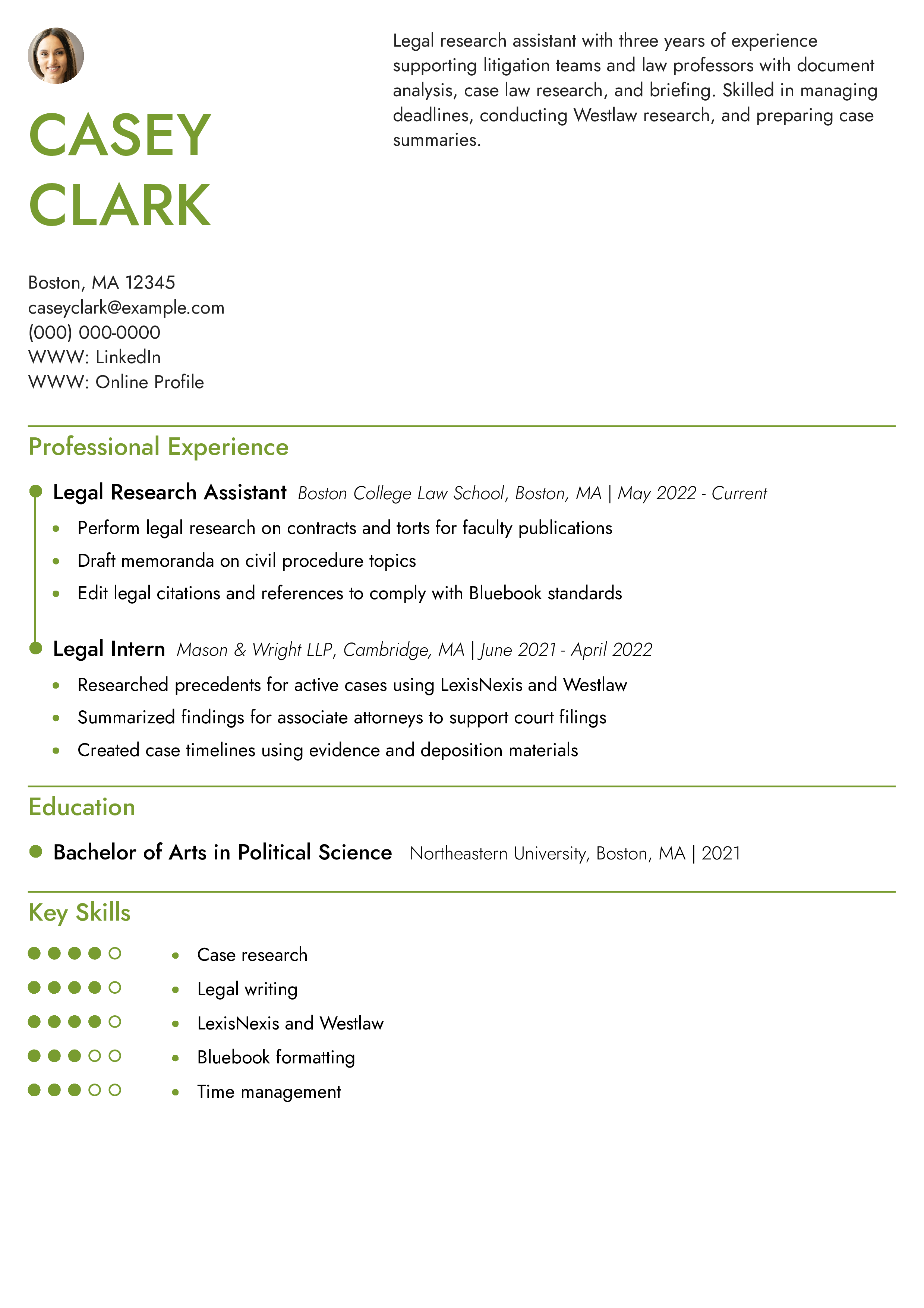
Why This Resume Stands Out
This resume is good because it shows real legal research experience and emphasizes skills specific to the legal field.
Graduate Research Assistant Resume
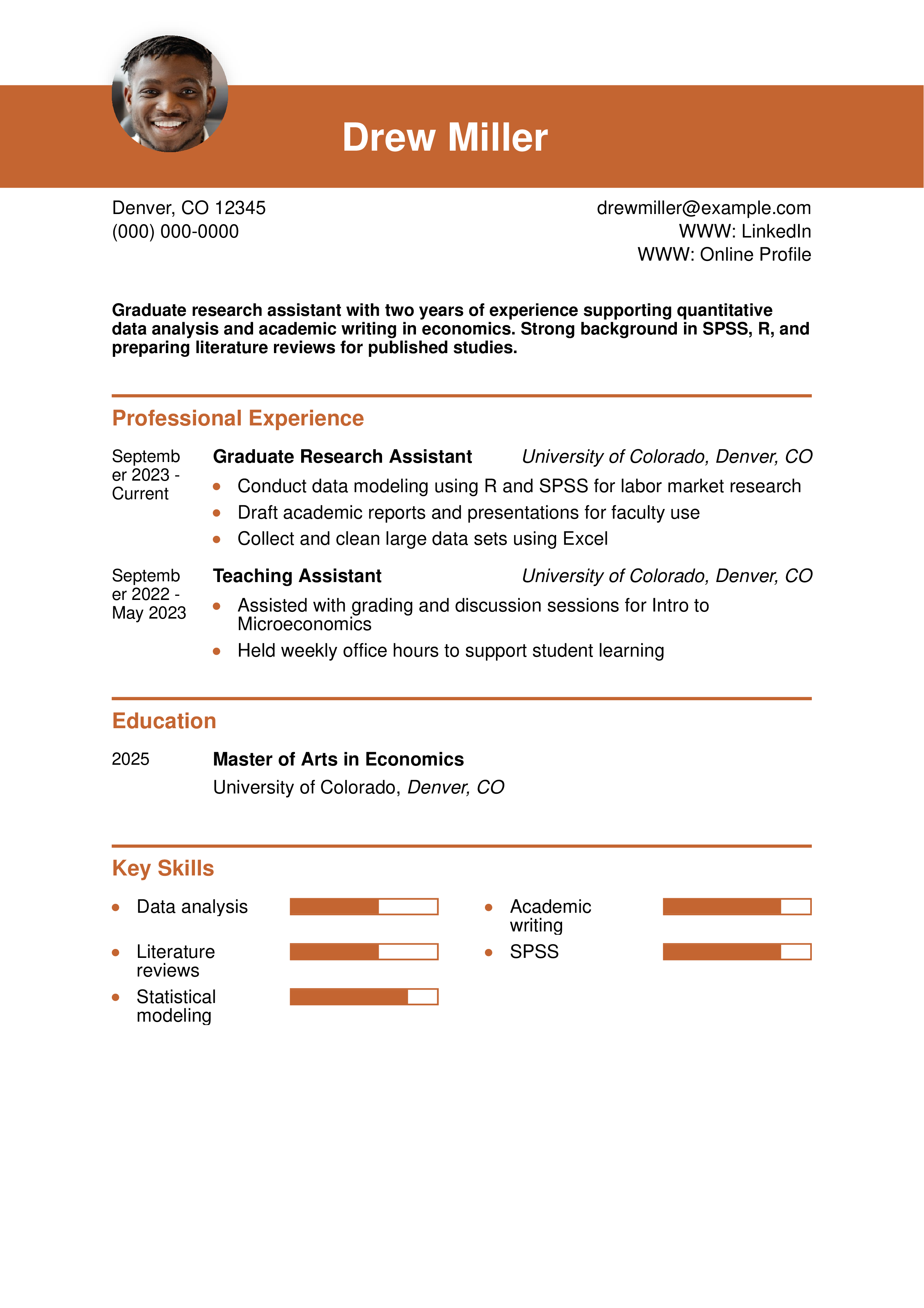
Why This Resume Stands Out
This resume is good because it includes technical skills in R and SPSS and connects academic experience with research deliverables.
Entry-Level Clinical Research Assistant Resume
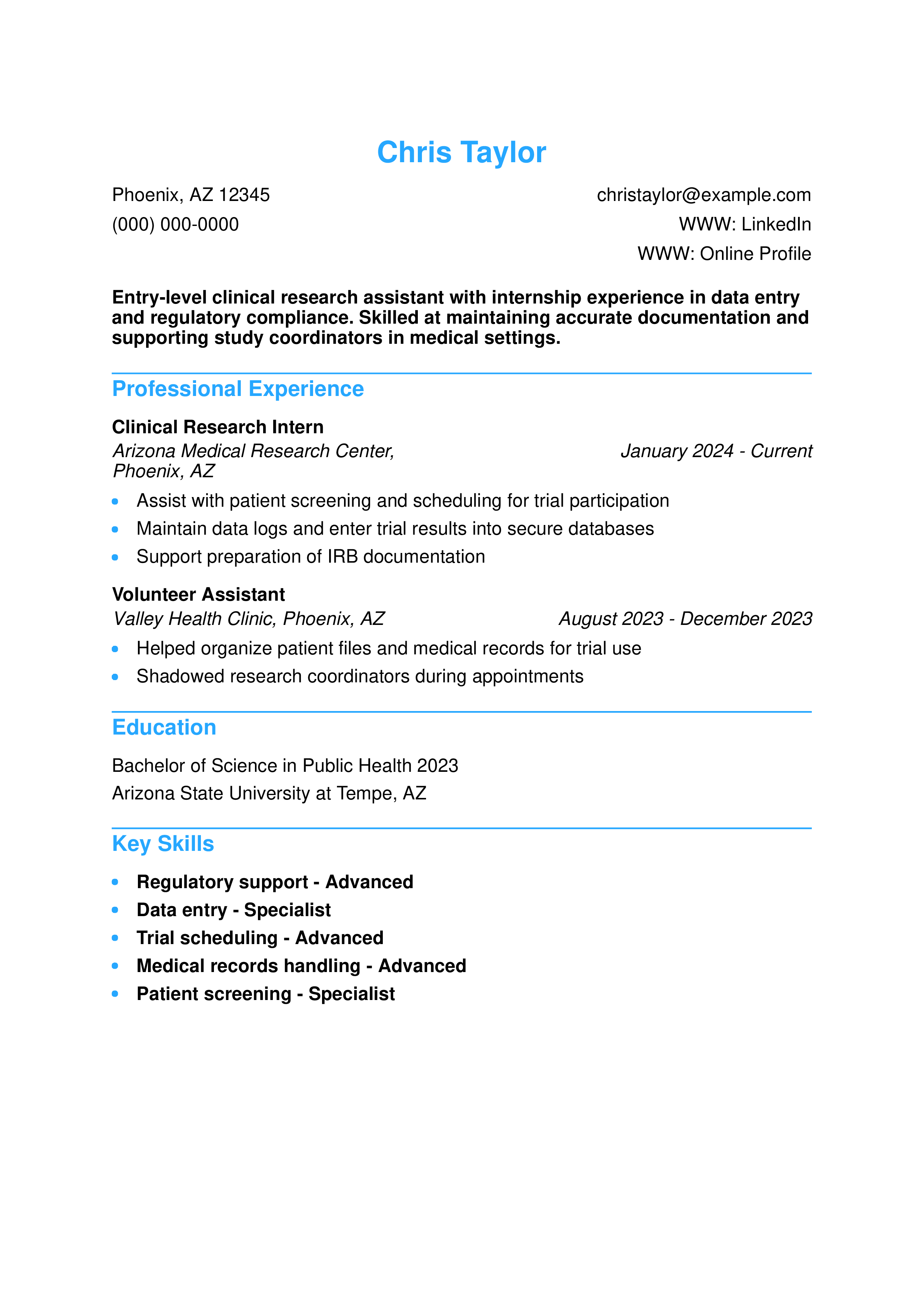
Why This Resume Stands Out
This resume is good because it balances academic achievement with hands-on experience in health care settings.
Beginner Clinical Research Assistant Resume
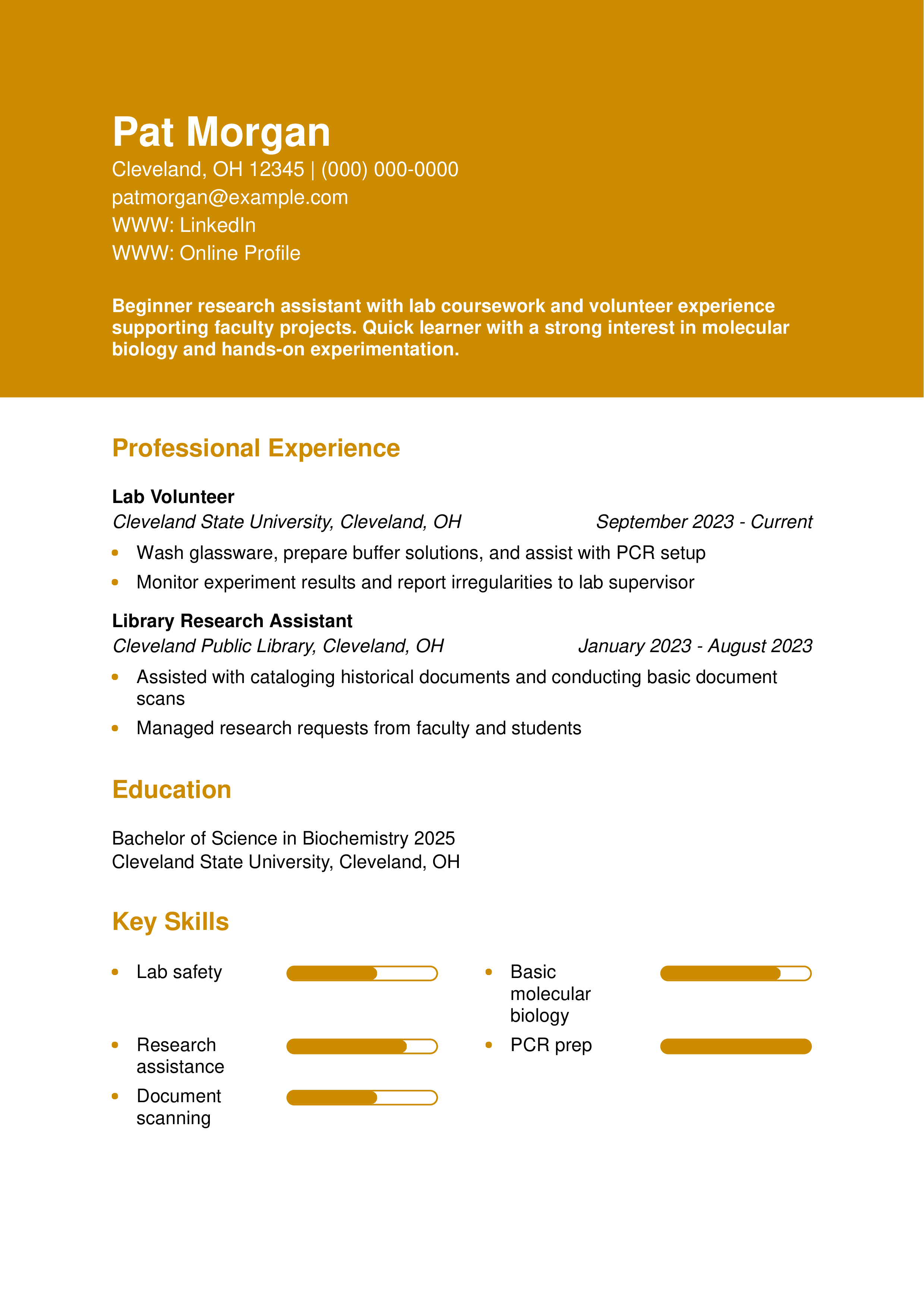
Why This Resume Stands Out
This resume is good because it reflects initiative and relevant entry-level exposure to research environments.
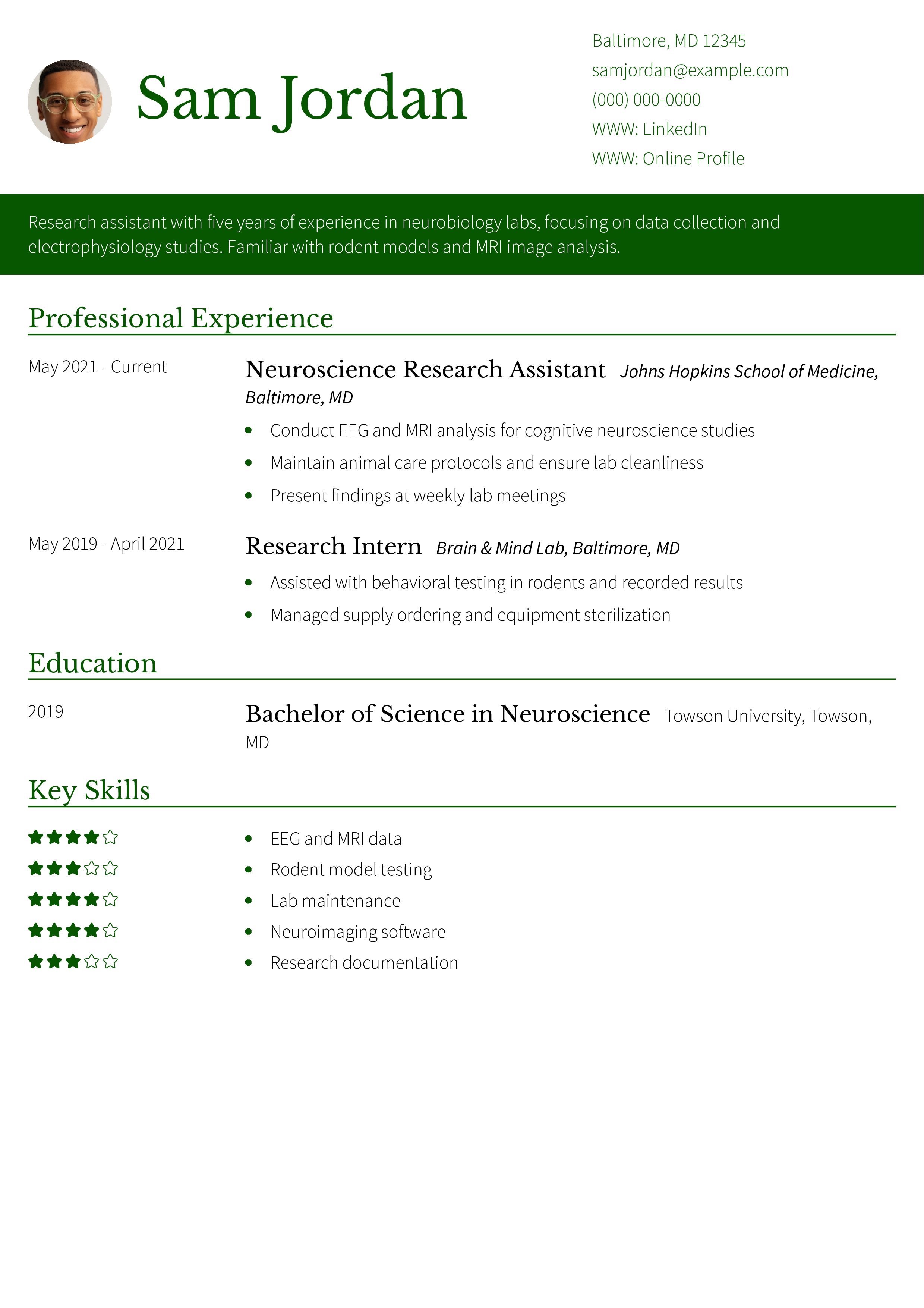
Neuroscience Research Assistant Resume
Why This Resume Stands Out
This resume is good because it demonstrates technical neuroscience knowledge and long-term research involvement.
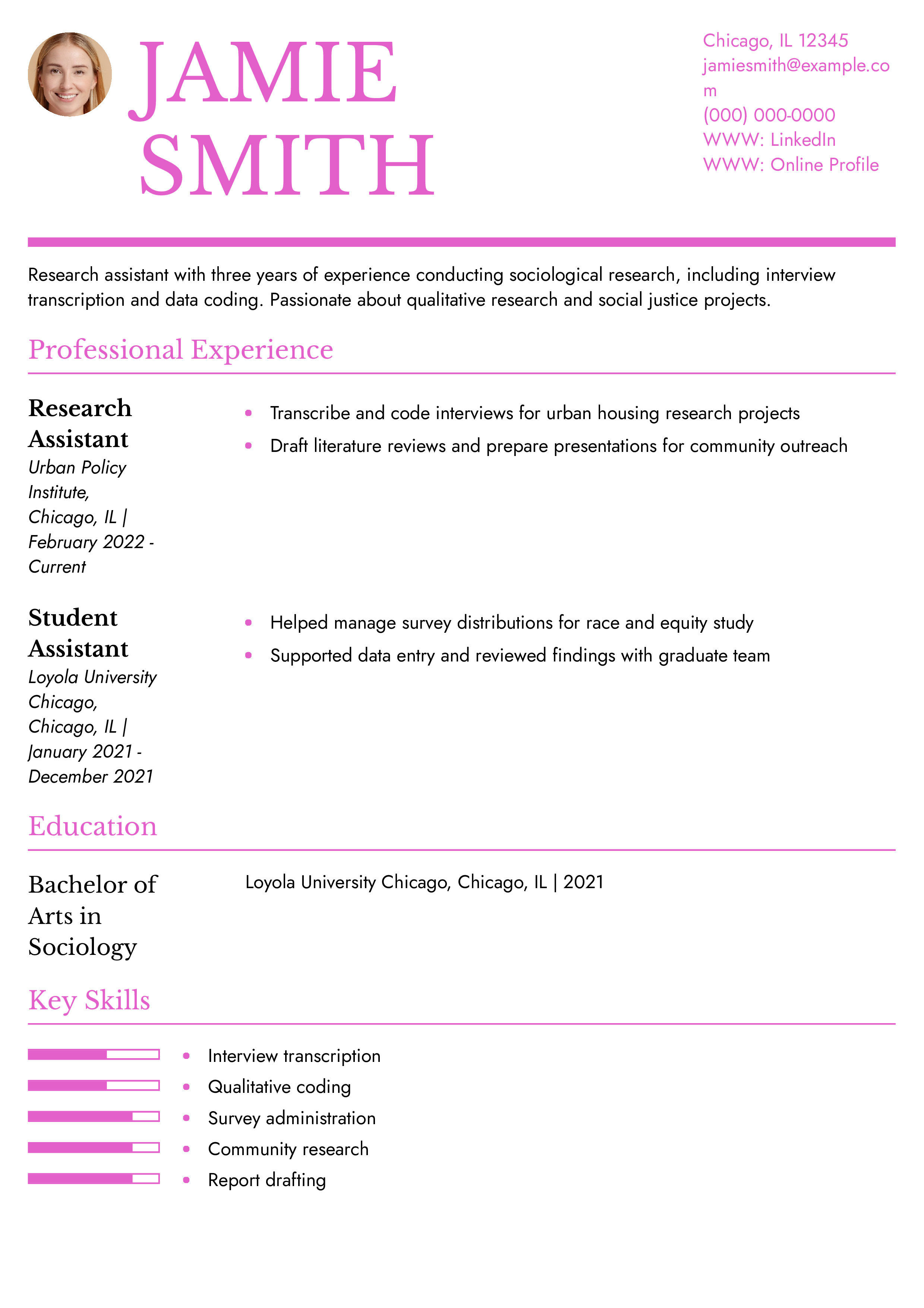
Sociology Research Assistant Resume
Why This Resume Stands Out
This resume is good because it strongly focuses on social research and clearly presents the candidate's contributions.
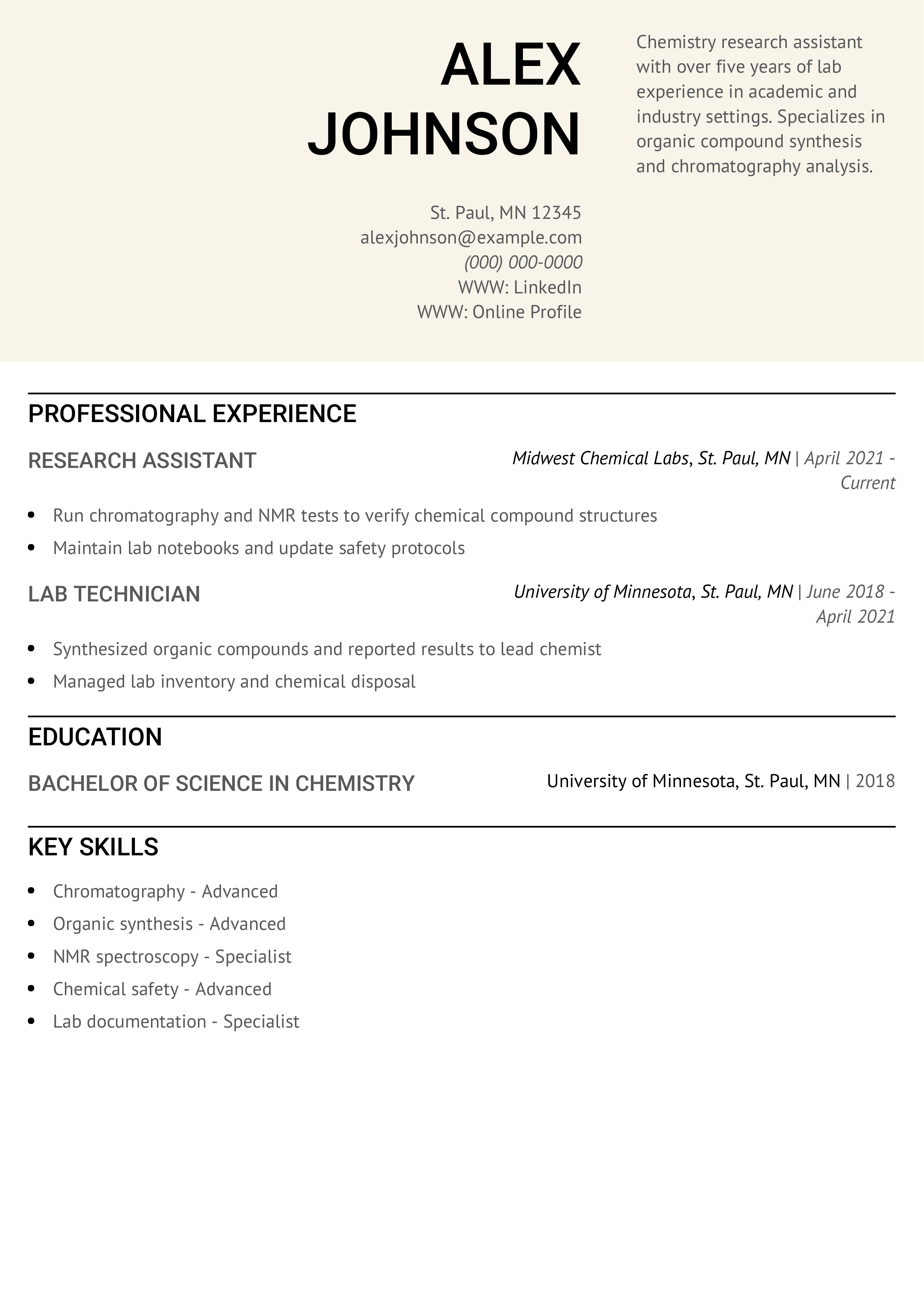
Chemistry Research Assistant Resume
Why This Resume Stands Out
This resume is good because it communicates specialized lab expertise and consistent results.
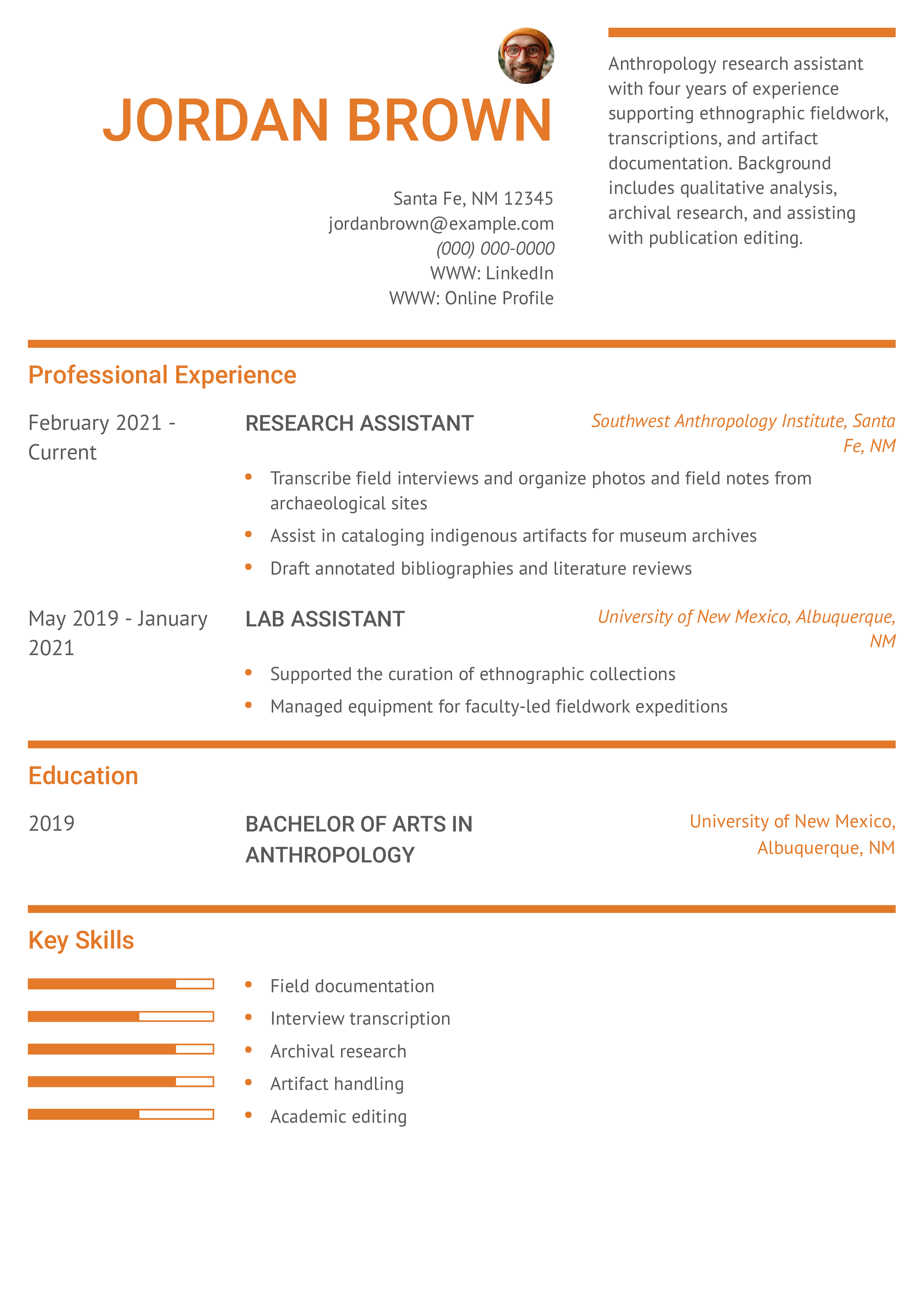
Anthropology Research Assistant Resume
Why This Resume Stands Out
This resume is good because it demonstrates academic experience supporting research in field and archival settings.
Biomedical Research Assistant Resume
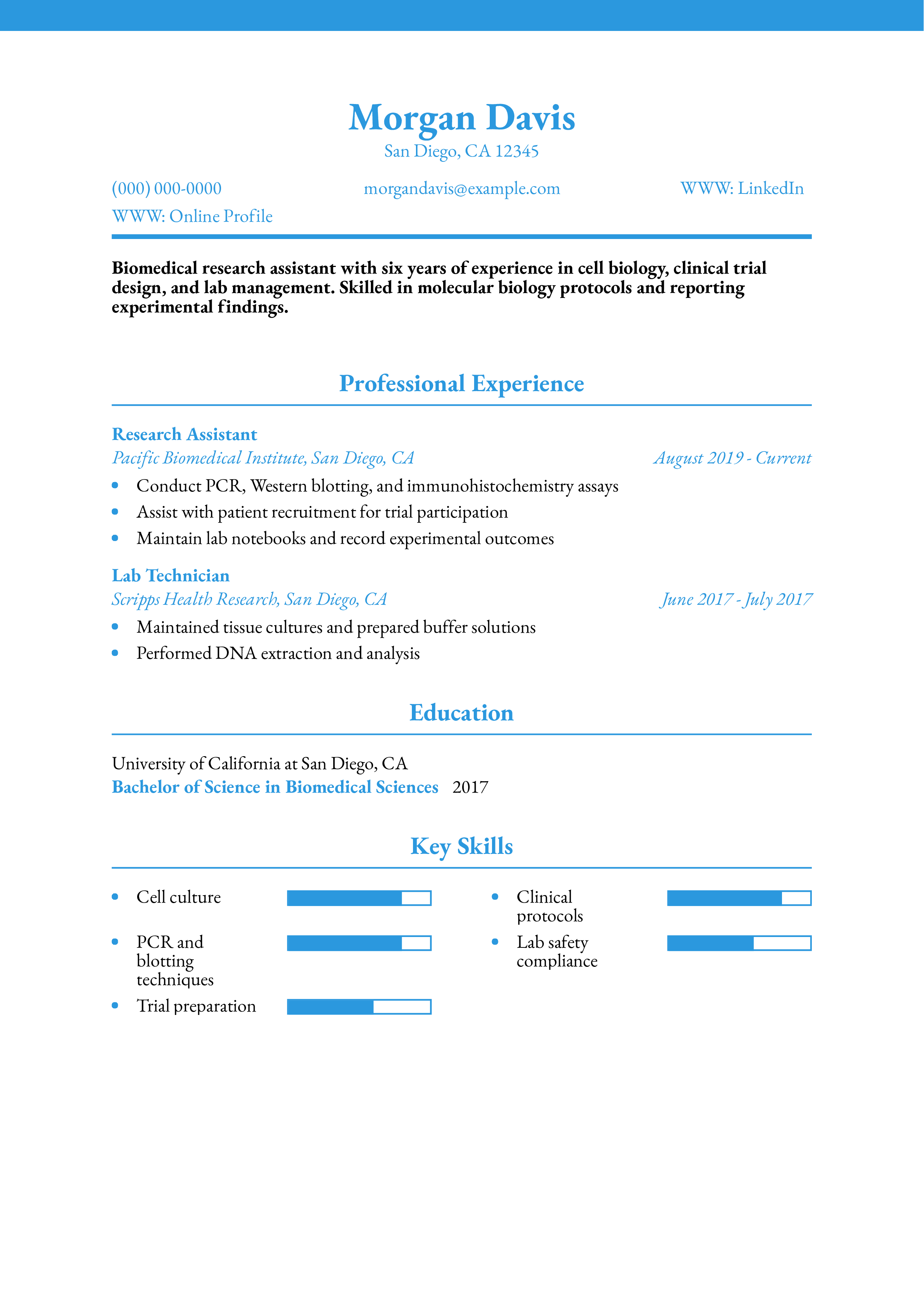
Why This Resume Stands Out
This resume is good because it showcases lab experience and complex scientific procedures clearly.
Economics Research Assistant Resume
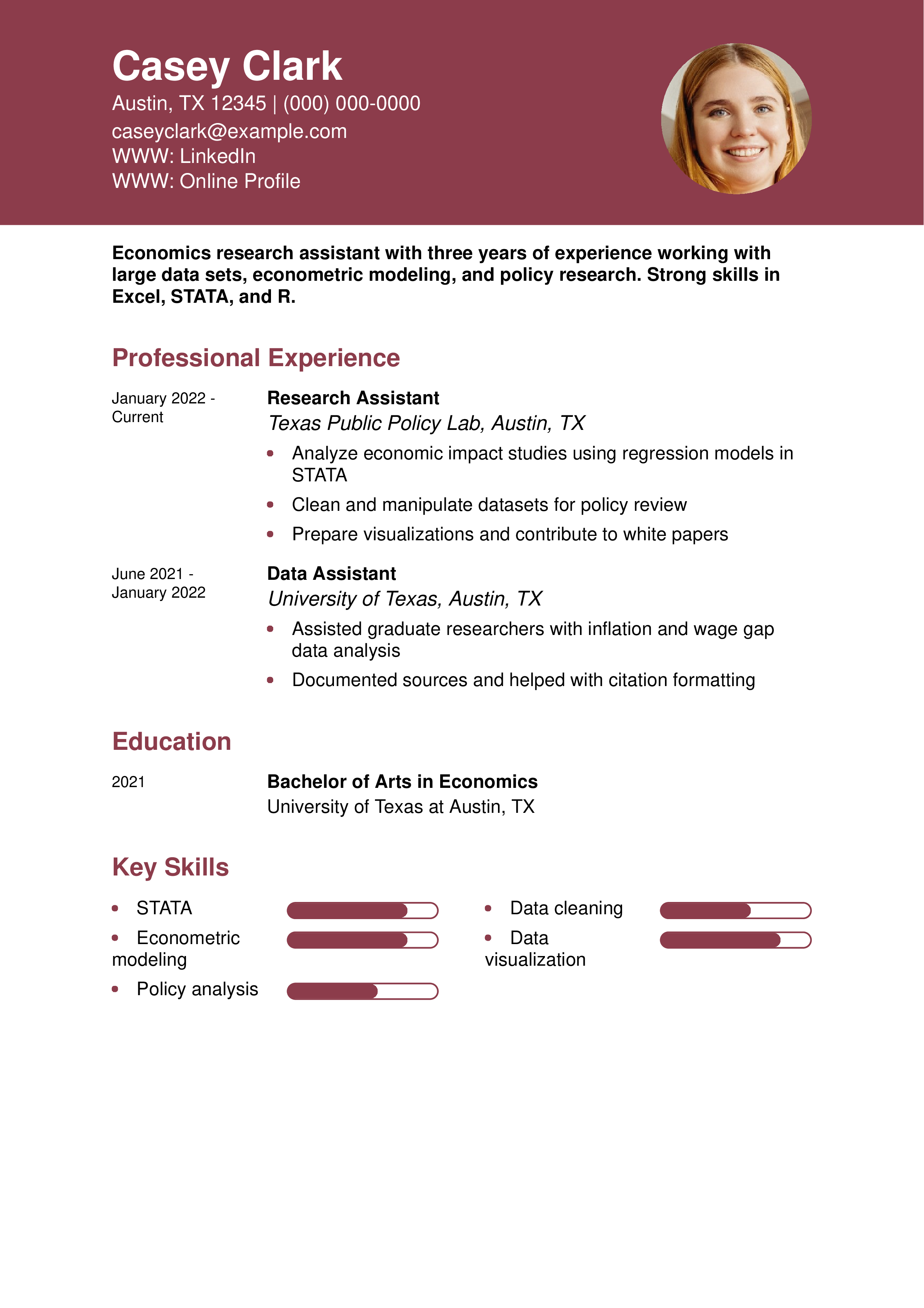
Why This Resume Stands Out
This resume is good because it clearly shows quantitative research experience relevant to economic roles.
Linguistics Research Assistant Resume
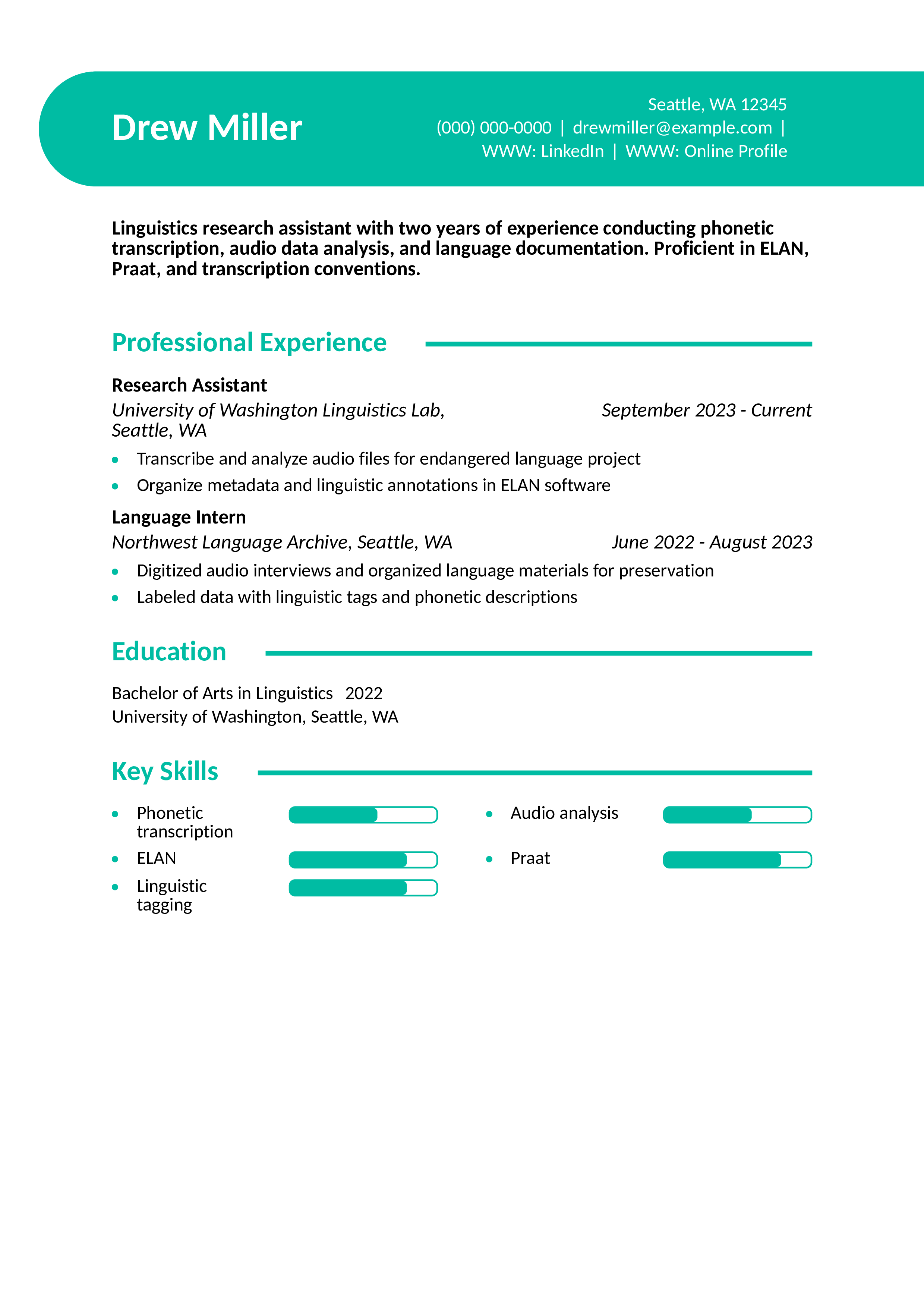
Why This Resume Stands Out
This resume is good because it outlines technical linguistic tools and practical field experience.
Public Health Research Assistant Resume
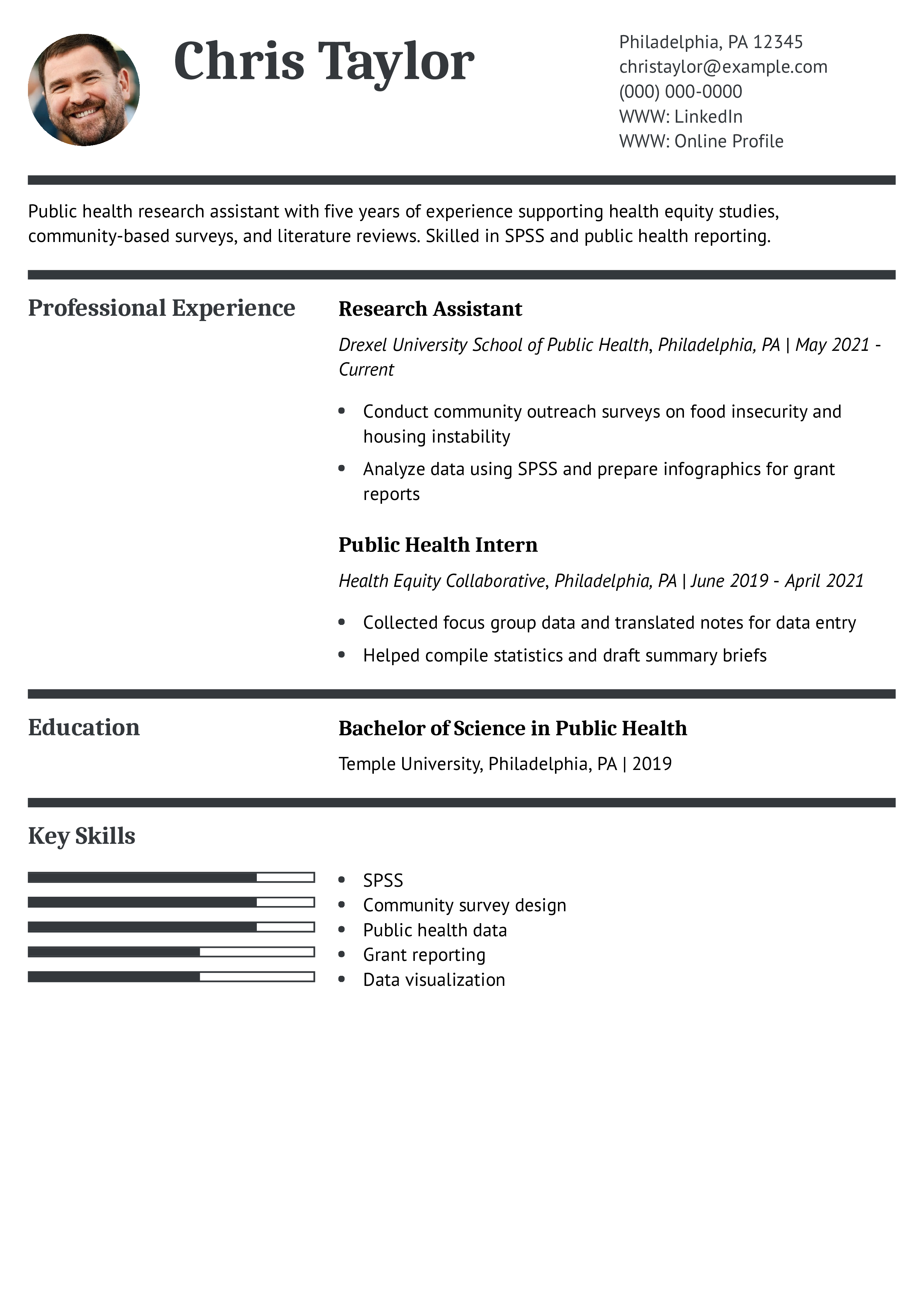
Why This Resume Stands Out
This resume is good because it emphasizes fieldwork and analytical skills specific to public health.
Genetics Research Assistant Resume
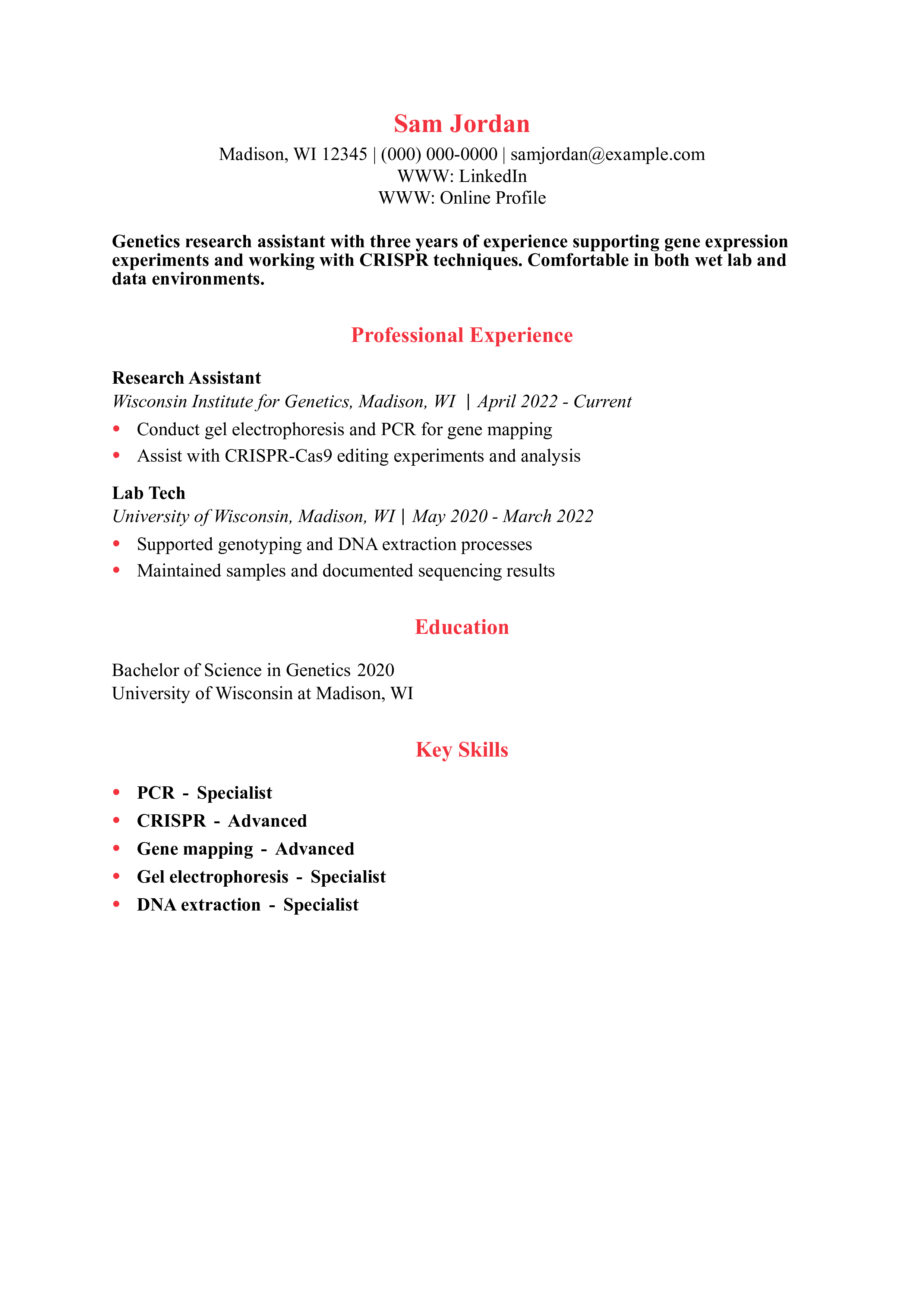
Why This Resume Stands Out
This resume is good because it features up-to-date lab techniques relevant to modern genetics labs.
Education Research Assistant Resume
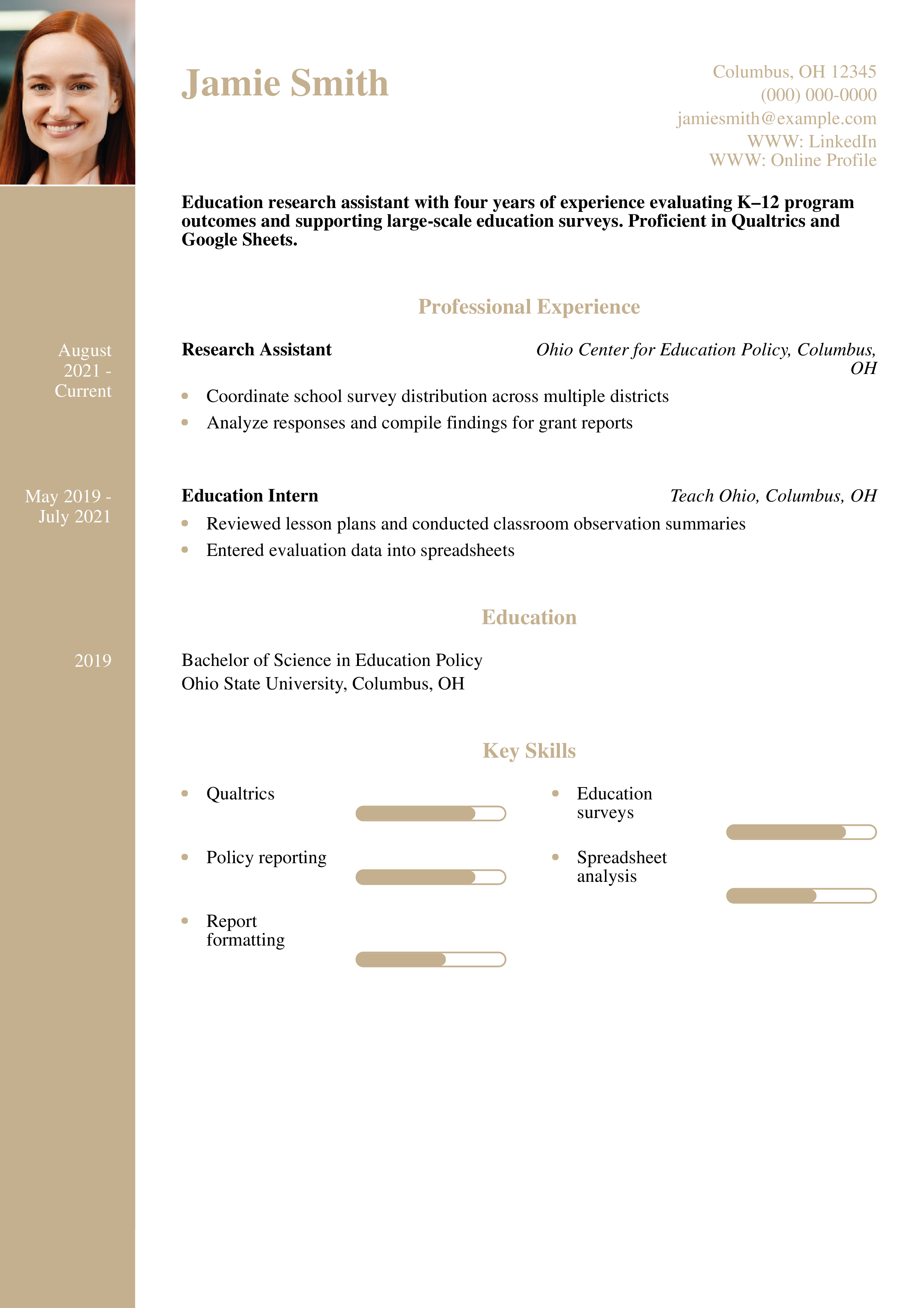
Why This Resume Stands Out
This resume is good because it reflects relevant research tasks in education policy and analysis.
Veterinary Research Assistant Resume
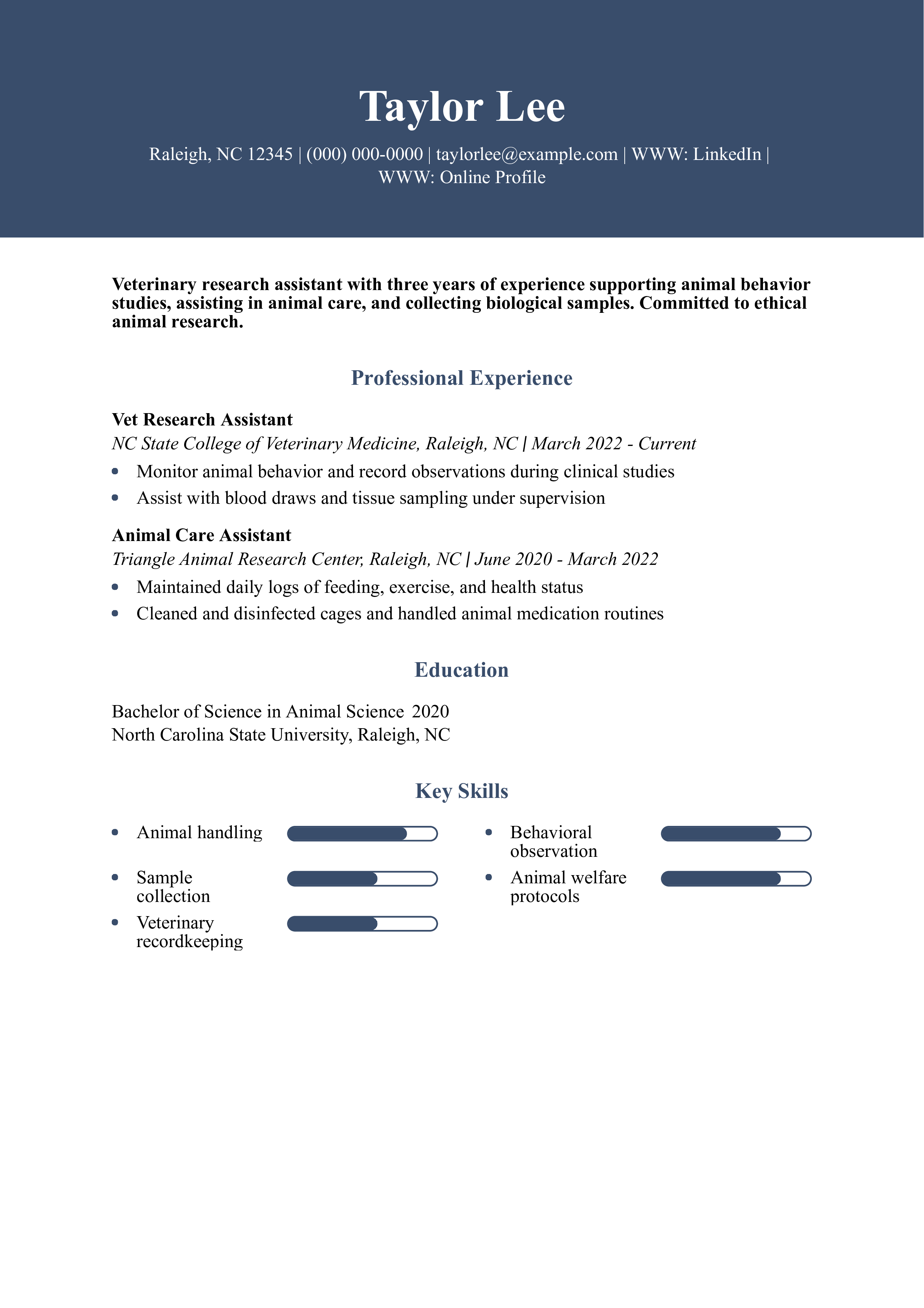
Why This Resume Stands Out
This resume is good because it highlights lab animal care, which is crucial in veterinary studies.
Physics Research Assistant Resume
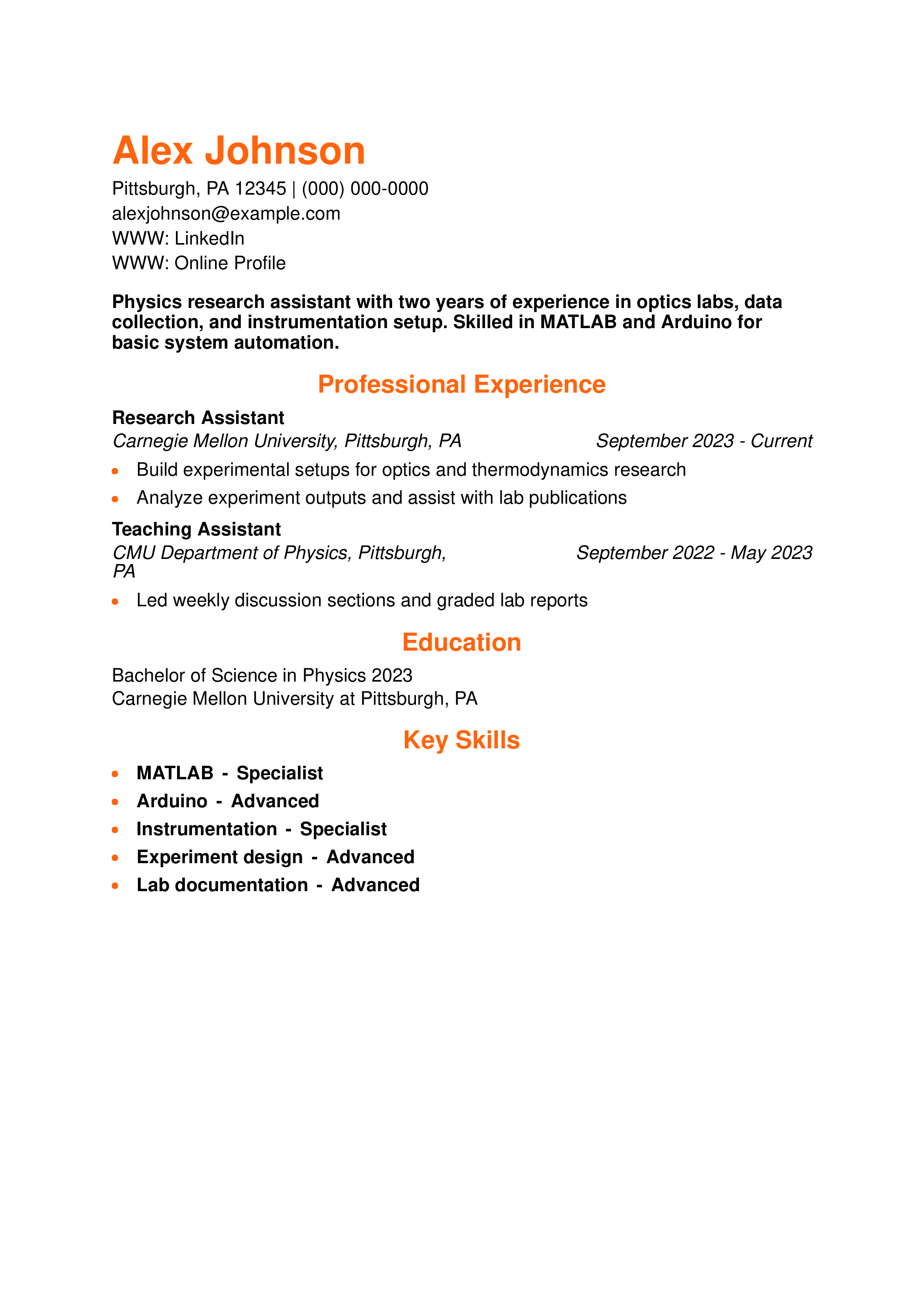
Why This Resume Stands Out
This resume is good because it showcases technical tools and lab experience critical to physical sciences.
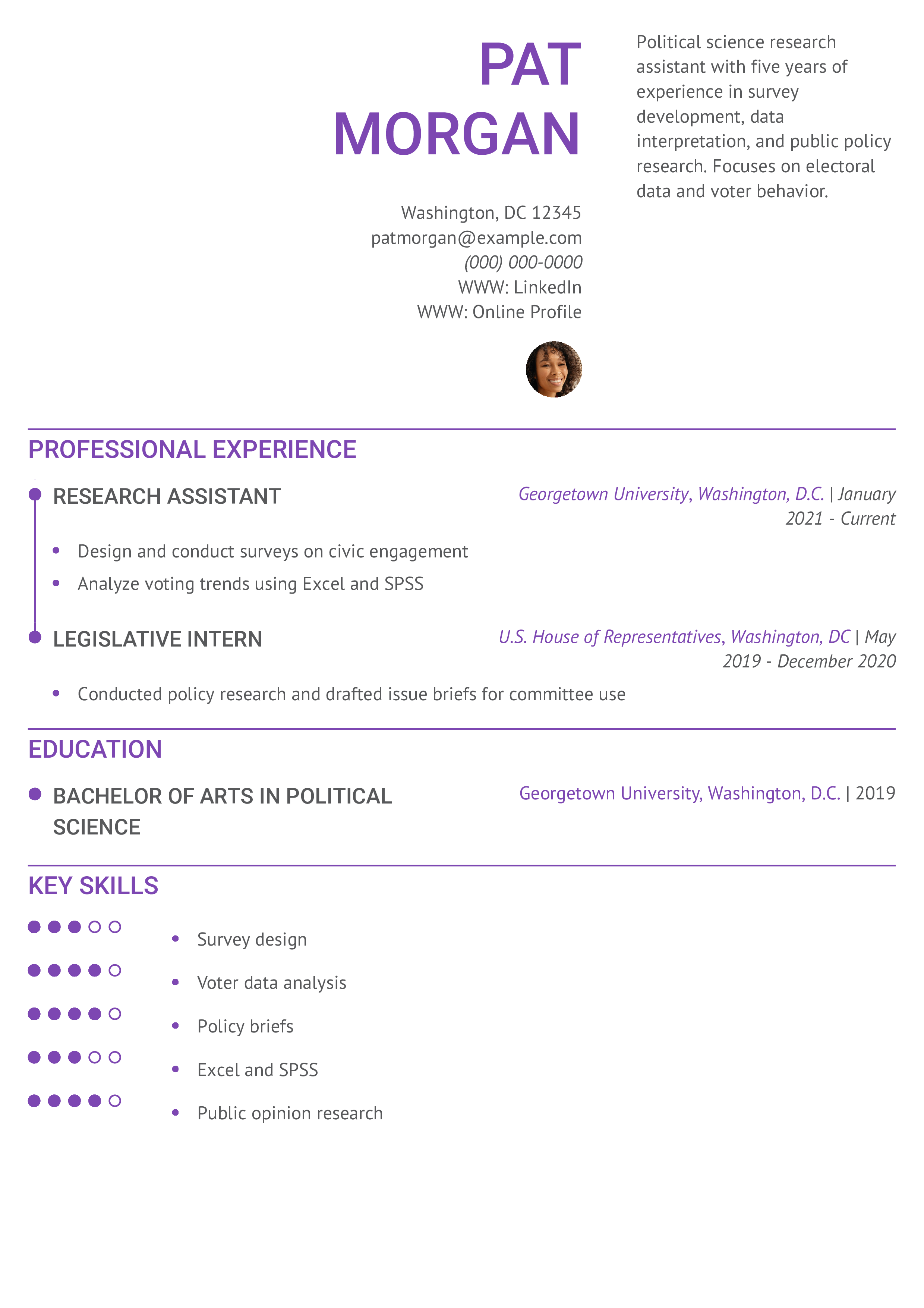
Political Science Research Assistant Resume
Why This Resume Stands Out
This resume is good because it balances academic research with real-world political experience.
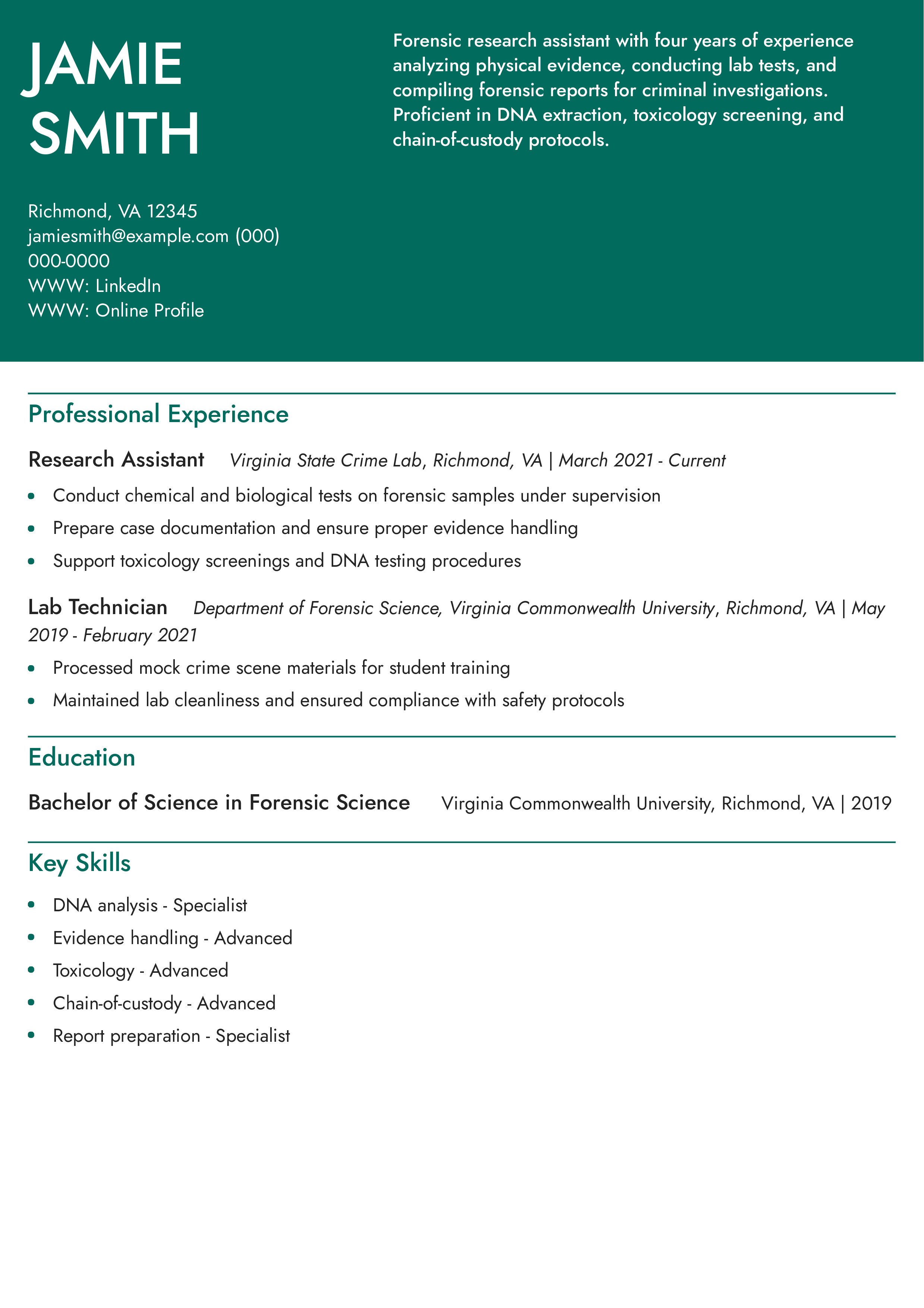
Forensic Research Assistant Resume
Why This Resume Stands Out
This resume is good because it highlights highly specific lab skills related to forensic work and ties them to real-world application.
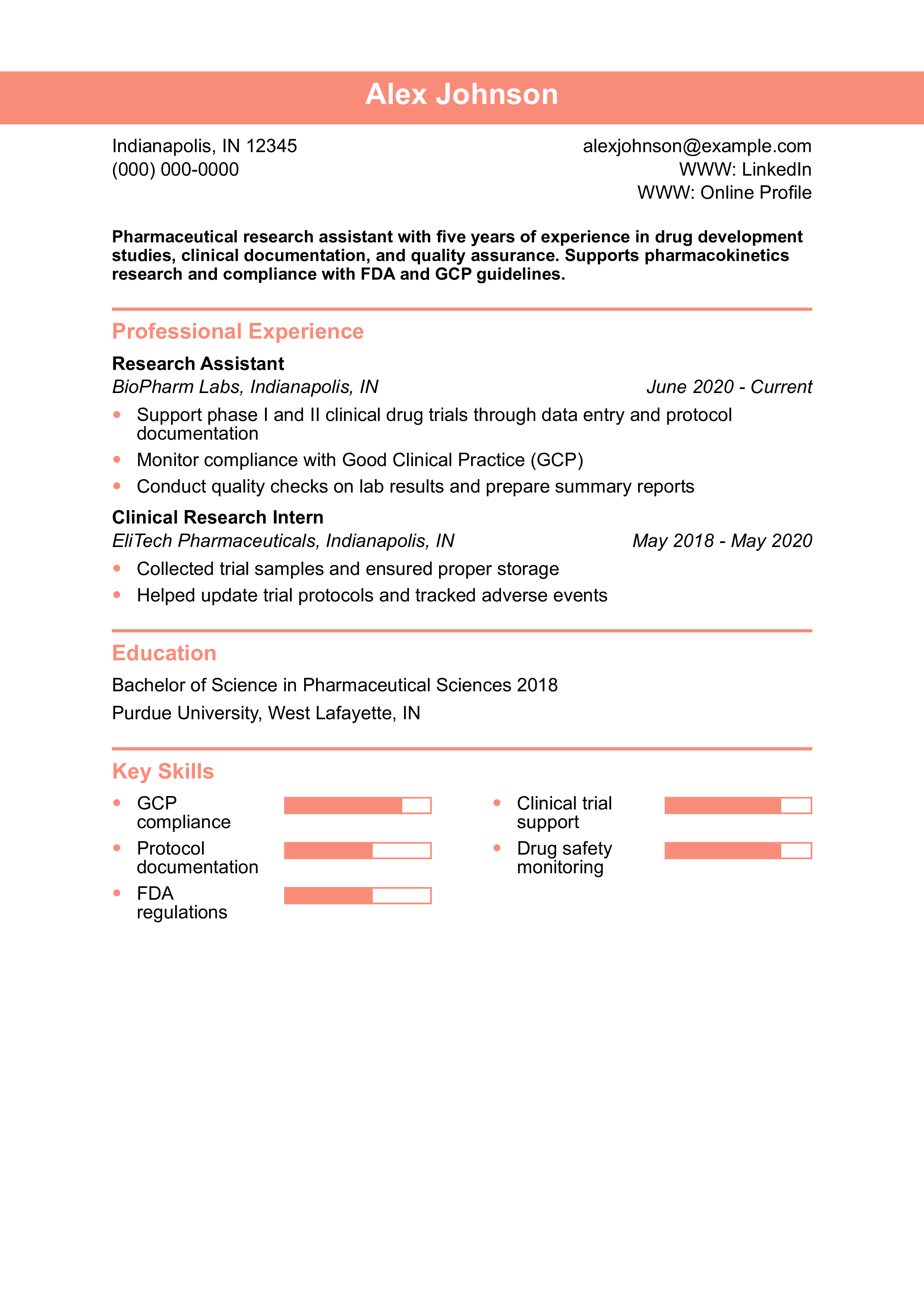
Pharmaceutical Research Assistant Resume
Why This Resume Stands Out
This resume is good because it combines regulatory knowledge with hands-on experience in pharmaceutical research.
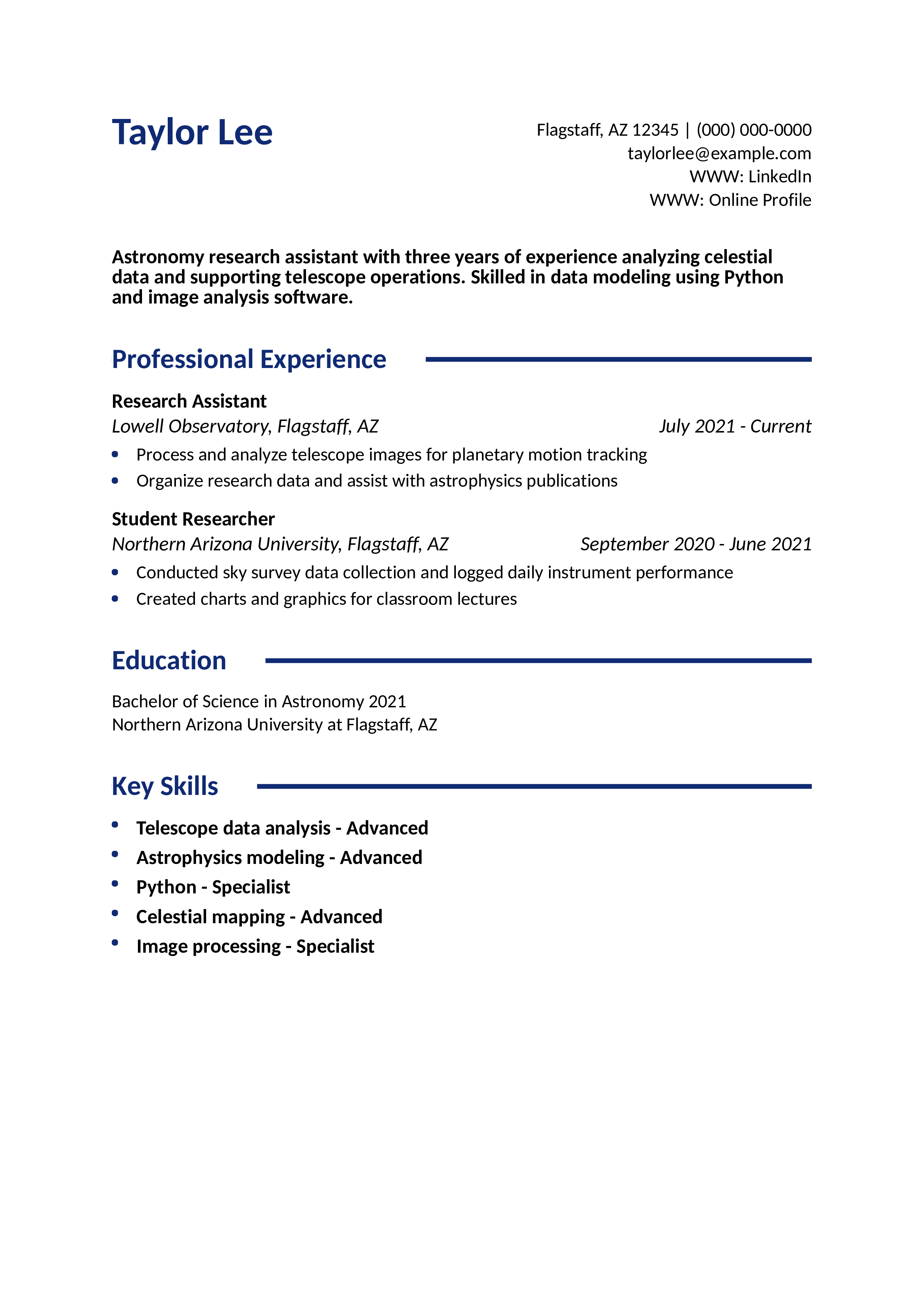
Astronomy Research Assistant Resume
Why This Resume Stands Out
This resume is good because it demonstrates technical proficiency with astronomy-specific tools and research environments.
Our templates are crafted by professional resume writers to make creating your resume quick, easy, and effective.
- Professional resume template downloads
- Customized cover letter generation
- AI resume writing support
- Career-building resources and advice
Research Assistant Text-Only Resume Templates and Examples
How To Write a Research Assistant Resume
Research Assistant resumes should highlight experimental design, data analysis tools, and publication or grant contributions in the opening summary. Metrics showing improved efficiency or successful studies help you stand out early.

1. Craft an outstanding profile with a summary of your research assistant qualifications
Start your resume strong with an impactful profile. It should be a concise statement that summarizes your experience and key strengths. List your job title, years in the field, and areas of specialization that align with the job description. Mention unique qualities or experiences that set you apart from other candidates. These could be specific research methodologies, tools, or projects you’ve led.
For instance, highlight these achievements in your profile if you’ve been instrumental in pioneering novel research methodologies or contributed to high-impact publications. Include these details if you have a track record of coordinating successful research projects or excel in specific areas such as data collection or experimental design. You set yourself up to impress hiring managers when you underscore your strengths and contributions.
Senior-Level Profile Example
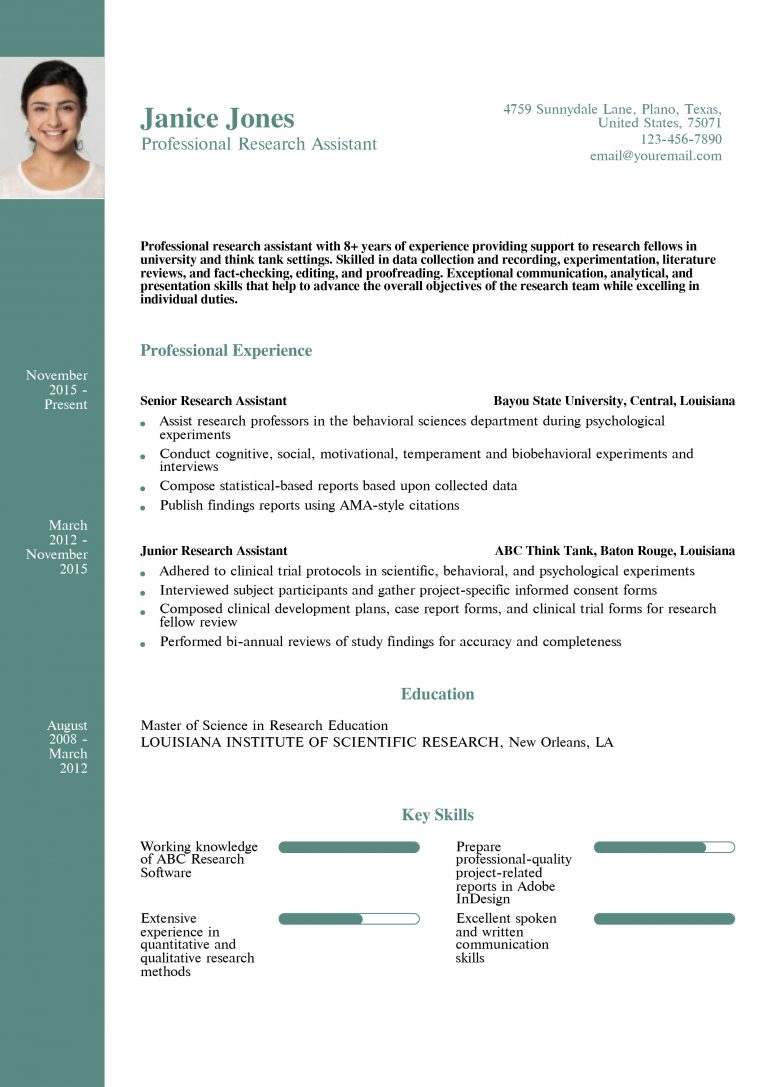
Detail-oriented research assistant with over 10 years of experience coordinating research efforts among study sponsors, medical staff, and participants. Self-motivated team player with a reputation for accuracy, forward-thinking, and strong organizational skills.
Entry-Level Profile Example
Research assistant with two years of experience in laboratory work. Specializes in statistical analysis and clinical research. Experience with collaborating in teams to conduct lab experiments and collect research data. Ability to work accurately in a fast-paced environment. Adept at following directions and maintaining industry standards.
2. Create a powerful list of your research assistant experience
Focus on your achievements when writing your professional experience section. Instead of listing everything you were responsible for in previous roles, describe what you achieved. Employers are eager to see the concrete evidence of your work, so demonstrate your tangible contributions by featuring accomplishments instead of daily tasks and responsibilities.
Highlight your proficiency in various research methodologies. Provide tangible examples of your conducting experiments, surveys, interviews, or data analysis. Be sure to incorporate quantifiable data and metrics to show the value of your contributions to research projects and studies.
Senior-Level Professional Experience Example
Clinical Research Coordinator, Cleveland Clinic Indian River Hospital, Vero Beach, FL
June 2012 – present
- Oversee subject recruitment and enrollment goals for in vivo preclinical neurocognitive psychomotor testing
- Identify, screen, and schedule volunteers in clinical trials
- Prepare documents, supplies, and equipment for research visits
- Coordinate all components of data collection following standard operating procedures
- Develop input for adverse event reports
Entry-Level Professional Experience Example
Research Assistant, ABC Labs, Chicago, IL
August 2019 – present
- Assists with preparation for conducting experiments
- Manages detailed database and verifies the accuracy of data
- Implements quality control measures for research methodology
- Summarizes research data into tables, graphs, charts, and narratives
- Writes reports and gives oral presentations summarizing research activities
3. Include your education and certifications relevant to research assistants
Include pertinent certifications to strengthen your research assistant resume alongside your required formal education. Although your hands-on experience is most important to employers, certifications signal your dedication to advancing your skills and knowledge. Showing a commitment to continuing education can increase your chances of getting called for an interview.
For instance, earning a Certified Clinical Research Associate (CCRA) credential could help you secure a clinical research position. A certification won’t automatically earn you the job, but these credentials can help you stand out during the hiring process.
Education
Template
- [Degree Name]
- [School Name], [City, State Abbreviation] – [Graduation Month and Year]
Example
- Bachelor of Science in Biology
- The University of Iowa, Iowa City, IA, September 2016 – May 2019
Certifications
Template
- [Certification Name], [Awarding Organization] – [Completion Year]
Example
- ACRP, 2017
- SOCRA, 2017
4. List your key research assistant skills and proficiencies
It’s common for companies to use applicant tracking systems (ATS) to collect and sort resumes. These systems highlight top candidates by searching resumes for specific keywords and phrases mentioned in the job description. Include relevant skills and terms if you want your resume to reach the hiring manager. Below are some common key skills you may encounter as you construct your research assistant resume:
| Key Skills and Proficiencies | |
|---|---|
| Analysis | Case studies |
| Clinical research studies | Communication |
| Data analysis | Data collection |
| Data entry | Detail-oriented |
| Health Insurance Portability and Accountability Act (HIPAA) | Informed consent |
| Institutional review boards (IRB) | International Council for Harmonisation of Technical Requirements for Pharmaceuticals for Human Use Guideline for Good Clinical Practice (ICH-GCP) |
| Literature review | Manuscripts |
| MATrix LABoratory (MATLAB) | Microsoft Office suite |
| STATA (an abbreviation of the words statistics and data) | Statistical Package for the Social Sciences (SPSS) |
| Study protocols | Surveys |
5. Highlight your contribution to publications
A “Publications” section demonstrates your ability to contribute valuable knowledge, especially for assistants involved in academic or scientific research. As you list your contributions, use a citation style consistent with your domain. Clearly state your role in the publication to give context about your level of involvement in the research.
Whenever possible, quantify the impact of your publications. For instance, mention the number of citations your work has received or any awards or recognition it has garnered. Don’t limit yourself to only peer-reviewed publications. Include conference presentations, research reports, book chapters, or any other dissemination relevant to your field.
How To Pick the Best Research Assistant Resume Template
Finding a style that prioritizes readability and professionalism is most important when selecting your resume template. Look for a template that meets the expectations of your industry, employing a clean layout and easily legible fonts. Don’t worry about whether or not your design is trendy enough. Employers care about what you offer in your resume content, not how stylish you can make your document look.
Frequently Asked Questions: Research Assistant Resume Examples and Advice
Why should I use a Research Assistant resume example as a template for my own resume?-
A Research Assistant resume example provides a solid foundation for structuring your own resume. It showcases how to highlight achievements, use quantifiable metrics, and present your experience in an organized manner. You can personalize it by adding your unique qualifications and adjusting sections to better reflect your skills and career history.
What are common action verbs for research assistant resumes?-
Writing your resume can be challenging, especially as you think of ways to describe your research accomplishments. Using action verbs throughout your resume is a great strategy to help with any potential writer's block. They bring variety to your language and increase reader engagement. As you write your professional experience section, use some of the action verbs below:
| Action Verbs | |
|---|---|
| Analyzed | Collaborated |
| Collected | Compiled |
| Conducted | Designed |
| Drafted | Evaluated |
| Executed | Gathered |
| Identified | Implemented |
| Investigated | Organized |
| Oversaw | Planned |
| Presented | Researched |
| Synthesized | Validated |
How do you align your resume with a research assistant job description?-
Whether your specialty lies in the social sciences or clinical lab work, your talent as a research assistant is in demand. According to the Bureau of Labor Statistics, jobs for social science research assistants are projected to grow by 11% from 2021 to 2031, while jobs for clinical technicians may see a 7% increase.
Even with those promising outlooks, competition for research assistant positions will remain high. However, a customized resume can help you stand out from other research applicants. You can significantly increase your chances of landing an interview by tailoring your document to the job description.
Suppose a research position demands expertise in data analysis. In that case, emphasize your proficiency in statistical software, data visualization, and hypothesis testing to establish yourself as a standout candidate.
What is the best research assistant resume format?-
The reverse chronological format is best for research assistants with a consistent and progressive work history in the research field. This resume style can be valuable if you've had a series of increasingly responsible roles in research. Alternatively, a combination resume format is an excellent choice for individuals with little official work experience. For this approach, focus on highlighting coursework, academic projects, internships, and research skills.
How long should my research assistant resume be?-
A research assistant resume should typically be one page long, especially if you have less than 10 years of experience. A two-page resume may be appropriate for seasoned professionals with extensive achievements, but only if every detail adds value to your candidacy. Focus on conciseness and relevance by tailoring your resume to the job you're applying for. Highlight your most impactful accomplishments, certifications, and key skills rather than listing every career detail.
Including work experience from the last 10 to 15 years is generally recommended. Older positions can be summarized briefly or omitted unless highly relevant. Remember, your resume is a snapshot of your qualifications, not an exhaustive career history. Prioritize clarity and impact to make a strong impression.
Craft your perfect resume in minutes
Get 2x more interviews with Resume Builder. Access Pro Plan features for a limited time!