
If you’re looking for a professor job, you may be expected to submit a type of resume called a curriculum vitae (CV). This often lengthy job search document has a more understated style than the resume. It’s less focused on a hard-hitting summary and achievements and more on letting your various credentials and degrees speak for themselves.
Much of the information on CVs is similar to that on resumes, such as work history and education. For jobs in academia, they can also include sections such as:
- Board memberships
- Fellowships
- Grants
- Internships
- Presentations
- Publications
- Research interests
Below are tips for creating a great CV and advice for applying for professor positions. Also, see our Resume vs. Curriculum Vitae (CV) article for additional general guidance on CVs and a sample template showing how to structure your different sections and information.
“Professor resumes should emphasize teaching excellence, presentations, research publications, and curriculum development. Show how you shape minds and contribute to academia.”

AI Is Now Part of the Professor Job
Search committees at research universities and teaching colleges now screen for how candidates have engaged with AI in their scholarship and instruction. Whether it’s using AI-assisted literature review tools, integrating generative AI into course design, or developing department policies on student AI use, faculty applicants are being compared on their ability to navigate AI’s presence in higher education thoughtfully. Here’s what to surface:
- Deploying AI-assisted grading or feedback platforms across large sections, including how it changed your assessment process, signals more than basic familiarity with the tools.
- Course design or department policy shaped by AI integration, in a setting where faculty buy-in mattered.
Most Popular Professor Resumes
Adjunct Professor Resume
Why This Resume Stands Out
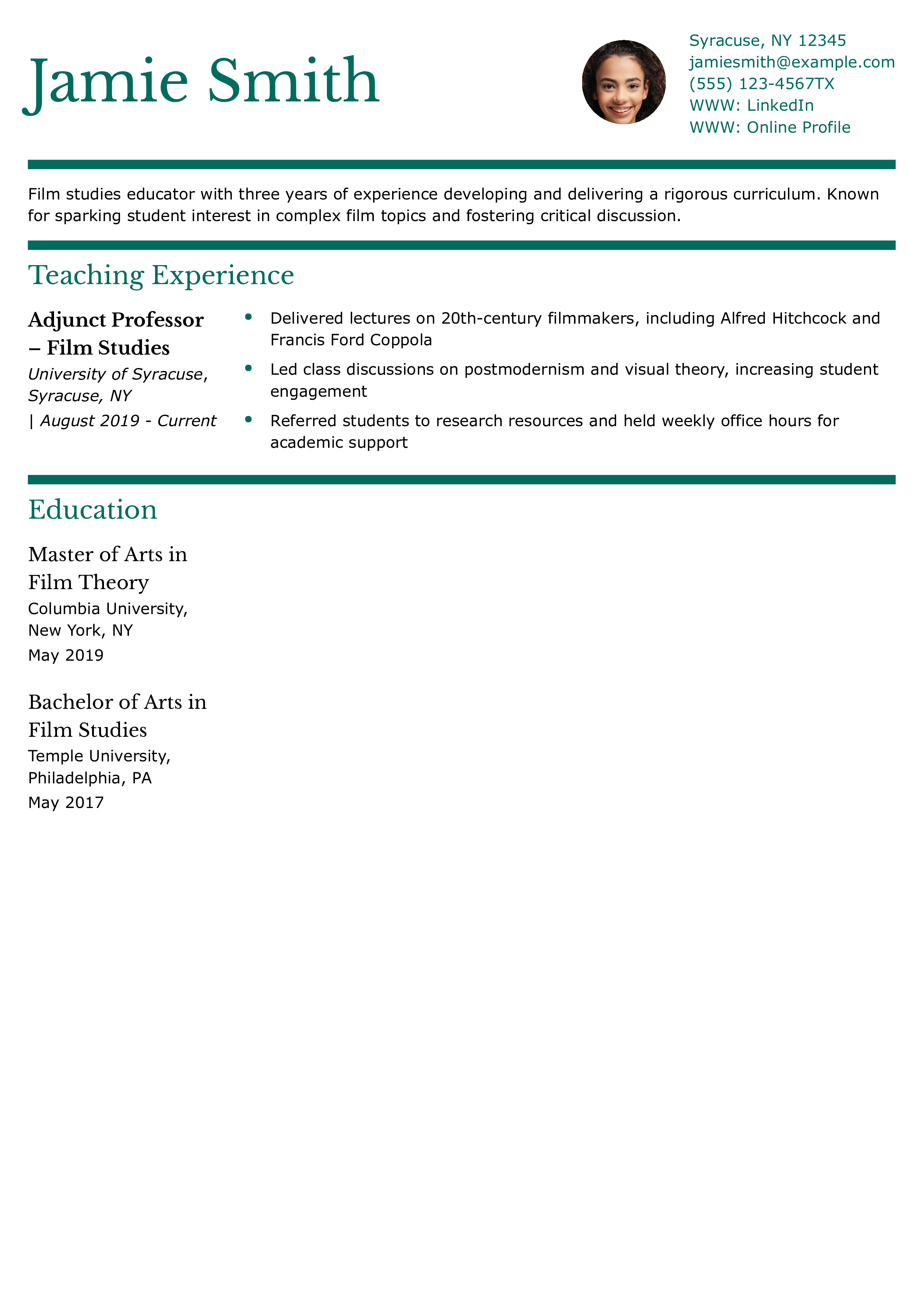
This resume is strong because it highlights subject-matter expertise and a focus on classroom engagement.
College Professor Resume
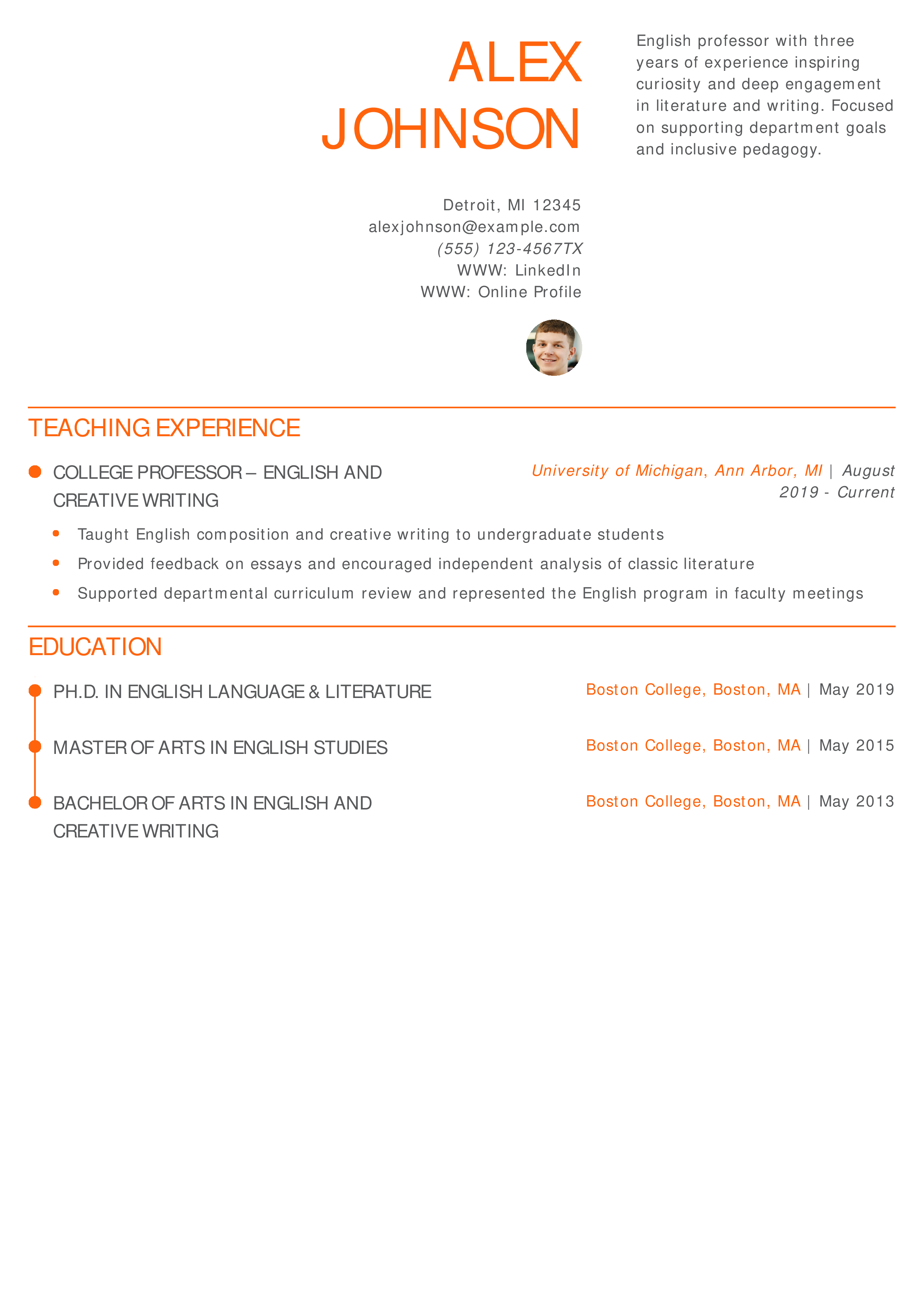
Why This Resume Stands Out
This resume is good because it bridges classroom instruction with departmental leadership.
Art History Professor Resume
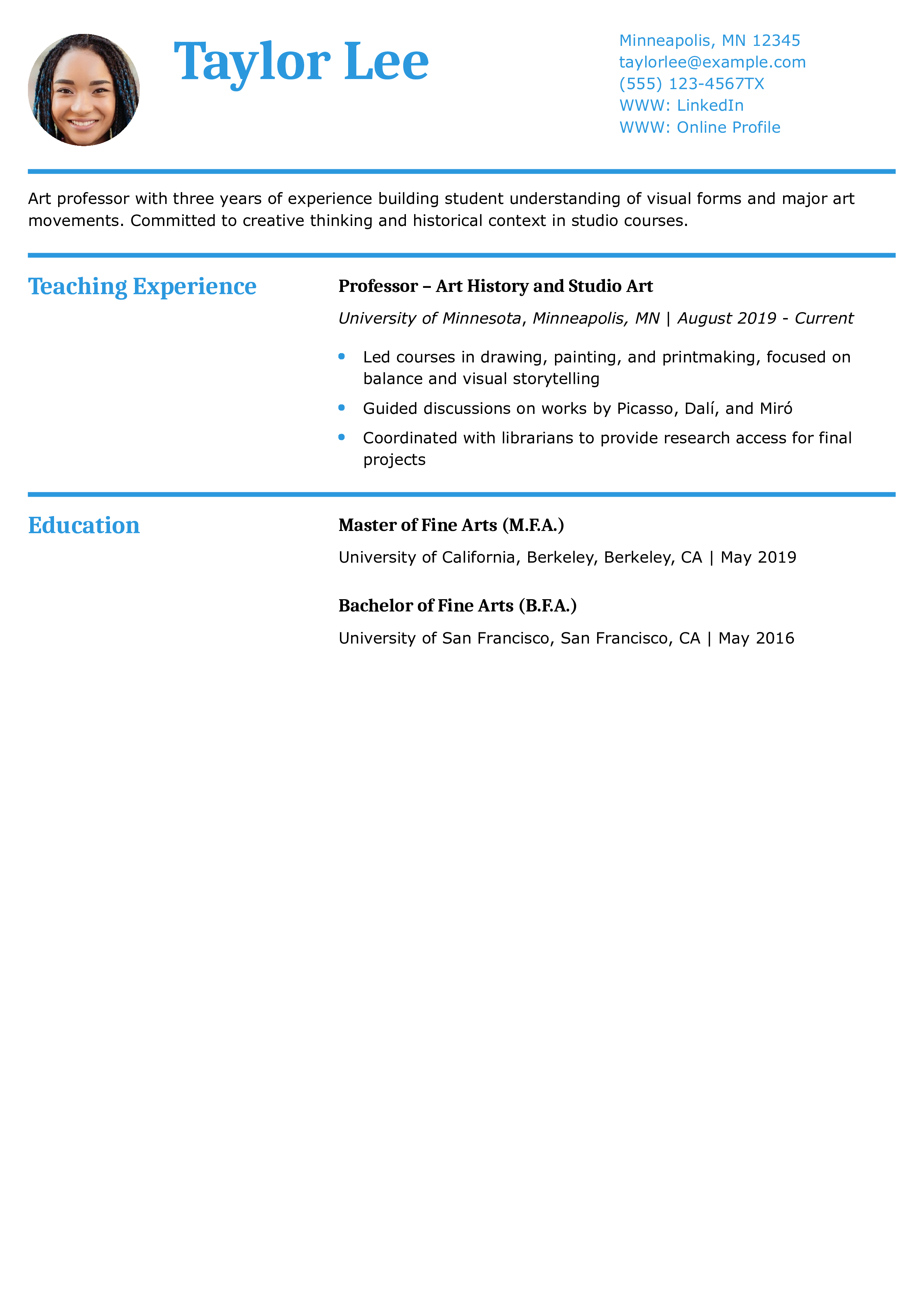
Why This Resume Stands Out
This resume works well because it integrates practical studio teaching with art historical depth.
Philosophy Professor Resume
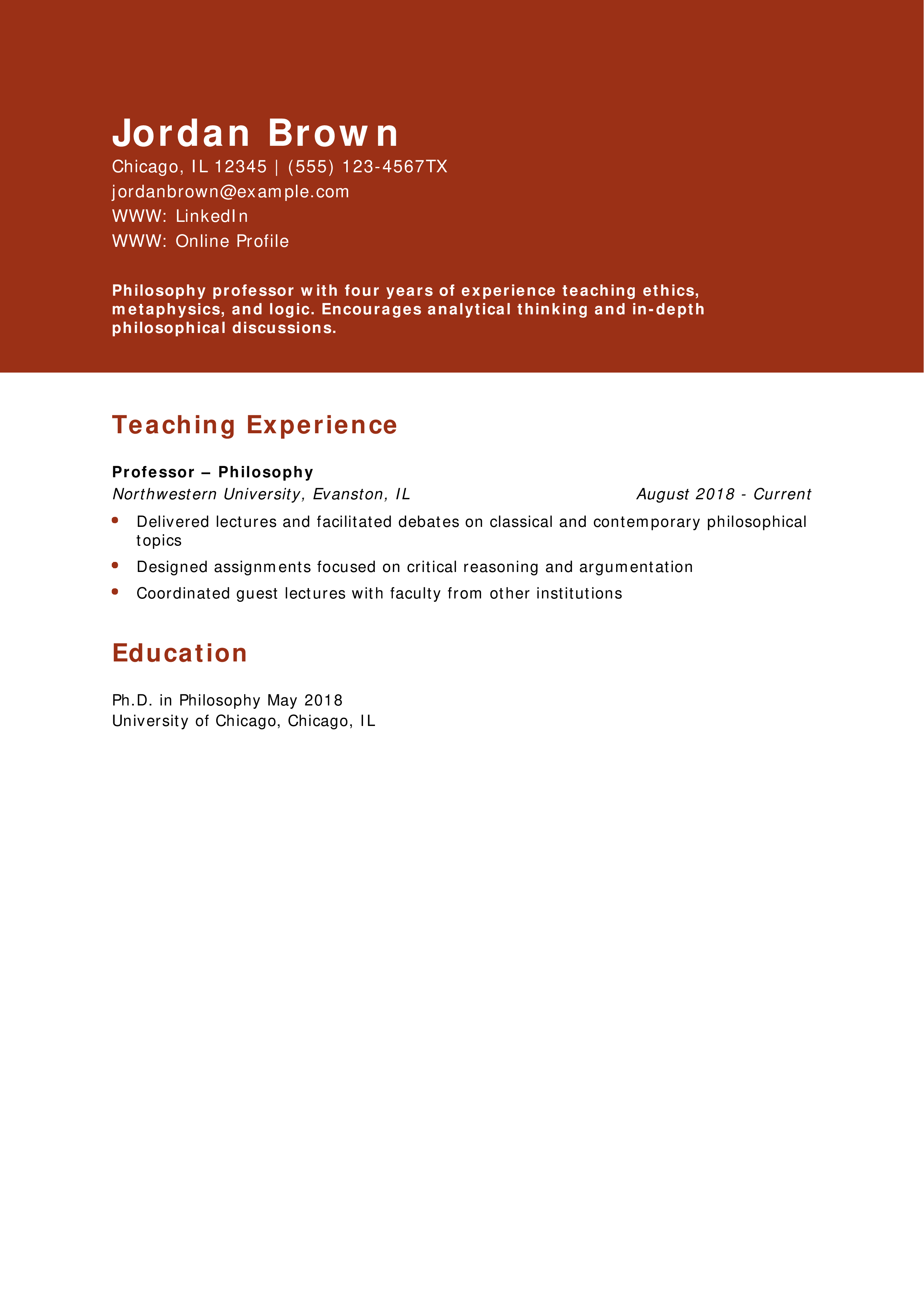
Why This Resume Stands Out
This resume is effective because it combines teaching experience with program collaboration.
History Professor Resume
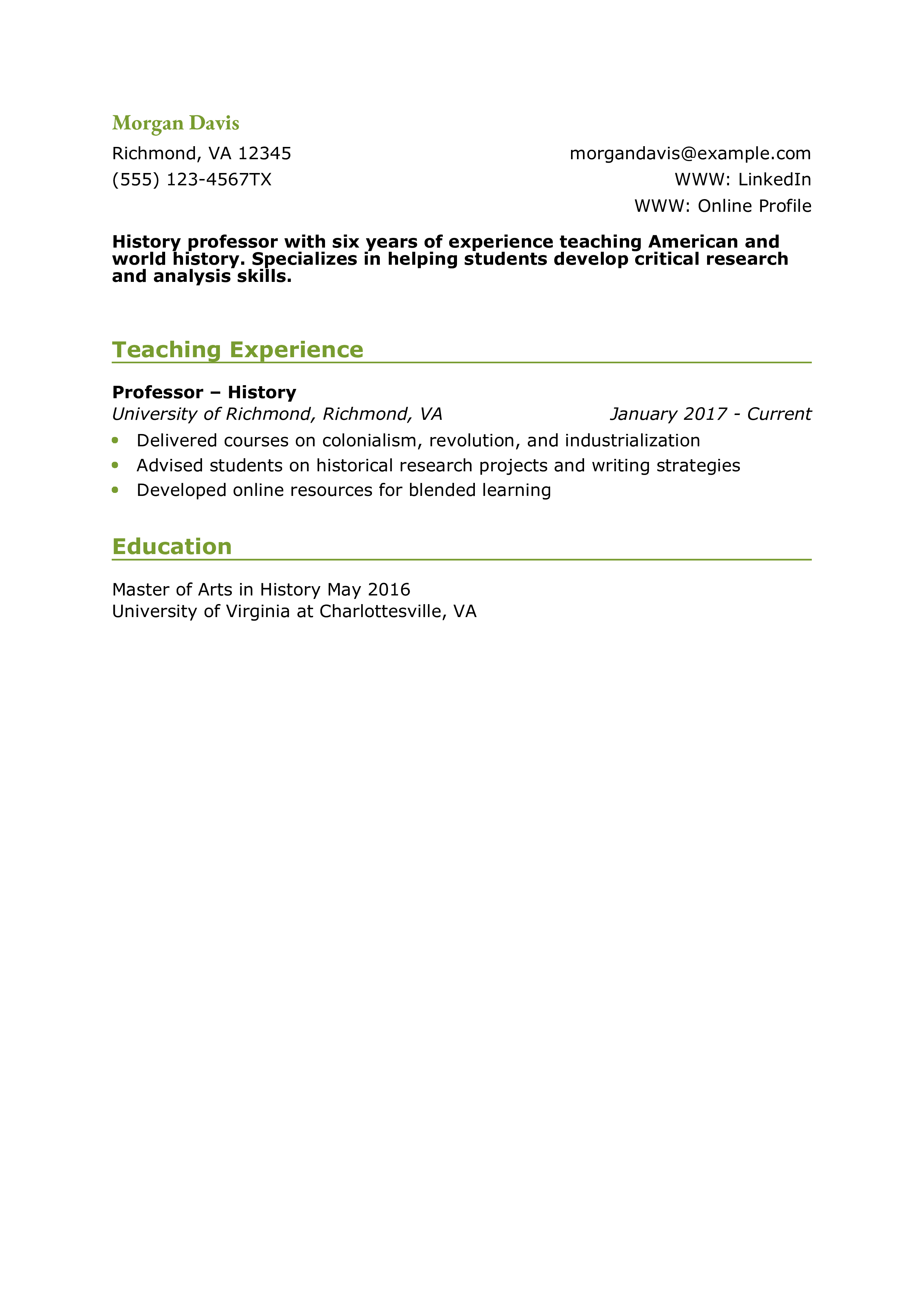
Why This Resume Stands Out
This resume is good because it shows a consistent teaching record and commitment to student development.
Political Science Professor Resume
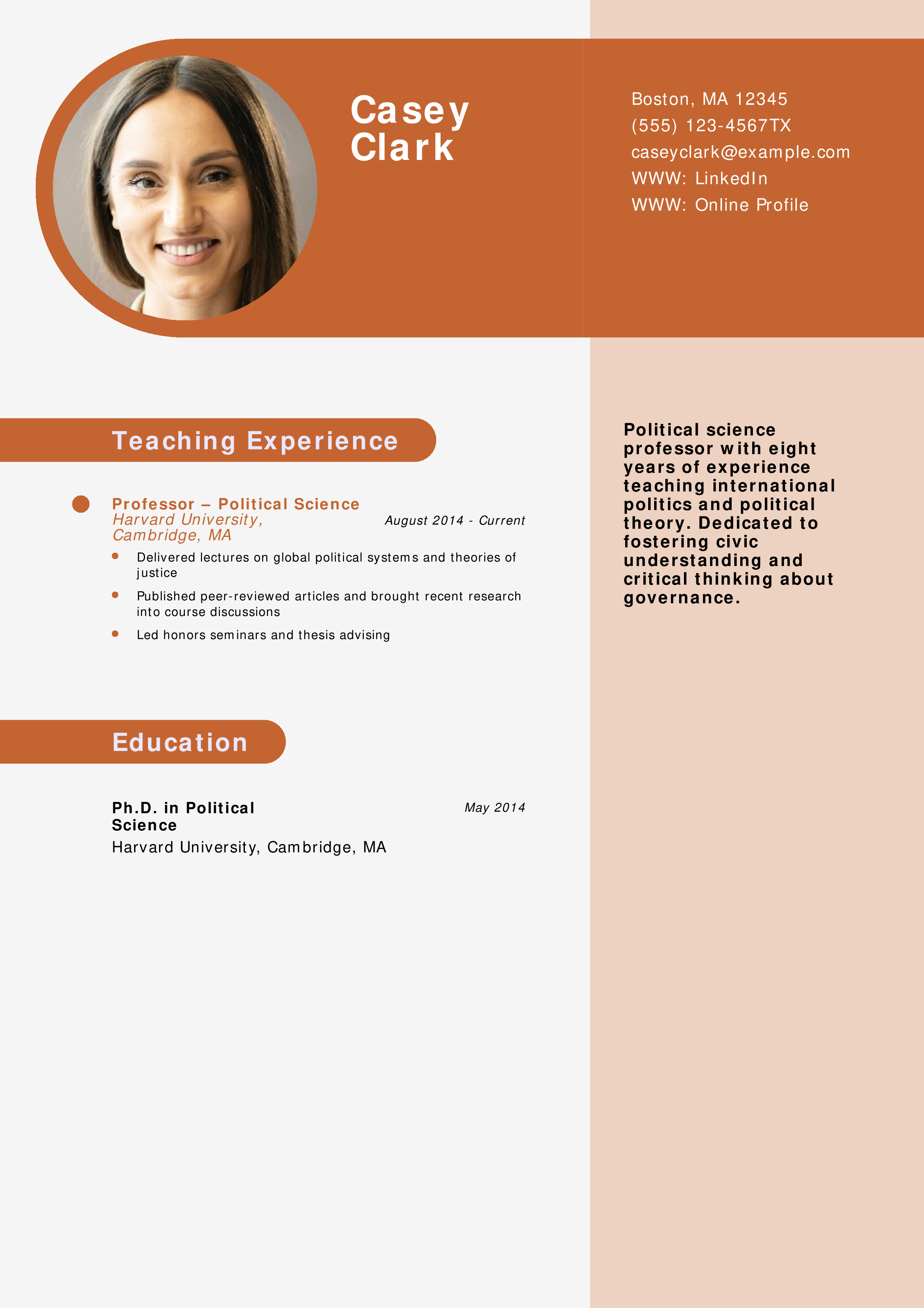
Why This Resume Stands Out
This resume is successful because it highlights research and teaching in balance.
University Professor Resume
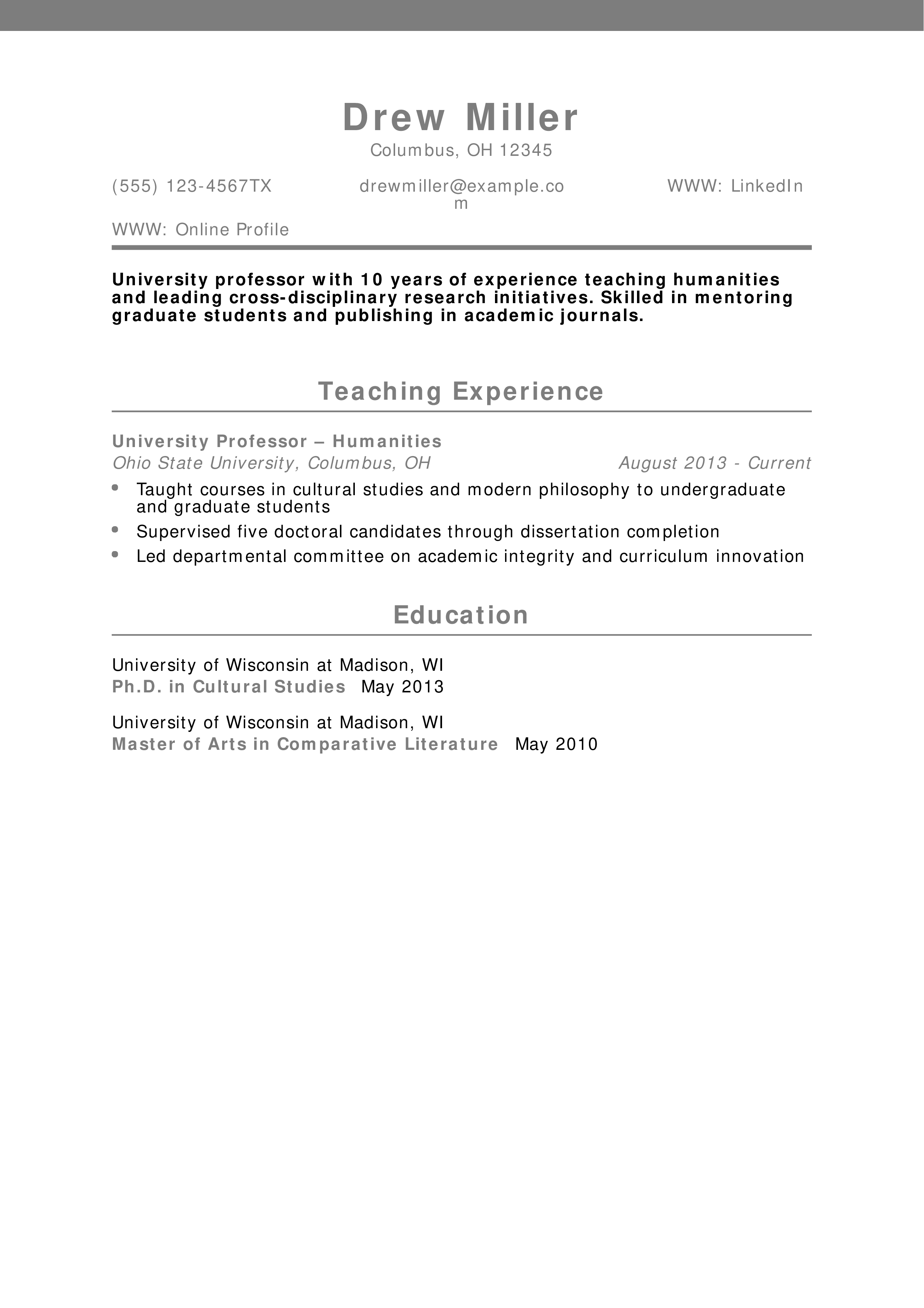
Why This Resume Stands Out
This resume works well because it combines high-level research with classroom leadership.
Academic Professor Resume
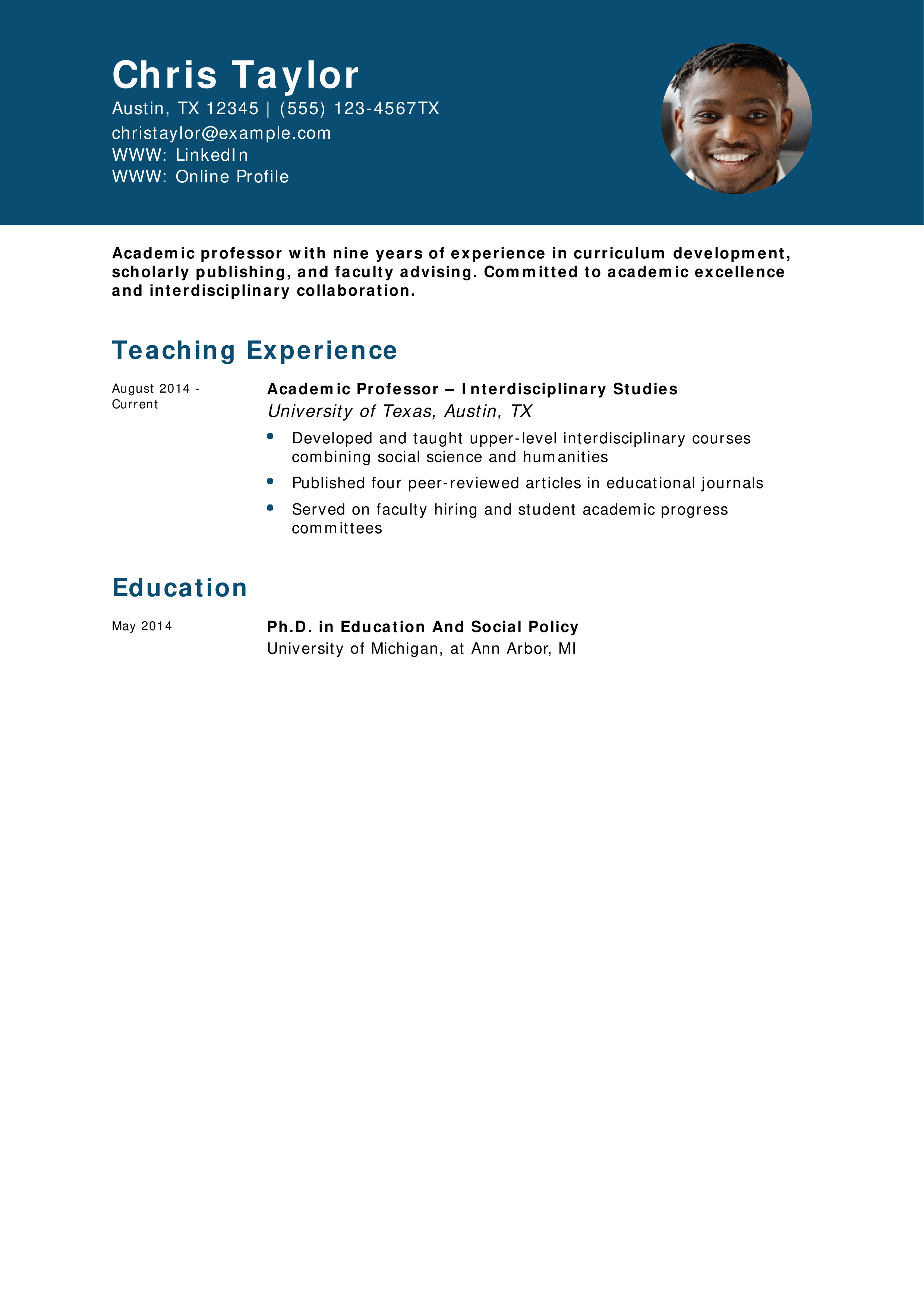
Why This Resume Stands Out
This resume is effective because it balances research productivity with service and teaching.
Biology Professor Resume
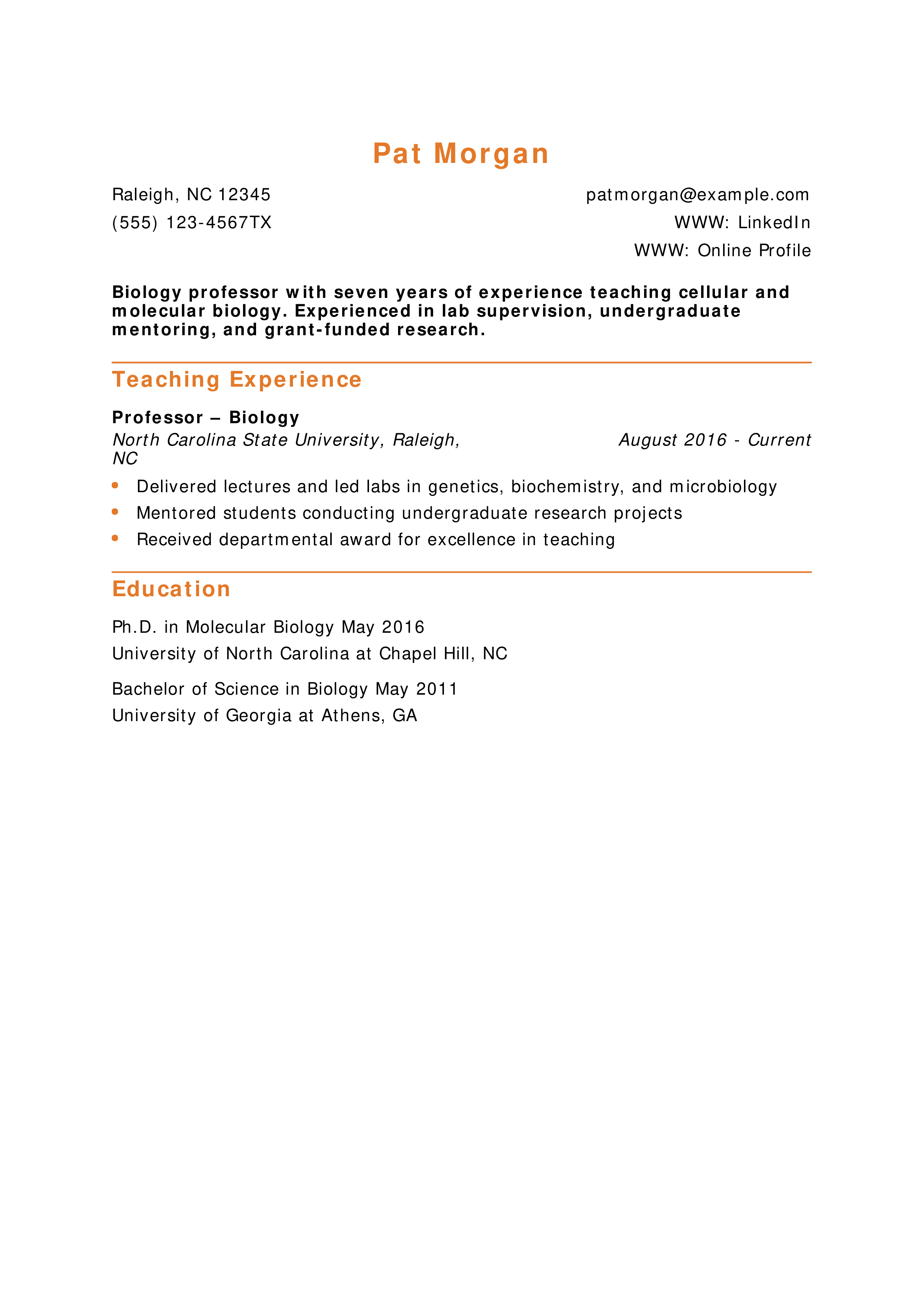
Why This Resume Stands Out
This resume is strong because it clearly outlines lab and classroom experience, backed by academic credentials.
Business Professor Resume
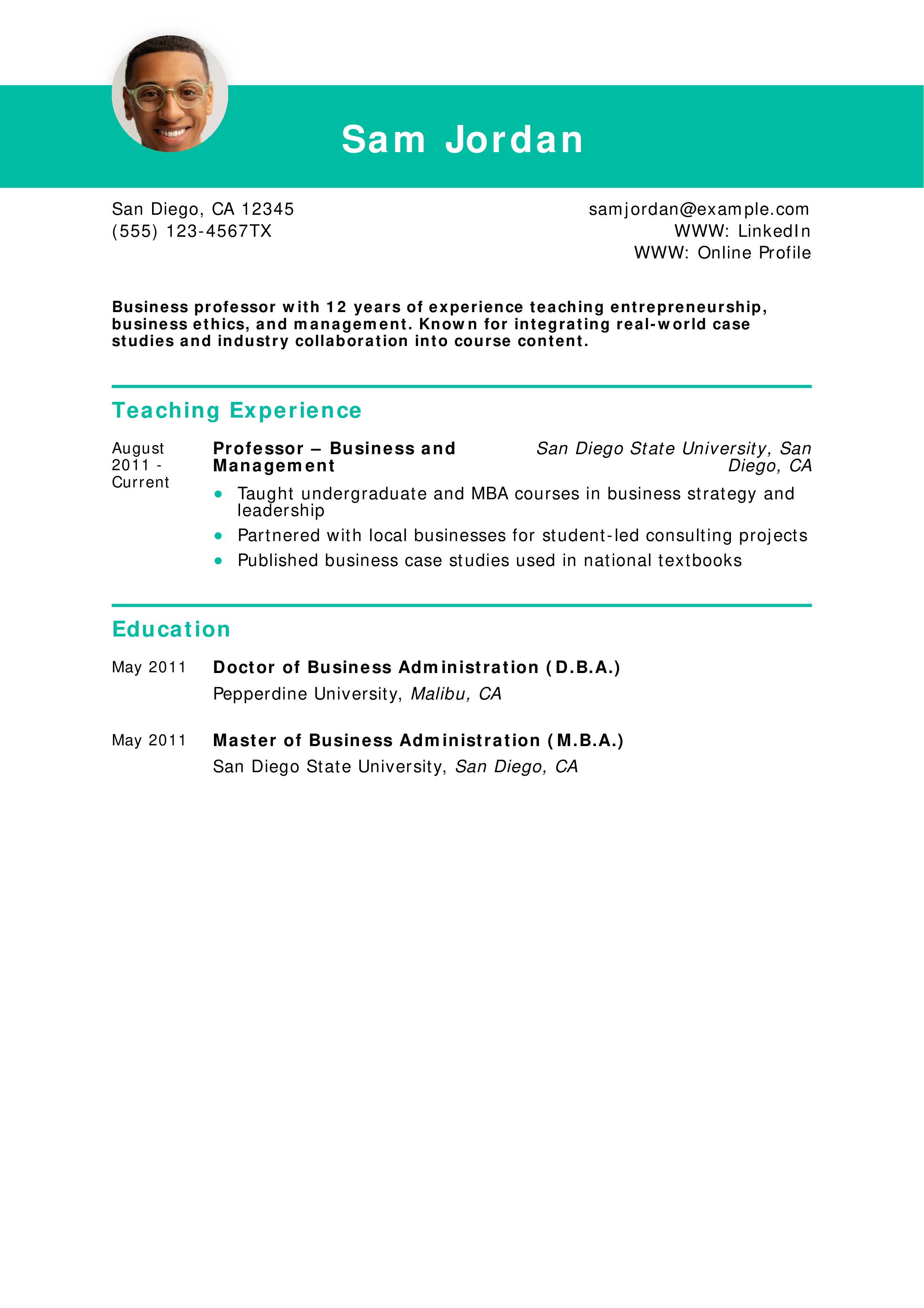
Why This Resume Stands Out
This resume is good because it links academic theory with industry practice.
Assistant Professor Resume
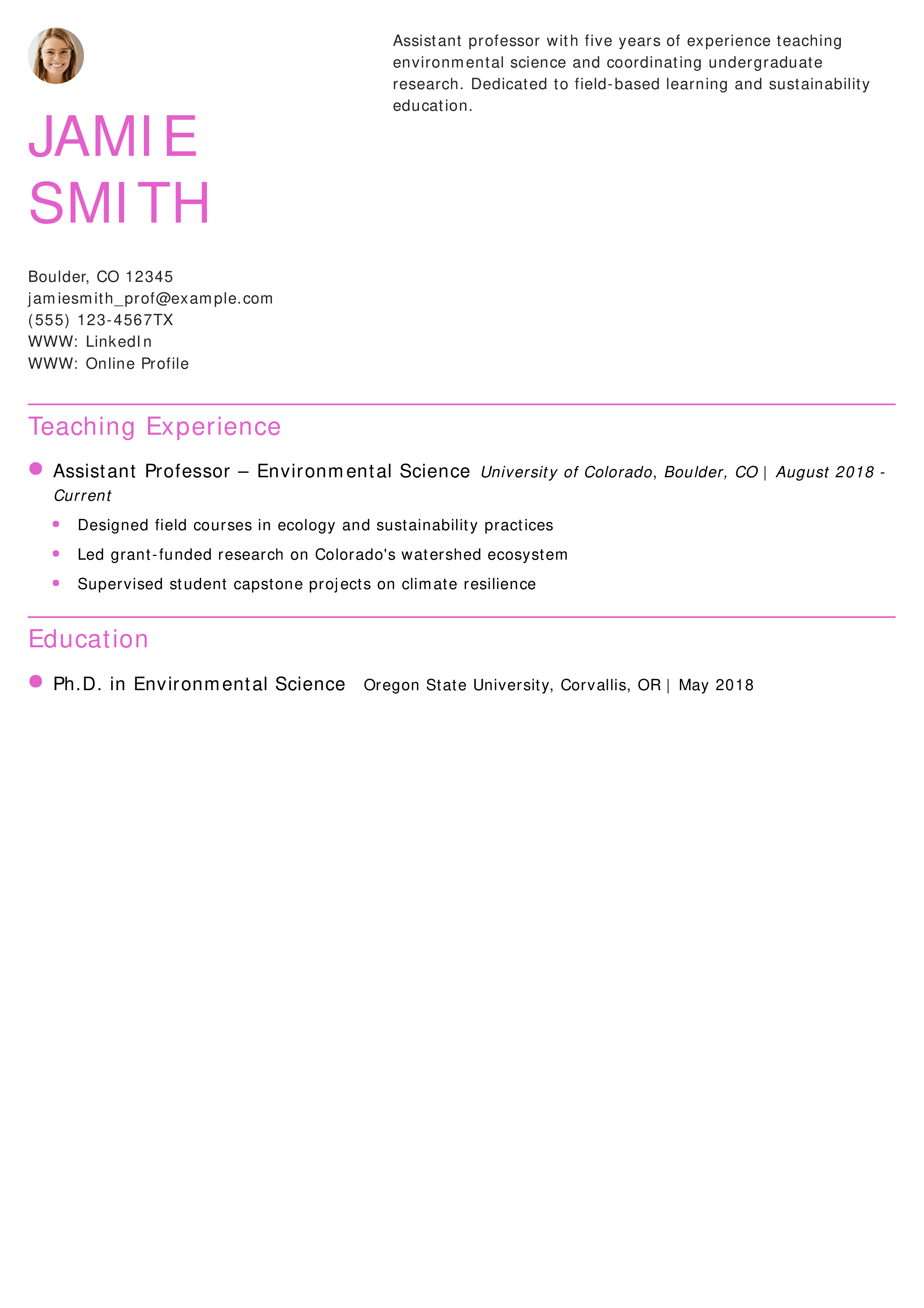
Why This Resume Stands Out
This resume succeeds by showcasing research experience and student mentorship.
Associate Professor Resume
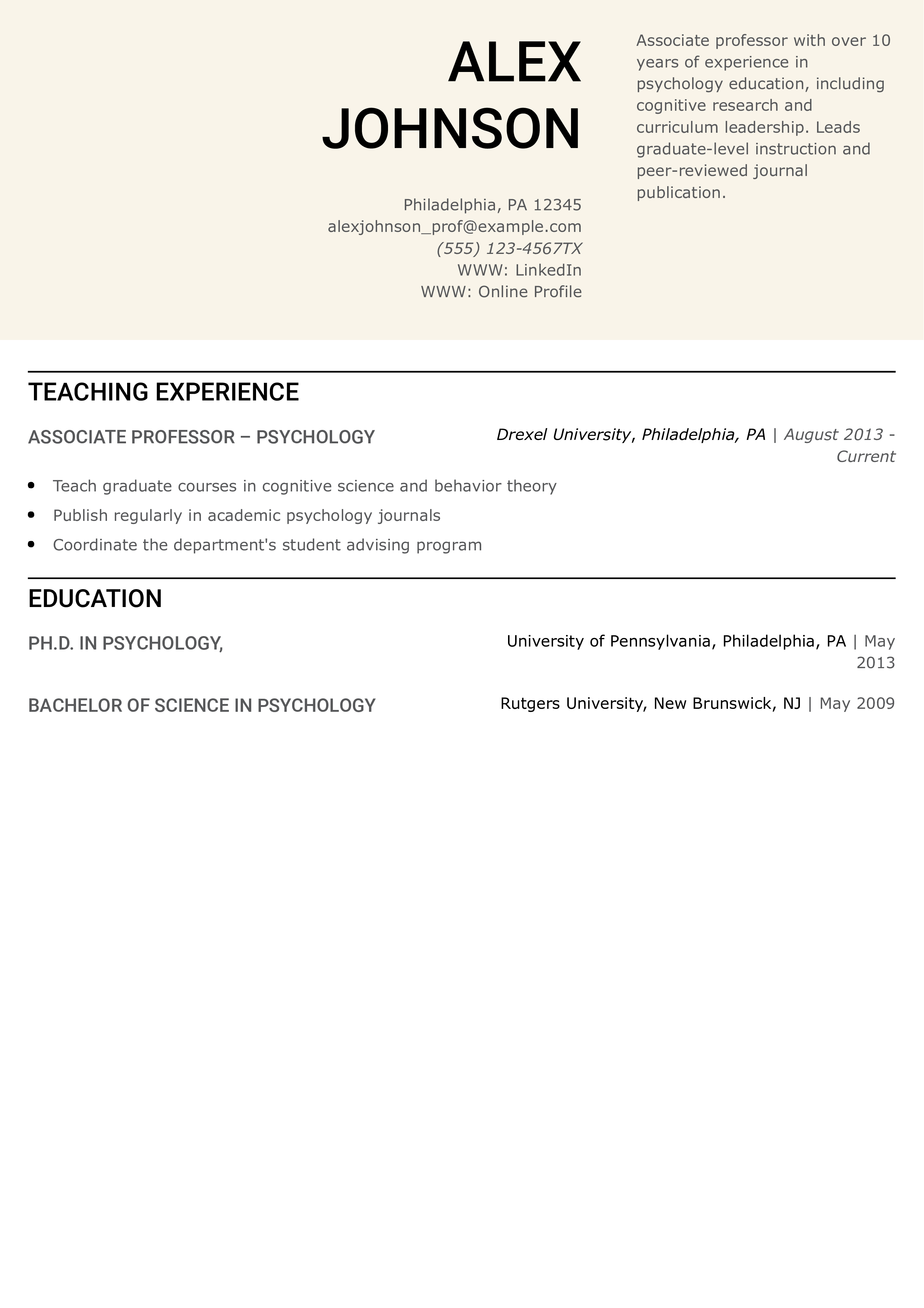
Why This Resume Stands Out
This resume is strong because it demonstrates academic advancement and research productivity.
Accounting Professor Resume
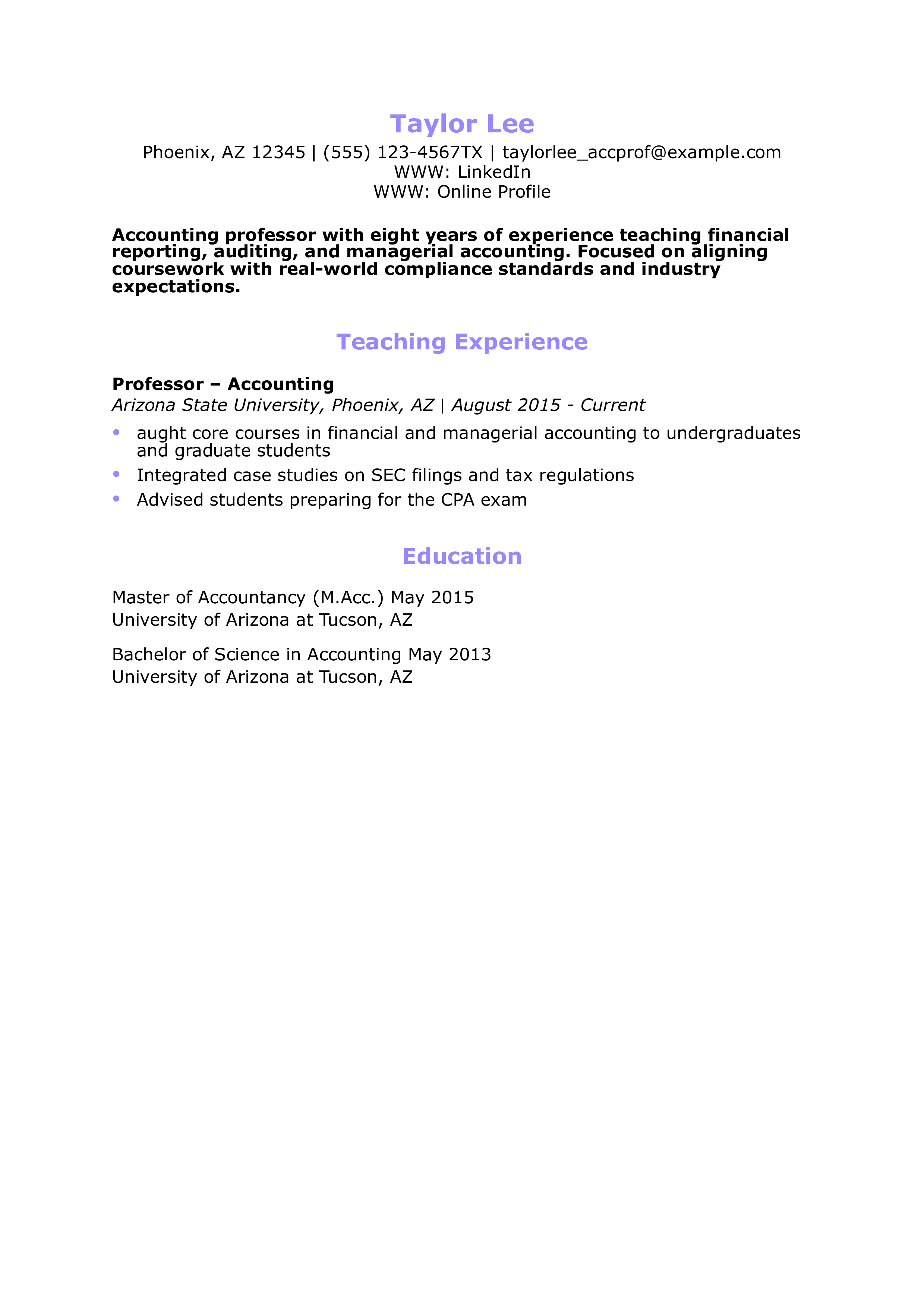
Why This Resume Stands Out
This resume effectively connects classroom learning with practical exam and compliance prep.
Sociology Professor Resume
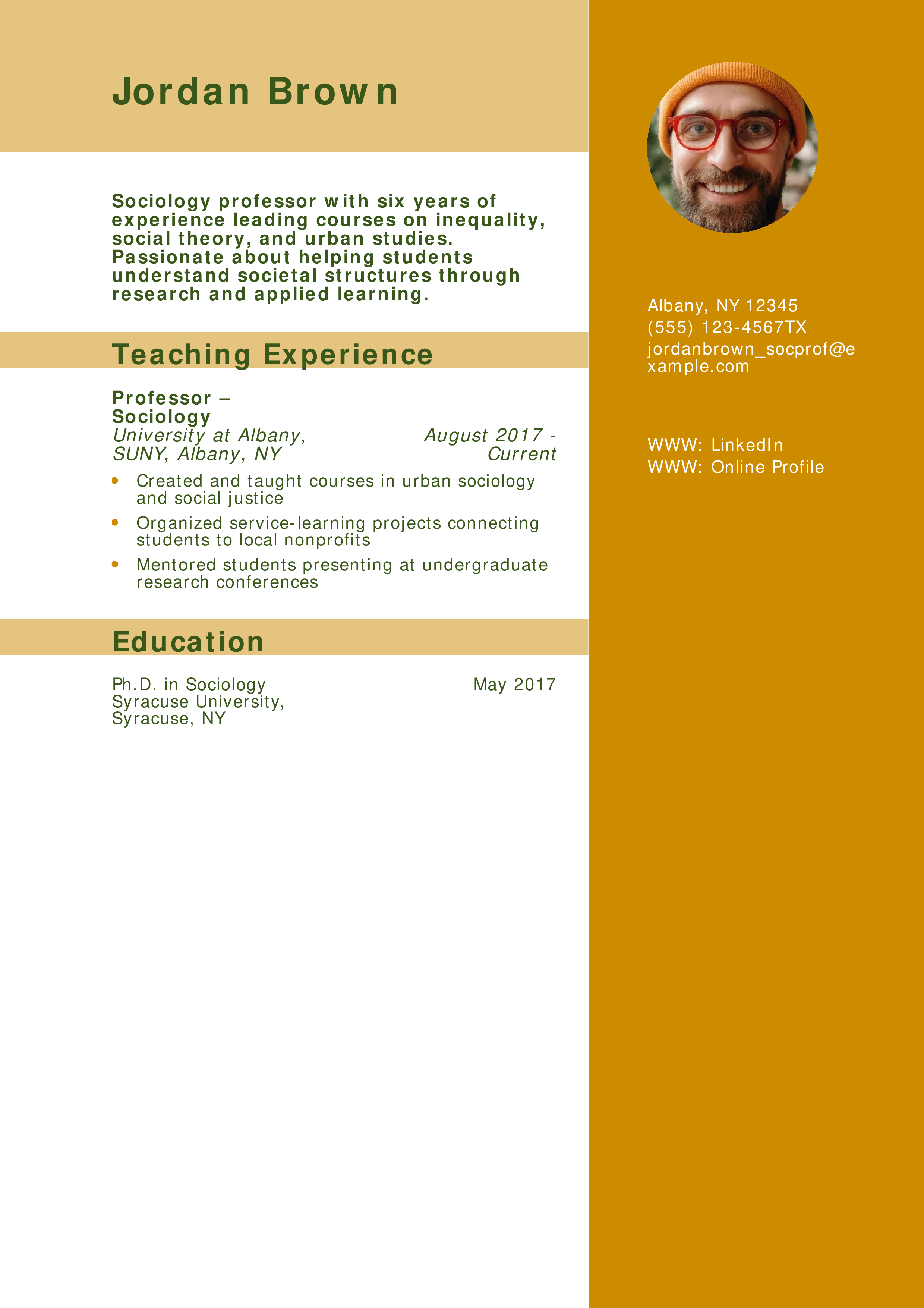
Why This Resume Stands Out
This resume is strong because it shows how community engagement makes academic topics relevant.
Engineering Professor Resume
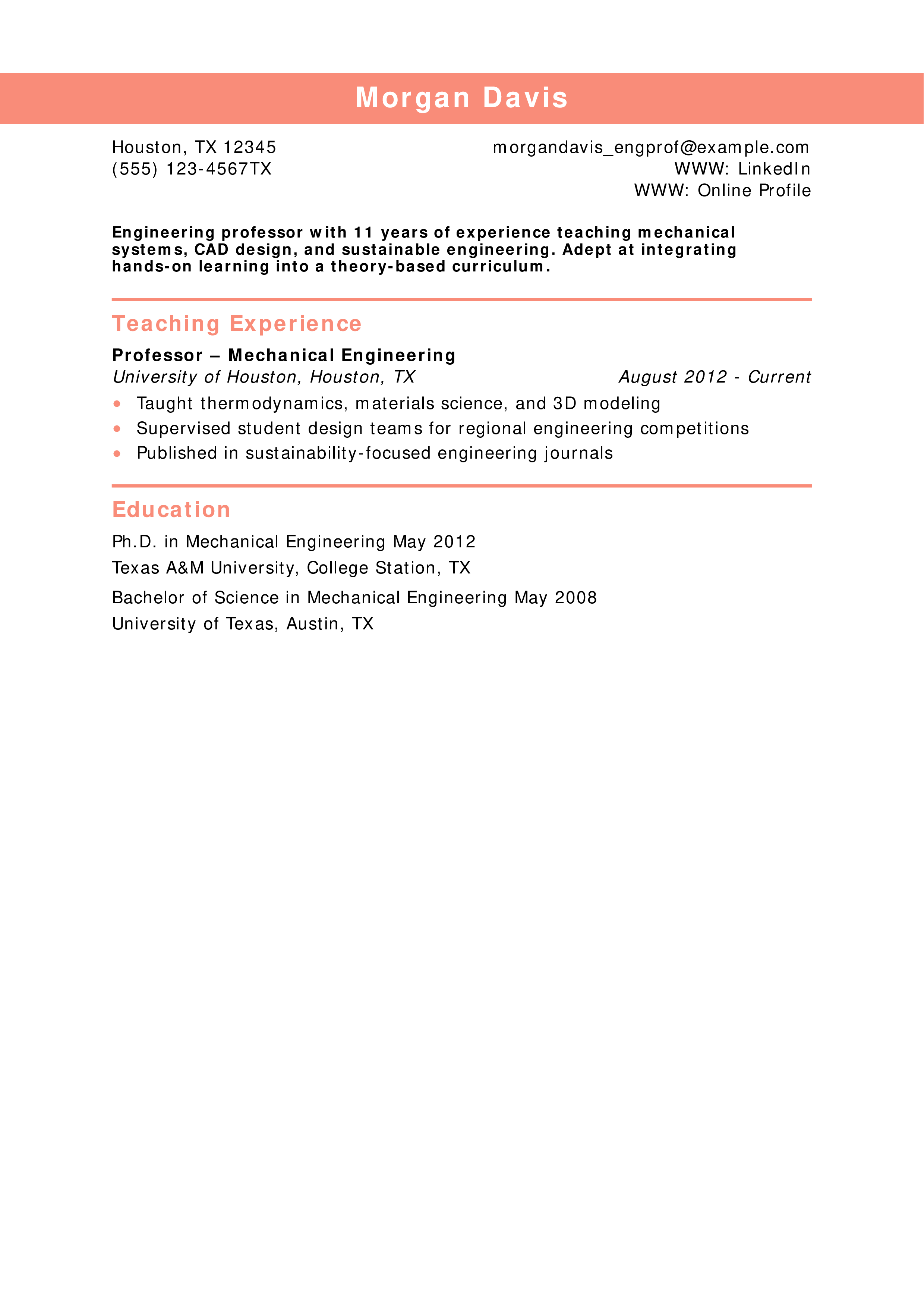
Why This Resume Stands Out
This resume is effective because it highlights both technical teaching and applied student projects.
Education Professor Resume
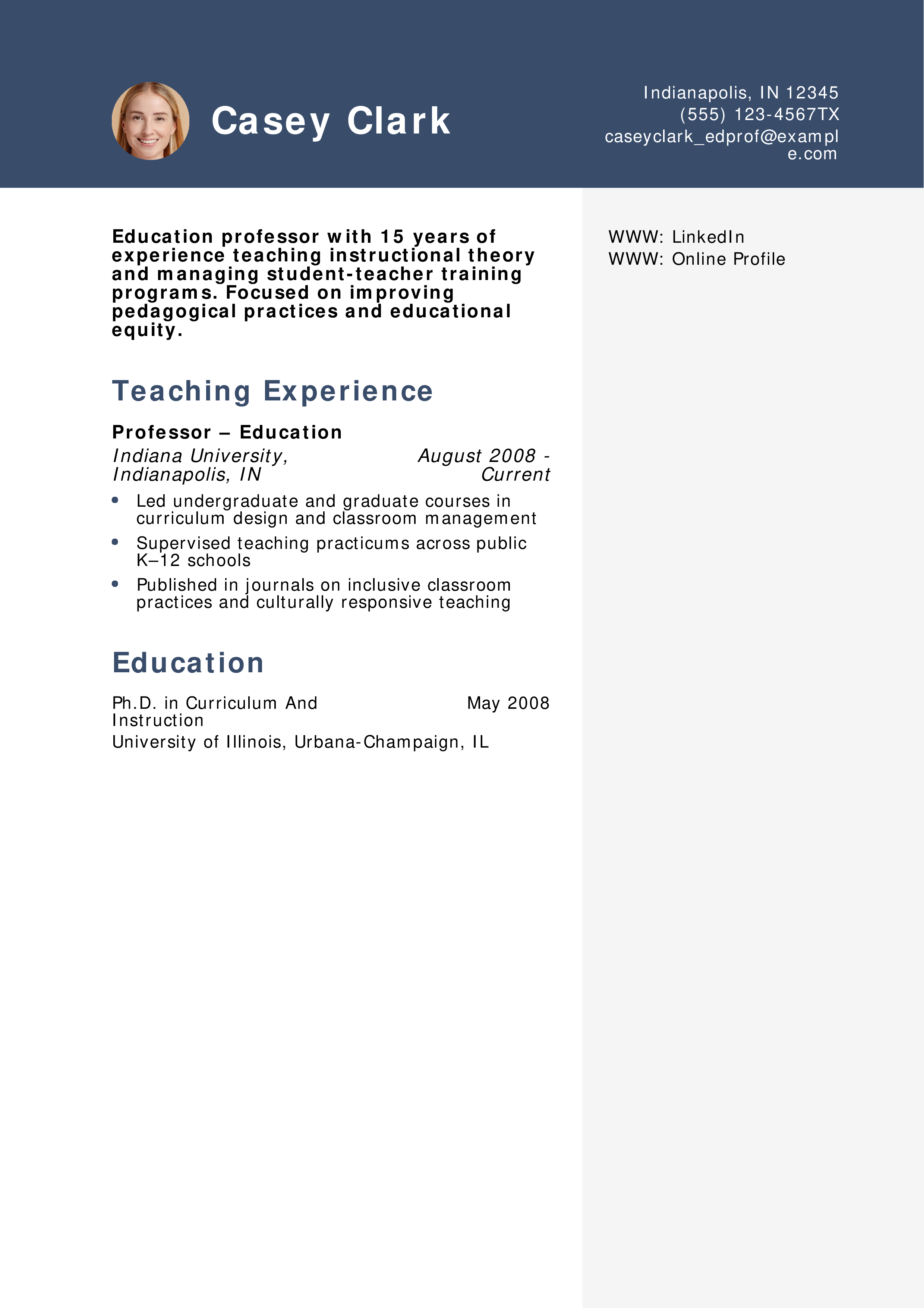
Why This Resume Stands Out
This resume works because it aligns academic research with applied classroom training.
Communications Professor Resume
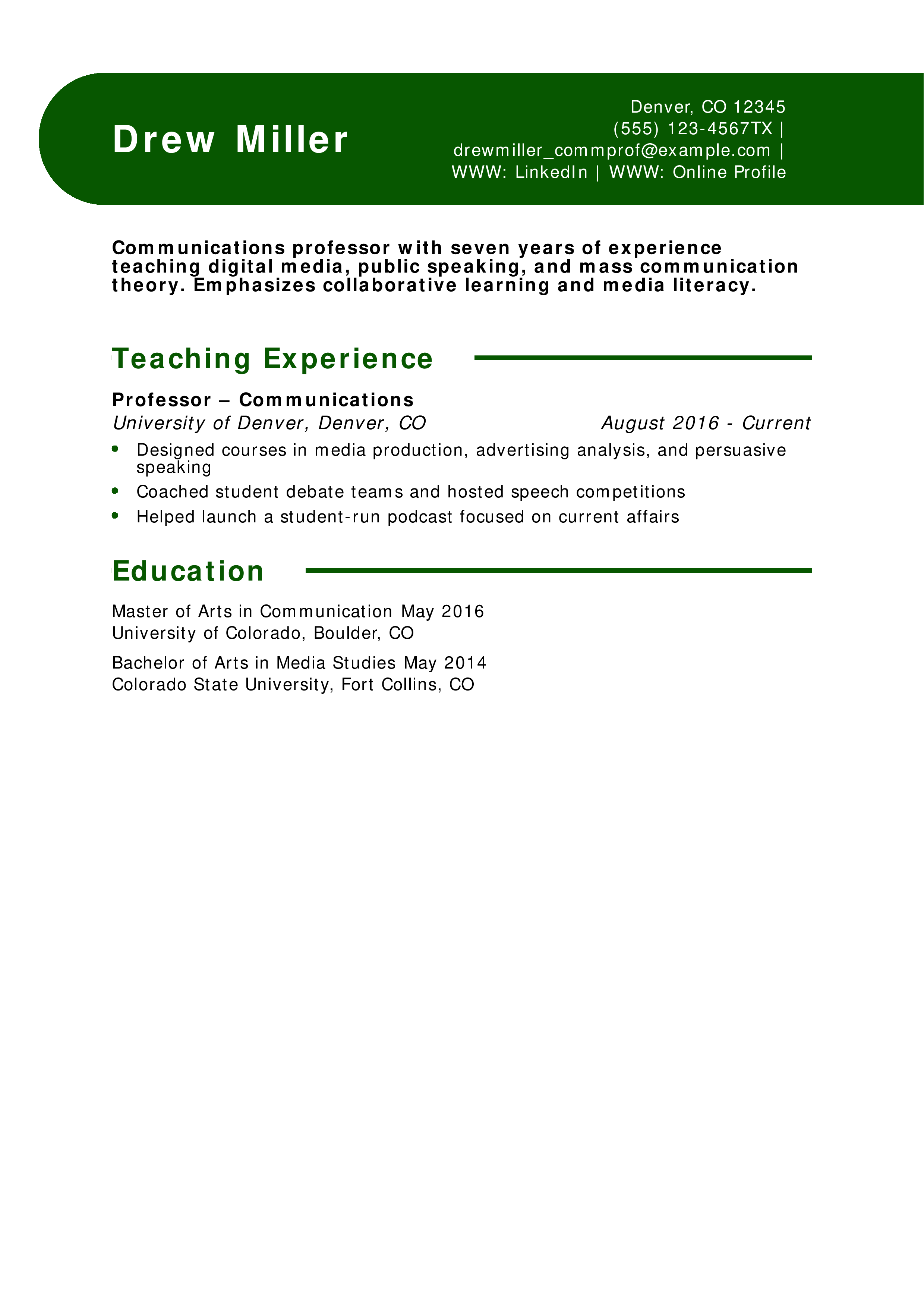
Why This Resume Stands Out
This resume is good because it balances theory with practical communication experience.
Economics Professor Resume
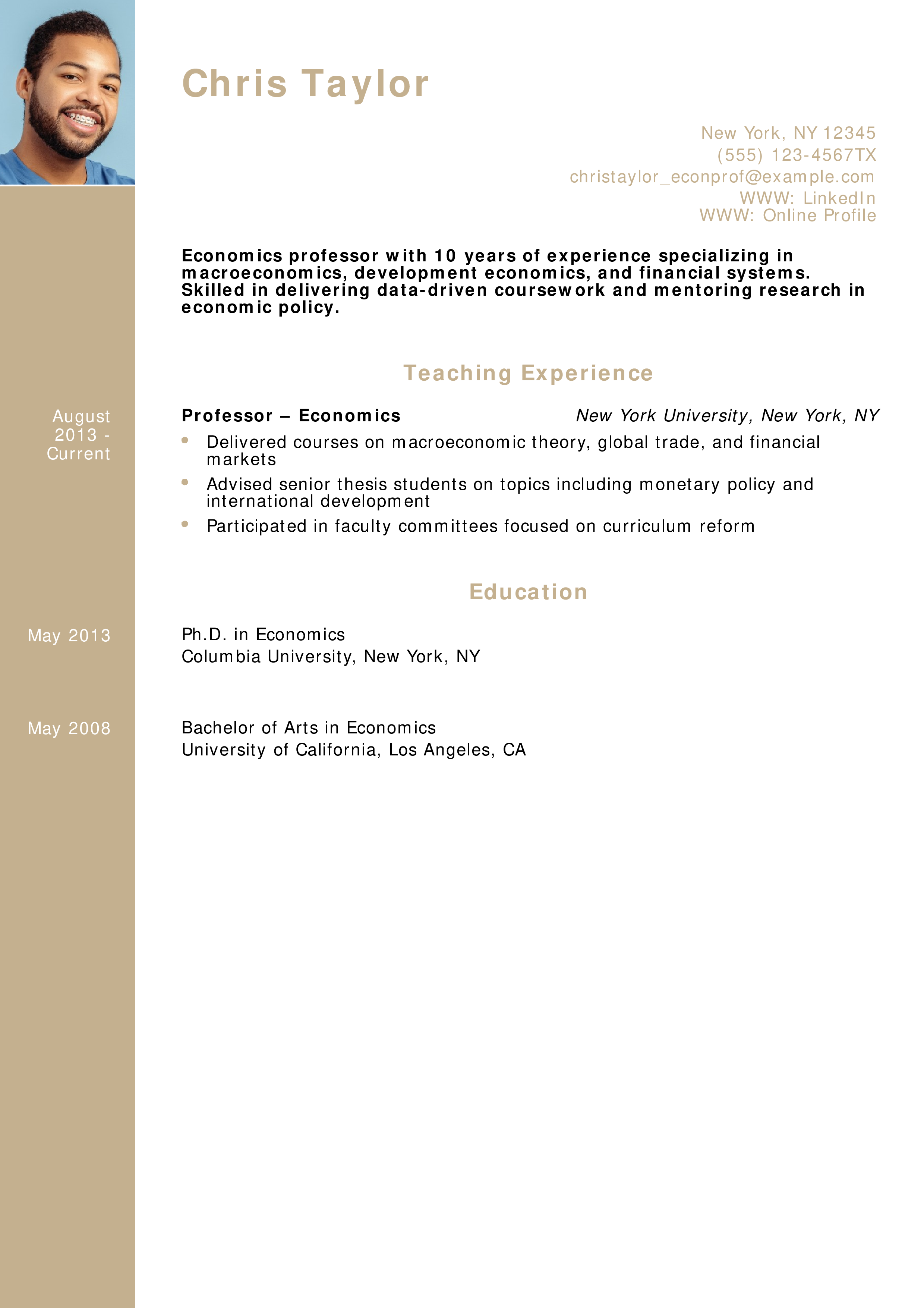
Why This Resume Stands Out
This resume is strong because it balances teaching, advising, and research leadership.
Literature Professor Resume
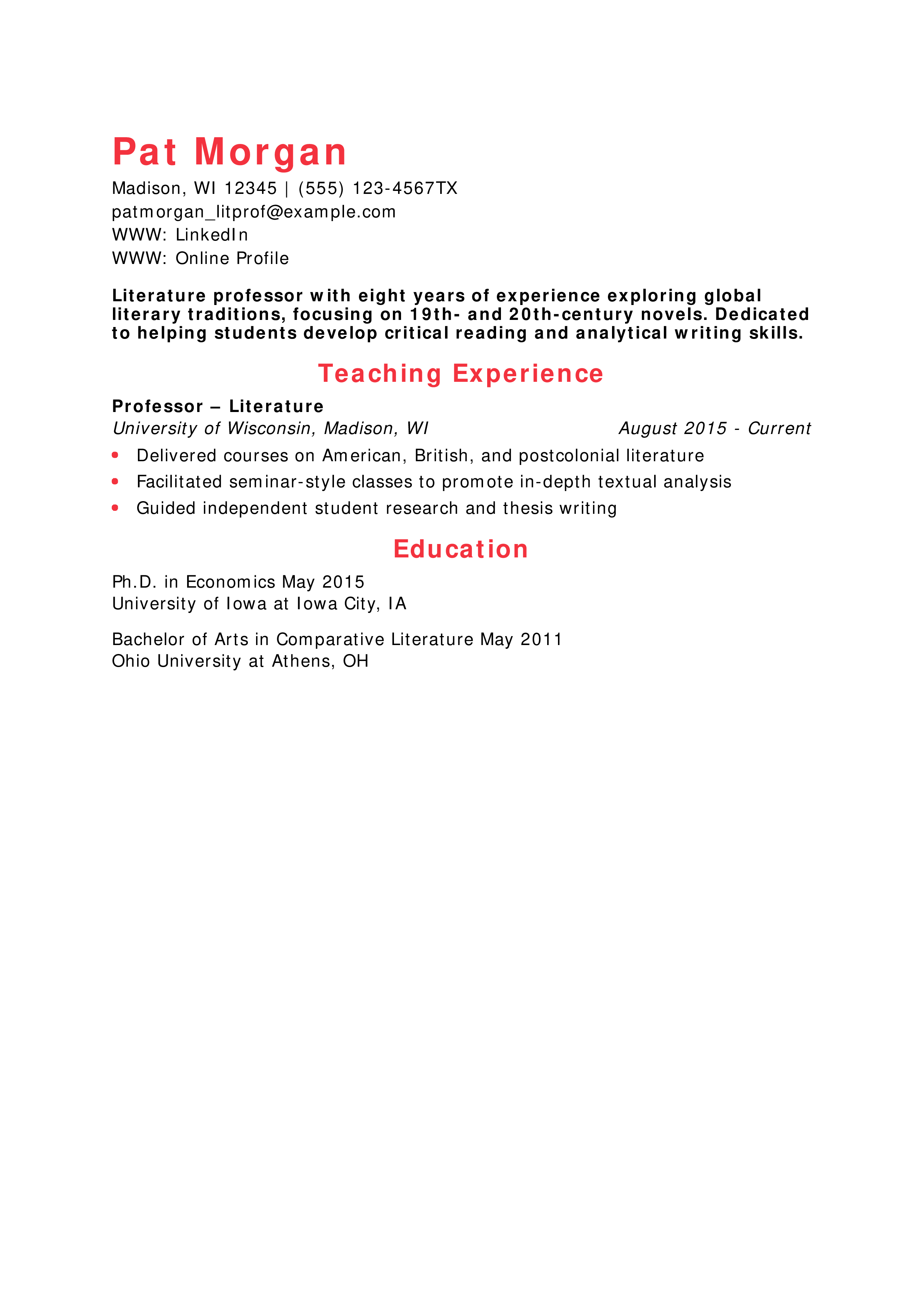
Why This Resume Stands Out
This resume is strong because it presents deep content knowledge along with a student-centered teaching approach.
Criminal Justice Professor Resume
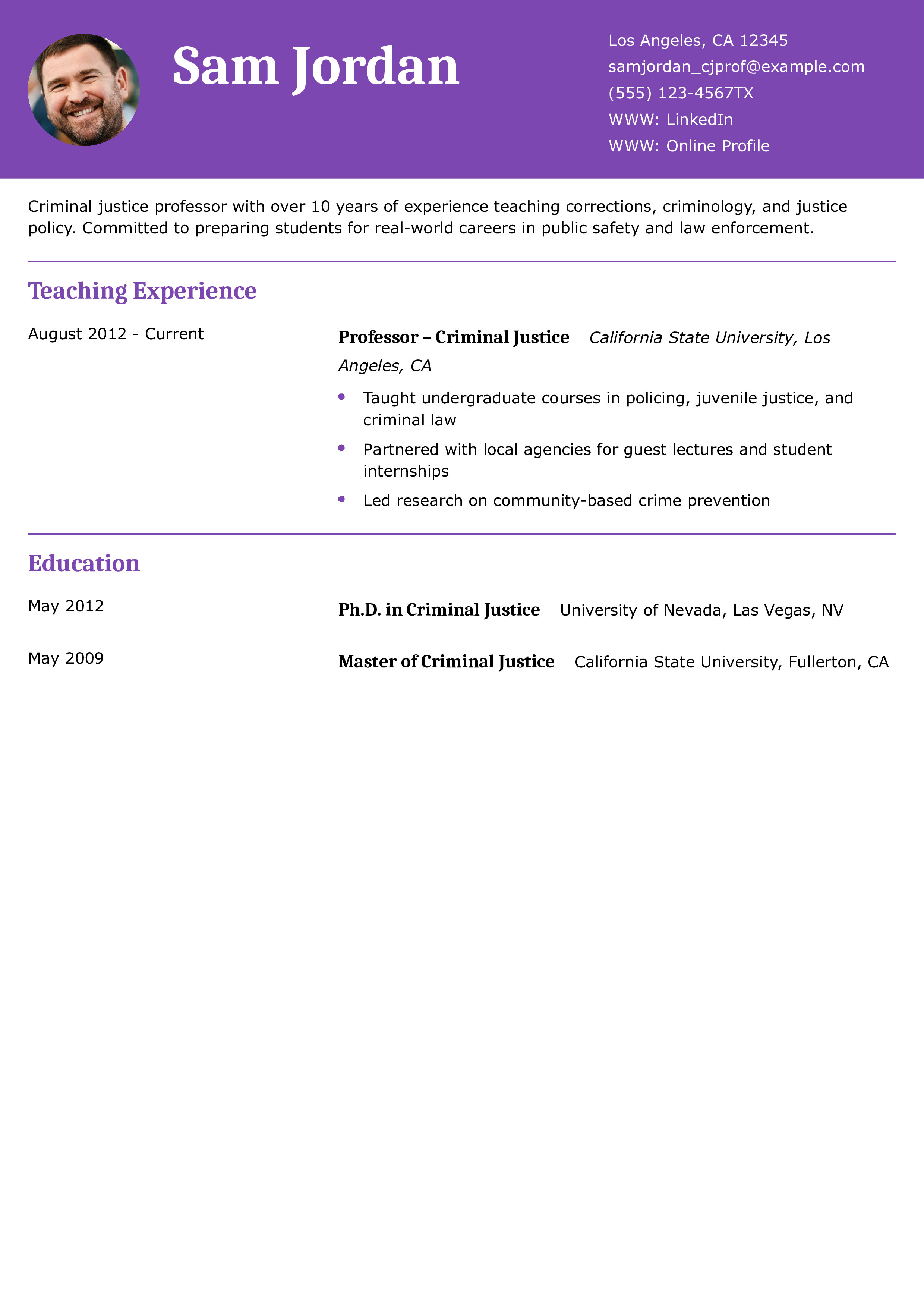
Why This Resume Stands Out
This resume is good because it highlights real-world application, academic leadership, and student mentorship.
Theology Professor Resume
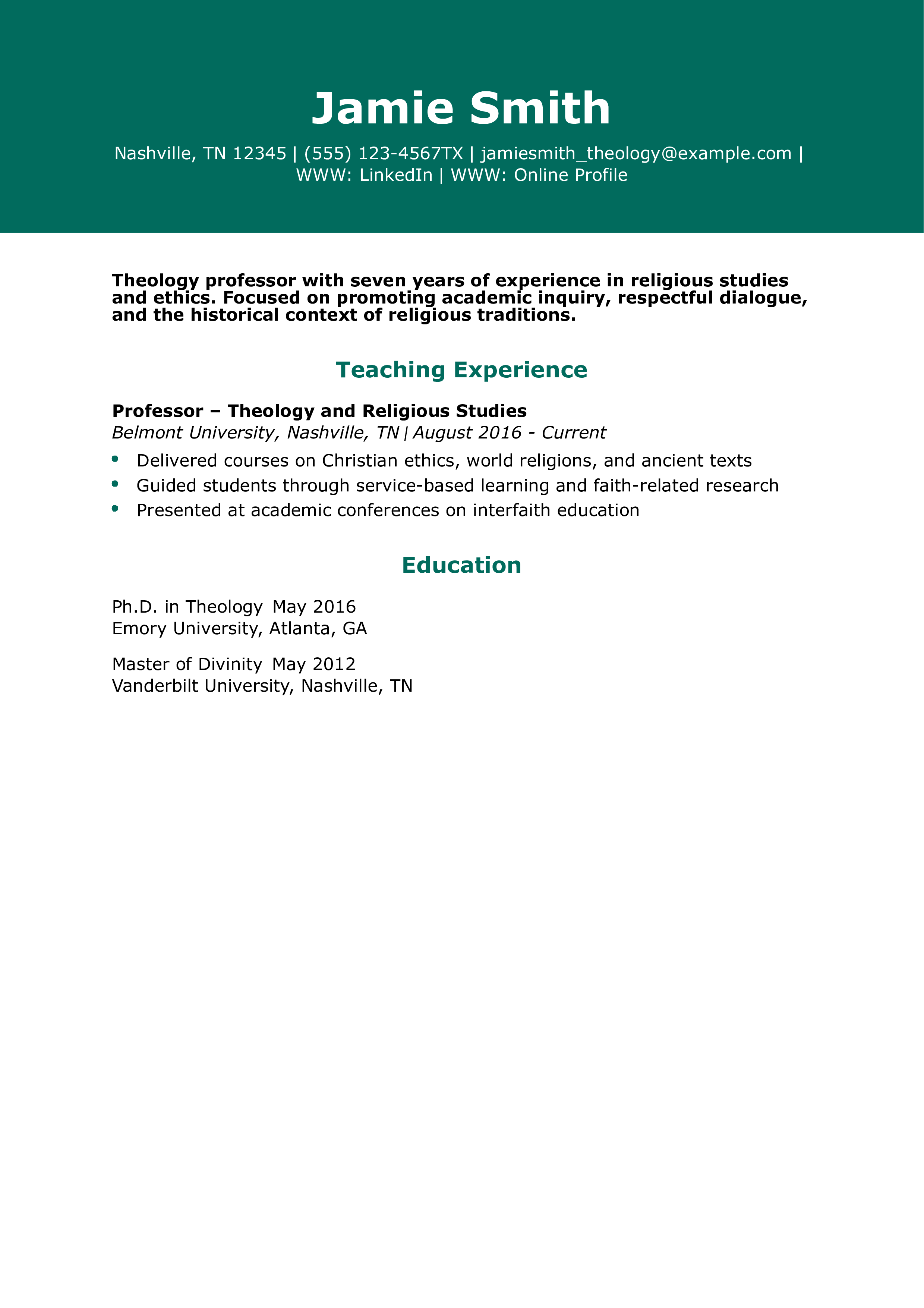
Why This Resume Stands Out
This resume is effective because it emphasizes scholarly research and compassionate education.
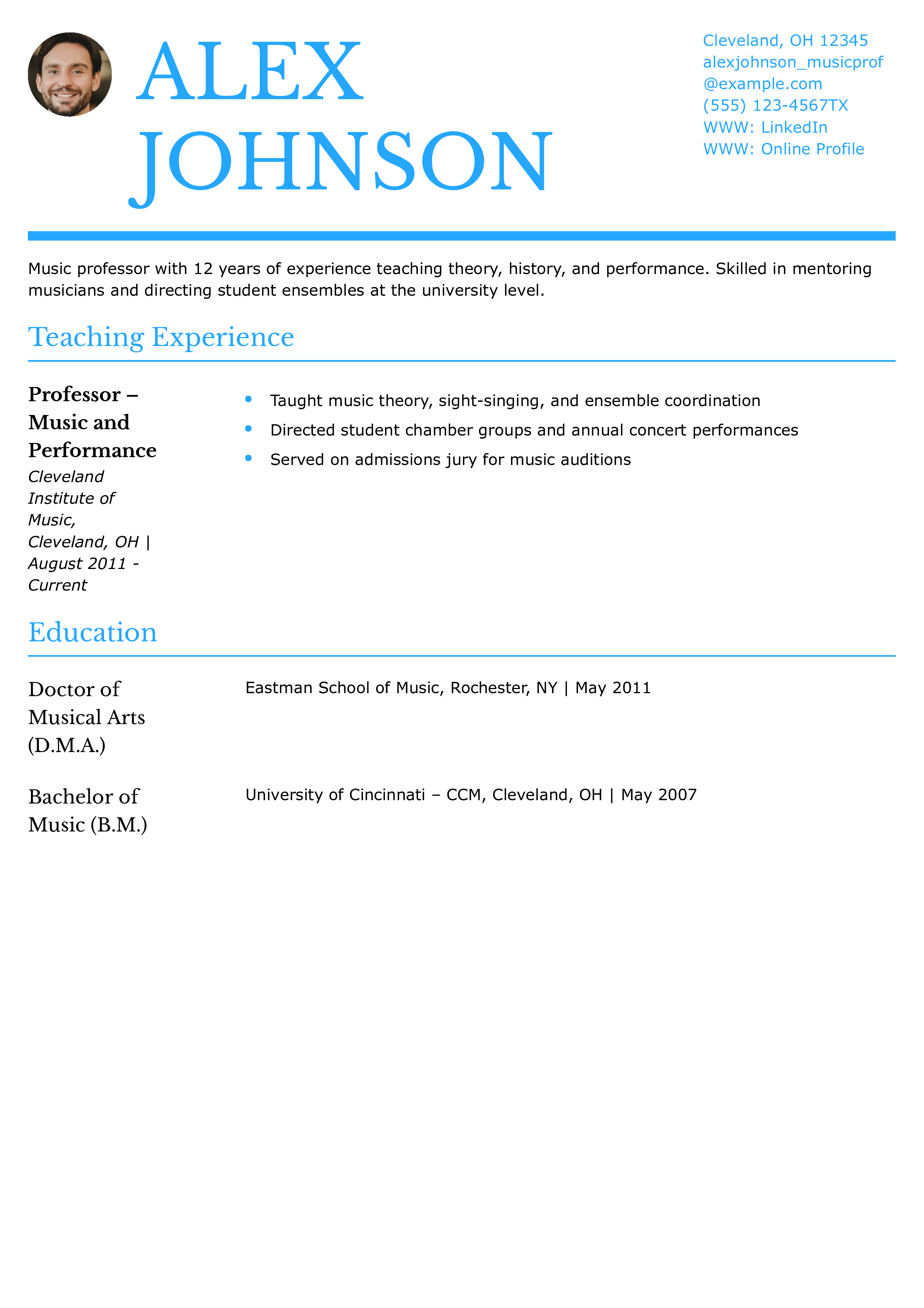
Music Professor Resume
Why This Resume Stands Out
This resume stands out because it blends academic knowledge with hands-on ensemble leadership.
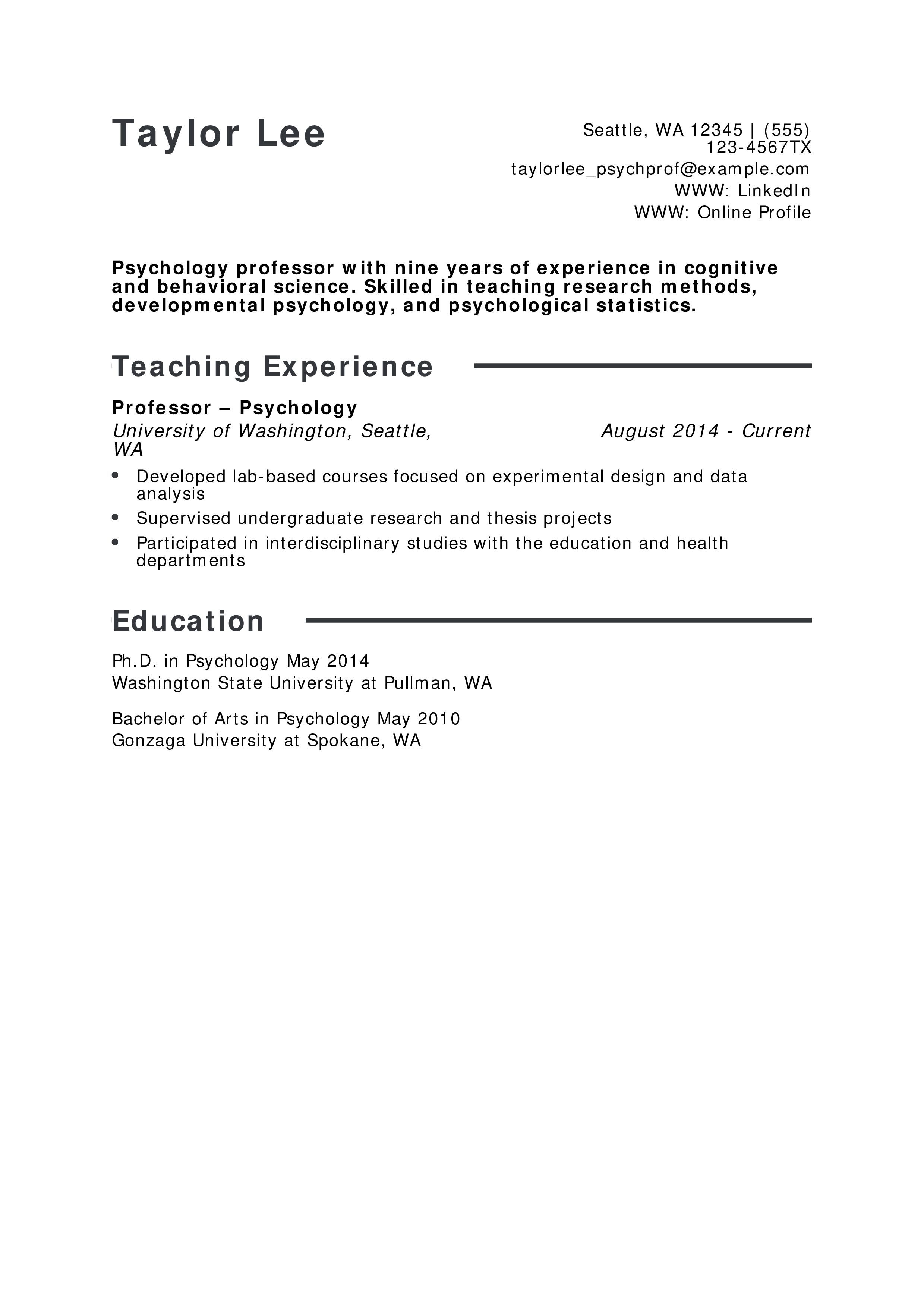
Psychology Professor Resume
Why This Resume Stands Out
This resume works because it shows academic leadership while promoting hands-on learning.
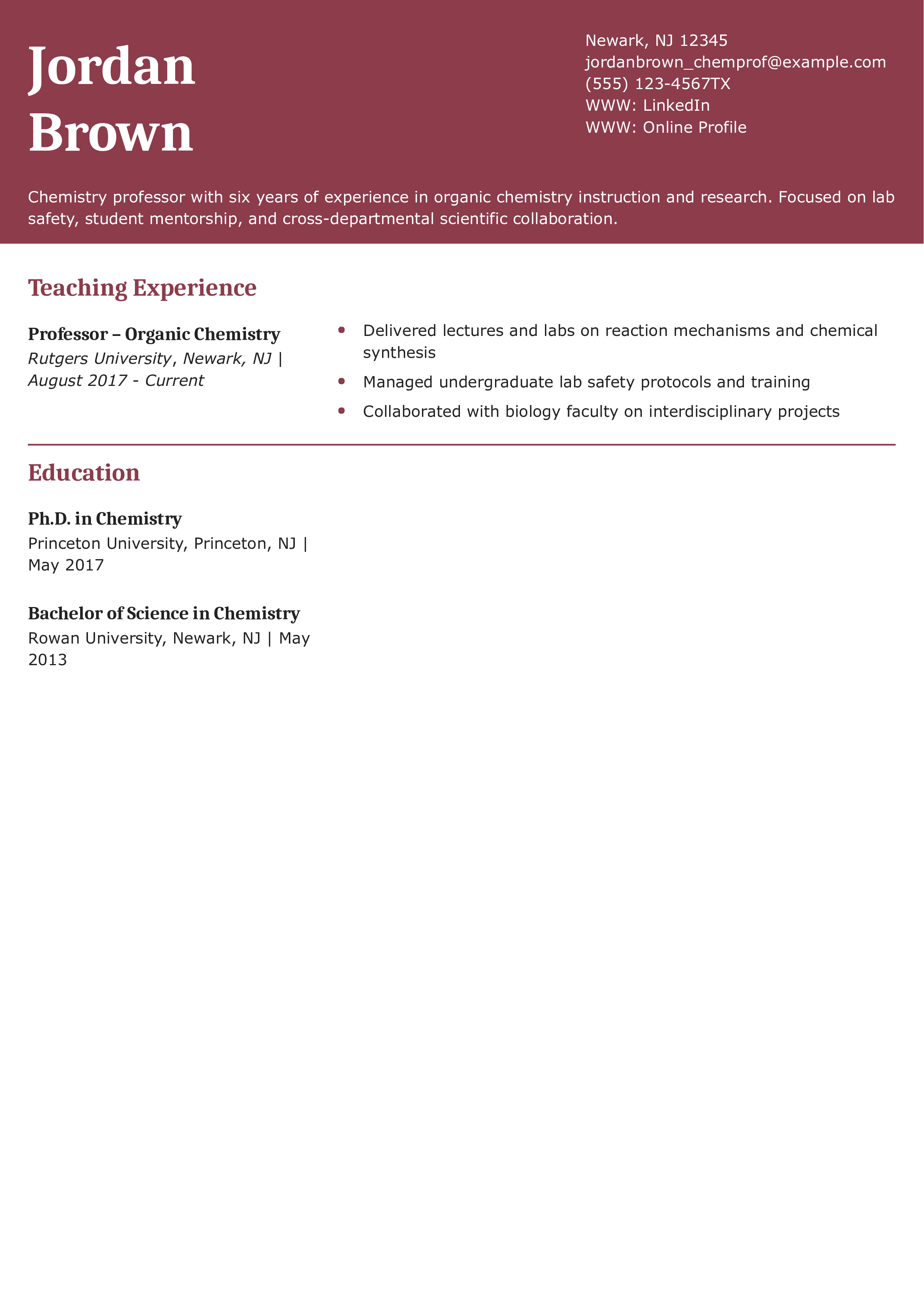
Chemistry Professor Resume
Why This Resume Stands Out
This resume is effective because it includes research, teaching, and interdisciplinary work.
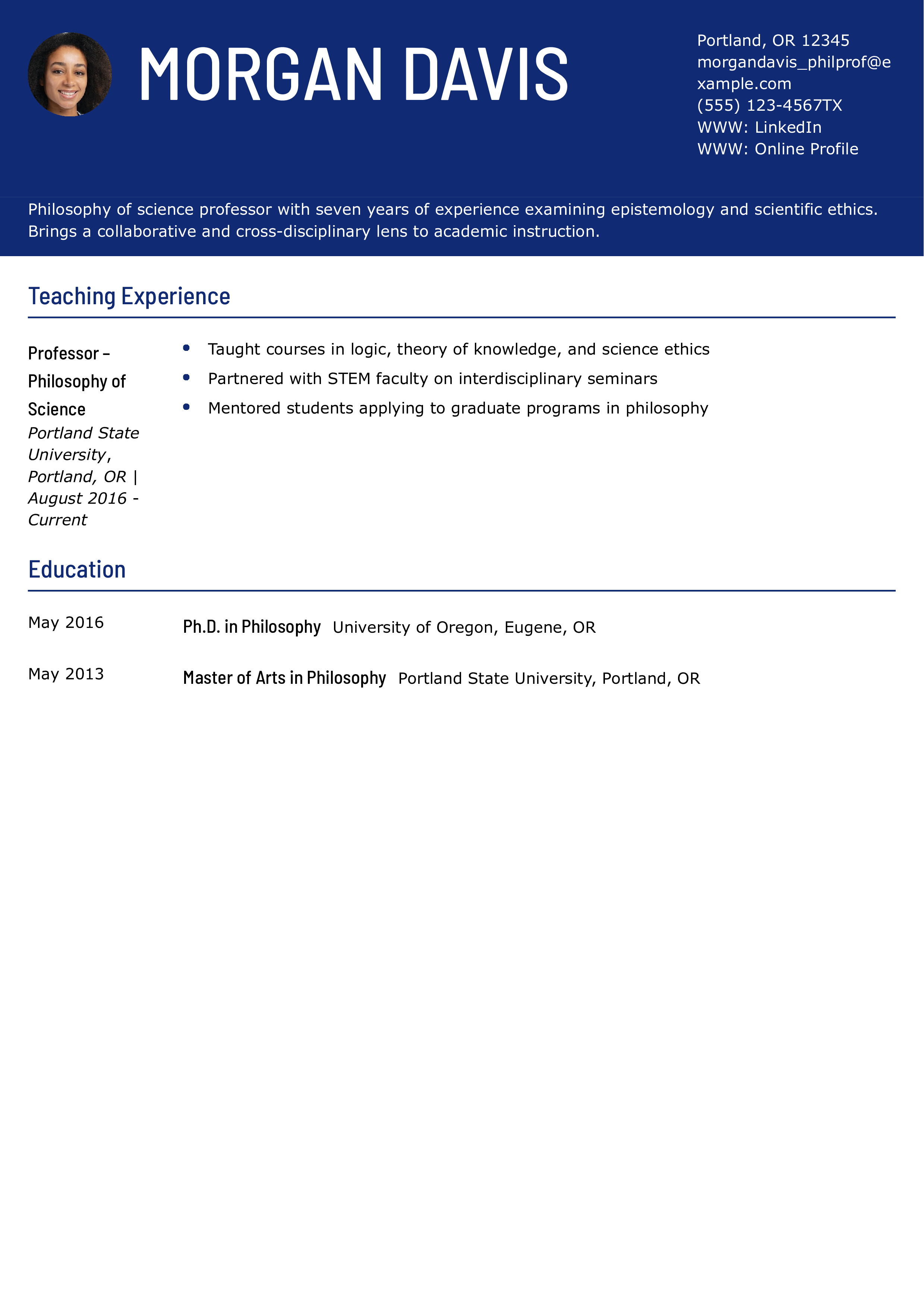
Philosophy of Science Professor Resume
Why This Resume Stands Out
This resume is strong because it highlights academic diversity and cross-department collaboration.
Our templates are crafted by professional resume writers to make creating your resume quick, easy, and effective.
- Professional resume template downloads
- Customized cover letter generation
- AI resume writing support
- Career-building resources and advice
Professor Text-Only Resume Templates and Examples
How To Write a Professor Resume
Professor resumes should start with discipline, rank, and a quick snapshot of teaching and research. Put your field, level, and a balance of strong evaluations, grants, or publications at the top so committees can immediately gauge your fit and productivity.

1. Write a dynamic profile summarizing your qualifications
When applying for a professor-level position, your application will likely be reviewed thoroughly. That said, crafting a professional summary at the top of your document can help you make a strong first impression on your prospective employer.
The key is to showcase your unique specializations, which align with the university’s needs and provide a concise overview of your educational career.
Profile - Example #1
Film Studies Educator with three years of experience. Develop and deliver a rigorous curriculum while sparking students’ interest in complex film topics and concepts.
Profile - Example #2
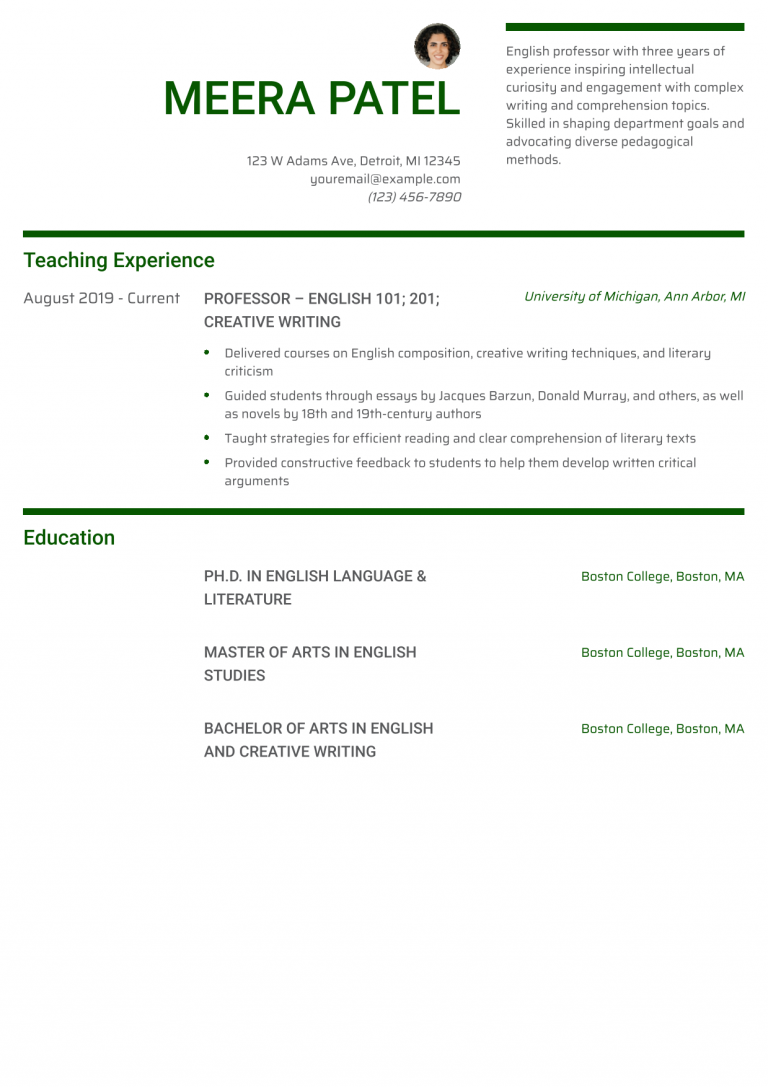
Professor of English with three years of experience. Focused on developing students’ intellectual curiosity and engagement with complex English writing and comprehension topics. Help define and inform broader department goals and advocate a wide variety of source texts, course topics, and pedagogical methods.
2. Add a detailed professional experience section
The CV can have shorter job descriptions than a traditional resume, with fewer quantified achievements, but avoid sharing minimal information about your work history. On the contrary, feel free to include any amount of detail as long as it overlaps with your interest areas. Remember to give just the basics for any teaching experience that doesn’t align with your goal.
Try to put relevant numbers to your career. How many students did you teach? How much did students improve under your instruction? Numbers are an easy way to add quick, easy-to-understand metrics to your career.
Professional Experience - Example #1
Adjunct Professor – Film Studies, University of Syracuse, Syracuse, NY | August 2019 to Present
- Deliver lectures about films by prominent 20th Century directors, including Alfred Hitchcock and Francis Ford Coppola
- Engage classes of up to 30 in discussions of film topics such as mise-en-scène, postmodernism, use of music, and contemporary critical analysis
- Broaden students’ understanding of the evolution of 20th Century American and international film, challenging preconceived notions of significant works
- Refer students to additional research resources as appropriate
- Maintain frequent open-office hours to help students address schedule challenges and focus their research efforts
Professional Experience - Example #2
Professor – English 101; English 201; Creative Writing, University of Michigan, Ann Arbor, MI | August 2019 to Present
- Engage students in topics such as English composition, creative freewriting methods, and literary criticism and analysis
- Discuss texts and essays by authors and scholars such as Jacques Barzun, Peter Elbow, Horace, Donald Murray, Sir Arthur Quiller-Couch, and E. B. White
- Explore novels by major 18th and 19th Century writers, including Samuel Richardson and William Makepeace Thackeray
- Provide students with tips and tactics for efficient reading and clear comprehension of source materials
- Teach students to develop and sustain written critical arguments, providing thorough, constructive feedback on graded papers
- Draw strong link between college curricula and various internships and entry-level career opportunities for students
3. Include your certifications and education
While certifications aren’t necessarily required (or more important than your educational history), they can help provide evidence of a professor’s qualifications and demonstrate your commitment to professional development. Certifications can help you stand out from other applicants and show you have achieved a certain level of expertise in your field. They also help ensure that, as a professor, you are up-to-date on the latest trends, technologies, and best practices in the field.
One such certification is the Certified Professional Professor (CPP) program for college and university faculty members. The CPP certification recognizes individuals who have demonstrated excellence in teaching, research, and service. Applicants must have a minimum of five years of full-time teaching experience at the college or university level and have earned at least two degrees from accredited institutions.
Please note that while certifications can enhance a professor’s career prospects, they are not always required to become a college professor. Academic professors within colleges and universities must complete postsecondary education and training. However, depending on the specific subject, an occupational certification may be necessary.
Education
Template
- [Degree Name]
- [School Name], [City, State Abbreviation] | [Graduation Year]
Example
- Master of Fine Arts (MFA)
- University of California, Berkeley
Certifications
Template
- [Certification Name], [Awarding Organization], [Completion Year]
Example
- CPP, 2019
4. List pertinent key skills
Many institutions of higher learning use Applicant Tracking Systems (ATS) to screen candidates by parsing resumes and CVs for specific keywords and industry terms. Your application may be rejected before reaching the hiring manager if your document fails to meet certain requirements. To prevent this, integrate as many relevant keywords as possible from the job posting into your bullet points, summary, and skills section.
Below is a list of potential key terms you may encounter during the job hunt:
| Key Skills and Proficiencies | |
|---|---|
| Class scheduling | Comparative analysis |
| Constructive feedback | Critical analysis |
| Critical thinking | Cross-department collaboration |
| Curriculum development | Higher education |
| Independent research | Mentoring |
| Public speaking | Reporting and documentation |
| Socratic seminars | Student advising |
How To Pick the Best Professor Resume Template
For professors, a clear and straightforward CV template is usually best. Opt for a layout that lets the hiring manager quickly review your best career details. Select a traditional font style, and avoid any template with a colorful or elaborate design.
Frequently Asked Questions: Professor Resume Examples and Advice
How can I customize my Professor CV for a specific job role?-
Customizing your Professor CV involves closely analyzing the job description and ensuring that you include the relevant skills and accomplishments that align with the employer’s needs. Use specific keywords from the job posting, and focus on tailoring your profile summary and professional experience sections to match the responsibilities of the position you're applying for.
What are common action verbs for professor resumes?-
It’s easy to get stuck when writing the experience section of your CV. You might run out of action verbs to describe your work. We created this list of strong verbs to help you reach the finish line. (Note, the verbs below are in the past tense, but change them to present tense for any duties you hold currently.)
Below, you’ll find a list of action verbs to illustrate your career achievements:
| Action Verbs | |
|---|---|
| Analyzed | Assayed |
| Broadened | Collaborated |
| Connected | Defined |
| Delivered | Developed |
| Discussed | Educated |
| Engaged | Explored |
| Focused | Guided |
| Helped | Informed |
| Presented | Researched |
| Taught | Wrote |
How do you align your resume with a professor job posting?-
According to the U.S. Bureau of Labor statistics, the median annual wage for postsecondary teachers was $80,840 in May 2022. Overall employment of postsecondary teachers is projected to grow 8% from 2022 to 2032, faster than the average for all occupations. Craft a great CV to catch the eye of the institution you want to work for to get a great job in this space.
What kinds of schools and campus communities have you taught? Has your work been characterized by certain class sizes, student demographics, or teaching philosophies? Consider details like these when looking at professor jobs that interest you. If a posting includes information on the school that overlaps with your background, mention that in your CV’s intro. This extra step will make your CV more relevant to the job opening at hand and help attract the hiring manager’s notice.
What is the best resume format for a professor?-
The combination format, also known as the hybrid format, is often a solid choice for professors for several reasons. It balances experience and skills, emphasizes teaching and academic achievements, and provides a comprehensive view of a professor’s qualifications. This lets you include relevant information about your teaching philosophy, awards, conference presentations, committee involvement, and work history.
Overall, the combination format is versatile and adaptable, making it an excellent choice for a professor. It allows you to showcase your academic and teaching experience. Also, it highlights your specific achievements, skills, and contributions to academia, ultimately increasing the chances of landing a position in your desired field within academia.
How long should I make my professor resume?-
A one-page professor resume is the best option for most candidates, as it ensures clarity and brevity. If you have significant achievements or over 10 years of experience, extending to two pages is fine—but only if the content is tailored and directly supports your application. Focus on impactful accomplishments and key skills that relate to the job.
Include your most recent 10 to 15 years of work experience. Older roles should only appear if they provide unique insights or align closely with the job requirements. Keeping your resume concise and relevant will maximize its impact.
Craft your perfect resume in minutes
Get 2x more interviews with Resume Builder. Access Pro Plan features for a limited time!

Once you’re done with your CV, a good way to finalize your application before sending it to your prospective employer is to add a cover letter. This is a great opportunity to speak directly to the hiring manager and explain why you’re the best candidate for the job.
Remember, a cover letter should be fairly succinct. Avoid exceeding more than 400 words — 250 to 300 is ideal. For more information and ideas, view our teacher cover letter examples.