
To write a great analyst resume that stands out from the competition in today’s job market, you need to craft engaging content that captures the nuances of your industry expertise. Demonstrate your ability to translate complex data into actionable insights for clients and businesses. Incorporate hard numbers to show potential employers how your efforts have helped to facilitate data-driven decision making throughout your career. In this guide, we’ll walk you through each step of the resume-building process to help you land your next analyst role.
AI Has Raised the Bar for Analyst Candidates
Analysts across finance, operations, marketing, data, and strategy are increasingly expected to work within AI-integrated analytical environments and show how AI-assisted tools improved the depth, speed, or quality of their analysis. The question on every competitive analyst resume is not whether you work with data but what your data-driven work delivered and how AI tools contributed to those outcomes. Analytical rigor, domain expertise, and the stakeholder communication skills to make insights actionable remain the foundation of every analyst search across disciplines. What has changed is that organizations want analysts who actively leverage AI tools to deliver more rigorous and forward-looking analysis rather than performing the same analytical work manually.
- Analysis and data platforms you use by name relevant to your analyst specialty (SQL, Tableau, Power BI, Python, Excel)
- AI-powered analytics tools, AI-assisted modeling, or AI-integrated reporting platforms in your analyst workflow
- Analysis outcomes: business decisions informed, insights generated, and measurable performance improvements from your work
- Relevant analyst certifications and your strongest domain specialization within your analyst discipline
- Analytical rigor, data storytelling quality, and ability to communicate insights that drive action in non-technical audiences
Most Popular Analyst Resumes
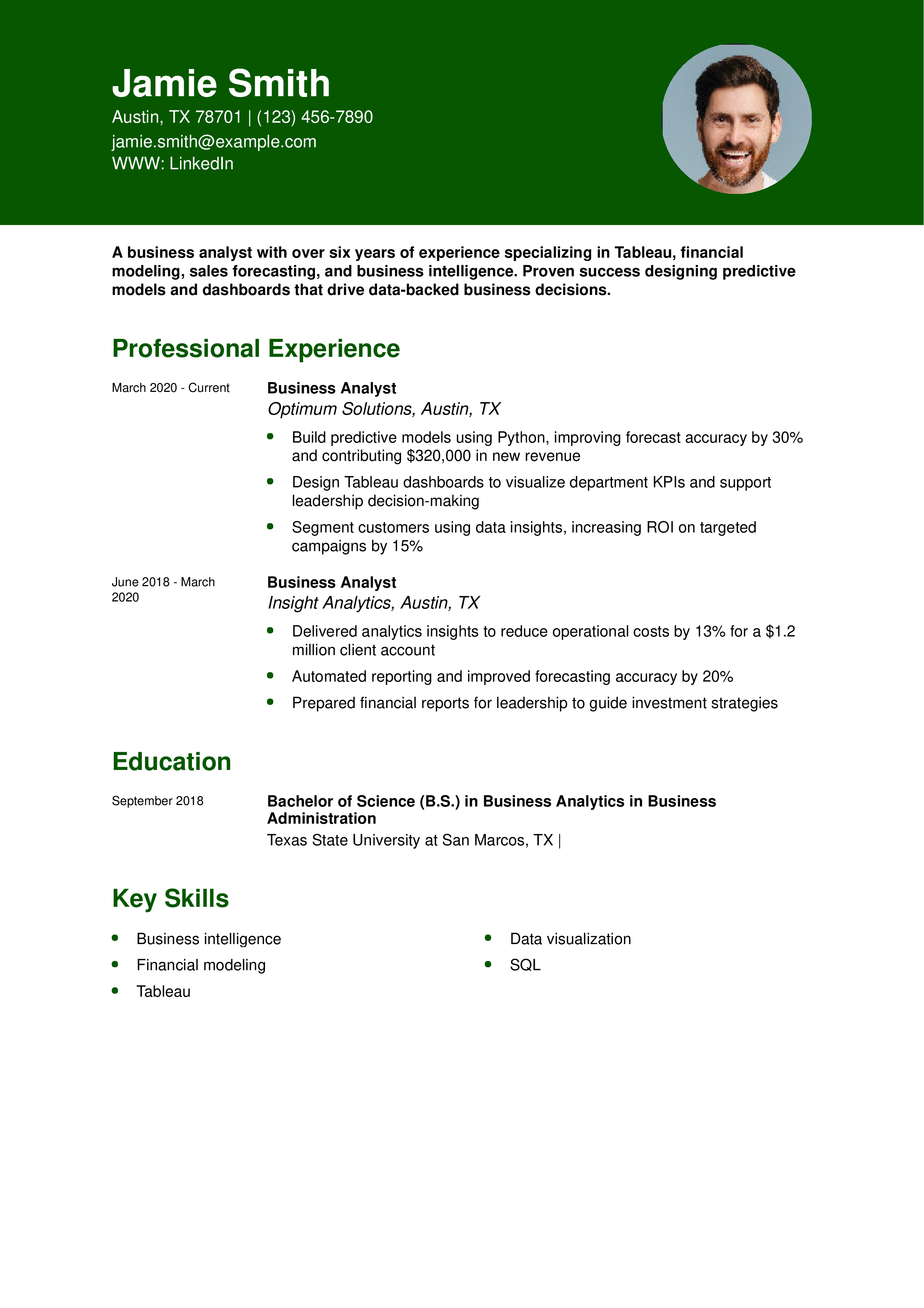
Business Analyst Resume Example
Why This Resume Stands Out
This resume is effective because it highlights a balance of technical skills and strategic impact, with quantifiable results.
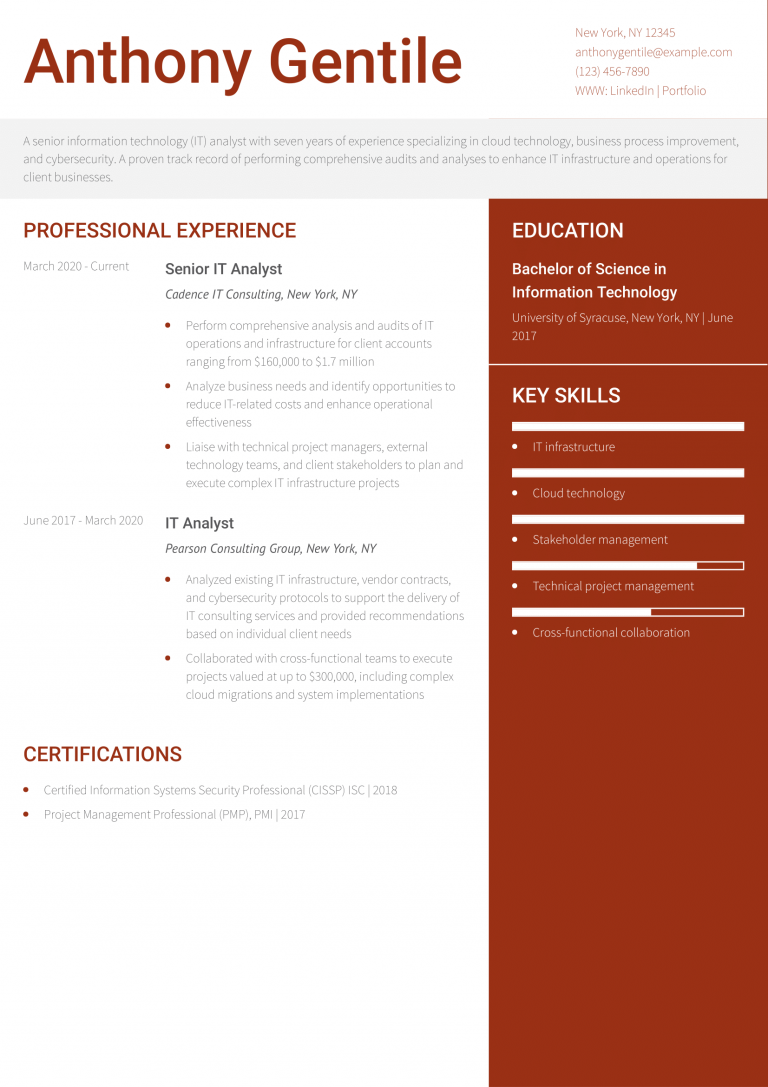
Information Technology Analyst Resume Example
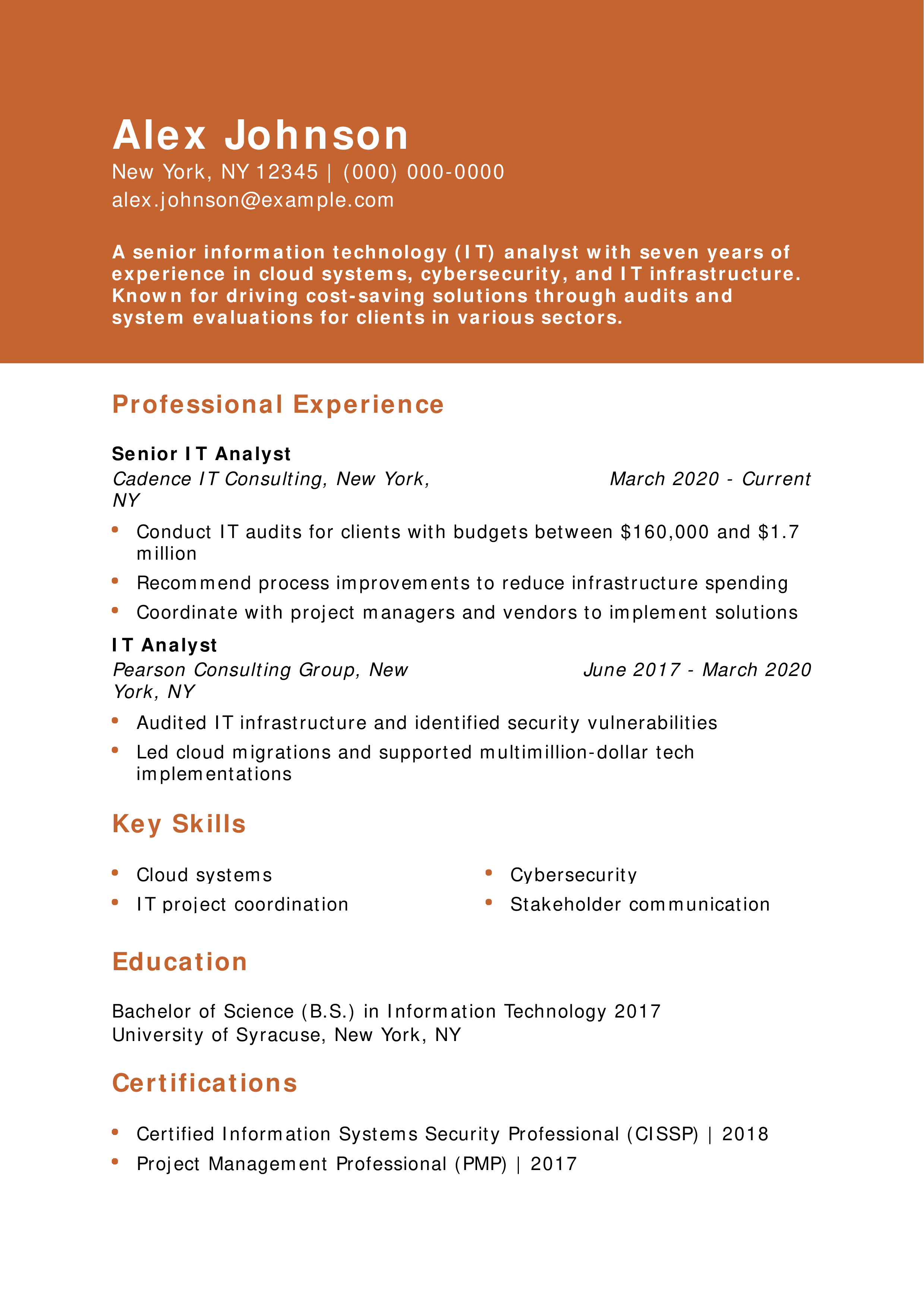
Why This Resume Stands Out
This resume stands out for its emphasis on technical leadership and cross-team collaboration.
Credit Analyst Resume Example
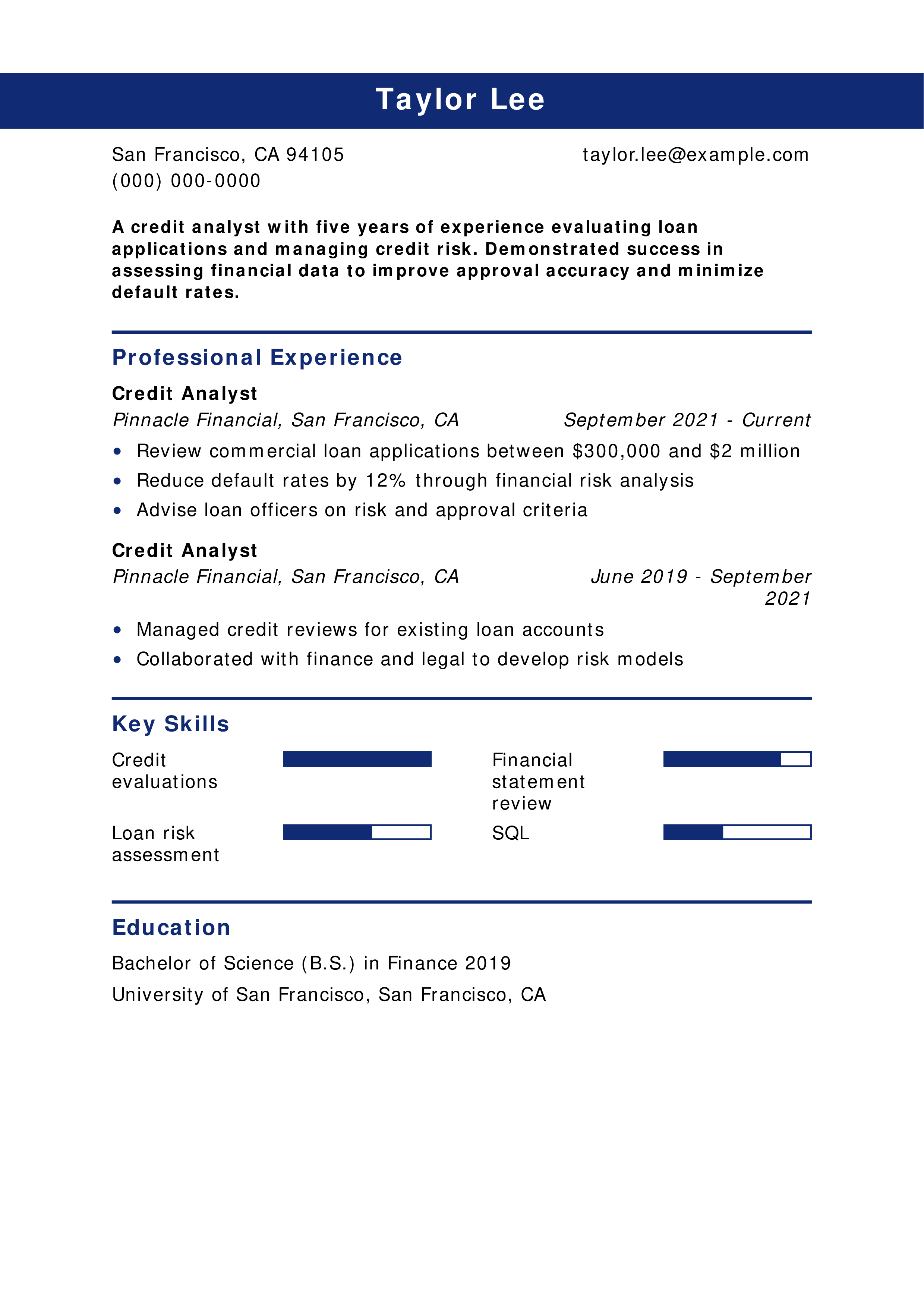
Why This Resume Stands Out
This resume is strong because it showcases how technical analysis improves business outcomes.
Financial Analyst Resume Example
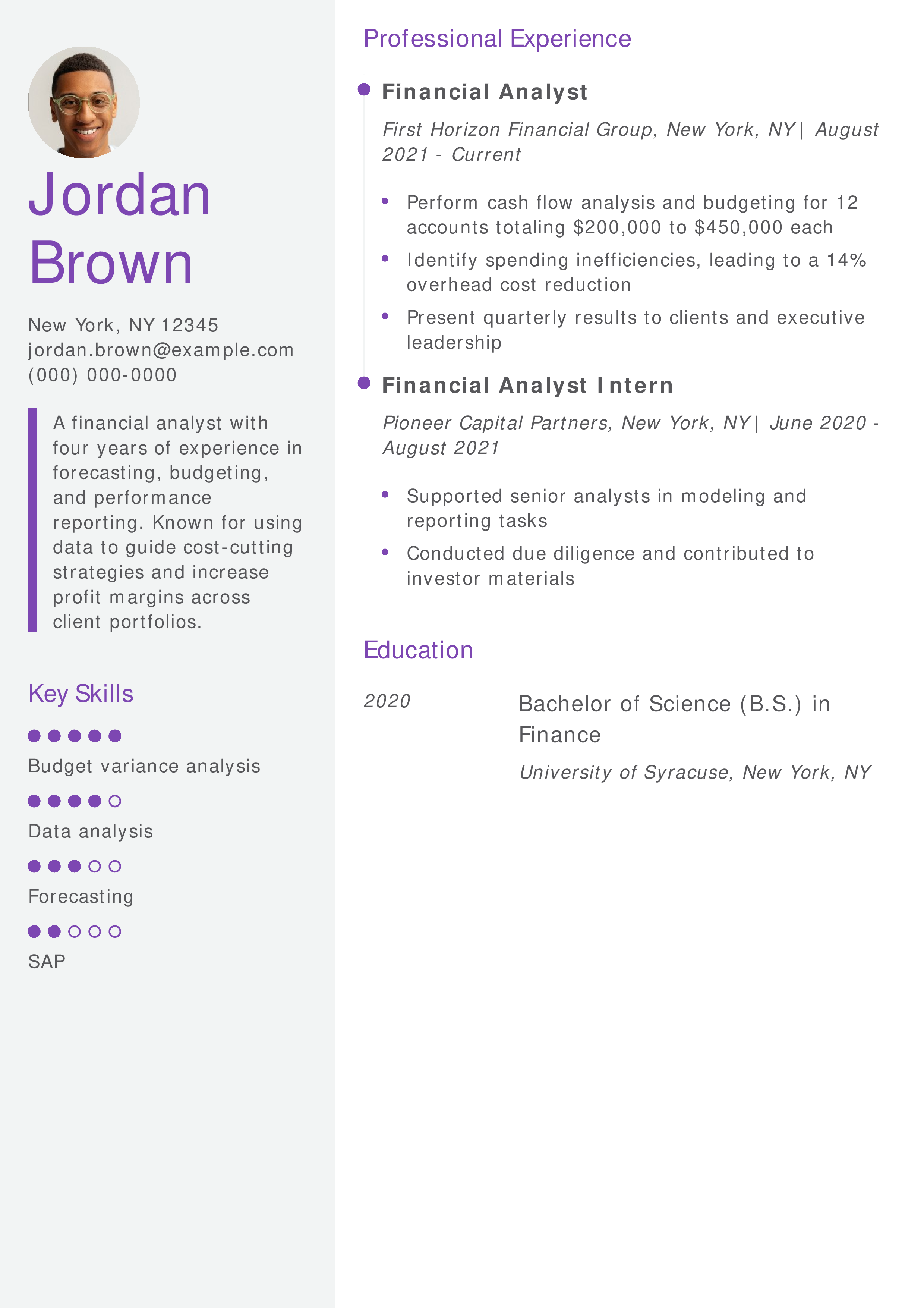
Why This Resume Stands Out
This resume stands out because it emphasizes specific financial improvements.
Financial Planning and Analysis Resume Example
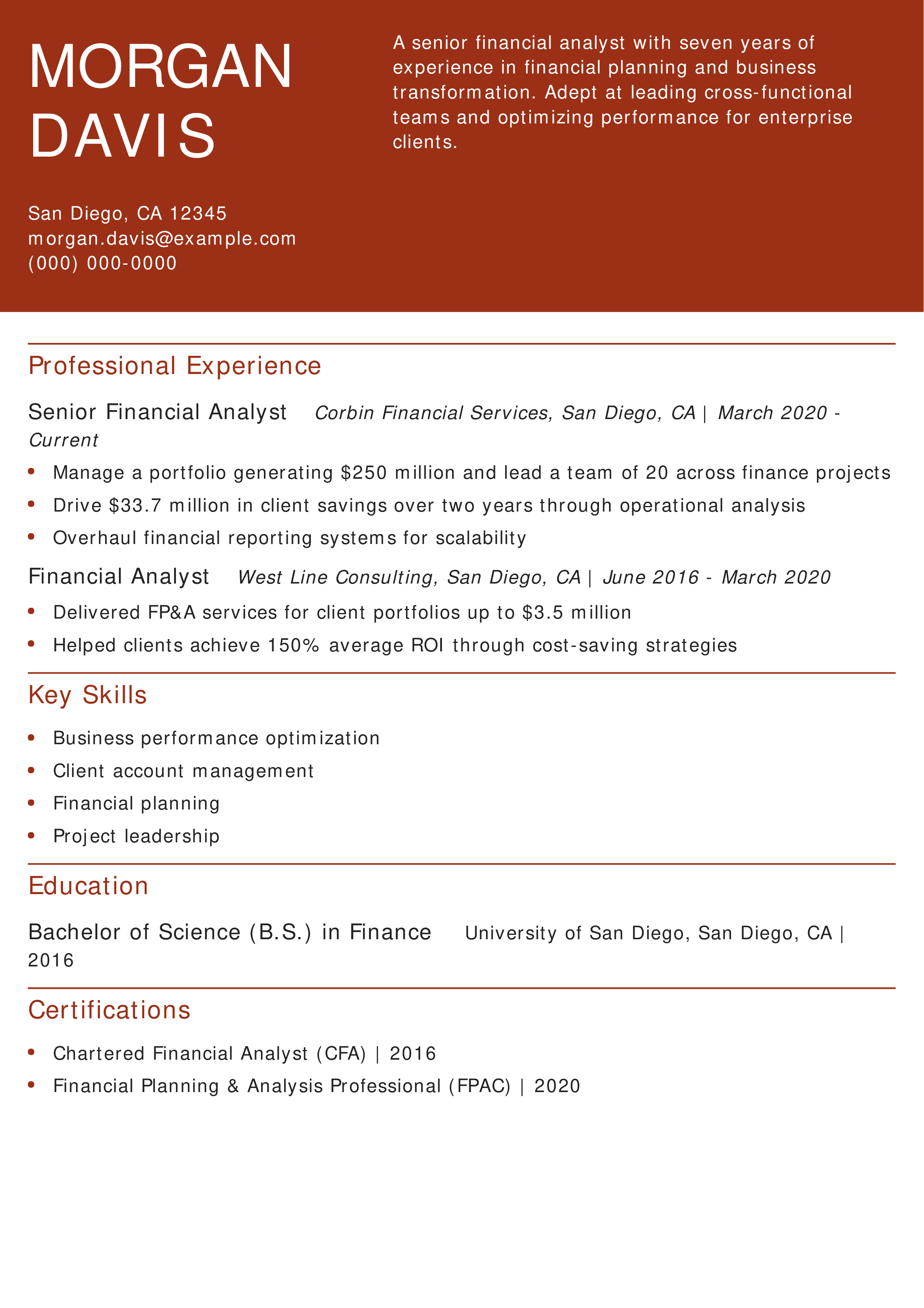
Why This Resume Stands Out
This resume does a great job highlighting leadership and tangible results.
Data Analyst Resume Example
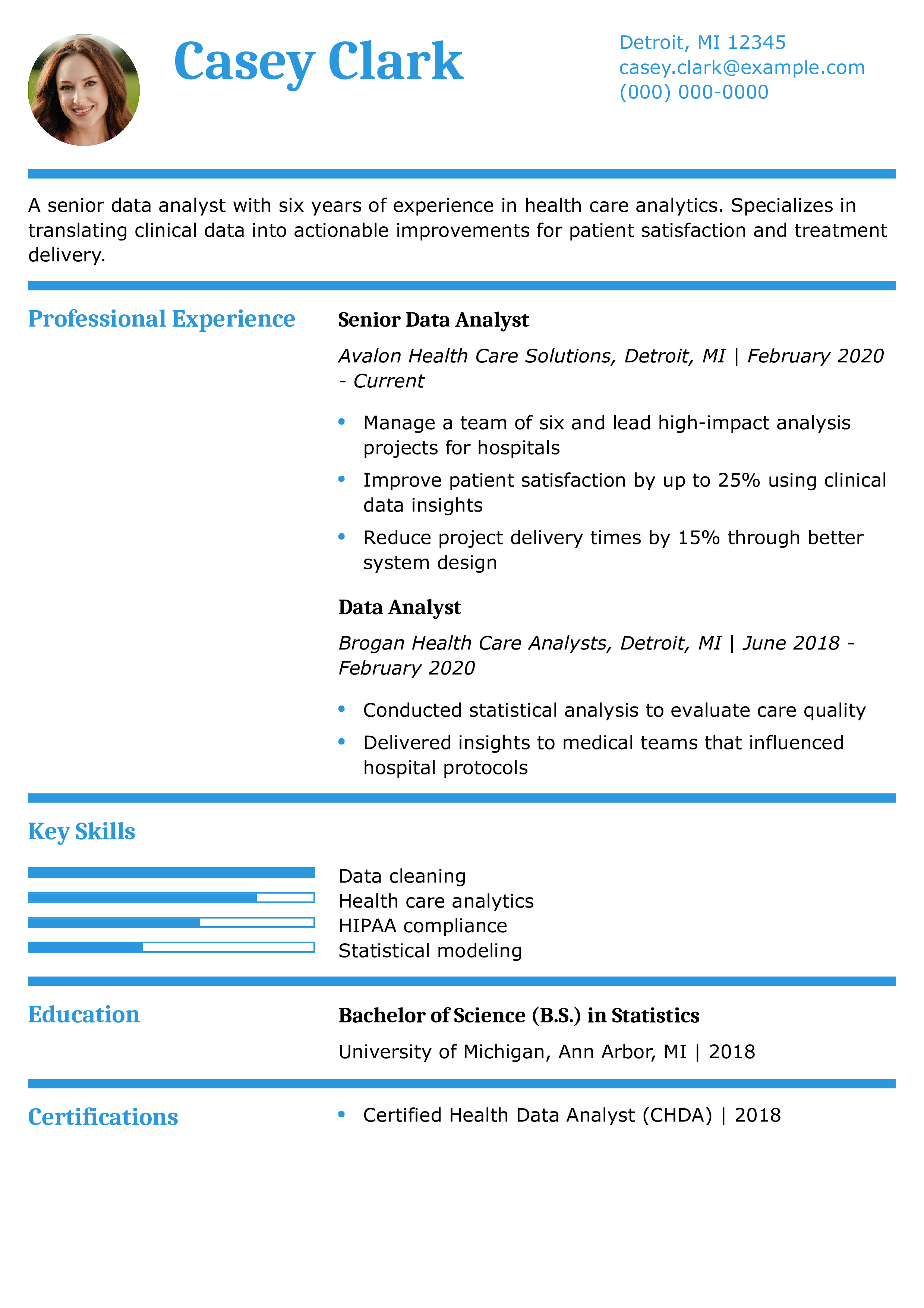
Why This Resume Stands Out
This resume succeeds by connecting data to real-world outcomes in a specialized field.
Tableau Business Analyst Resume Example
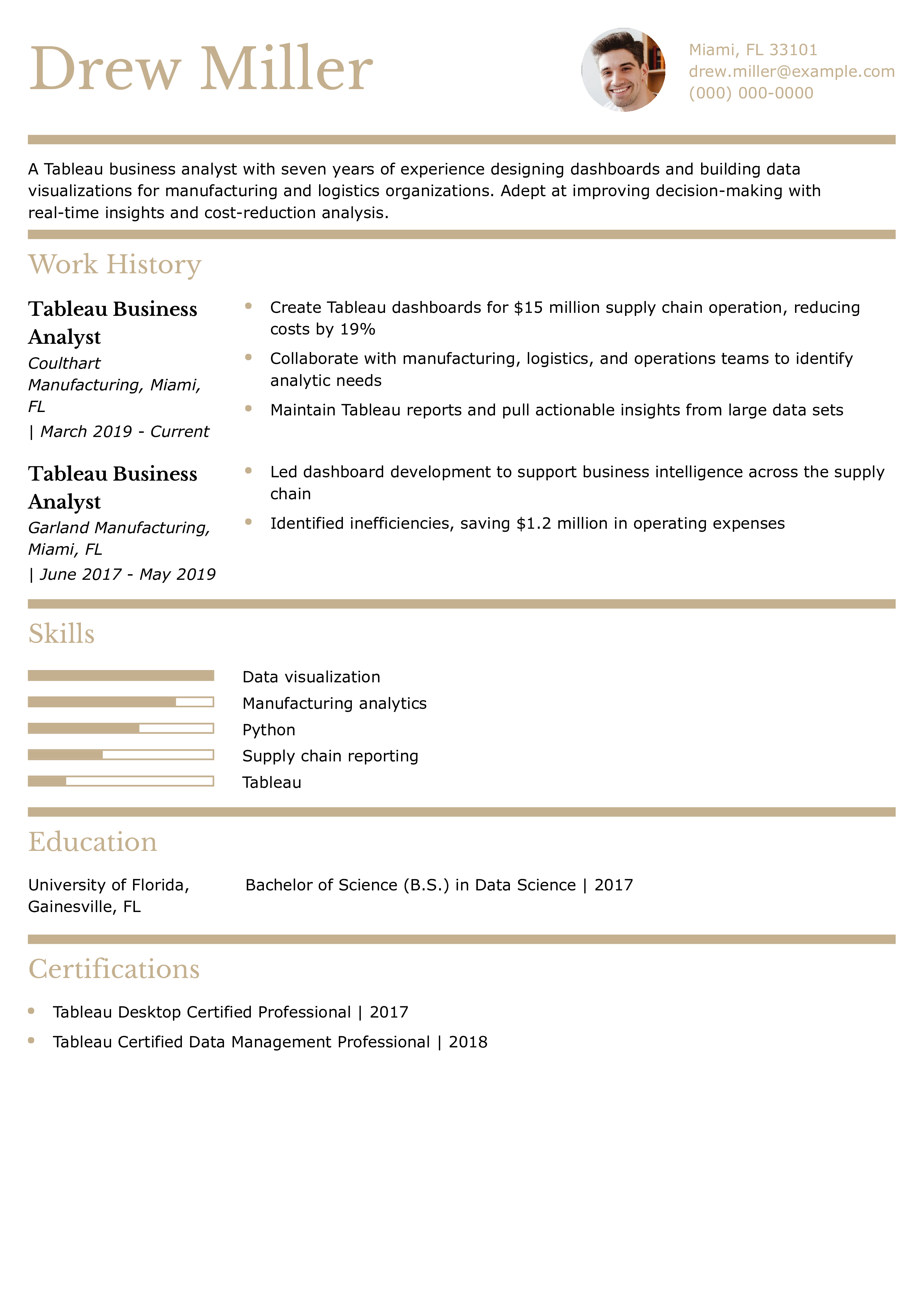
Why This Resume Stands Out
This resume effectively shows the candidate's expertise with Tableau and includes a clear financial impact.
Health Care Business Analyst Resume Example
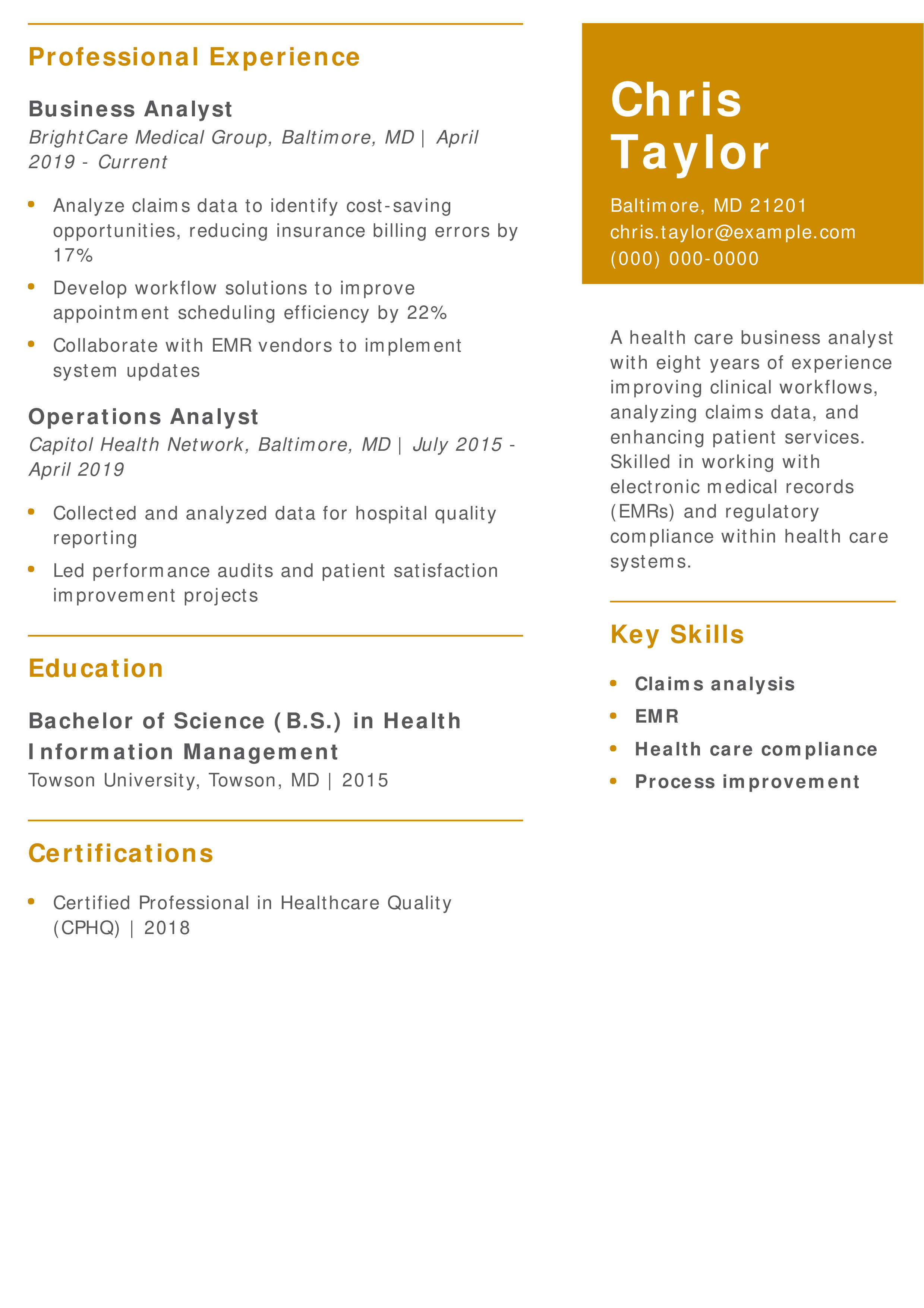
Why This Resume Stands Out
This resume is strong because it directly improves clinical and billing processes.
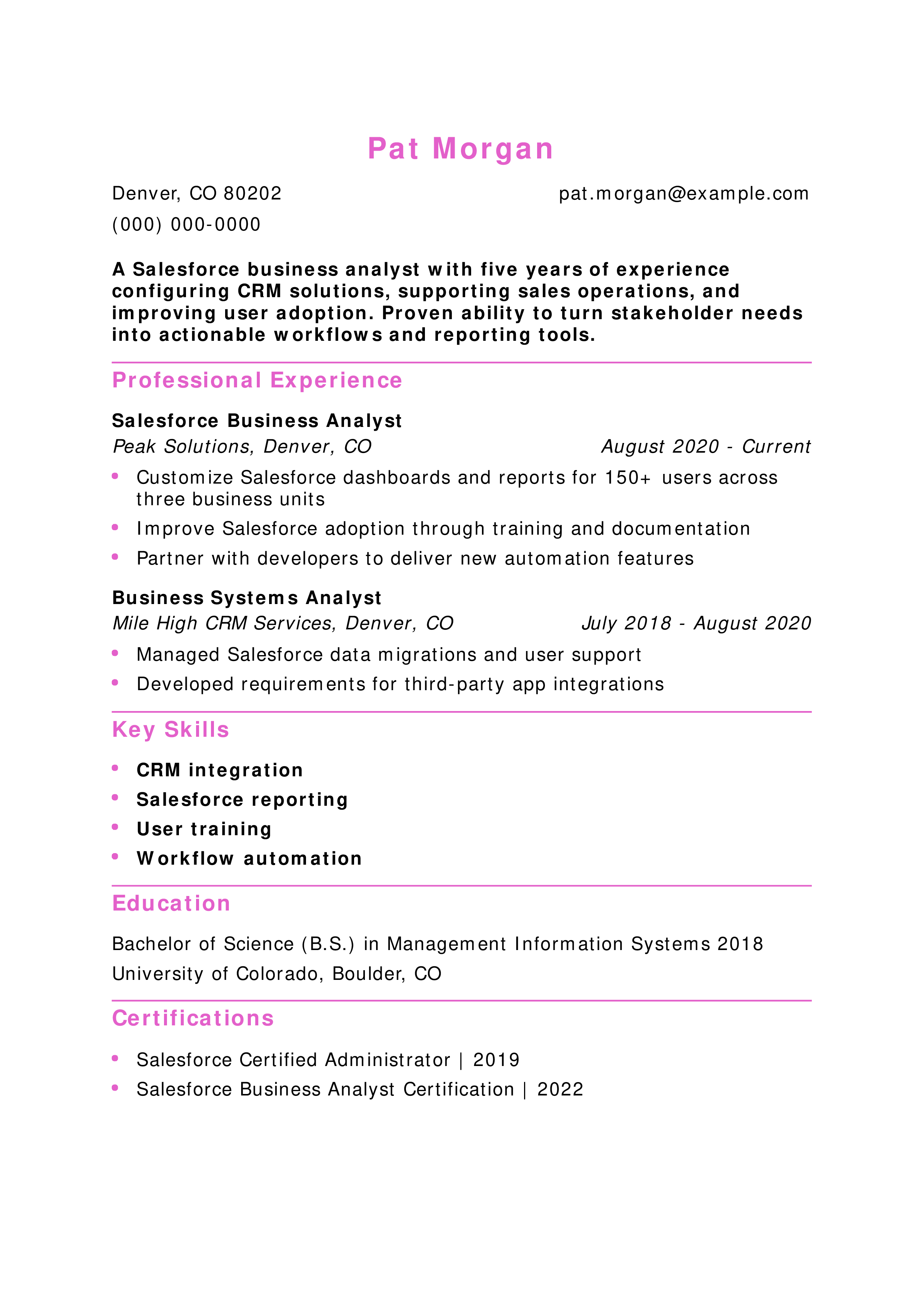
Salesforce Business Analyst Resume Example
Why This Resume Stands Out
This resume clearly shows how the candidate connects technical tools to business performance.
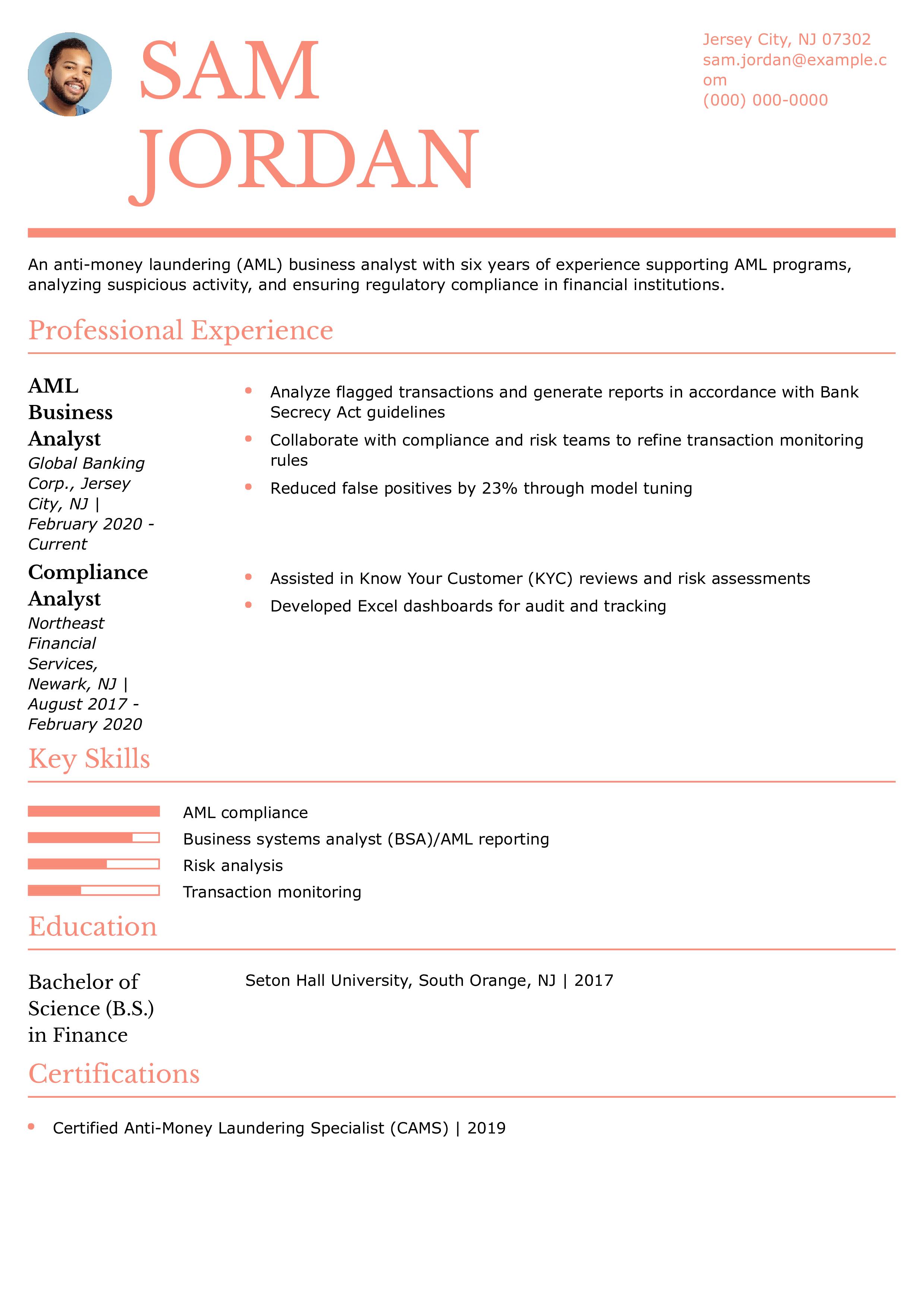
Anti-Money Laundering Business Analyst Resume Example
Why This Resume Stands Out
This resume shows targeted expertise in compliance and AML tools, with specific metrics that reflect accuracy and process improvement.
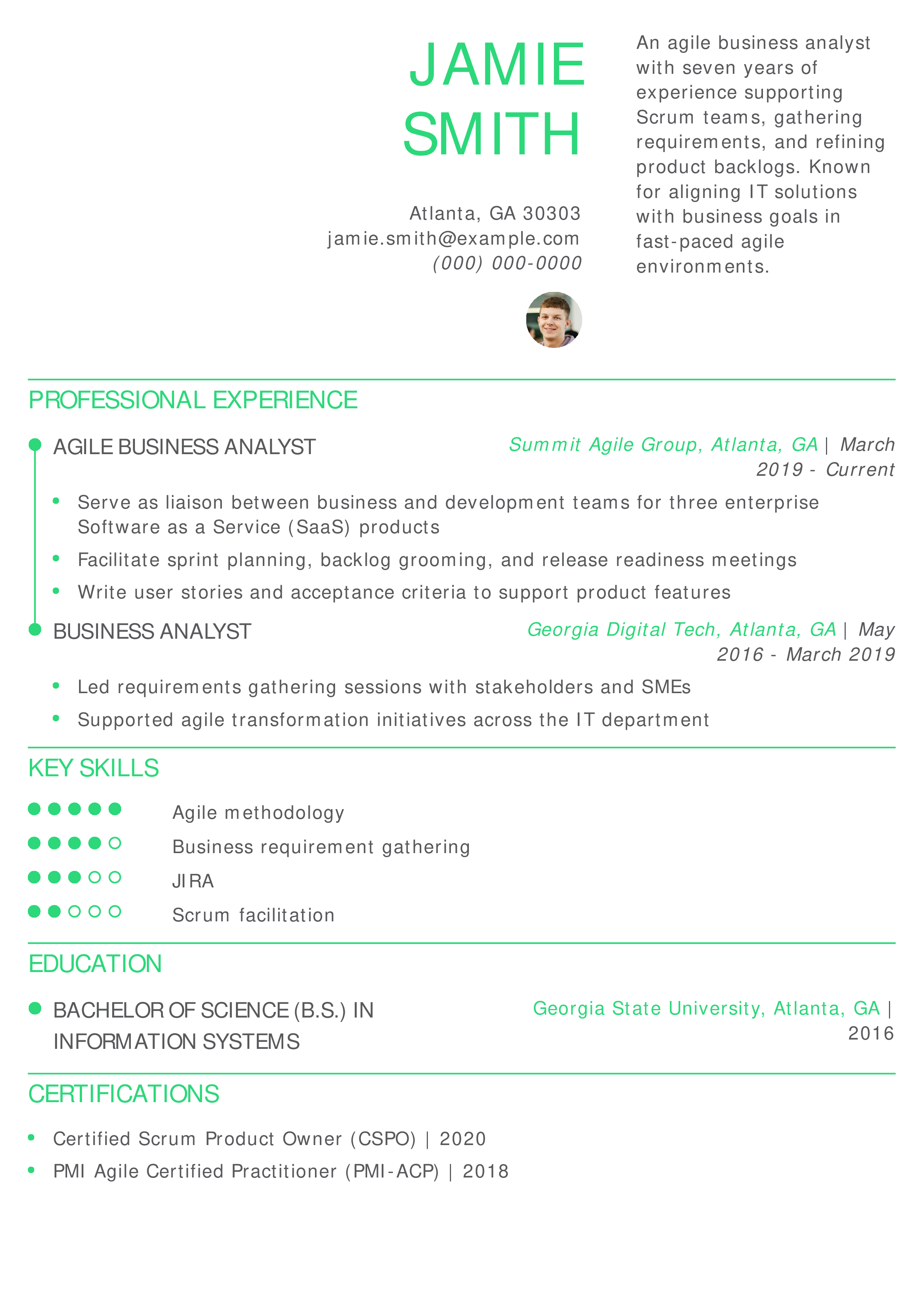
Agile Business Analyst Resume Example
Why This Resume Stands Out
This resume clearly reflects agile expertise and shows the candidate's role in driving delivery across technical and business teams.
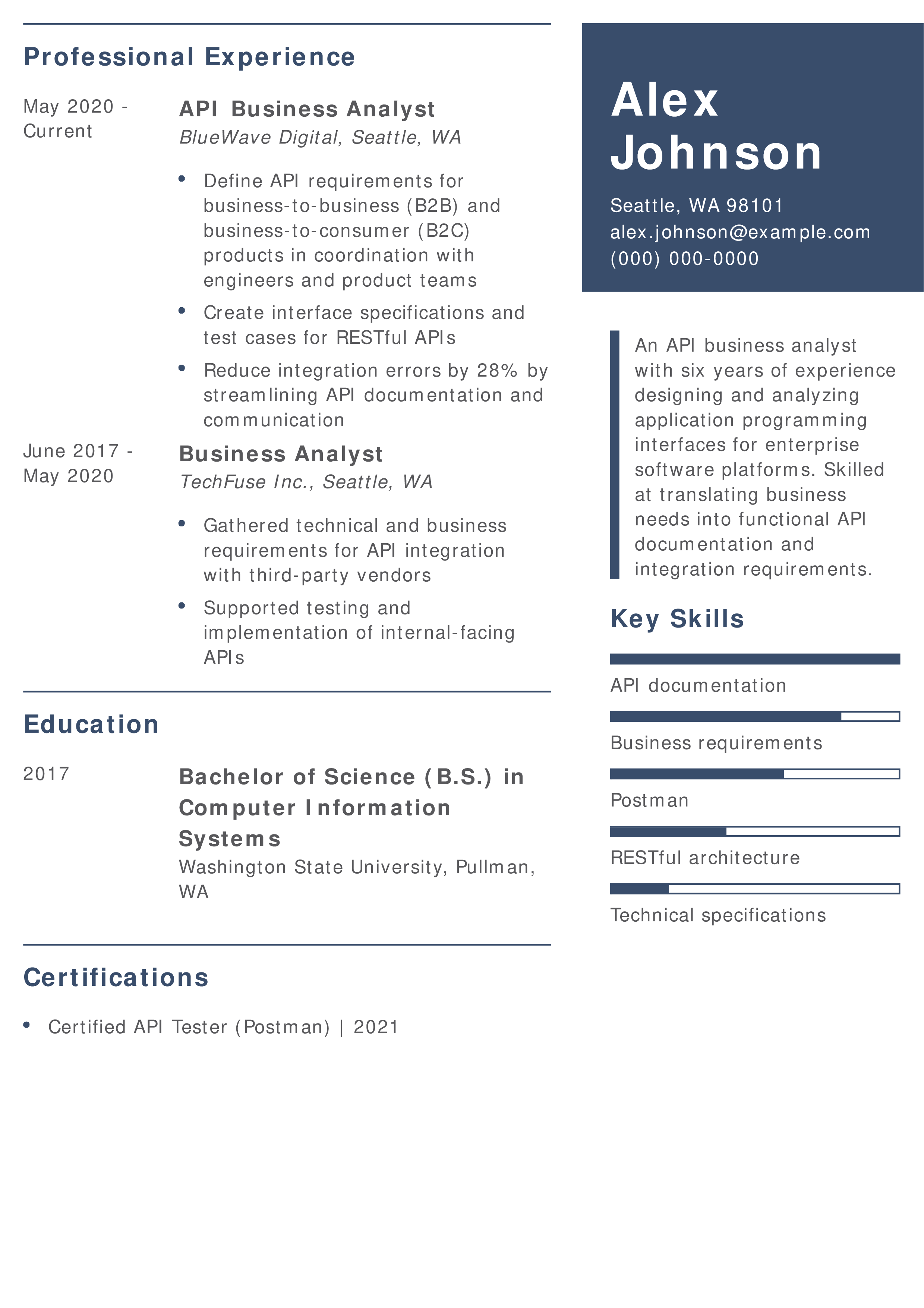
API Business Analyst Resume Example
Why This Resume Stands Out
This resume successfully combines technical knowledge with communication and documentation skills.
Associate Business Analyst Resume Example
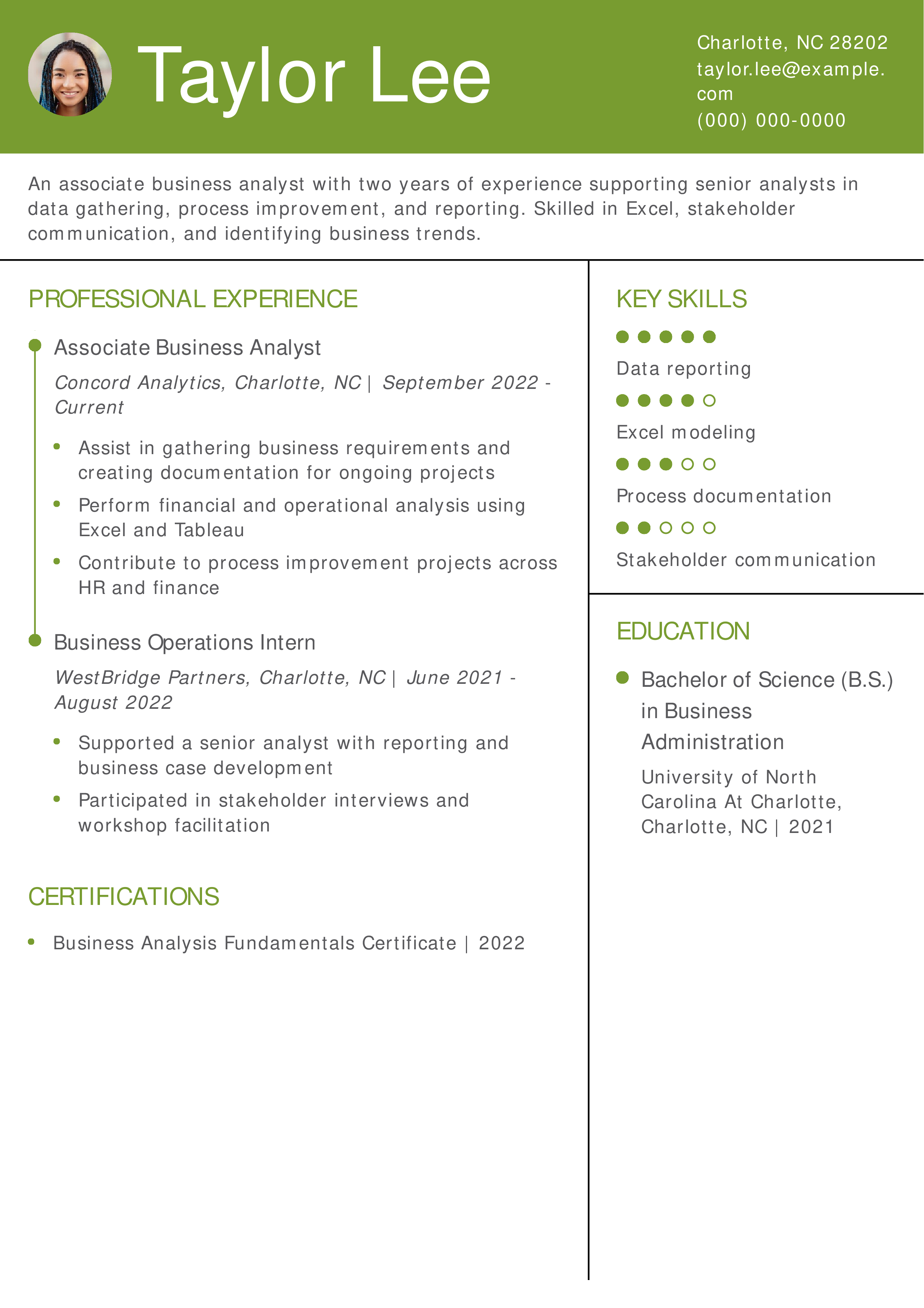
Why This Resume Stands Out
This resume is strong because it shows clear career growth and real-world support experience.
Senior Business Analyst Resume Example
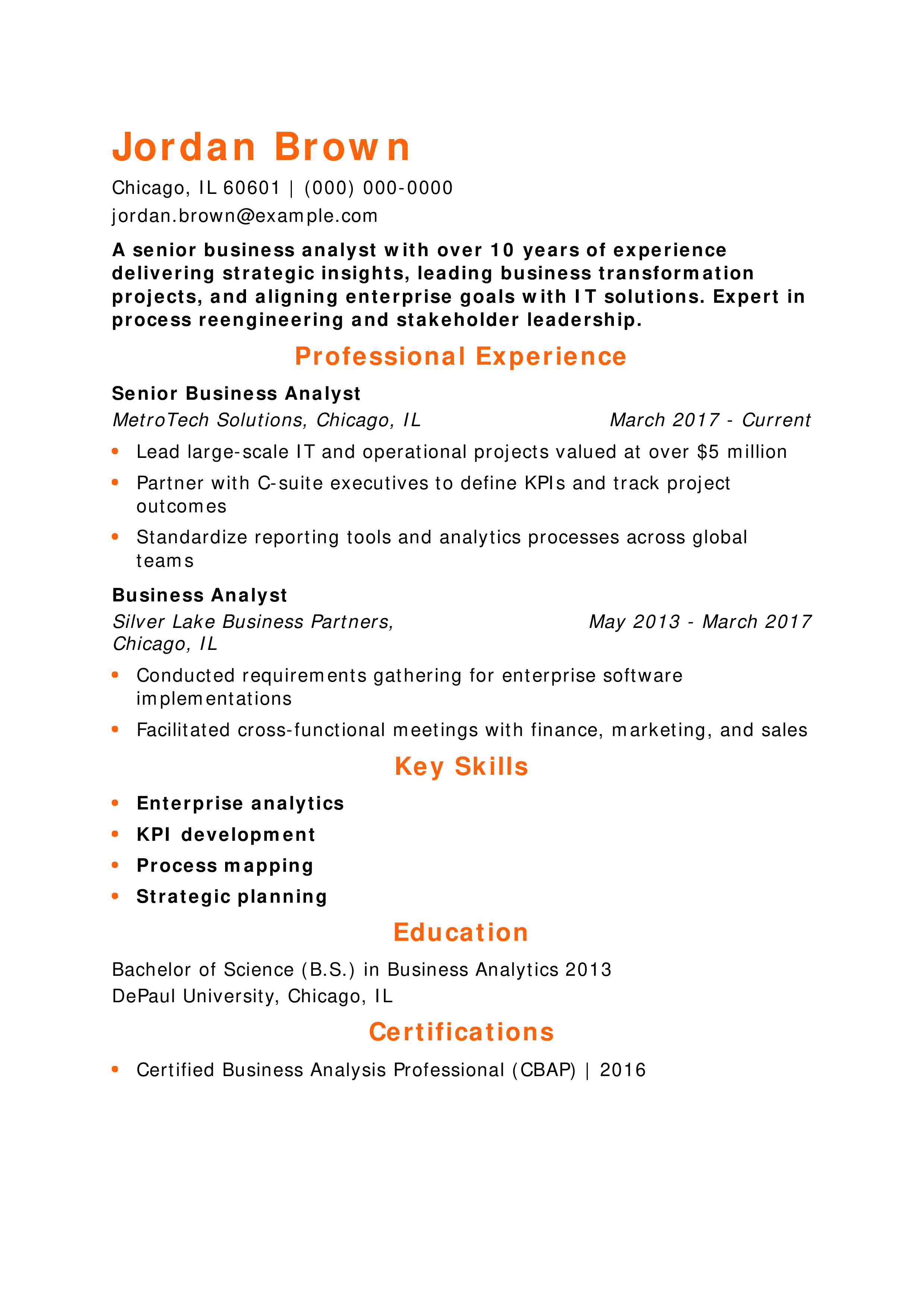
Why This Resume Stands Out
This resume shows leadership, high-value project oversight, and consistent progression.
Technical Business Analyst Resume Example
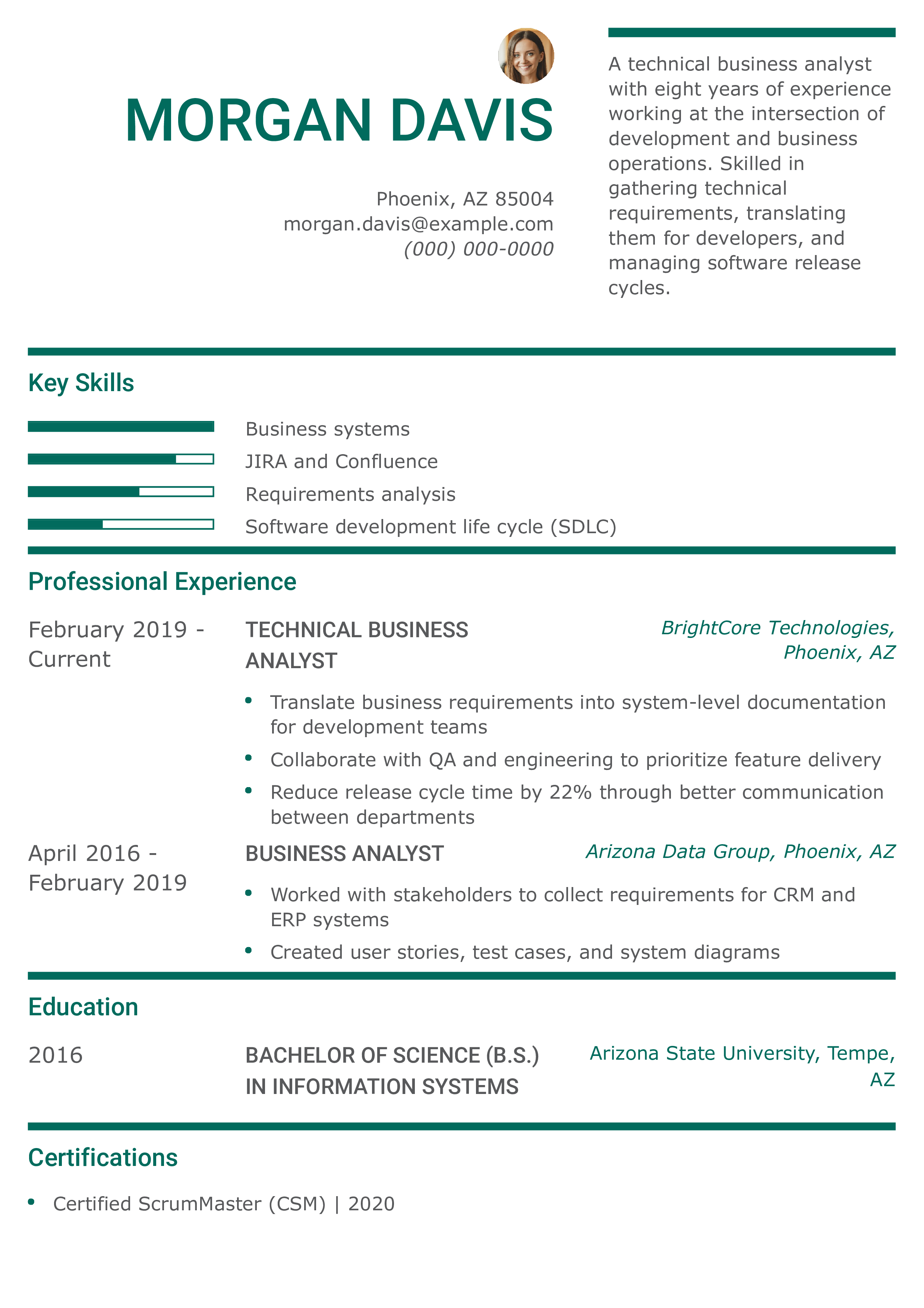
Why This Resume Stands Out
This resume effectively bridges business knowledge and technical skills, making it ideal for cross-functional roles.
Amazon Business Analyst Resume Example
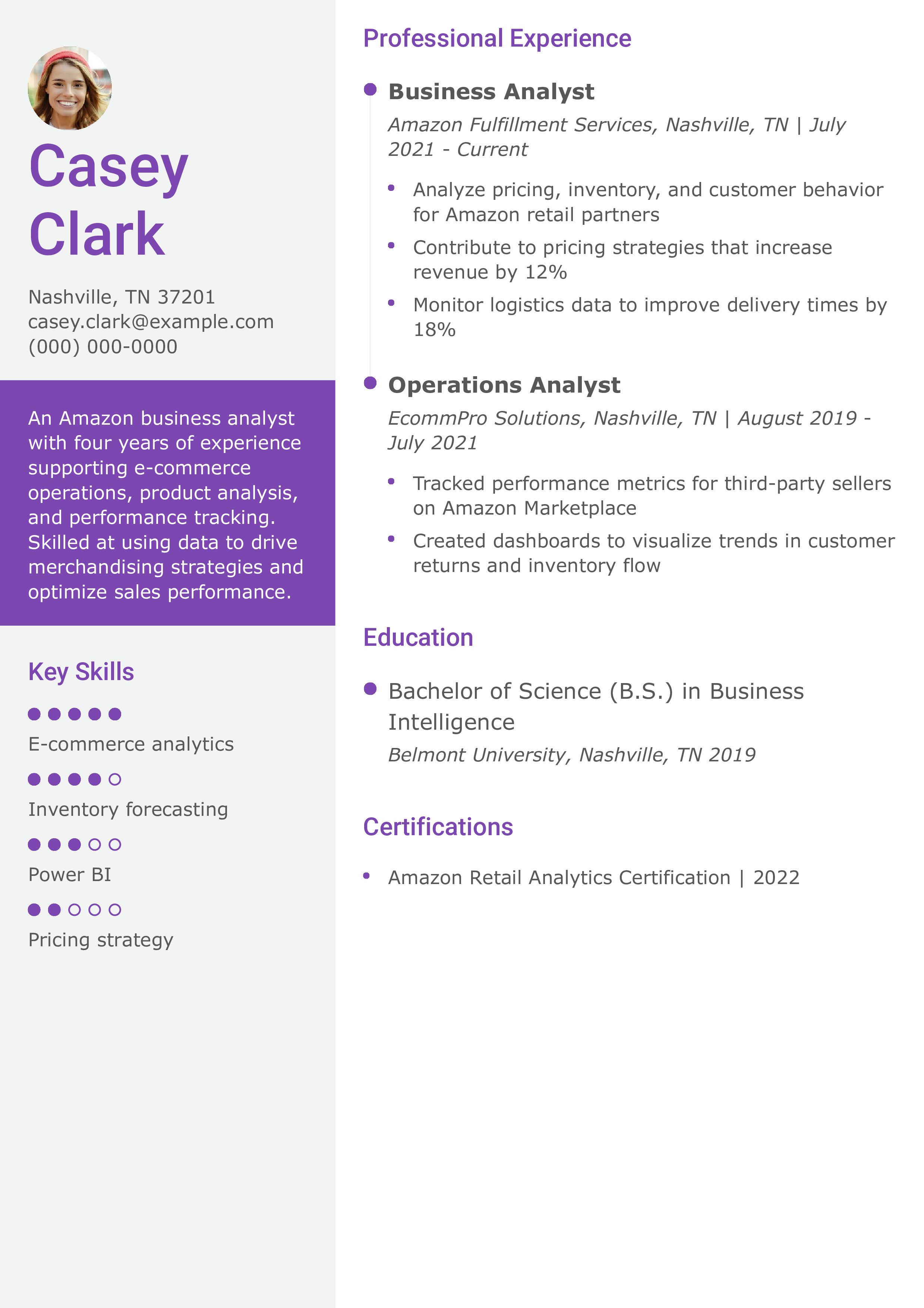
Why This Resume Stands Out
This resume focuses on data-driven decision-making and e-commerce experience relevant to a fast-paced tech company.
Marketing Analyst Resume Example
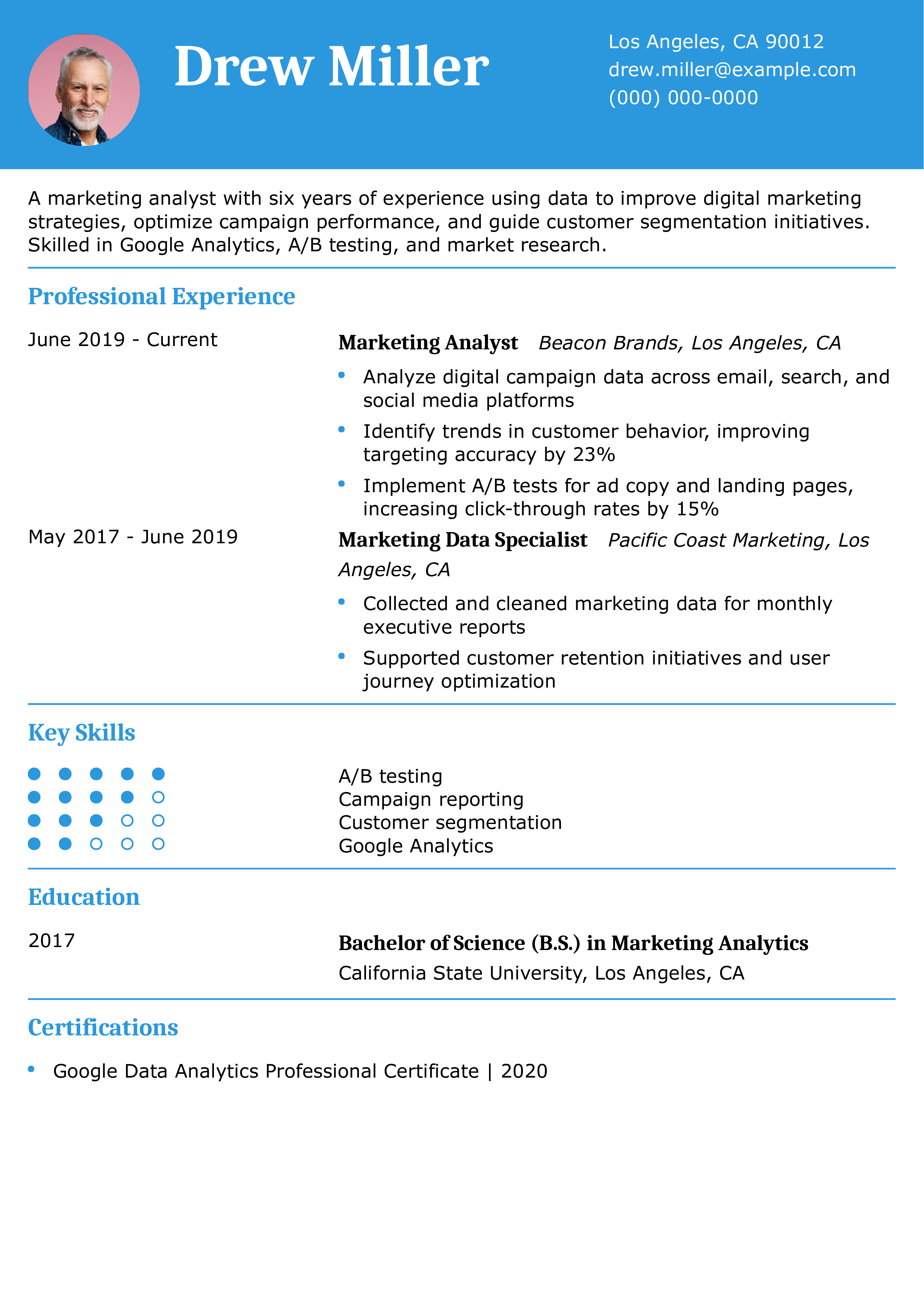
Why This Resume Stands Out
This resume showcases real marketing performance improvements tied to data.
Data Quality Analyst Resume Example
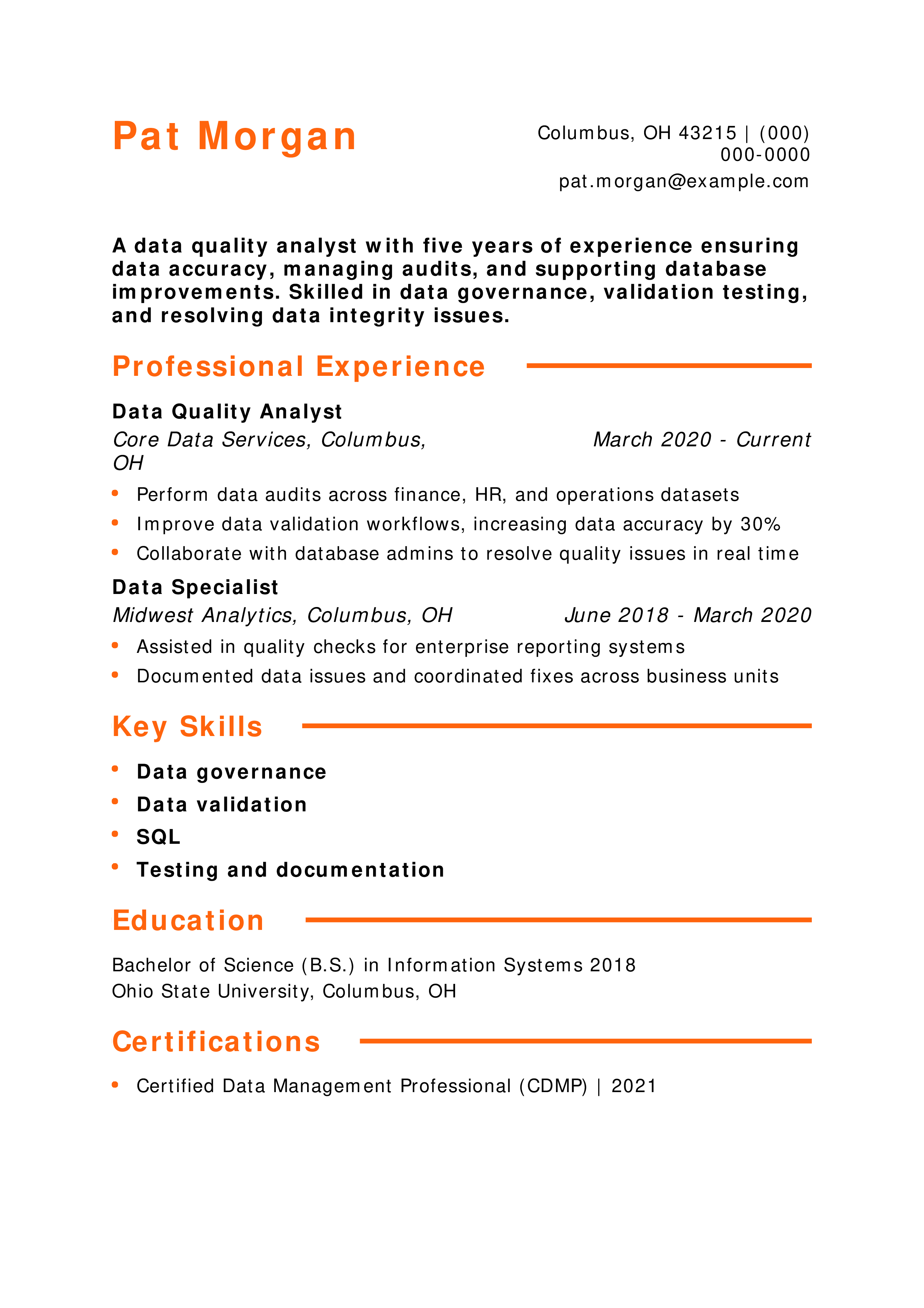
Why This Resume Stands Out
This resume works well because it connects day-to-day responsibilities to measurable outcomes.
Risk Analyst Resume Example
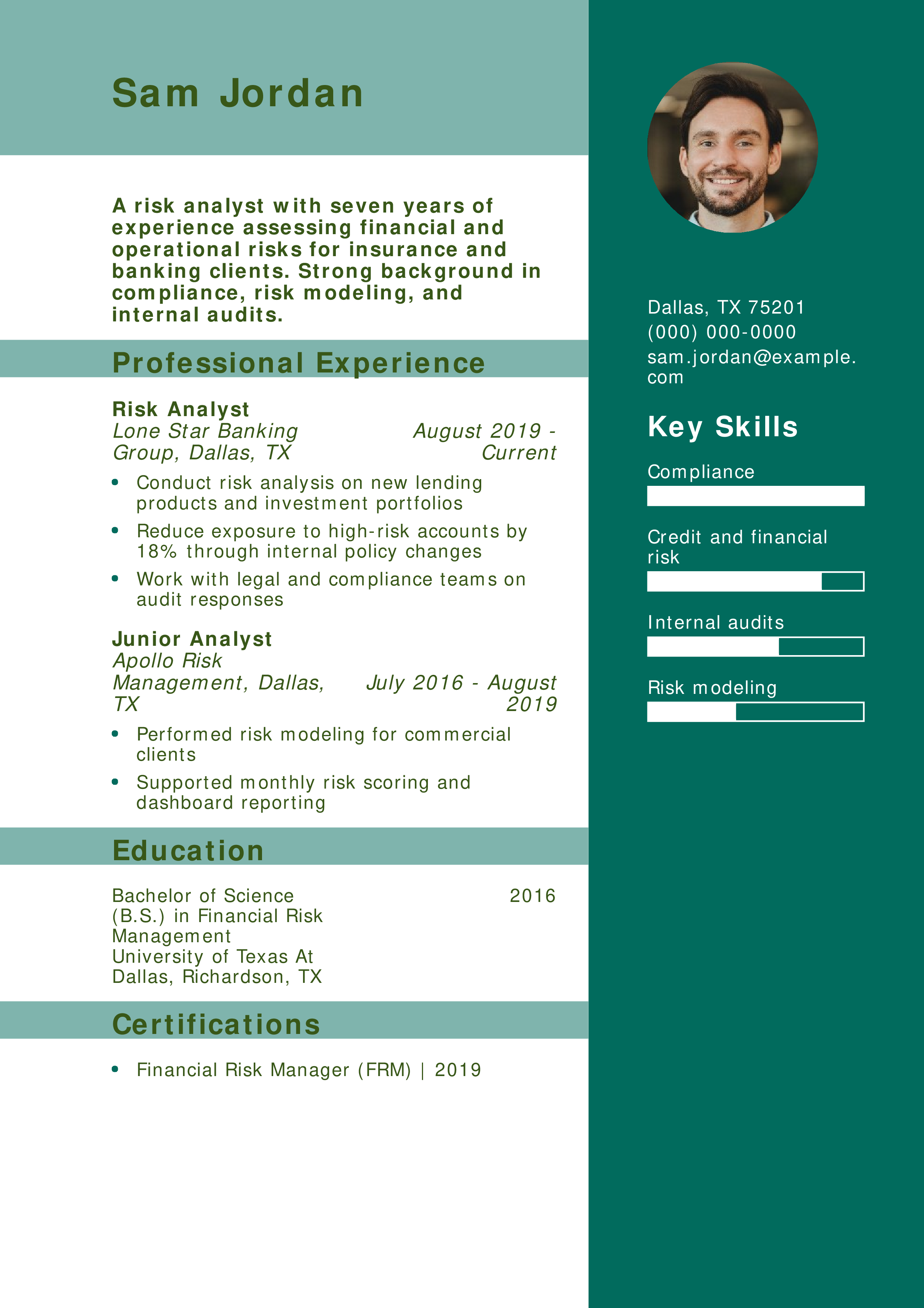
Why This Resume Stands Out
This resume provides real results and highlights collaboration with key departments.
Operations Analyst Resume Example
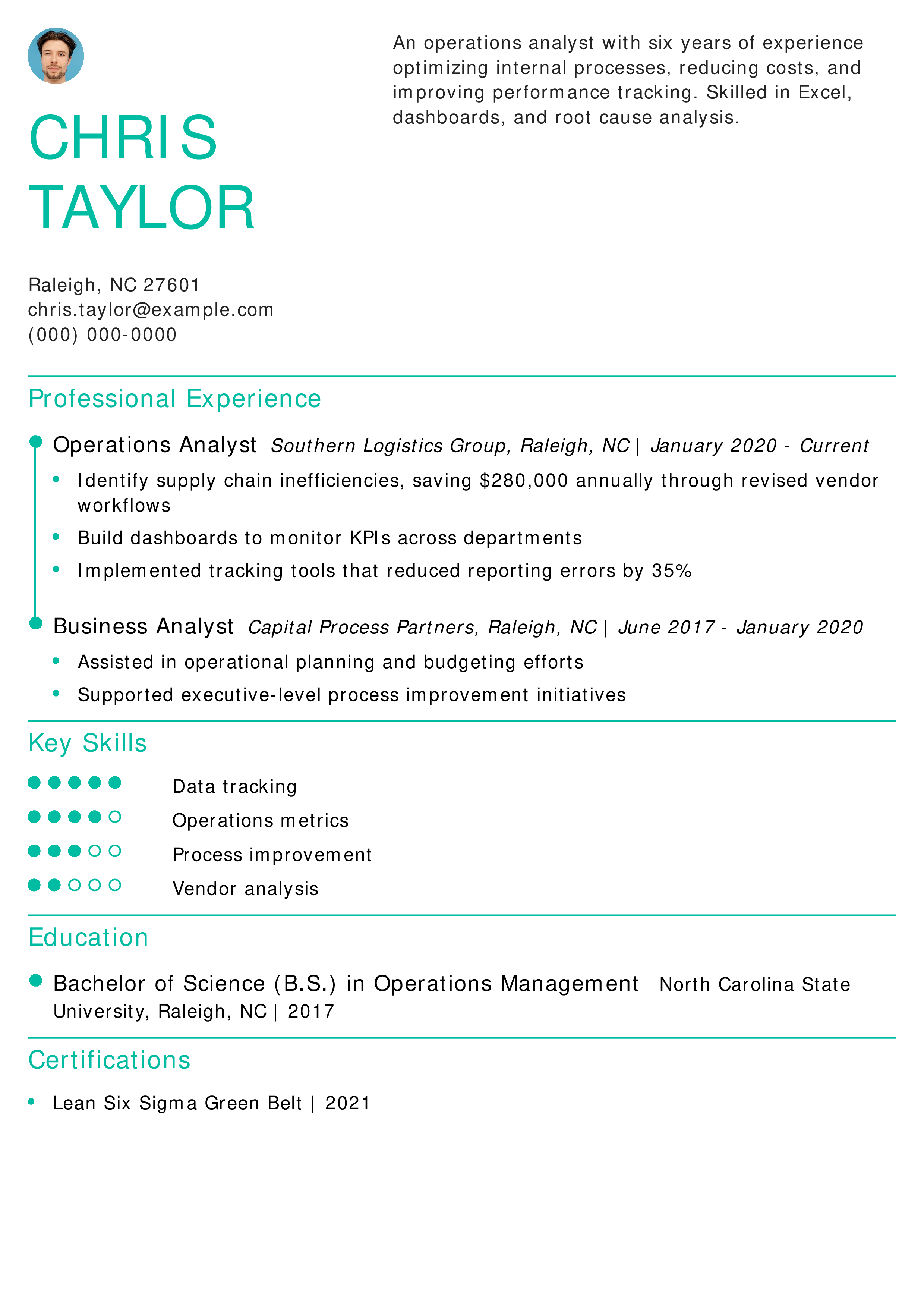
Why This Resume Stands Out
This resume is strong because it uses numbers to reflect performance improvement.
Workforce Analyst Resume Example
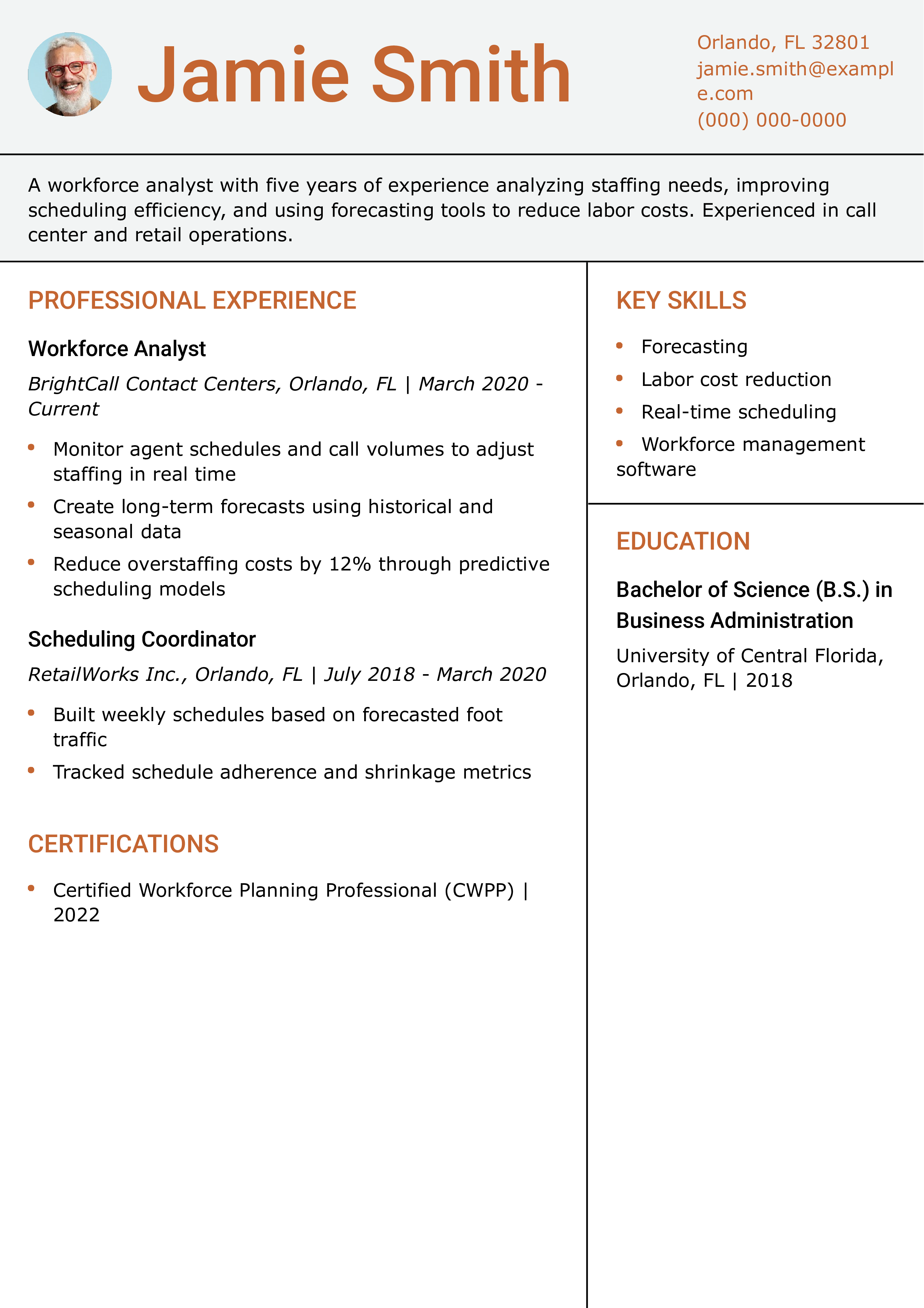
Why This Resume Stands Out
This resume does a great job showing how data translates into staffing decisions.
Business Intelligence Analyst Resume Example
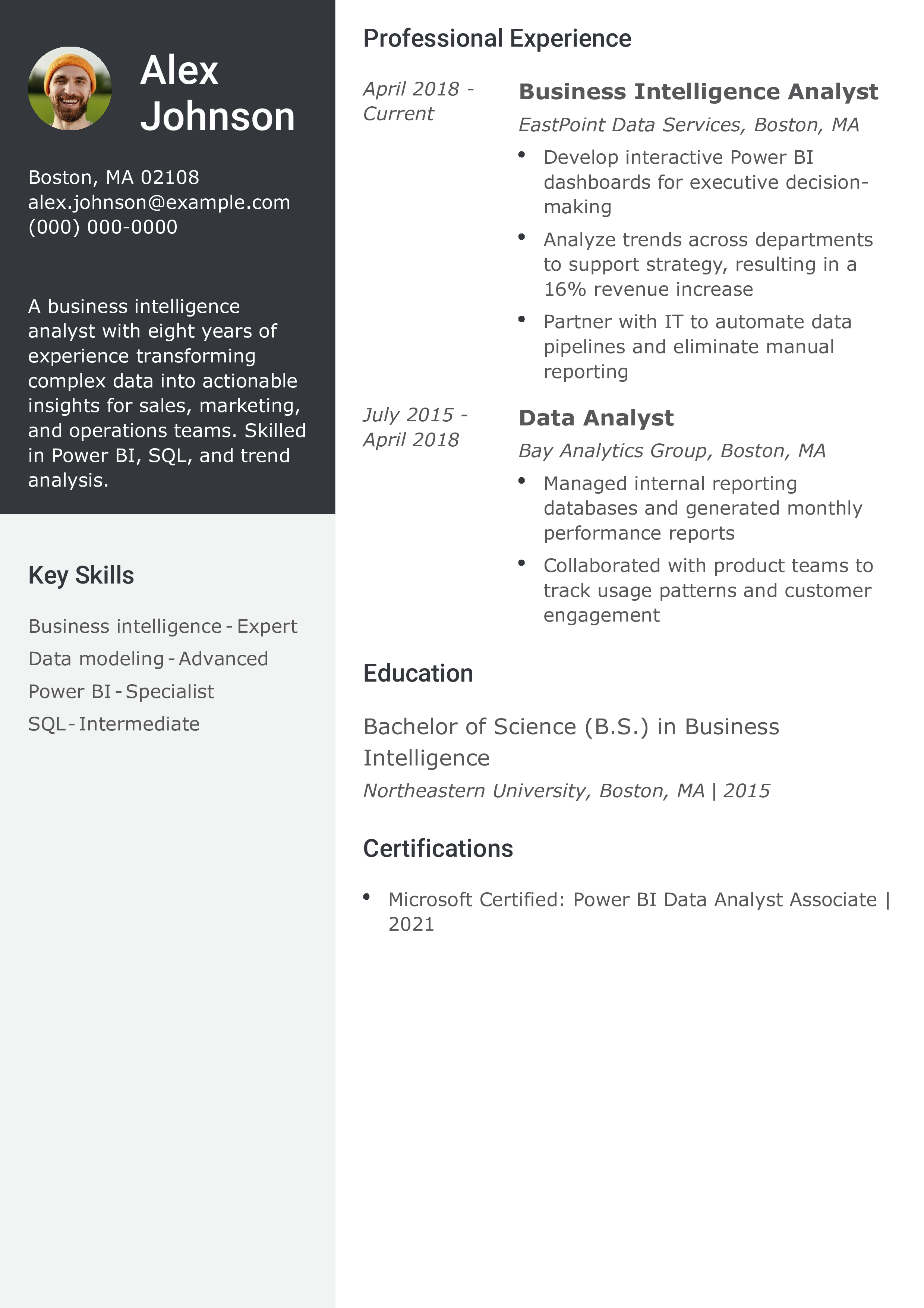
Why This Resume Stands Out
This resume demonstrates technical depth and business impact, combining strong tools with measurable outcomes.
Product Analyst Resume Example
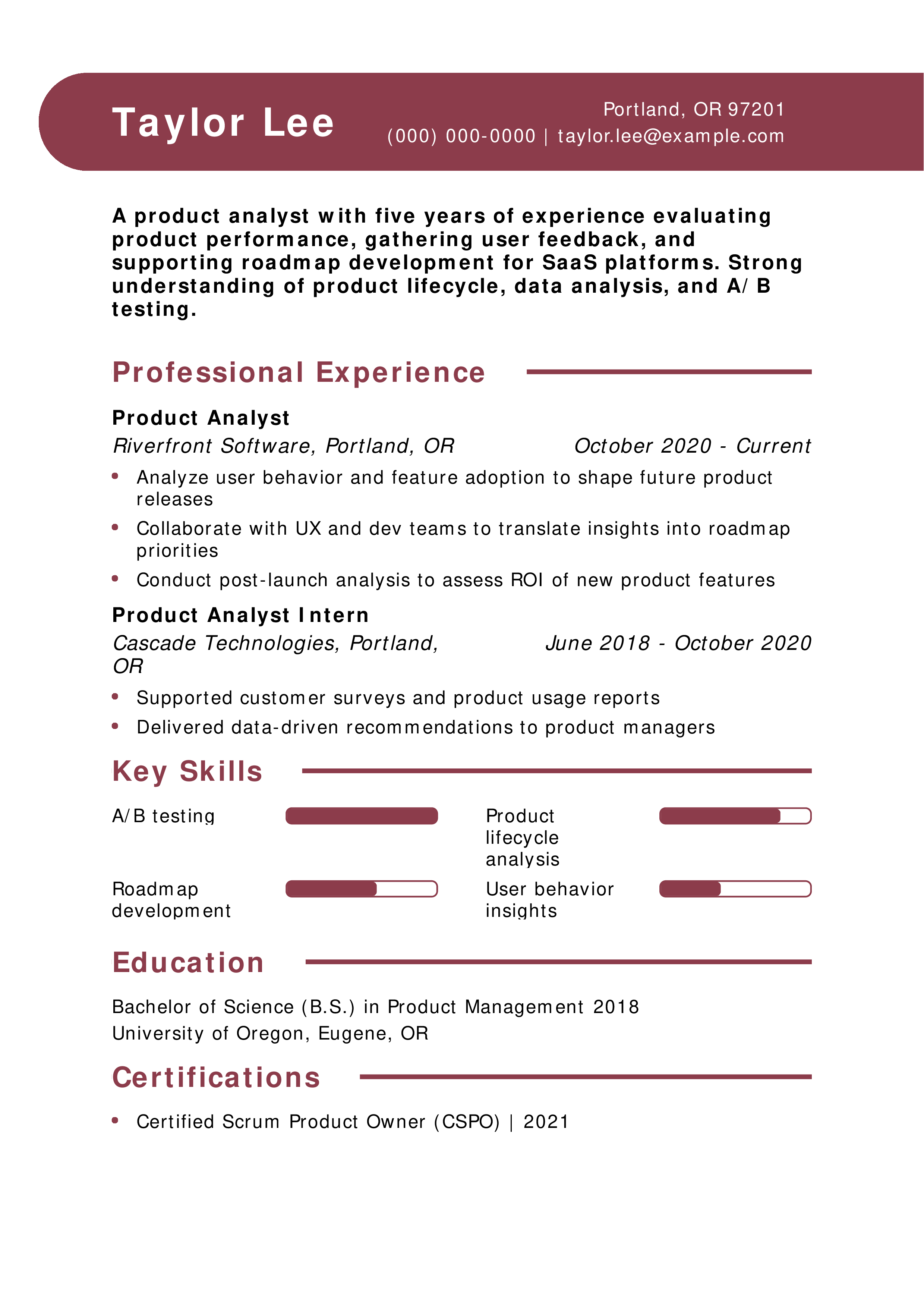
Why This Resume Stands Out
This resume effectively connects product usage data directly to strategic decisions.
Logistics Analyst Resume Example
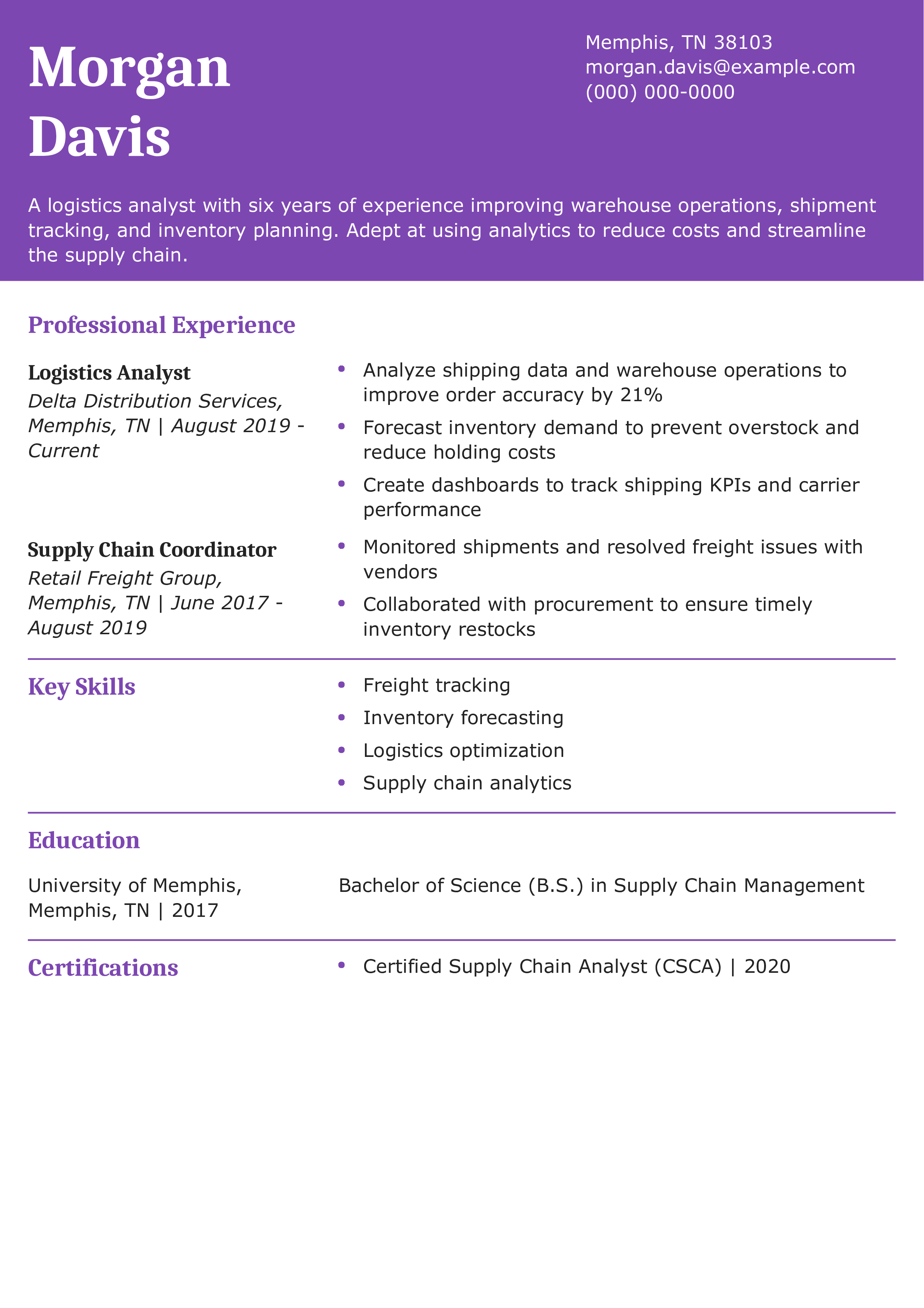
Why This Resume Stands Out
This resume clearly demonstrates how analytics improved efficiency in a tangible, physical operations setting.
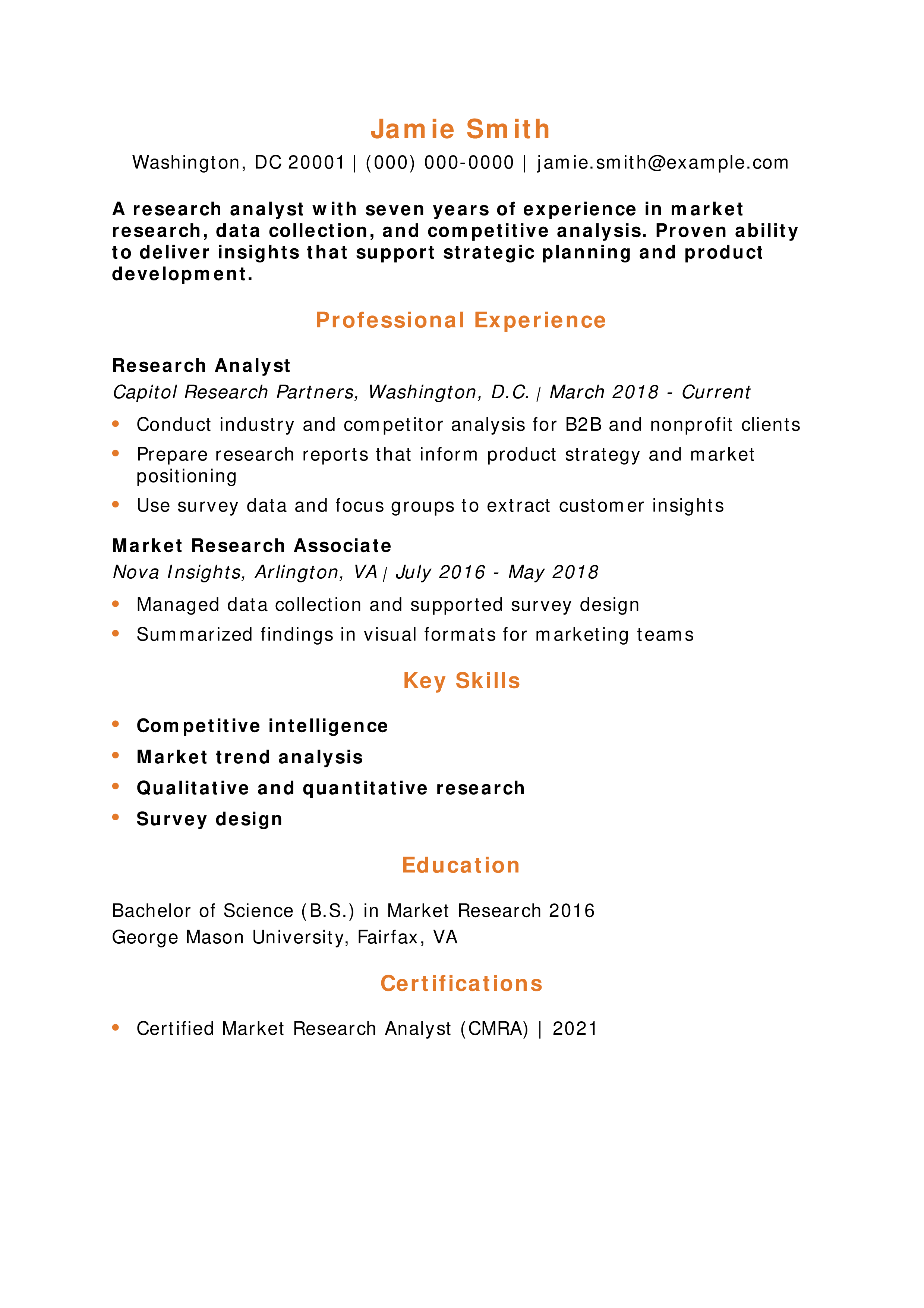
Research Analyst Resume Example
Why This Resume Stands Out
This resume is strong because it emphasizes research methodology, collaboration, and how insights supported business growth.
Our templates are crafted by professional resume writers to make creating your resume quick, easy, and effective.
- Professional resume template downloads
- Customized cover letter generation
- AI resume writing support
- Career-building resources and advice
Analyst Text-Only Resume Templates and Examples
How To Write an Analyst Resume
Analysts should skip broad “data-driven” statements and highlight SQL, Python, automation, and dashboards that sped up decisions or reduced waste. Employers want analysts who translate data into business action.

To write a great analyst resume that stands out from the competition in today’s job market, you need to craft engaging content that captures the nuances of your industry expertise. Demonstrate your ability to translate complex data into actionable insights for clients and businesses. Incorporate hard numbers to show potential employers how your efforts have helped to facilitate data-driven decision making throughout your career. In this guide, we’ll walk you through each step of the resume-building process to help you land your next analyst role.
1. Write a dynamic profile summarizing your analyst qualifications
Open your resume with a powerful snapshot of your analyst career. Start with a sentence that lists your title, years of experience, and three to four industry specializations that match the job description. For example, if you’re targeting a business analyst position, consider highlighting terms such as data visualization, business intelligence, and financial modeling. By tailoring your summary towards each application, you immediately show the hiring manager that you have the qualifications to excel in the position.
Strong Profile Example
A financial analyst with four years of experience in financial reporting, data analysis, and business strategy. A proven track record of building and translating financial models into actionable insights to improve profitability for client portfolios. Adept at interfacing with cross-functional teams to define data-driven financial strategies.
Weak Profile Example
Experienced analyst proficient in Excel, SQL, and Tableau. Skilled in working with large datasets and generating reports.
2. Add an accomplishment-driven analyst experience section
To build an engaging professional experience section, paint a clear picture of your most impressive achievements as an analyst. Provide quantifiable results and specific examples to illustrate how your analytical talents have consistently generated value for your clients and organizations. For example, say you performed a comprehensive analysis of a company’s business operations and financial health. In this case, you might emphasize how your findings helped to reduce unnecessary expenditures or increase profit margins. The key is to provide enough context for the reader to understand your accomplishments without burdening them with an excess amount of information.
Strong Professional Experience Example
Business Analyst, Optimum Solutions, Austin TX | March 2020 – present
- Develop and implement predictive models using Python to improve sales forecasting accuracy by 30%, contributing to a $320,000 increase in annual revenue
- Design Tableau dashboards to track key performance indicators (KPIs) across all departments and enhance data visualization for senior leadership
- Collaborate with cross-functional teams to optimize customer segmentation, increasing targeted marketing campaign return on investment (ROI) by 15%
Weak Professional Experience Example
Data Analyst, TechWorks, Boston, MA | January 2020 – present
- Ran SQL queries to gather data
- Built reports and dashboards for different departments
- Helped with ad-hoc data requests
3. Include relevant analyst education and certifications
Education and certifications to demonstrate your foundational knowledge in data analysis, statistics, and technology. Most companies will expect a bachelor’s degree in accounting, finance, or a computer science-related field, though it’s possible to garner interviews with an Associate degree if your experience is strong enough. You can also further strengthen your application by highlighting certifications to convey your commitment to professional development within your target industry.
Education
Template
- [Degree Name]
- [School Name], [City, State Abbreviation] | [Graduation Year]
Example
- Bachelor of Science (B.S.) Data Science
- University of California, Los Angeles (UCLA), CA | 2017
Certifications
Template
- [Certification Name], [Awarding Organization], [Completion Year]
Example
- Certified Analytics Professional (CAP), INFORMS | 2020
- Google Data Analytics Certificate, Coursera | 2021
4. List pertinent analyst key skills
Creating a “Key Skills” section allows hiring managers to quickly see your technical competencies and soft skills. Be sure to include hard skills relevant to your target role, such as programming languages, data analysis tools, and business intelligence platforms. This allows you to achieve compliance with applicant tracking systems (ATS) and make a positive impression on the hiring manager.
| Key Skills for an Analyst Resume | |
|---|---|
| Business analysis | Business intelligence |
| Communication | Cross-functional collaboration |
| Data analysis | Data analytics |
| Data-driven decision making | Data visualization |
| Financial analysis | Financial modeling |
| Financial reporting | Forecasting |
| Machine learning | PowerBI |
| Predictive modeling | R |
| SQL | Tableau |
How To Pick the Best Analyst Resume Template
When choosing a resume template for an analyst role, simplicity and organization are key. Opt for a clean, structured design that allows you to showcase your professional experience, technical skills, and education clearly. Avoid overly creative templates with too many design elements, as they can distract from your qualifications. Focus on readability and a format that allows you to present data and achievements clearly.
Frequently Asked Questions: Analyst Resume Examples and Advice
Can I adjust an Analyst resume example for different roles or industries?-
Yes, you can easily adjust an Analyst resume example by aligning your profile summary and key skills with the job description. If you are applying to different industries, emphasize transferable skills and any industry-specific experience. For example, if you’re applying to a finance role after working in tech, highlight your data analysis and financial reporting skills as relevant to both fields.
What are common action verbs for analyst resumes?-
Incorporating action verbs can go a long way in enhancing the readability of your bullet points. Proactive language helps the hiring manager to fully visualize your contributions as an analyst, allowing you to take proper ownership of your achievements. Below, we’ve compiled a list of action verbs you can use to flesh out the professional experience section of your analyst resume:
| Action Verbs | |
|---|---|
| Analyzed | Collaborated |
| Communicated | Conducted |
| Created | Developed |
| Diagnosed | Drove |
| Enhanced | Evaluated |
| Identified | Implemented |
| Improved | Led |
| Managed | Modeled |
| Optimized | Researched |
| Supported | |
How do you align your resume with an analyst job description?-
Job prospects for analyst occupations will vary depending on your target industry. According to the Bureau of Labor Statistics, financial analysts are expected to grow by 9% over the next decade, whereas information security analysts are projected to achieve a 33% growth rate. That said, it’s always important to align your resume with the job description, no matter how promising your occupational outlook is.
For example, say a company is looking for a financial analyst with a strong technical background. In this case, you might prioritize examples of you utilizing Tableau and programming languages to enhance the accuracy and quality of financial reporting.
What is the best analyst resume format?-
The reverse chronological resume format is best for analysts. It allows you to showcase your most recent and relevant experience first. This format emphasizes work history and accomplishments, which is essential for displaying your analytical skills and achievements.
Should my analyst resume be one or two pages?-
Your analyst resume should ideally be one page, especially if you have fewer than 10 years of experience. A two-page resume can be effective for seasoned professionals with a longer track record if it highlights accomplishments and skills directly relevant to the job. Every detail should add value and strengthen your candidacy.
Limit your work experience to the past 10 to 15 years, unless earlier positions are highly relevant. Keeping your resume concise and targeted will make a strong and memorable impression on potential employers.
Craft your perfect resume in minutes
Get 2x more interviews with Resume Builder. Access Pro Plan features for a limited time!

Including a cover letter with your analyst resume is an essential step in personalizing your application and displaying your enthusiasm for the role. A well-crafted cover letter allows you to expand on your key qualifications, explain why you’re interested in the company, and highlight how your skills align with the specific analyst position. For more information, visit our business analyst cover letter guide.