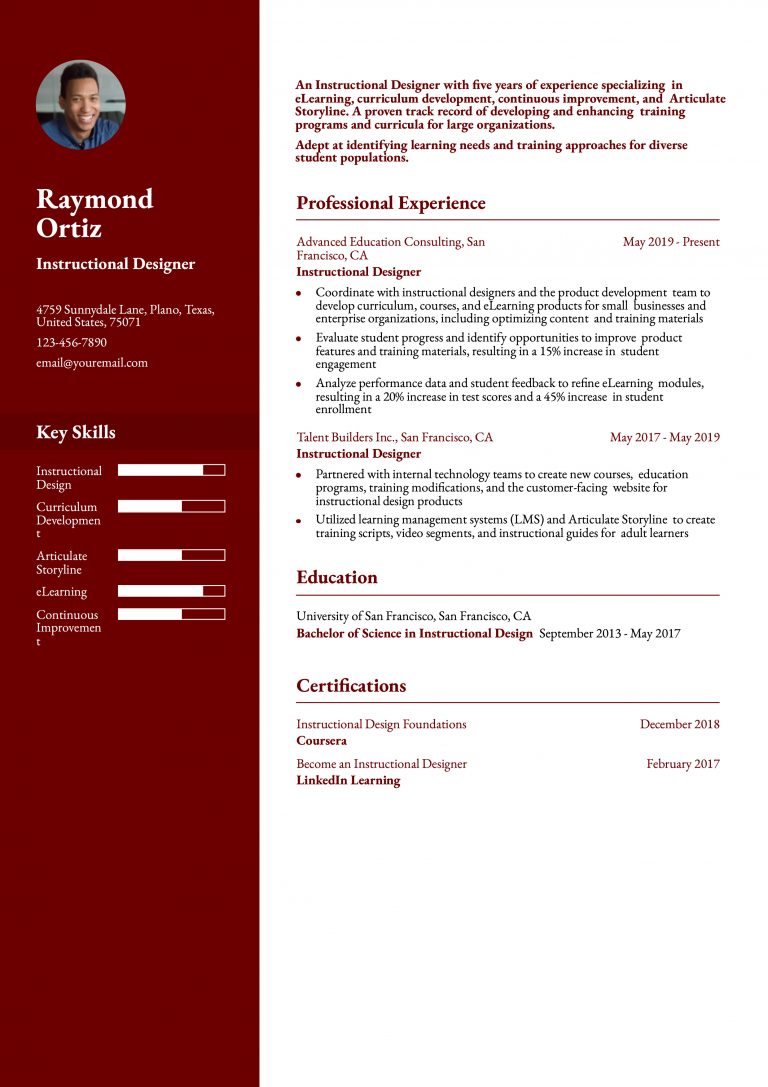

To write a winning instructional design resume, demonstrate subject matter expertise in education technology, learning management systems (LMS), and instructional design principles. Highlight the impact of your professional achievements on staff development and customer training by incorporating key metrics and monetary figures. Read on for valuable tips and insights to help translate your career into an accomplishment-driven resume.
Most Popular Instructional Designer Resumes
Entry-Level Instructional Designer Resume
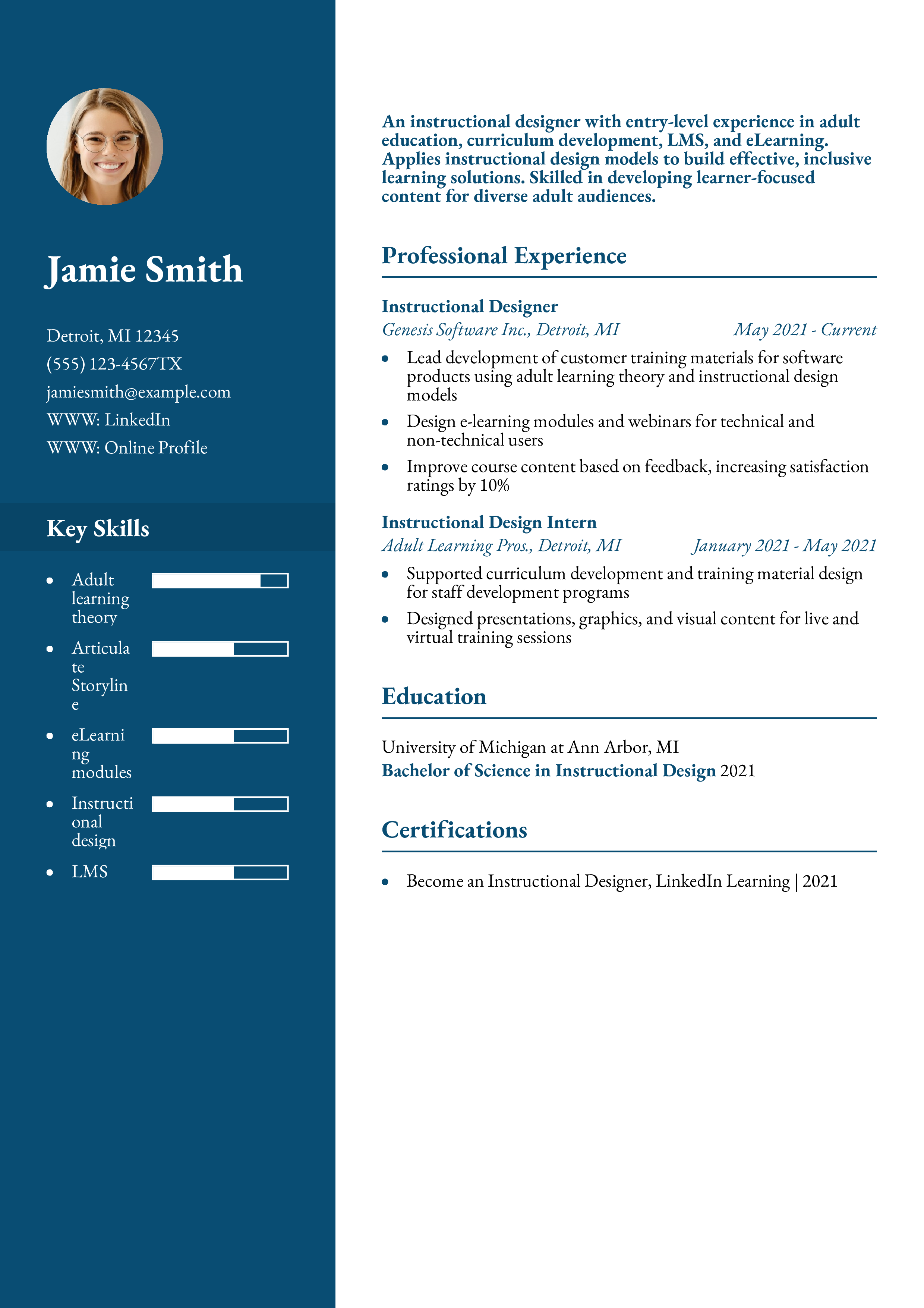
Why This Resume Stands Out
This resume shows how someone new to the field can highlight transferable skills and real-world impact through internships and early career roles. The profile is clear and focused, and the structure allows employers to identify relevant experiences quickl
eLearning Content Developer Resume
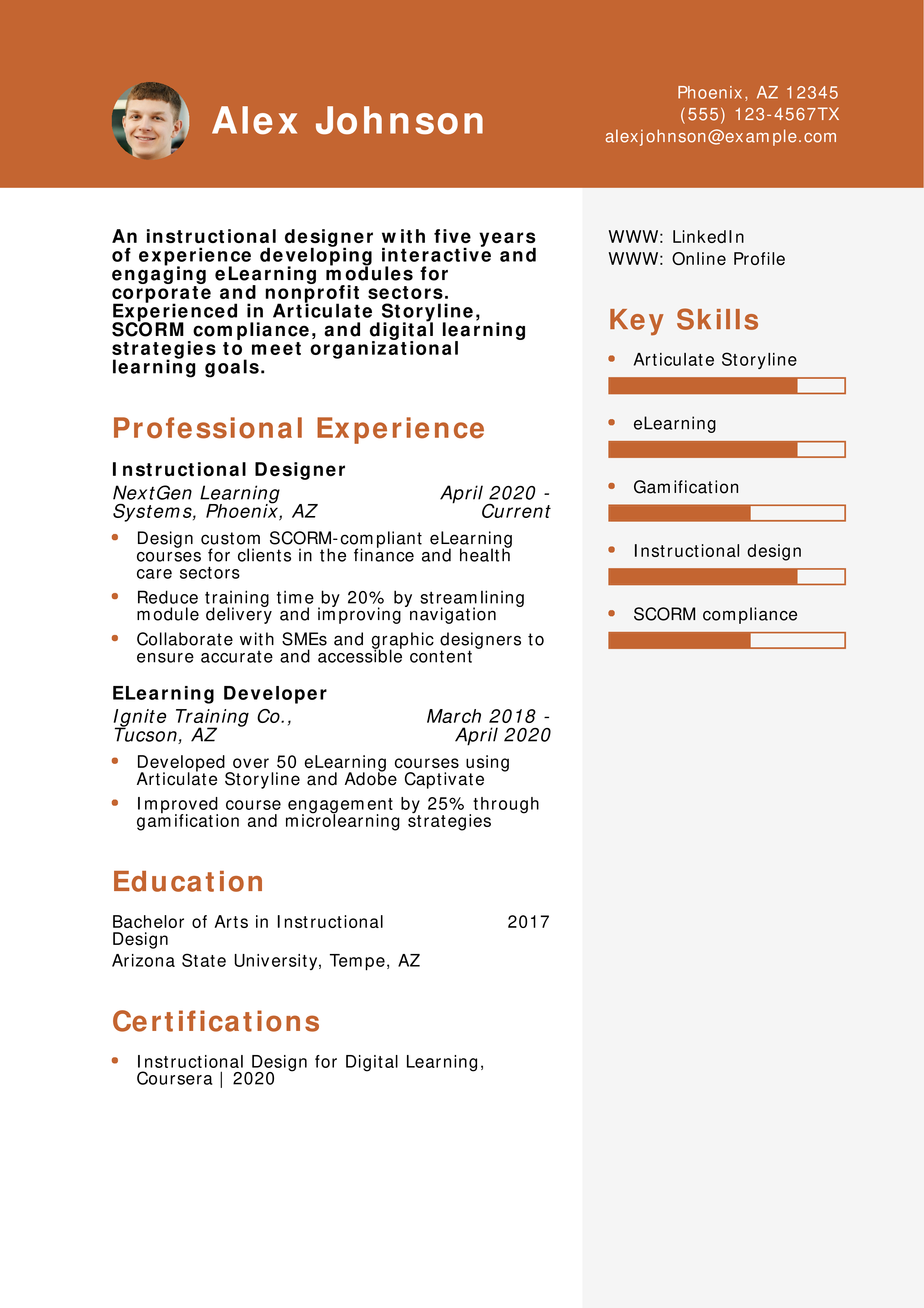
Why This Resume Stands Out
This resume demonstrates a strong grasp of technical tools while showcasing clear project outcomes. By referencing the impact of design choices, it positions the applicant as someone who drives results.
Senior Instructional Systems Designer Resume
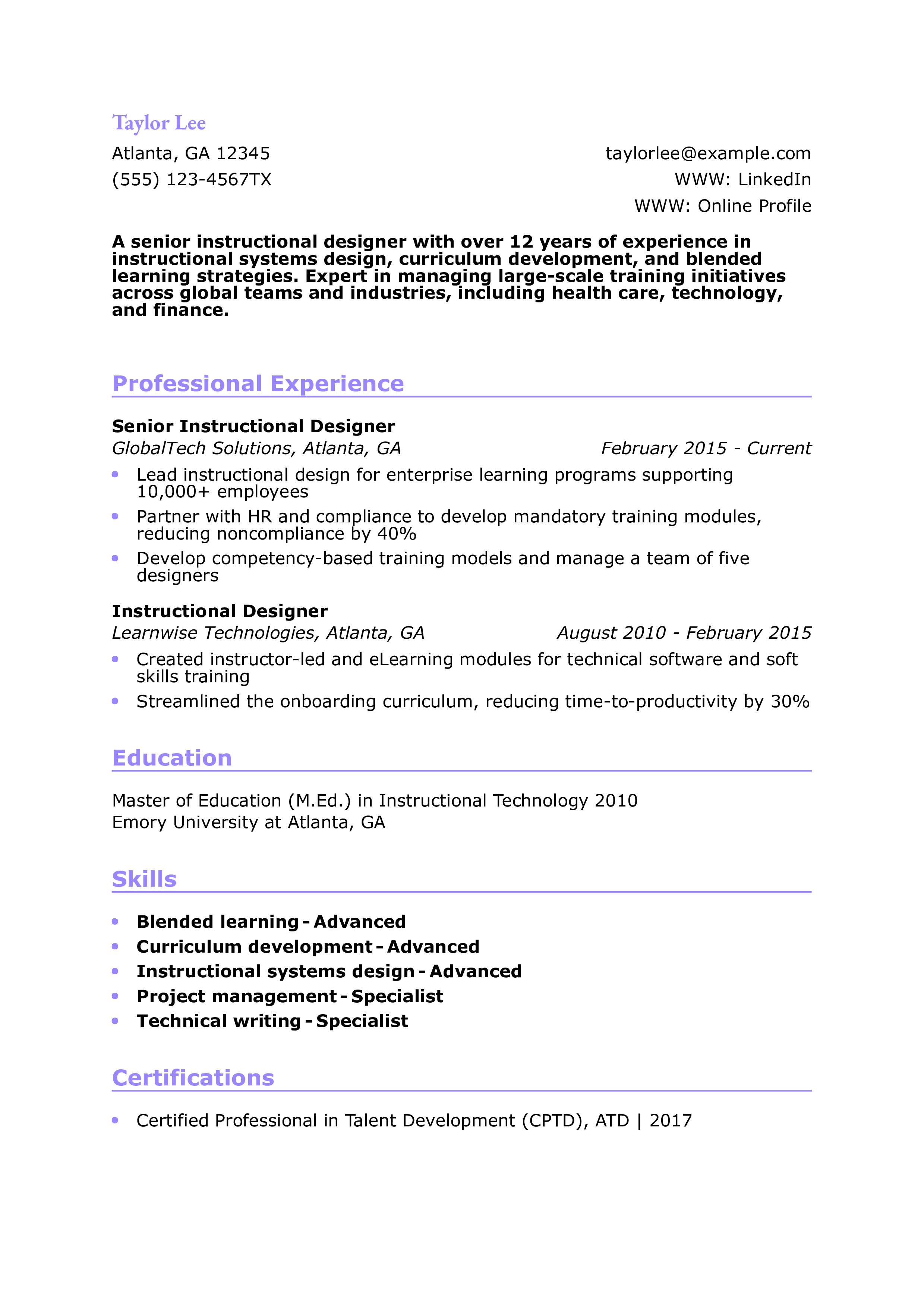
Why This Resume Stands Out
This resume reflects the applicant’s leadership in the field, showcasing strategic thinking and measurable results in large-scale programs. It also demonstrates clear career progression and mastery of instructional design across formats.
Teacher to Instructional Designer Resume
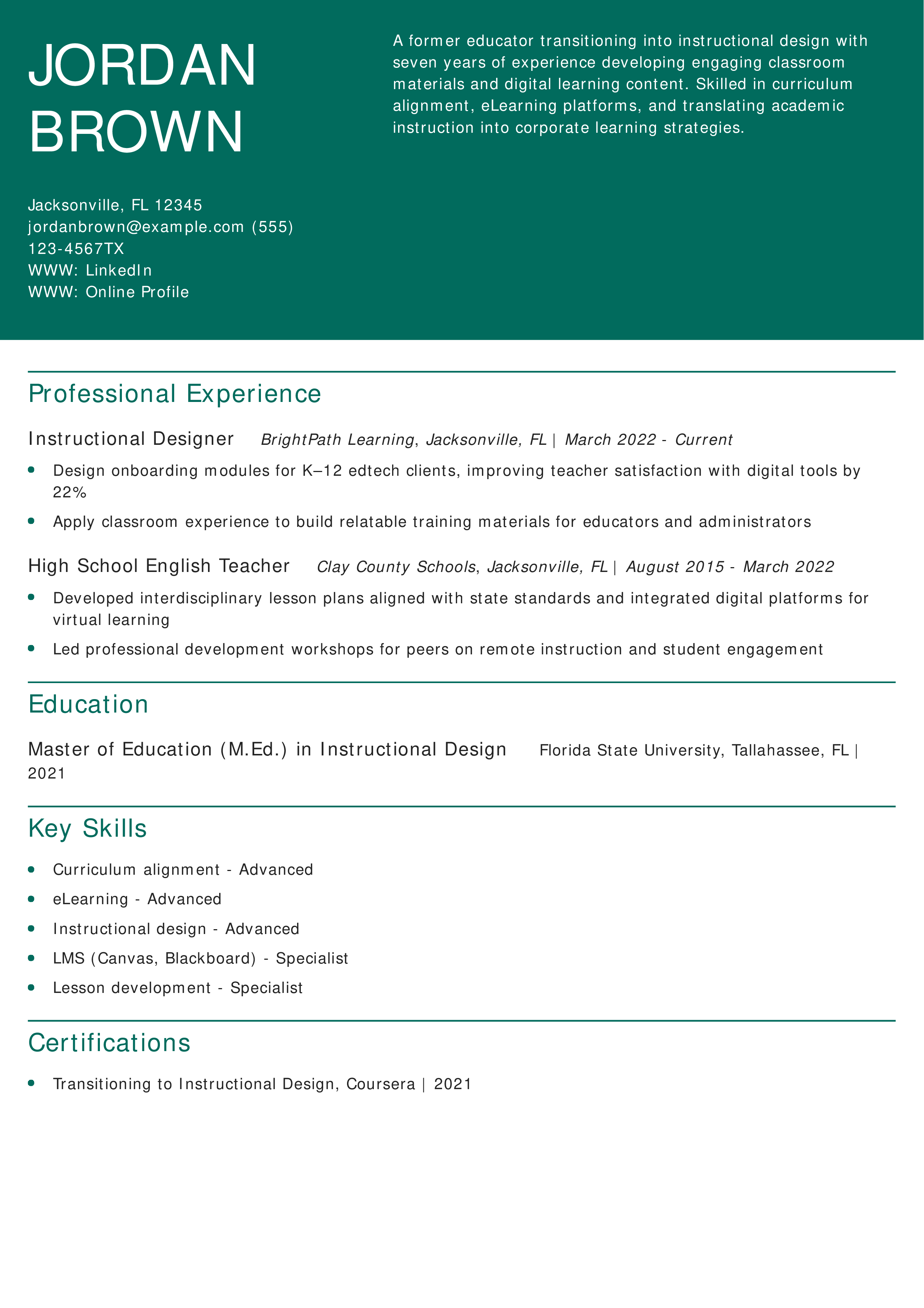
Why This Resume Stands Out
This resume demonstrates how teaching experience translates into instructional design, especially in curriculum and technology integration. It also shows a clear transition with relevant certifications and advanced education.
Epic Instructional Designer Resume
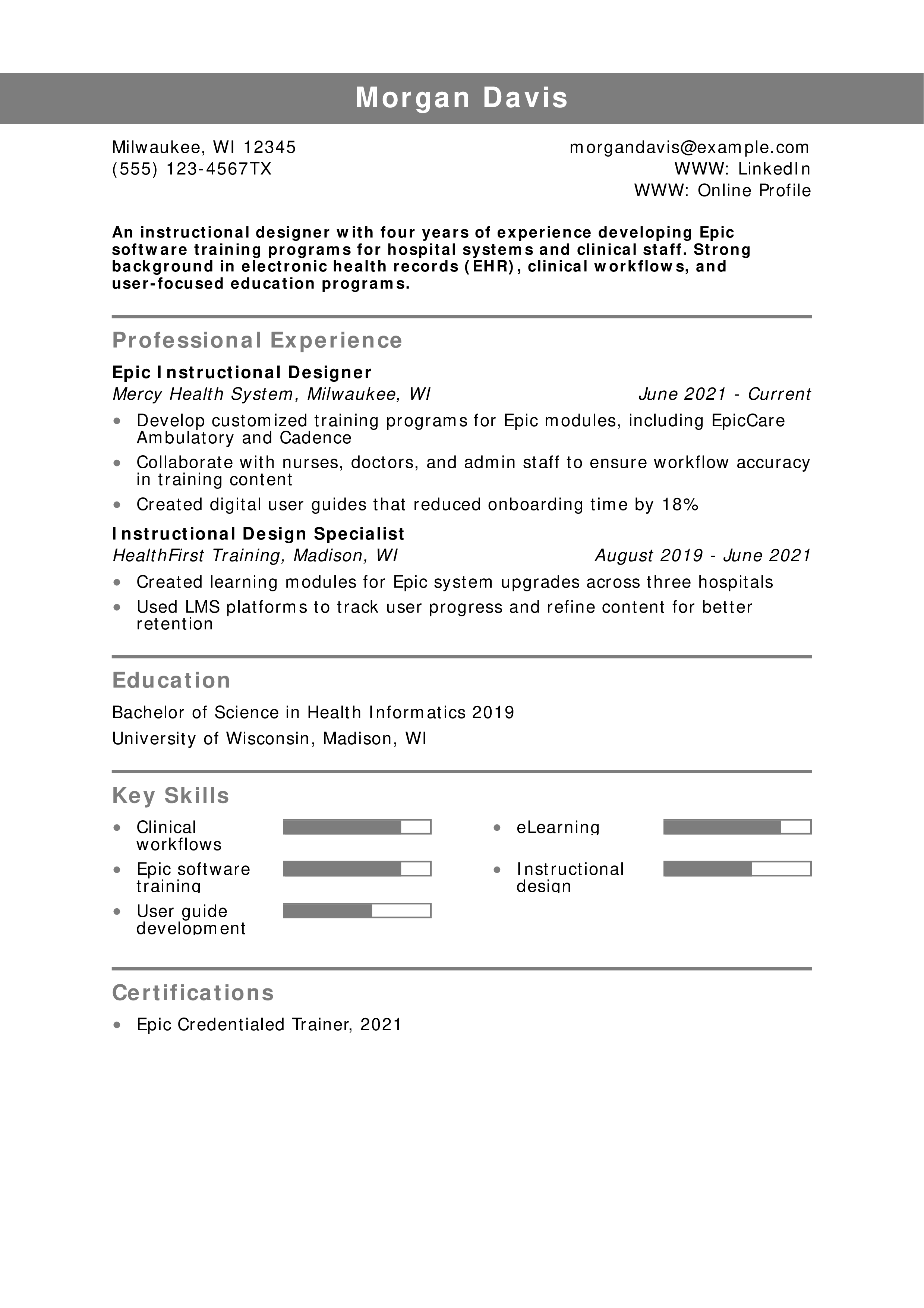
Why This Resume Stands Out
This resume directly connects the applicant's instructional design skills to Epic system training, a highly specialized niche. It also quantifies impact and shows collaboration with health care professionals.
Freelance Instructional Designer Resume
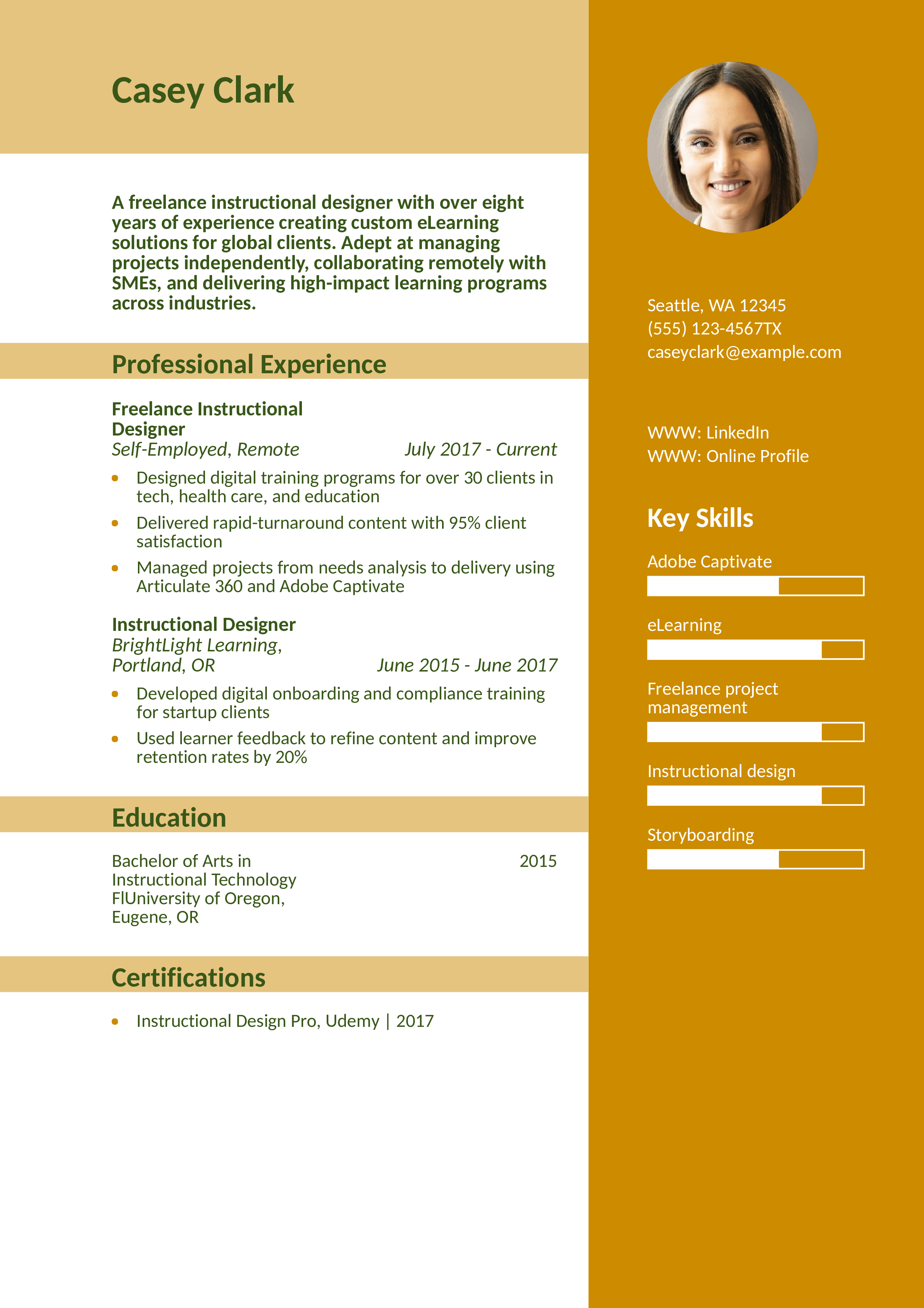
Why This Resume Stands Out
This resume showcases independent project success, client satisfaction, and adaptability — key qualities for freelance roles. It also reflects a solid grasp of tools and processes essential for remote work.
Caveo Instructional Designer Resume
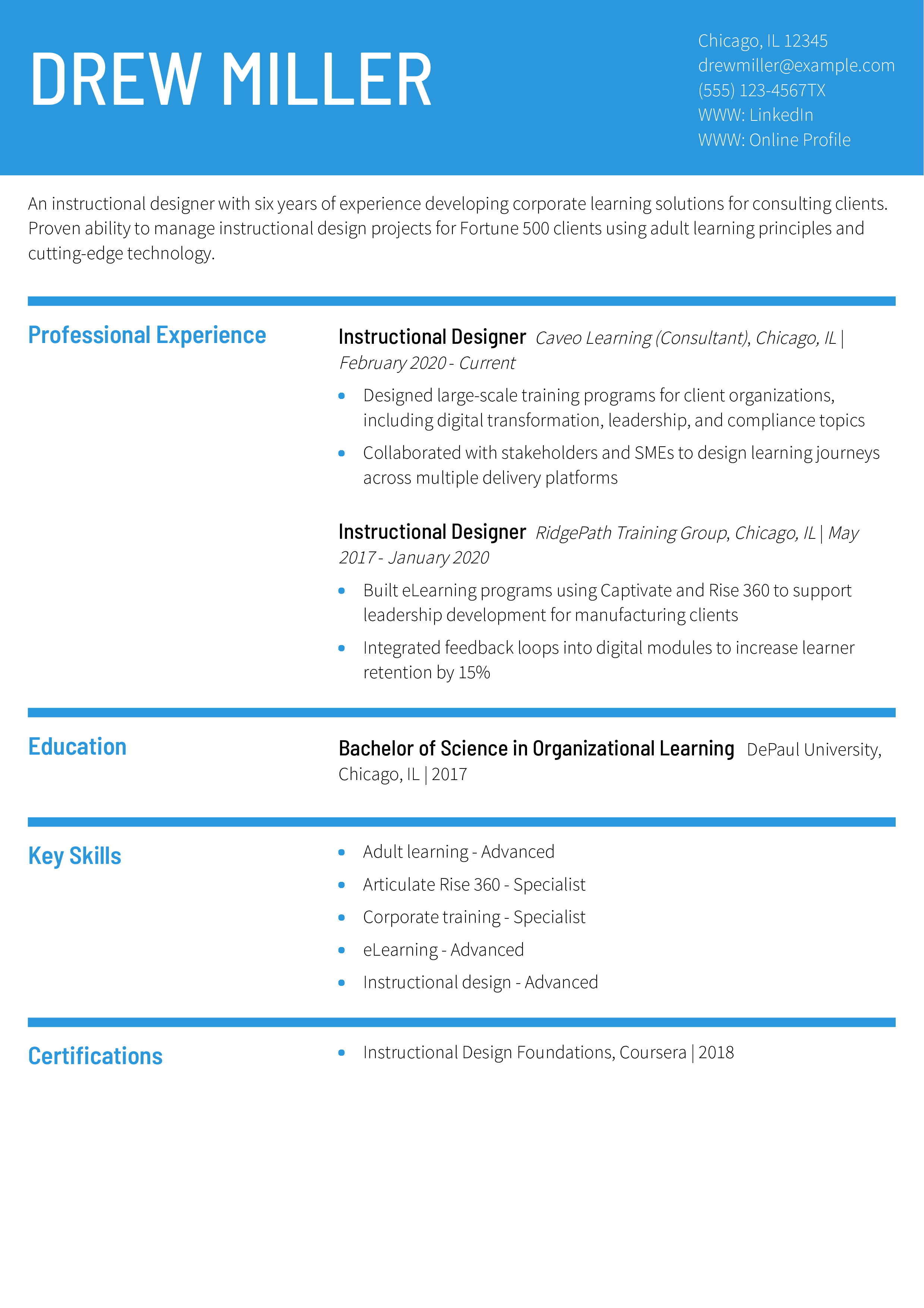
Why This Resume Stands Out
This resume emphasizes consulting experience and the ability to design for multiple client industries. It’s well-organized and highlights technical and strategic competencies.
Cerner Instructional Designer Resume
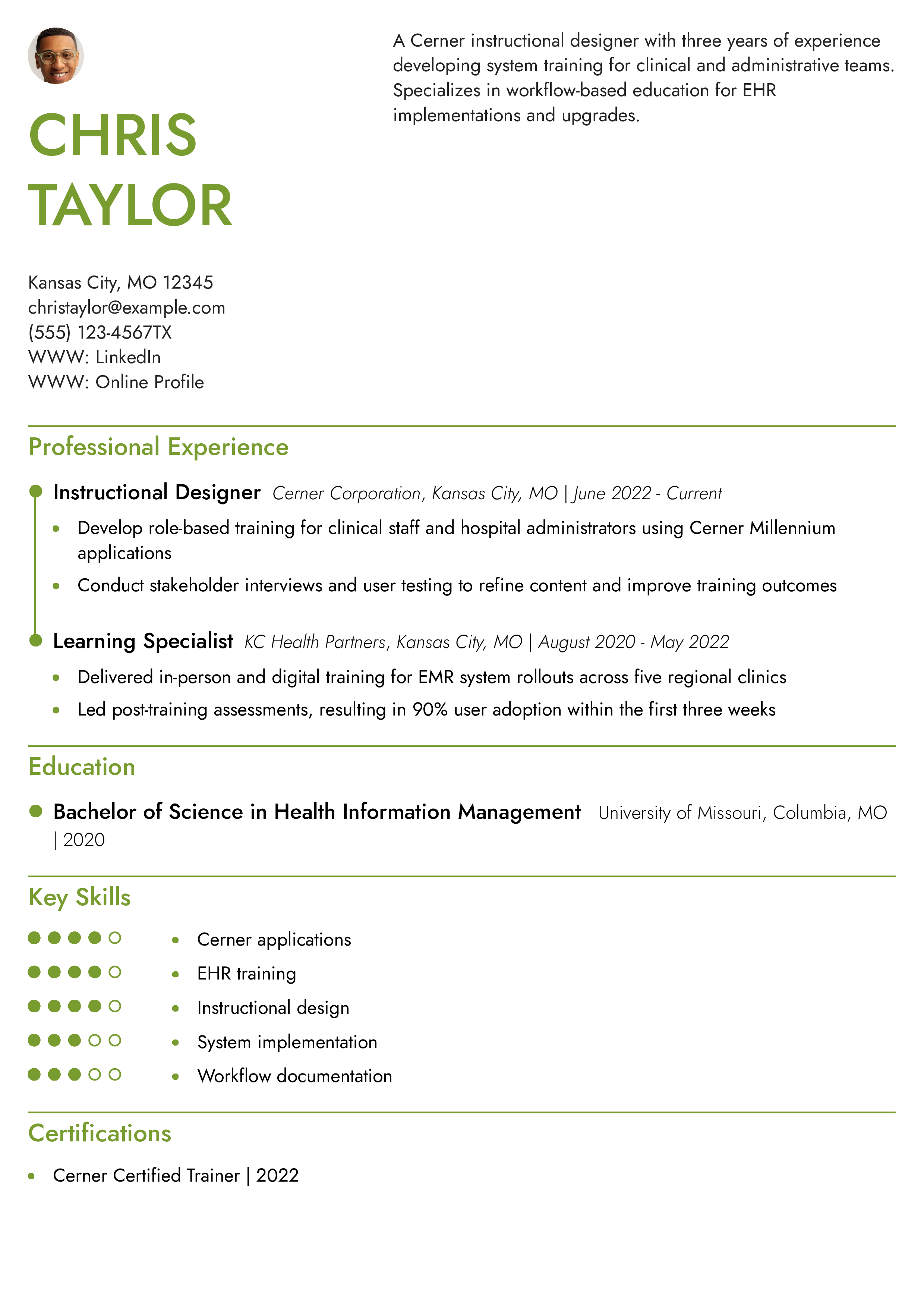
Why This Resume Stands Out
This resume clearly focuses on a specialized skill set in EHR systems. It highlights role-specific training outcomes and shows how instructional design supports clinical operations.
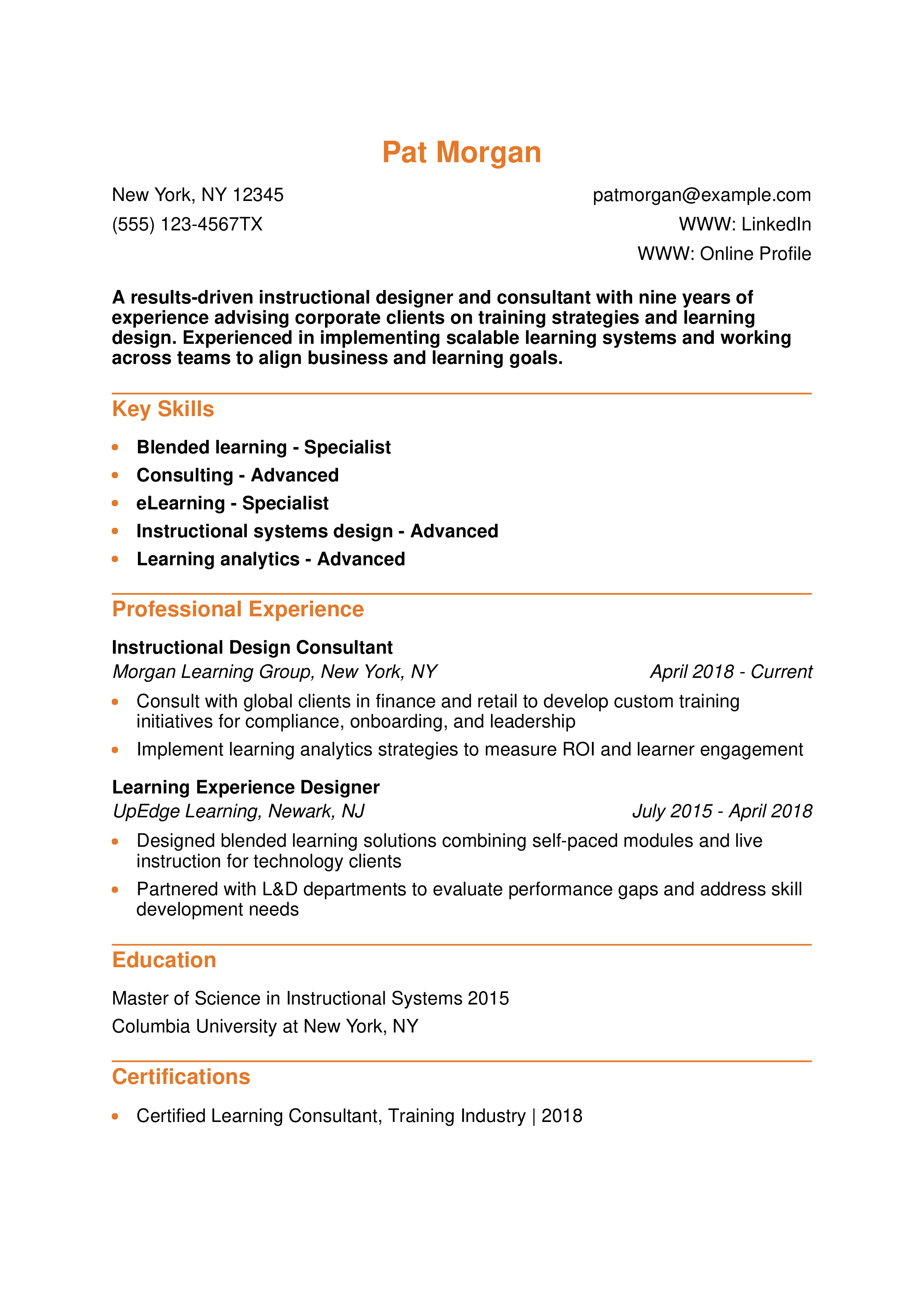
Instructional Designer Consultant Resume
Why This Resume Stands Out
This resume does a great job of blending instructional design expertise with consulting work. It shows how the candidate drives impact at the business level, not just in the classroom.
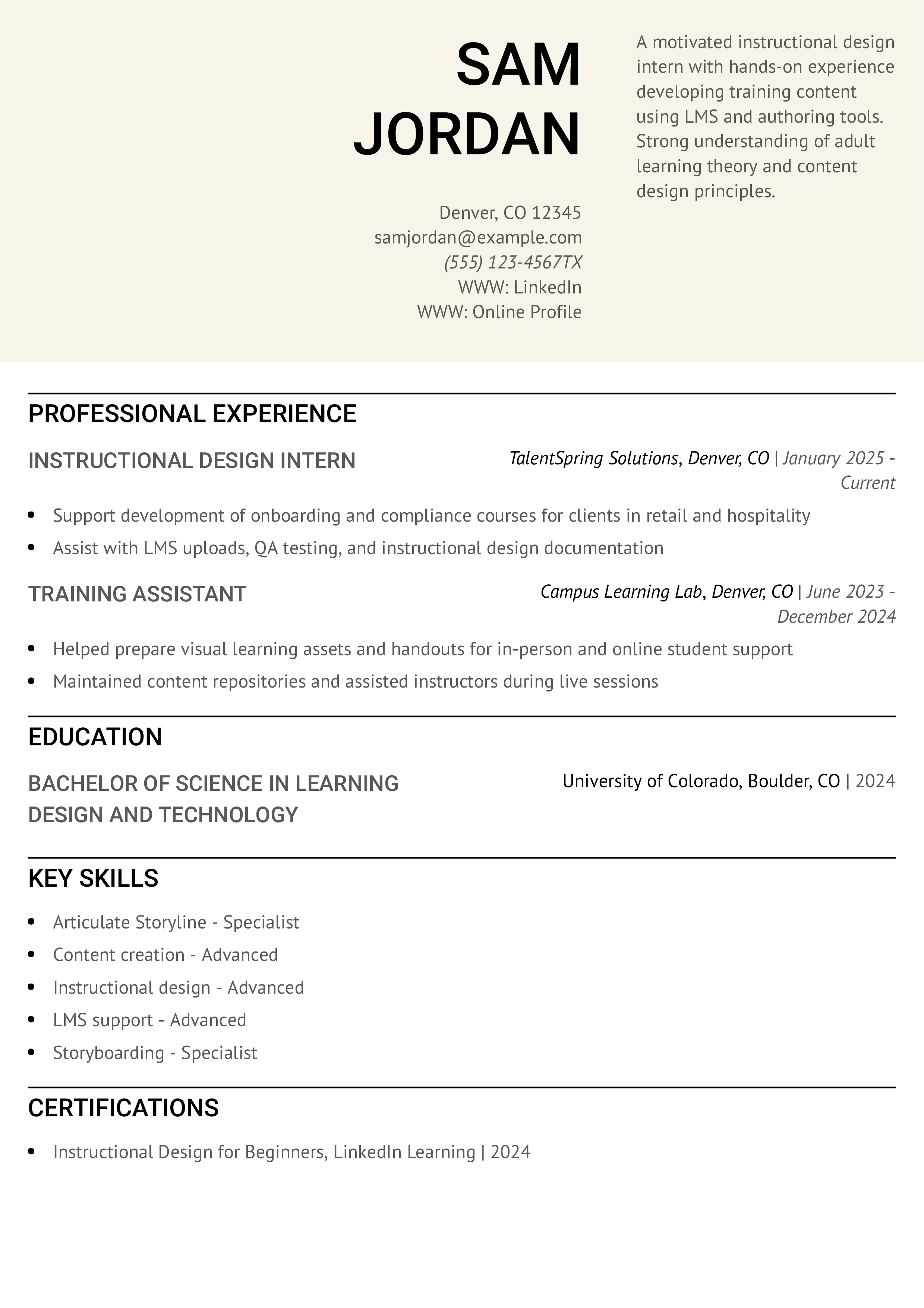
Instructional Designer Intern Resume
Why This Resume Stands Out
This resume clearly shows an early-career candidate actively applying classroom knowledge. It reflects relevant tools, shows initiative, and demonstrates readiness to learn on the job.
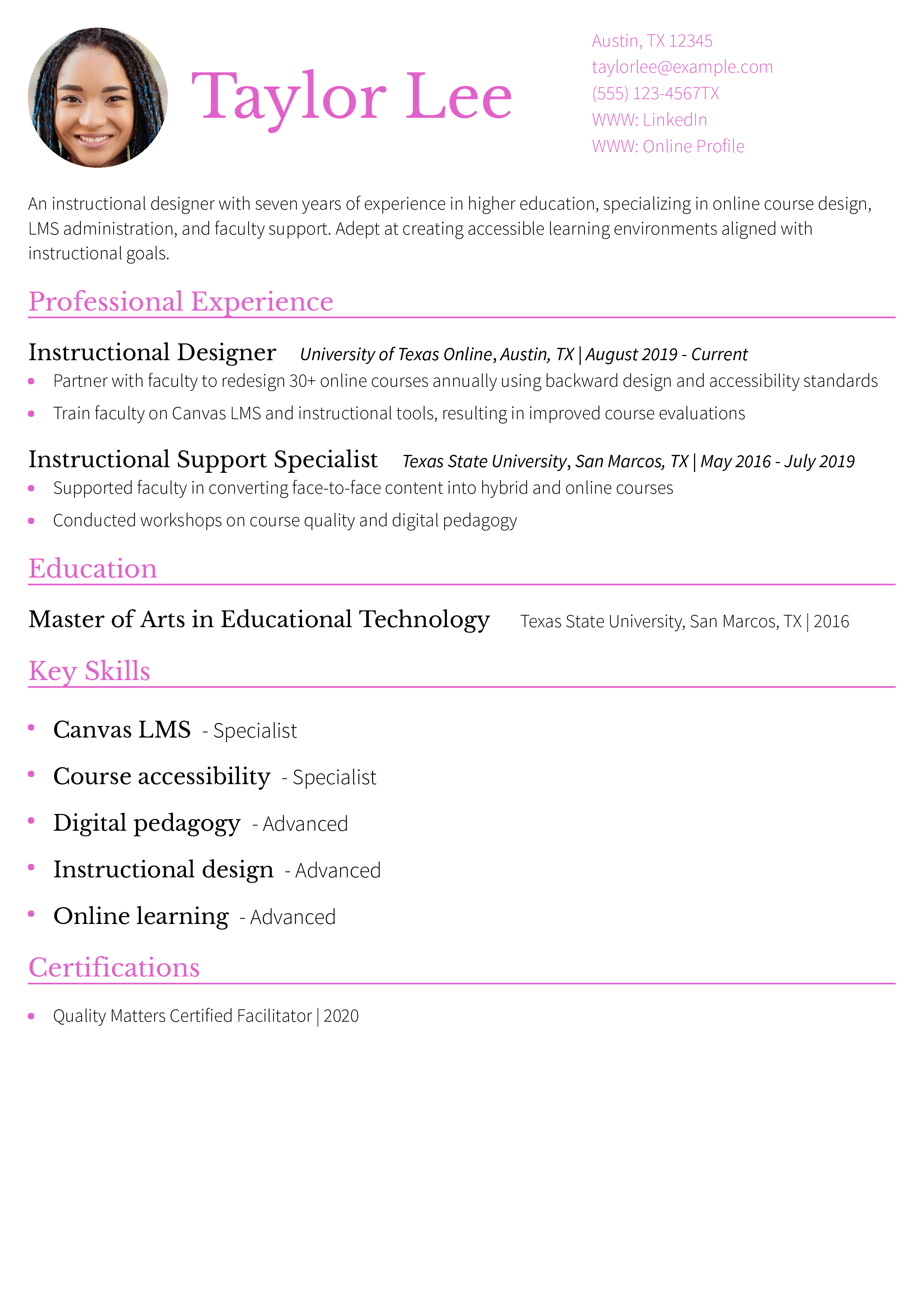
Higher Education Instructional Designer Resume
Why This Resume Stands Out
This resume clearly communicates domain-specific experience in academia and online learning. It blends technical skills with teaching collaboration and institutional goals.
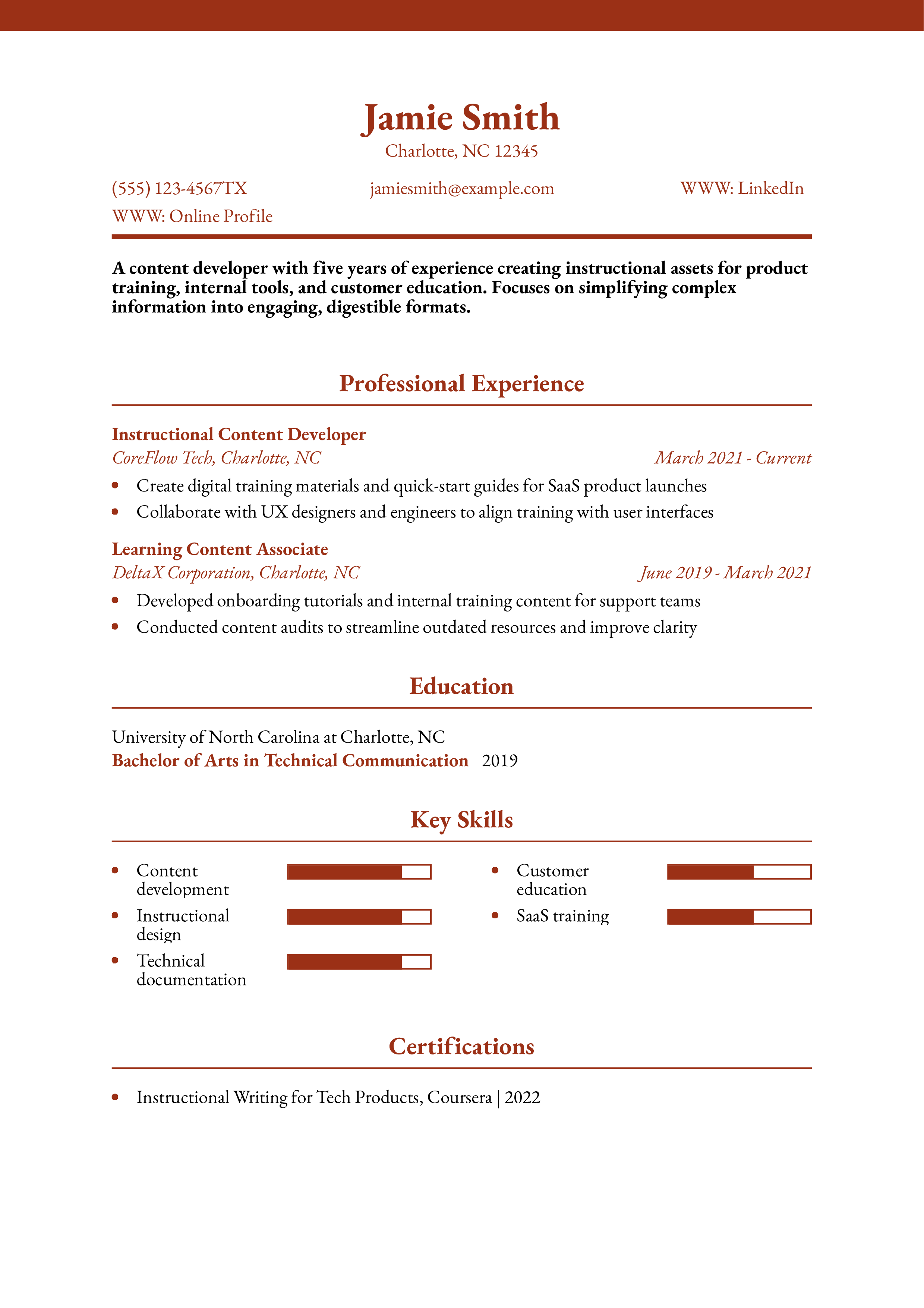
Instructional Content Developer Resume
Why This Resume Stands Out
This resume highlights content development experience tailored for technology-driven products. It shows collaboration with design and product teams, a key trait in tech environments.
Corporate Instructional Designer Resume
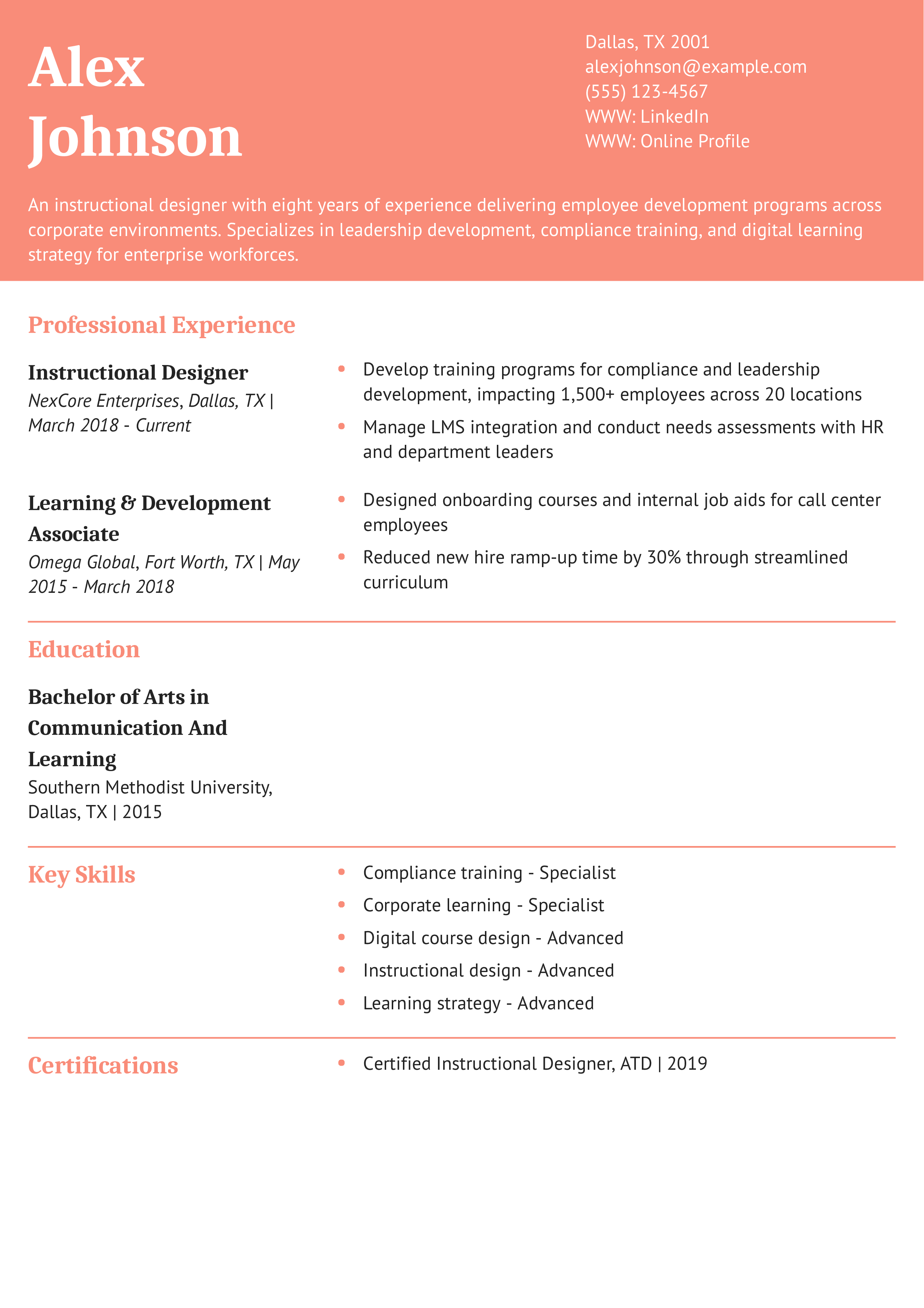
Why This Resume Stands Out
This resume reflects strong experience in large-scale employee training. The structure emphasizes business outcomes and demonstrates collaboration across departments.
Onboarding Instructional Designer Resume
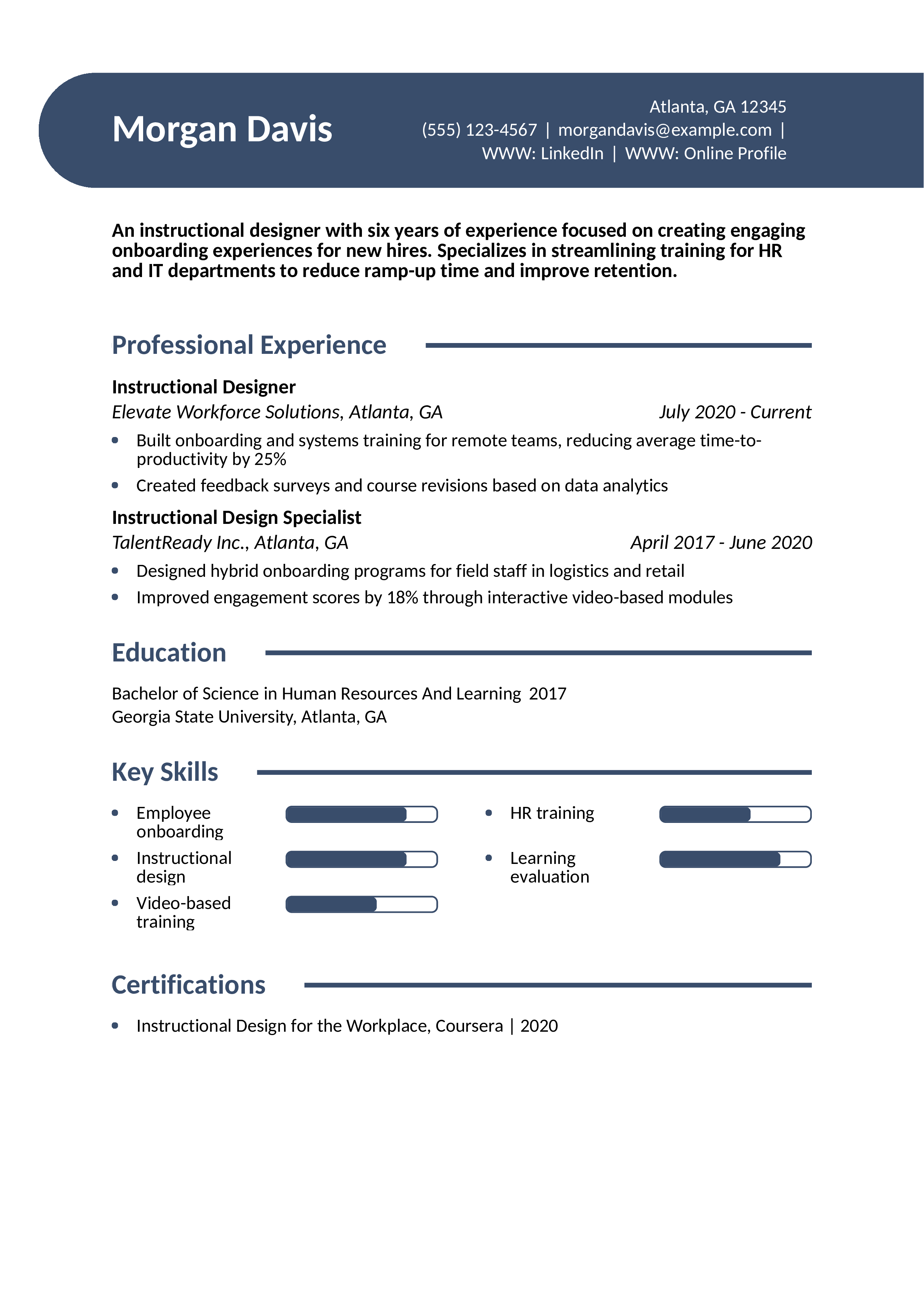
Why This Resume Stands Out
This resume focuses on a specific niche — onboarding — and does a great job quantifying performance improvements and learner satisfaction.
Remote Instructional Designer Resume
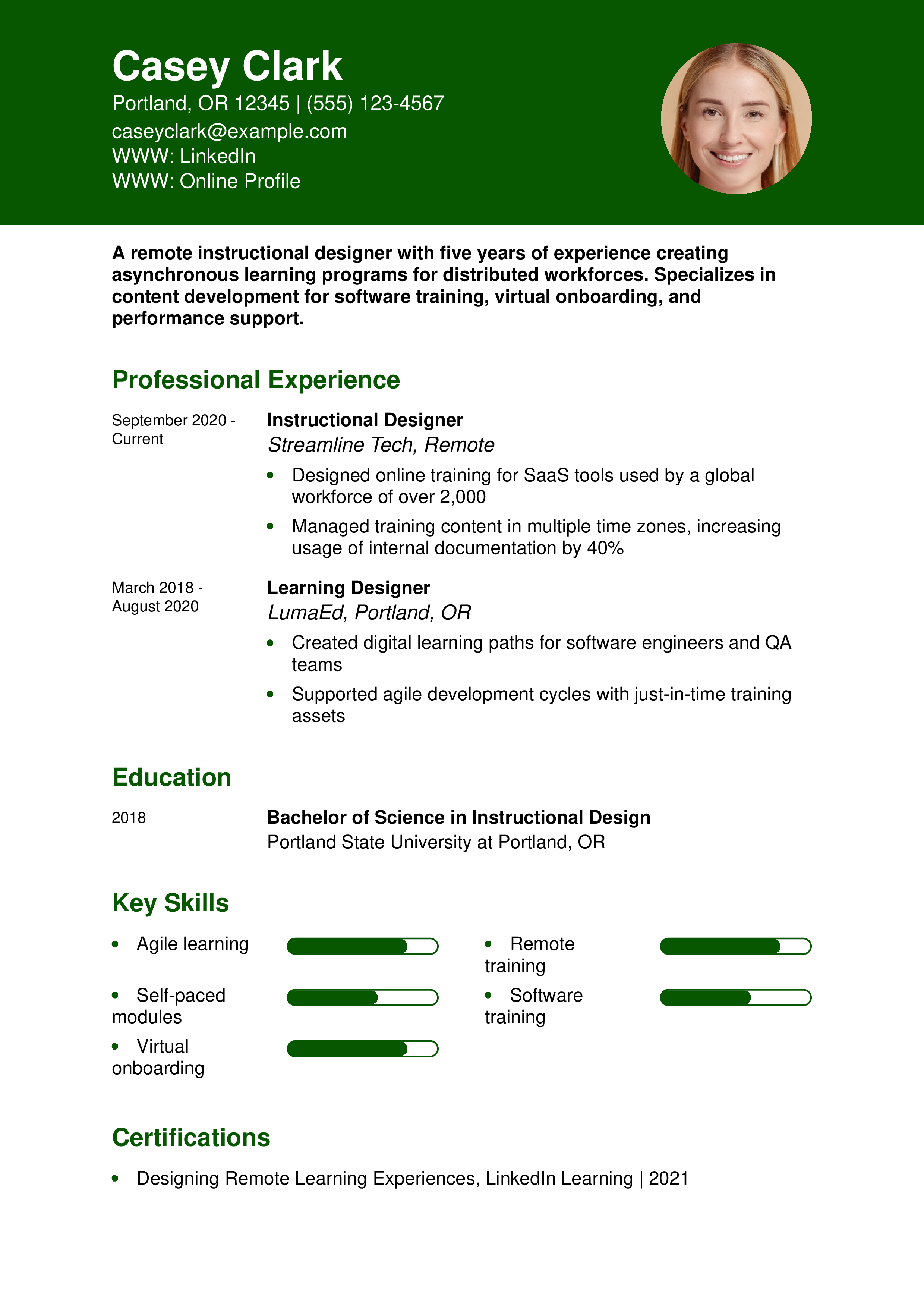
Why This Resume Stands Out
This resume shows how instructional design supports a remote-first workplace. It includes digital delivery, time zone considerations, and documentation outcomes.
Health Care Instructional Designer Resume
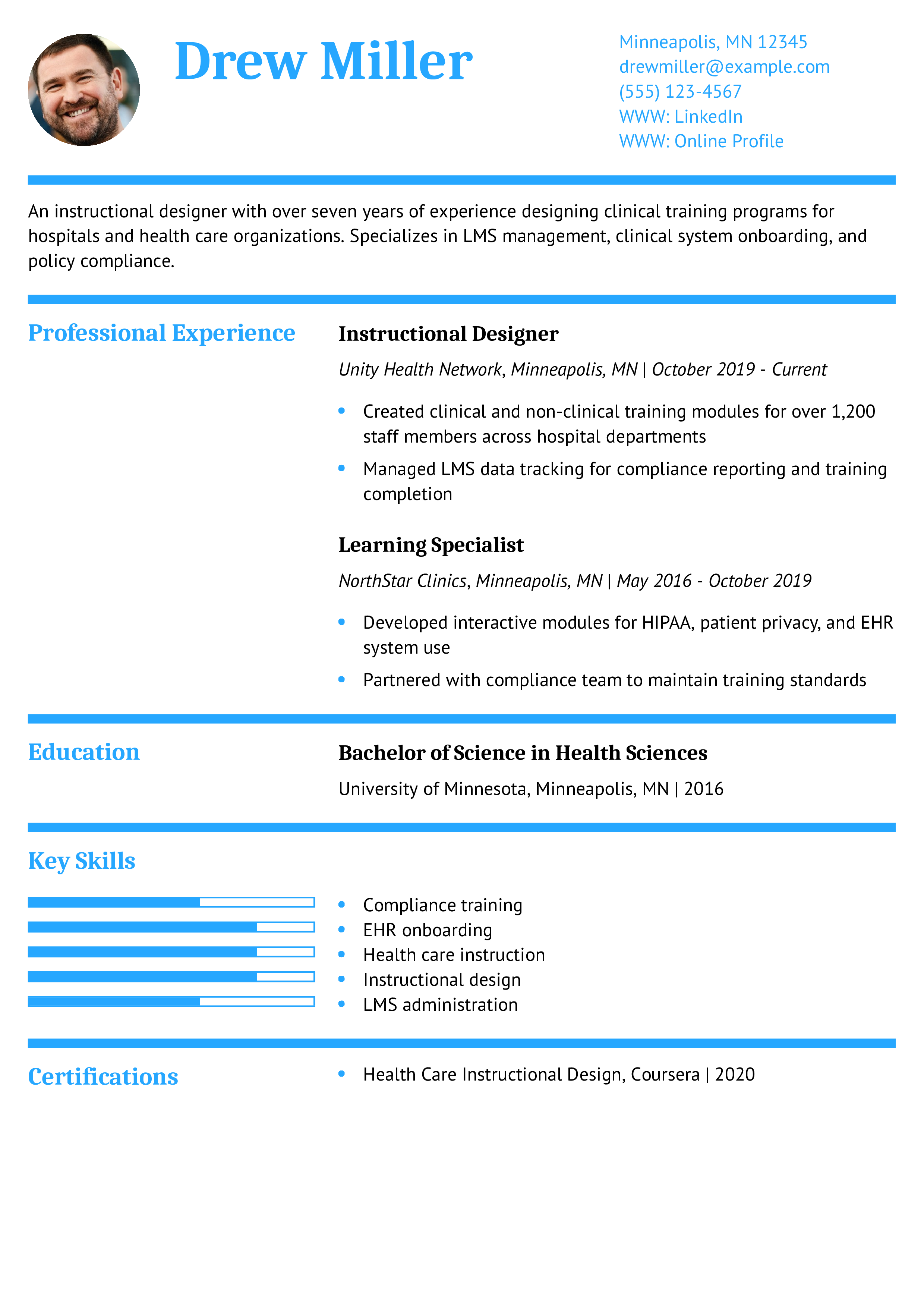
Why This Resume Stands Out
This resume is industry-specific and shows deep understanding of health care needs. The experience includes system training, regulations, and staff development.
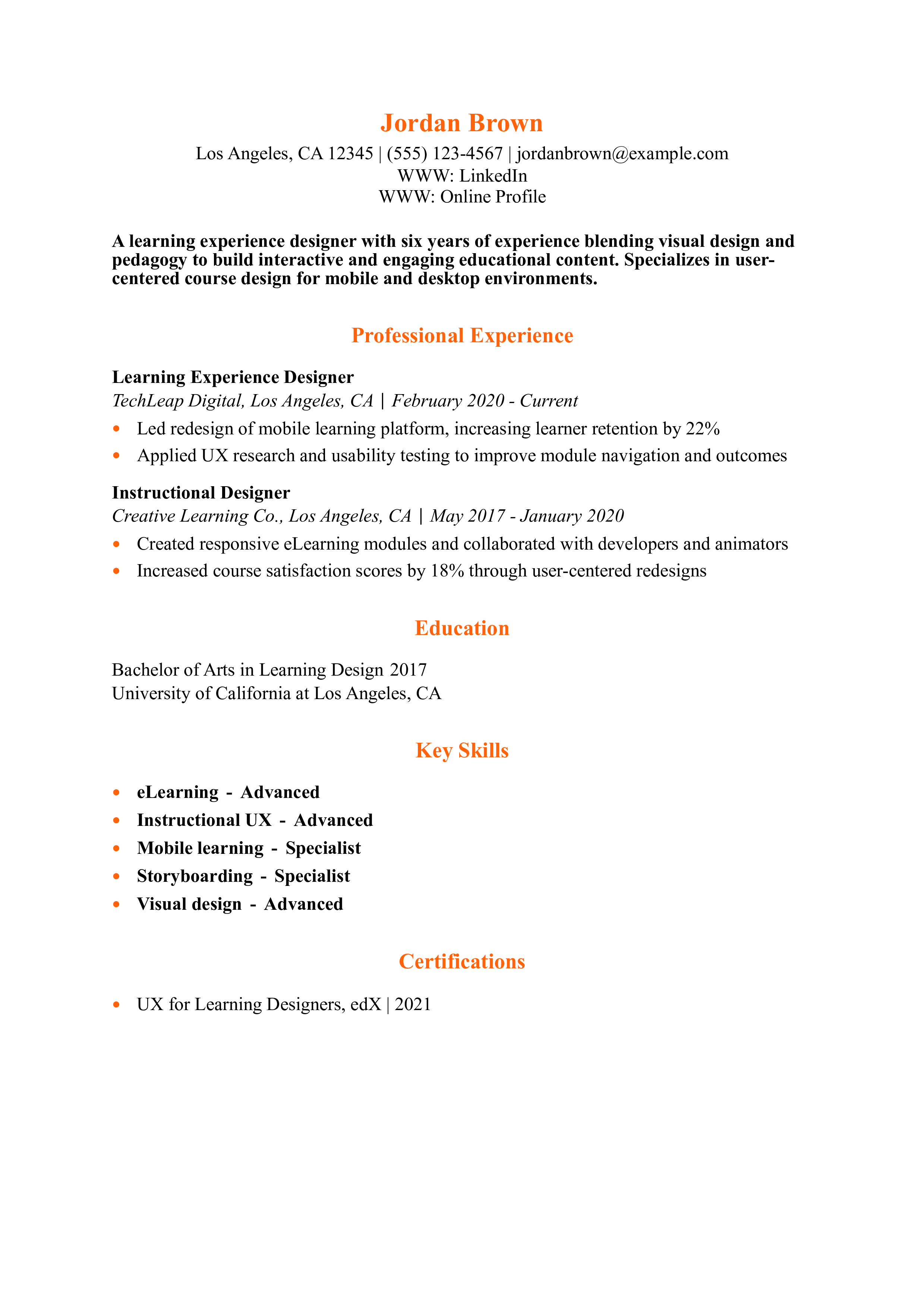
Learning Experience Designer Resume
Why This Resume Stands Out
This resume blends UX and instructional design, showing how aesthetics and usability impact learning outcomes. It also focuses on mobile-first design.
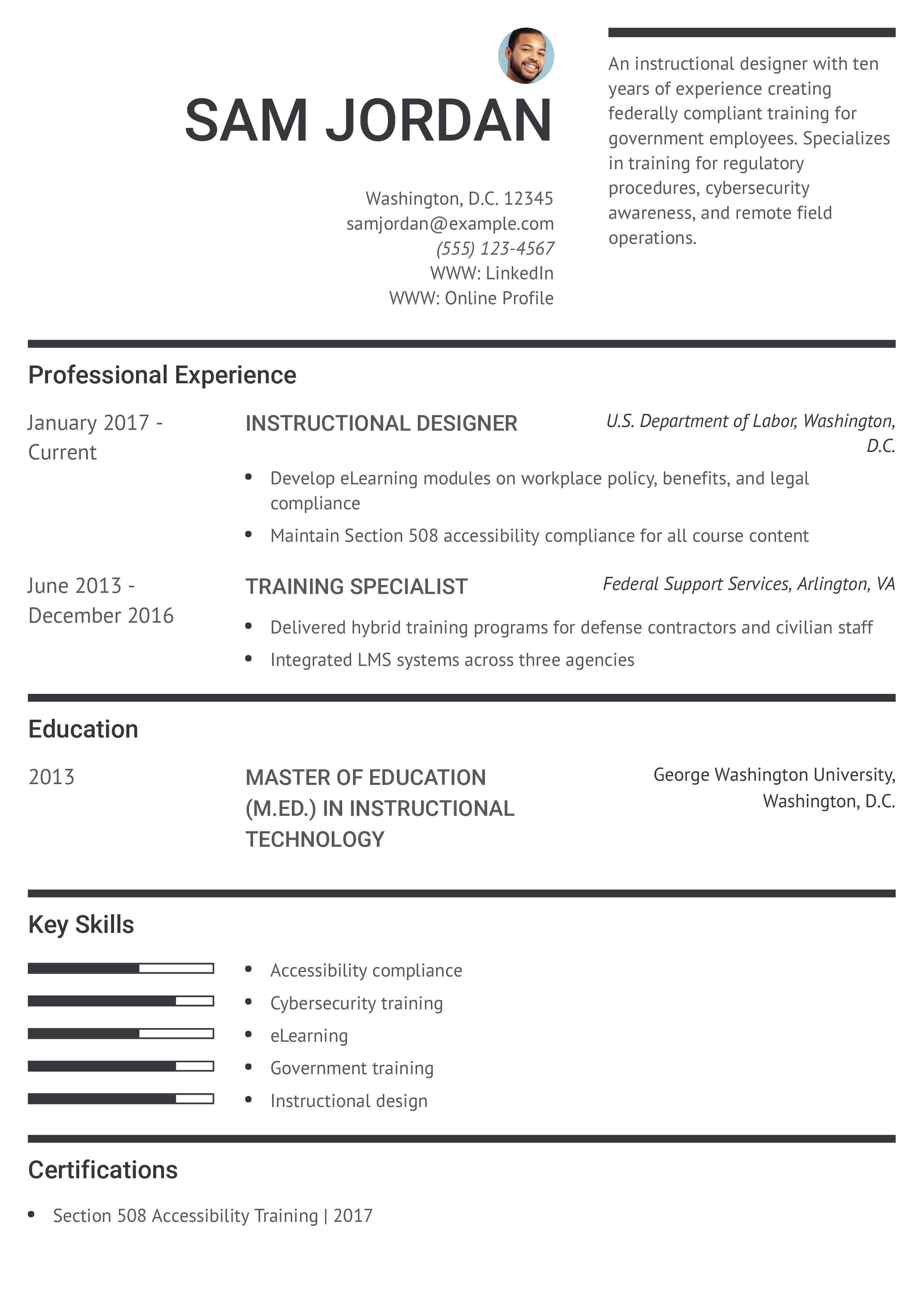
Government Instructional Designer Resume
Why This Resume Stands Out
This resume demonstrates depth in government-specific instructional design, including compliance and accessibility. It communicates precision, policy knowledge, and digital training experience.
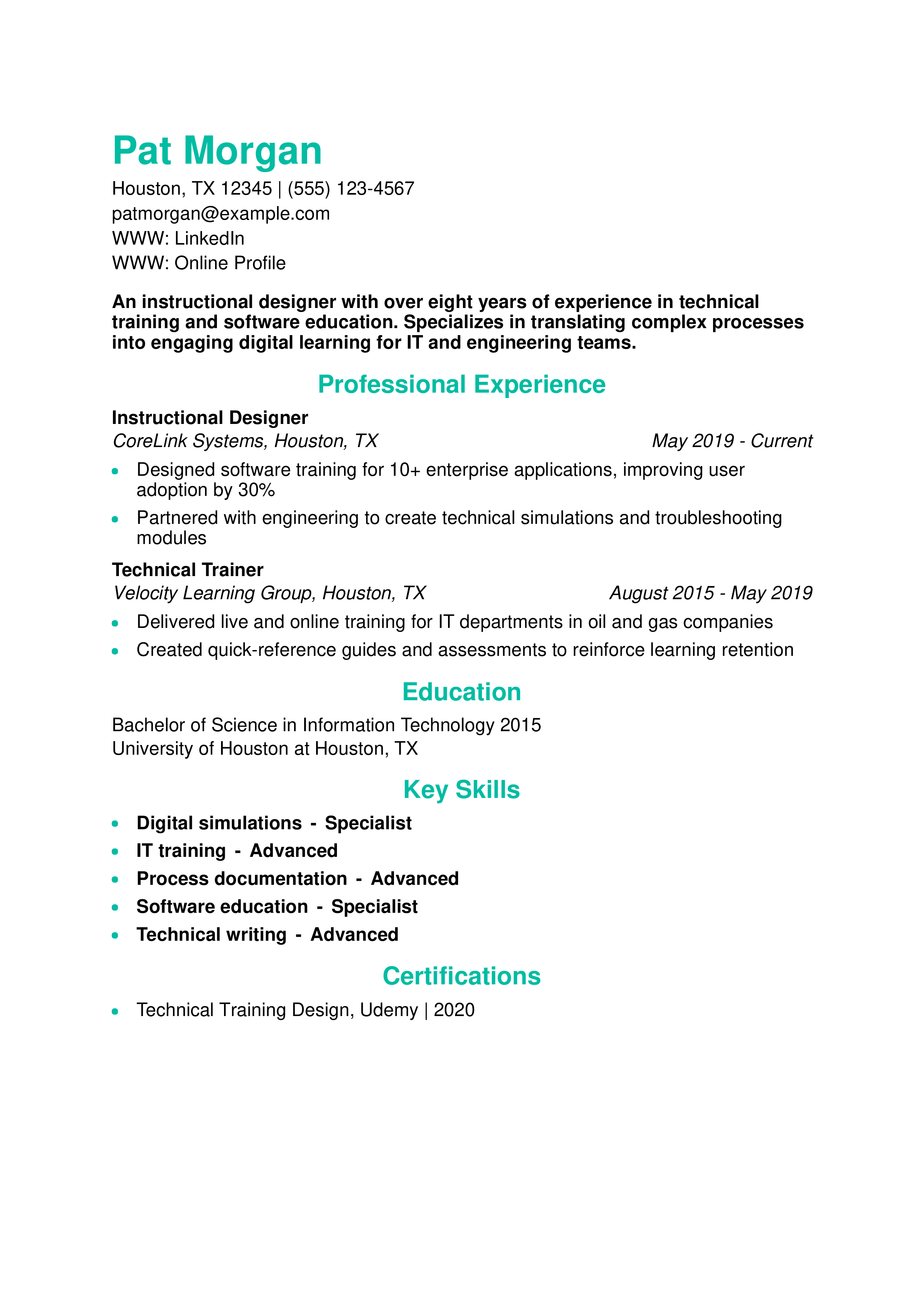
Technical Training Instructional Designer Resume
Why This Resume Stands Out
This resume clearly aligns instructional design with technical training needs. It highlights measurable outcomes like adoption rates and demonstrates cross-functional collaboration.
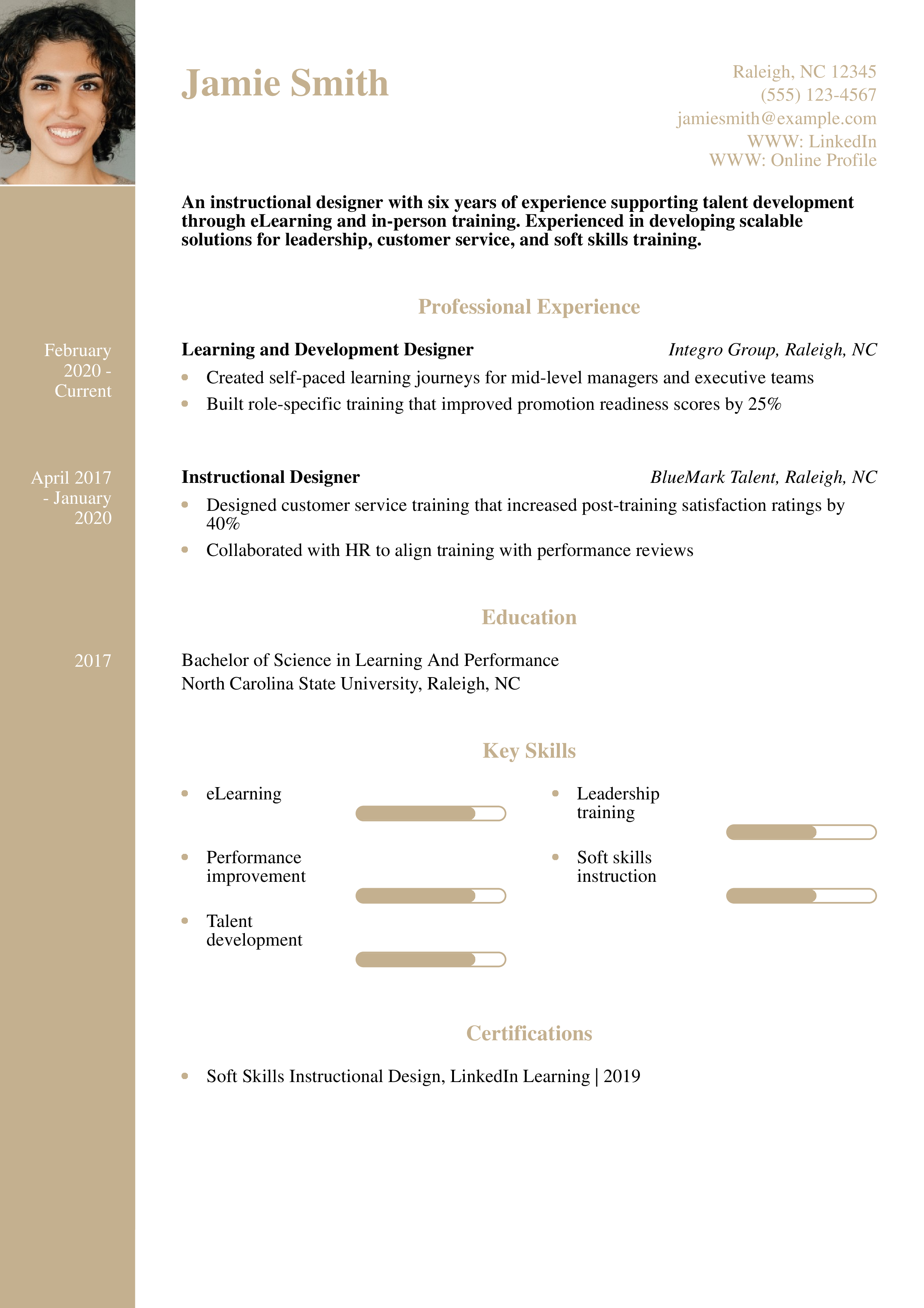
Learning and Development Designer Resume
Why This Resume Stands Out
This strong resume demonstrates alignment between training and organizational development goals. It shows how learning design supports workforce readiness.
Mobile Learning Instructional Designer Resume
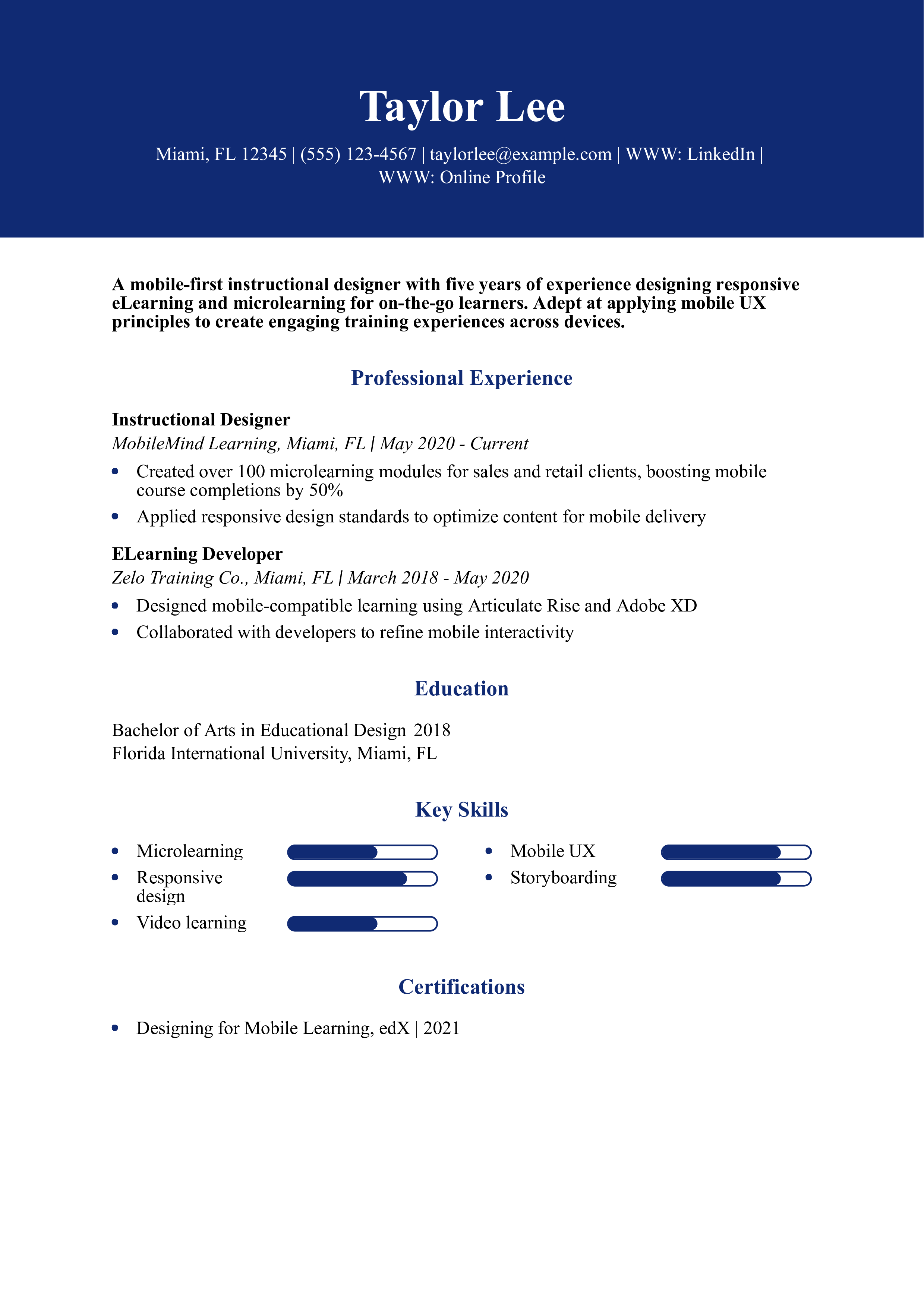
Why This Resume Stands Out
This resume stands out because it focuses on mobile learning, a fast-growing area in training. It includes relevant tools and measurable engagement outcomes.
Compliance Training Instructional Designer Resume
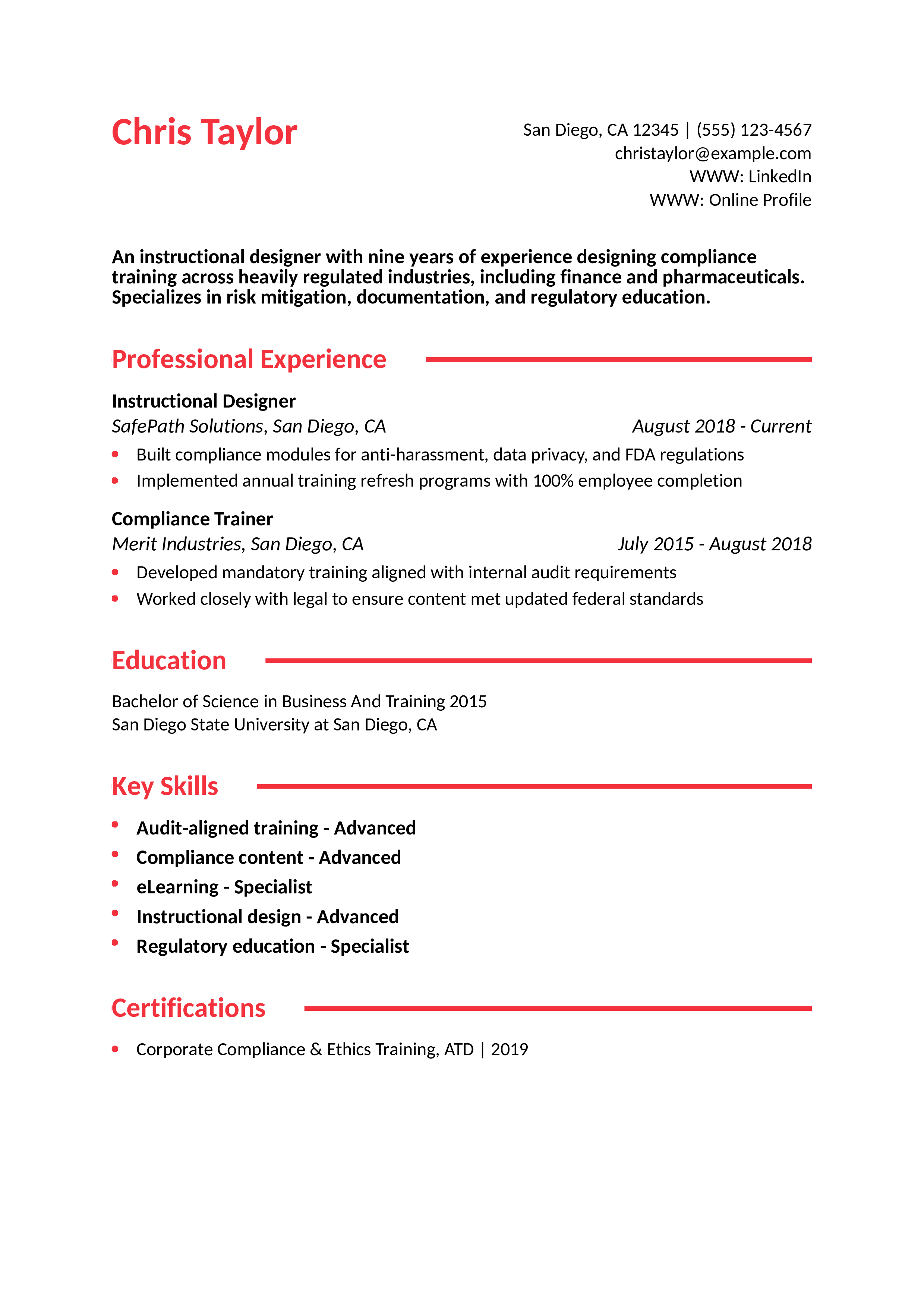
Why This Resume Stands Out
This resume demonstrates expertise in compliance training, a critical need in regulated sectors. It shows knowledge of law-aligned instruction and how to ensure company-wide adherence.reer-center/best-resume-skills/">Resume Skills
Instructional Design Coordinator Resume
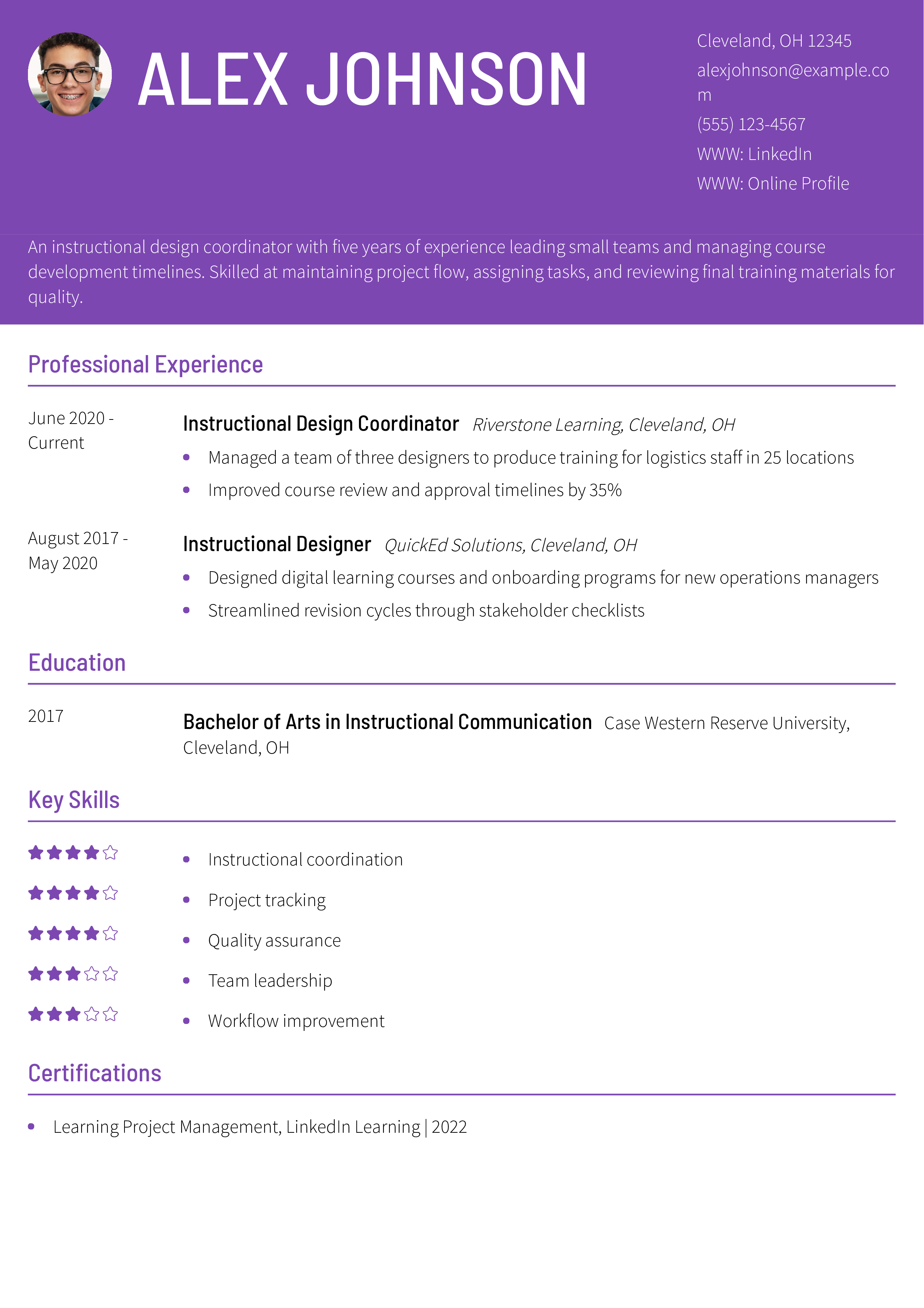
Why This Resume Stands Out
This resume stands out because it combines design experience with project coordination. It shows an ability to manage timelines and lead production teams.
Instructional Design Strategist Resume
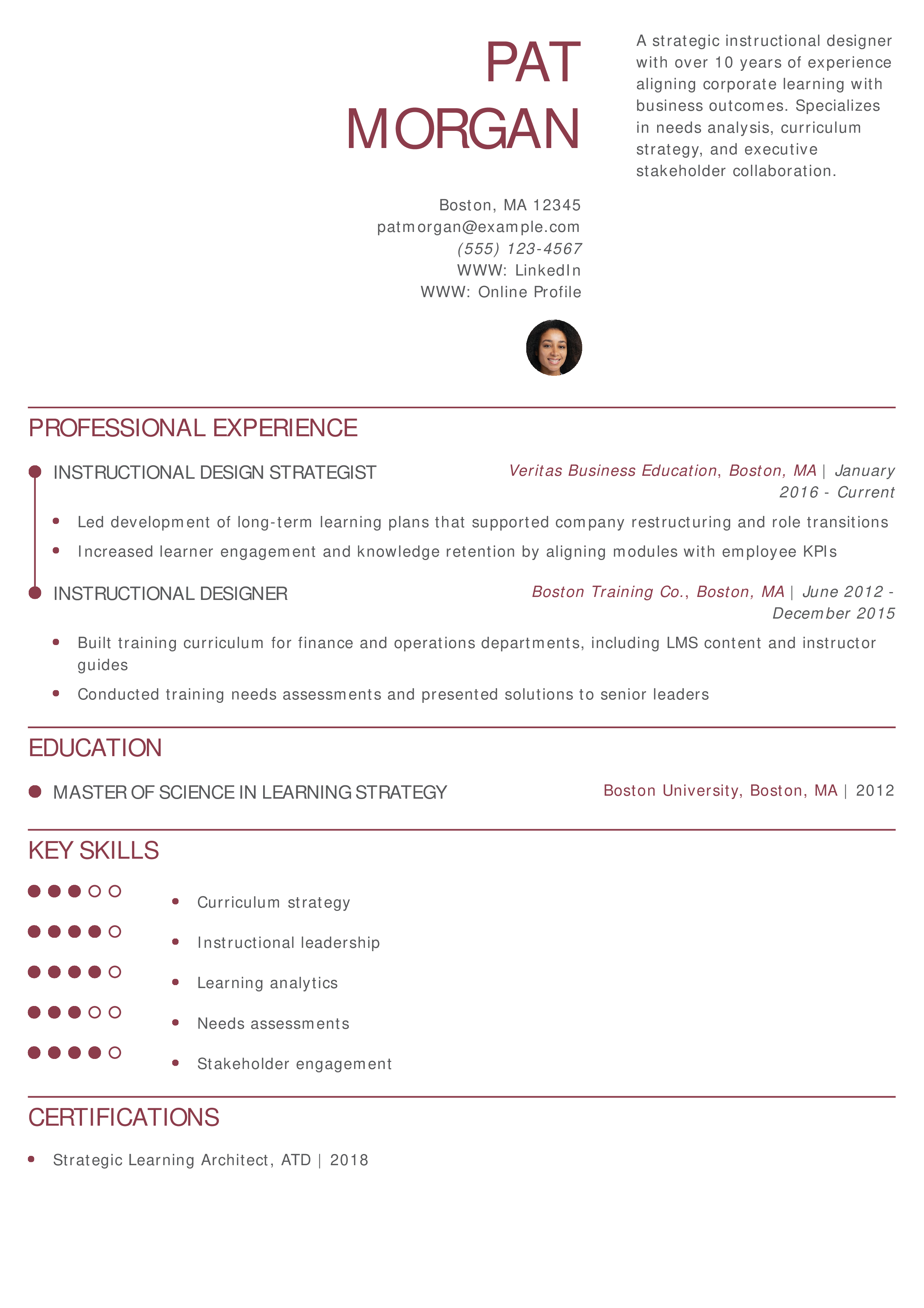
Why This Resume Stands Out
This resume shows how instructional design aligns with company goals. It emphasizes collaboration at the leadership level and the ability to guide long-term learning plans.
Nonprofit Instructional Designer Resume
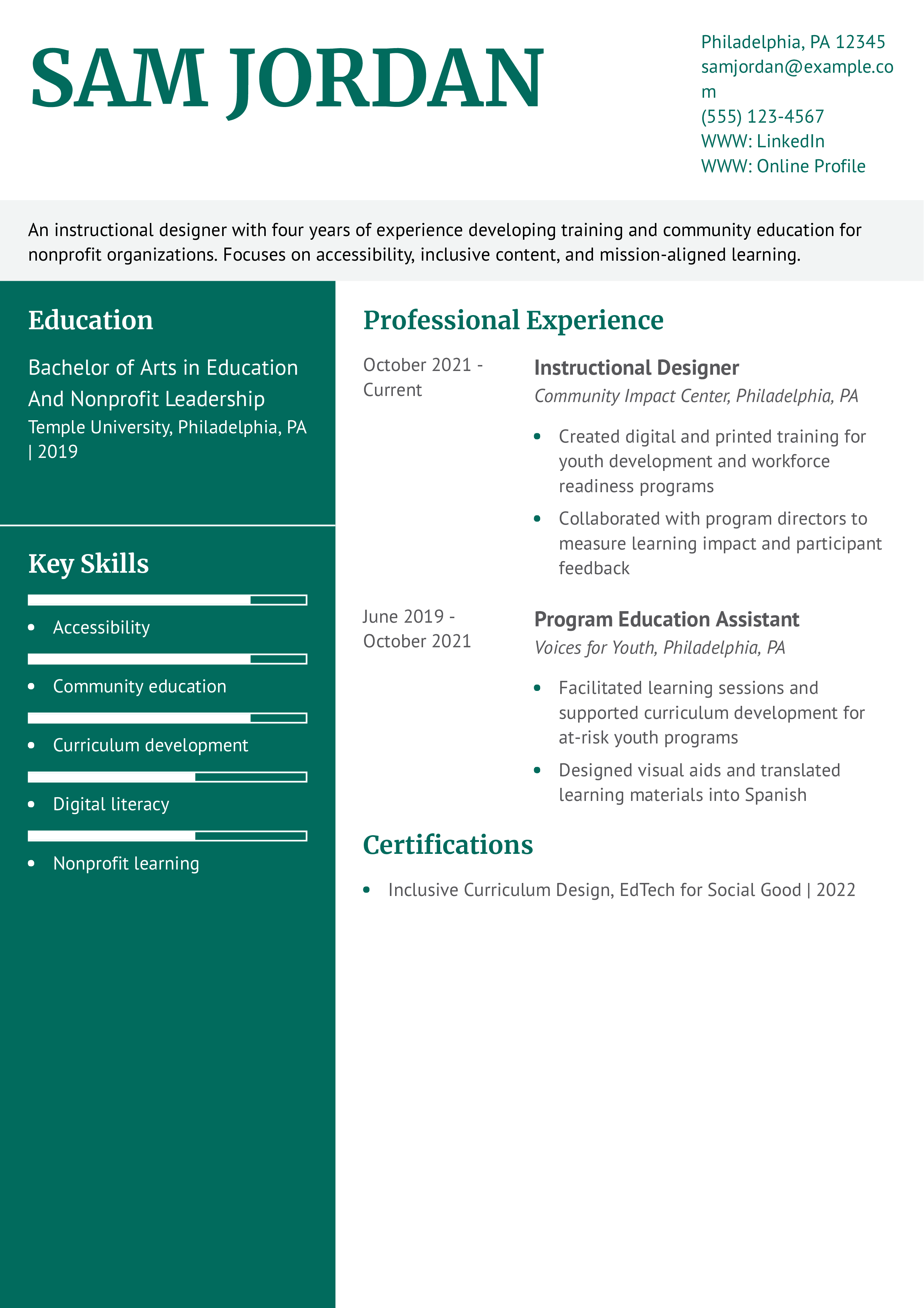
Why This Resume Stands Out
This resume highlights mission-driven work in nonprofit education. It connects learning design to social impact and showcases community-focused outcomes.
Our templates are crafted by professional resume writers to make creating your resume quick, easy, and effective.
- Professional resume template downloads
- Customized cover letter generation
- AI resume writing support
- Career-building resources and advice
Instructional Designer Text-Only Resume Templates and Examples
How To Write an Instructional Designer Resume
Instructional designers should drop generic training language and highlight full learning lifecycle ownership, from analysis to implementation. Hiring managers want to see improved learner outcomes, strong assessment design, and fluency with authoring tools across platforms.

1. Craft an outstanding profile with a summary of your instructional designer qualifications
Making a strong impression early is important to grab the attention of potential employers. Open with a sentence that includes your job title, years of experience, and three to four specializations that align with the organization’s needs.
Keep the profile summary short and ensure it speaks overall to why you’re a good candidate and what your resume might show in that regard. Think of it as an abstract and your resume as the curriculum. The abstract should capture and hint at a few of the details most relevant to the target audience for the document.
Senior-Level Profile Example
An Instructional Designer with 10+ years of experience specializing in curriculum development, eLearning, and content strategy. A strong history of collaborating with cross-functional teams to build innovative learning solutions. Adept at using learning technology, universal design principles, and blended approaches to design programs for target audiences.
Entry-Level Profile Example
An Instructional Designer with entry-level experience specializing in adult education, learning management systems (LMS), curriculum development, and E-learning. Adept at using instructional design principles to develop and implement high-quality adult education programs.
2. Add a compelling section featuring your instructional designer experience
To craft an accomplishment-driven professional experience section, brand yourself as a thought leader by highlighting the nuances of your instructional design background. Emphasize your unique approach to curriculum development and education. For instance, you might mention your experience integrating universal design principles into learning programs. This is an important concept to touch on, as organizations are heavily adopting universal design due to its adaptability across diverse student populations.
Also, incorporate key performance indicators (KPIs), percentages, and hard data to demonstrate the positive impact of your learning strategies and training programs. Within the instructional design field, your achievements can be quantified in a number of ways, such as student engagement, test scores, and student enrollment.
Senior-Level Professional Experience Example
Instructional Designer, Healthcare Learning Center, Boston, MA
October 2016 – Present
- Manage, develop, and implement training curriculum and resources for medical education programs, including content strategy, course design, and eLearning modules
- Coordinate with subject matter experts to integrate universal design principles across all courses and learning formats and ensure the accessibility of educational materials across diverse student populations, resulting in a 30% increase in student engagement
- Oversee the transition to eLearning classrooms and digital curriculums during Covid-19 to retain existing students and ensure the continued delivery of high-quality medical training
Entry-Level Professional Experience Example
Instructional Designer, Genesis Software Inc., Detroit, MI
May 2021 – Present
- Lead the development of customer training materials for a suite of software products using adult learning theory and instructional design principles
- Create and define content and training curriculum for technical and non-technical audiences, including eLearning modules and webinars
- Analyze feedback from users on the effectiveness of course material and identify areas of improvement, resulting in a 10% increase in customer satisfaction
3. Include your instructional designer-related education and certifications
Education credentials demonstrate your qualifications and tell employers you put in the work to acquire the right skills and knowledge. Since employers in many instructional fields — corporate and otherwise — only want to hire individuals with specific degrees, including yours is a must for passing through initial screening processes.
Typically, it’s best to include your highest level of education first. However, if you have a degree or certificate the employer specifically mentions as desirable, ensure it’s included and easy to see.
Education
Template
- [Degree Name]
- [School Name], [City, State Abbreviation] | [Graduation Year]
Example
- Bachelor of Science (B.S.) Instructional Design
- University of Michigan, Ann Arbor, MI | 2021
Certifications
Template
- [Certification Name], [Awarding Organization], [Completion Year]
Example
- Become an Instructional Designer, LinkedIn Learning | 2021
4. List any of your key instructional designer skills and proficiencies
List relevant skills on your resume and include mentions of them in your professional experience section. When possible, provide examples that help employers understand how you can leverage these skills to create a positive business impact.
For example, you might state you have corporate training experience and that you’ve worked on knowledge management projects to increase compliance with industry regulations. Or, you might discuss your project management experience and how it enables you to efficiently complete large instructional design projects.
Some common instructional design skills are listed below:
| Key Skills and Proficiencies | |
|---|---|
| Adult learning | Articulate storyline |
| Content development | Corporate training |
| Cross-functional collaboration | Cross-training |
| Curriculum design | Curriculum development |
| Differentiated instruction | e-learning |
| Instructional design | LMS |
| Microsoft Office Suite | Program development |
| Project management | Quality assessment |
| Staff development | Student assessment |
| Student engagement | Talent development |
| Team leadership | Training and development |
| Training manuals | Universal design |
| Vertical alignment | |
How To Pick the Best Instructional Designer Resume Template
Choose a template that looks professional. This means opting for one that uses consistent fonts and spacing and includes white space to support scanning and avoid visual fatigue. While an info-packed resume is great, the document must also be user-friendly for readers.
Consider some of the same traits you would when creating curriculum items for learners, such as scannable sections and well-organized content. Choose a template you can work comfortably with, and avoid anything with design elements that are frustrating or difficult for you to use.
Frequently Asked Questions: Instructional Designer Resume Examples and Advice
Should I use an Instructional Designer resume example even if I’m just starting my career?-
Yes, using an Instructional Designer resume example can provide guidance on structuring your resume, even if you’re at the beginning of your career. Focus on your internships, education, and skills that are transferable to the job you want. A strong entry-level resume example will highlight your potential and willingness to learn, making your limited experience a benefit.
What are common action verbs for instructional designer resumes?-
Action verbs enhance the readability and scannability of your document by adding structure to your sentences and bullet points. When you start phrases with appropriate action verbs, you also tend to automatically write in a more vibrant, dynamic style that’s interesting to readers.
For example, don’t just list “e-learning” as a past duty or skill. Create a more engaging narrative by writing something like “adapted in-person curriculum to support e-learning opportunities.”
Start with some of the action verbs below, which are common for instructional designer resumes, and work in your own options:
| Action Verbs | |
|---|---|
| Adapted | Analyzed |
| Customized | Designed |
| Developed | Edited |
| Established | Incorporated |
| Managed | Organized |
| Piloted | Planned |
| Produced | Revised |
| Structured | Synthesized |
| Tested | Updated |
| Validated | Visualized |
How do you align your resume with an instructional designer job description?-
While the Bureau of Labor Statistics (BLS) doesn’t provide job market figures specifically for instructional designers, it does offer some data for a closely related job: instructional coordinators. Opportunities for these positions are expected to grow at an average rate through 2032 compared to all other positions in the nation, and aligning your resume to each opportunity can help make you a more competitive candidate.
For example, if the posting places a particular emphasis on education technology and e-learning, you may want to demonstrate your expertise in Articulate Storyline or other instructional design programs. If the company mentions adult learning theory or universal design principles, provide deeper insights into the curriculums you developed and how you enhanced student engagement with educational materials. By tailoring your content toward a specific opportunity, you’ll significantly increase your chances of landing your next interview.
What is the best instructional designer resume format?-
A reverse chronological resume format is the right choice for most instructional design professionals. It’s easy to customize and helps you tell a story about your career progression.
For example, your list of past work experience might help a potential employer see you’ve worked in the ranks to learn an industry from the inside before you stepped into instruction-based roles. If you’re applying for curriculum design for other public or private education work, this format can show off your past teaching or practical education skills and accomplishments.
How long should my instructional designer resume be?-
An instructional designer resume should typically be one page long, especially if you have less than 10 years of experience. A two-page resume may be appropriate for seasoned professionals with extensive achievements, but only if every detail adds value to your candidacy. Focus on conciseness and relevance by tailoring your resume to the job you're applying for. Highlight your most impactful accomplishments, certifications, and key skills rather than listing every career detail.
Including work experience from the last 10 to 15 years is generally recommended. Older positions can be summarized briefly or omitted unless highly relevant. Remember, your resume is a snapshot of your qualifications, not an exhaustive career history. Prioritize clarity and impact to make a strong impression.
Craft your perfect resume in minutes
Get 2x more interviews with Resume Builder. Access Pro Plan features for a limited time!