
To write a good occupational therapist (OT) resume, you must show your ability to help people return to everyday life after an illness, injury, or surgery and work well with other health professionals. The tips below will help you capture this core strength in each section of your resume, while the examples can help you brainstorm and present your far-ranging OT skill set.
What AI Actually Looks Like in Occupational Therapy
AI has started appearing in the documentation and assessment side of OT work, and hiring managers at hospitals and rehab facilities are beginning to notice which candidates have used it. Automated note generation, predictive analytics for patient outcomes, and AI-assisted functional assessments are showing up in larger systems. This doesn’t replace clinical judgment, but it’s changing how therapists spend their time. Here’s where most resumes leave points on the table:
- AI documentation tool experience in a rehab or hospital setting, past initial training modules.
- Discharge planning informed by predictive analytics, across inpatient or outpatient settings, shows clinical depth that documentation basics don’t convey.
Most Popular Occupational Therapist Resumes
Hospital Occupational Therapist Resume
Why This Resume Stands Out
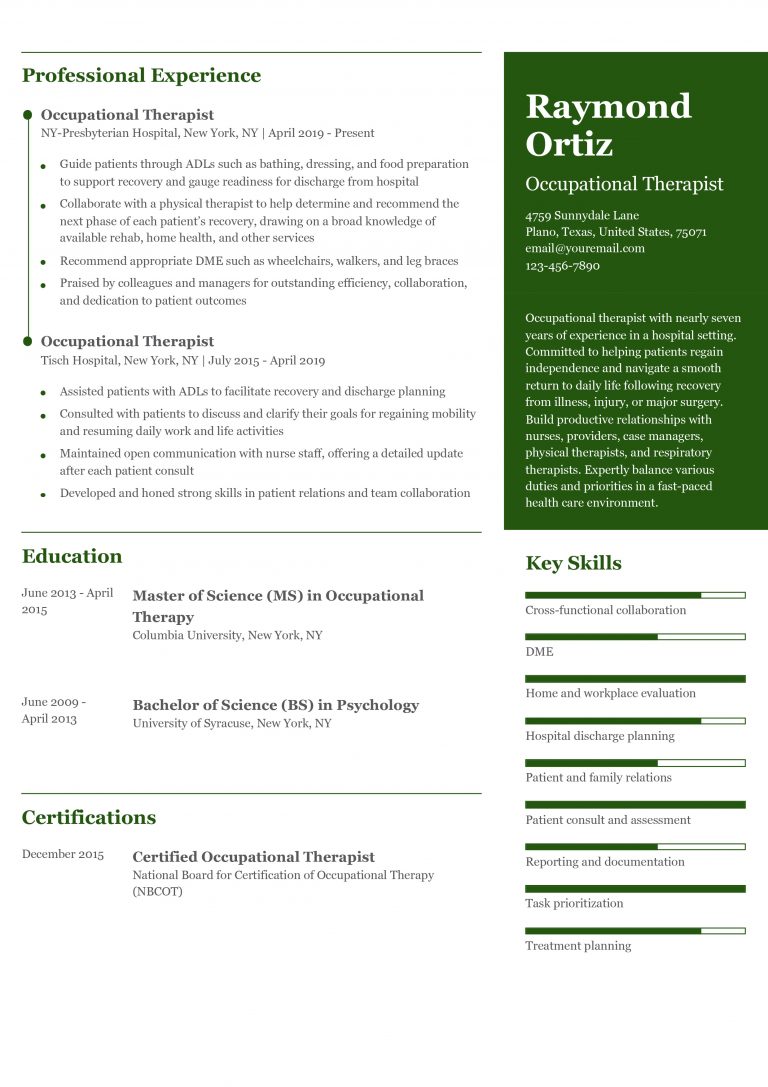
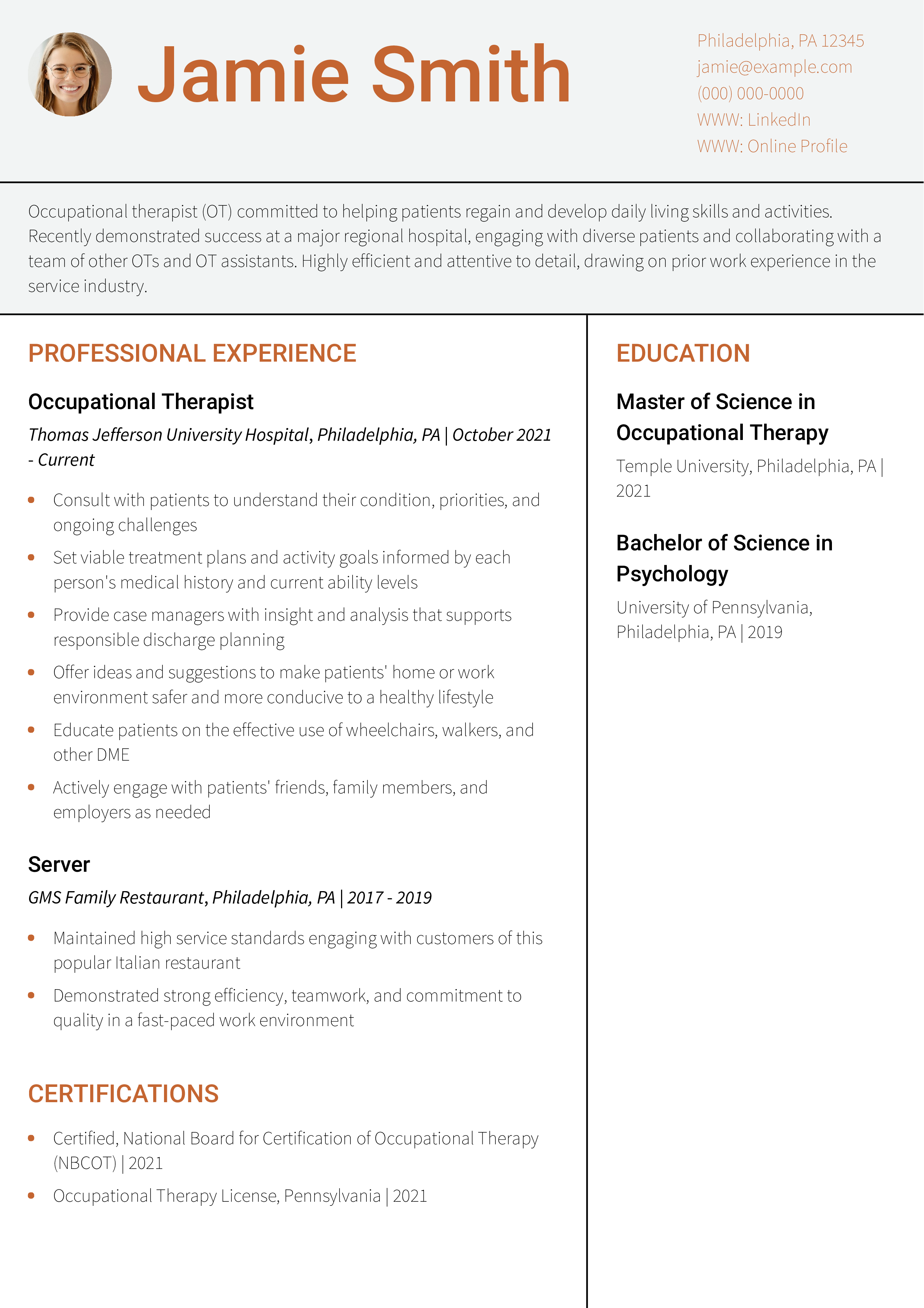
This resume effectively highlights a range of skills relevant to hospital settings, including patient consults, treatment planning, and home evaluations. The inclusion of certifications and a focus on collaboration with other health professionals make this candidate appealing to hiring managers in hospital environments.
Experienced Occupational Therapist Resume
Why This Resume Stands Out
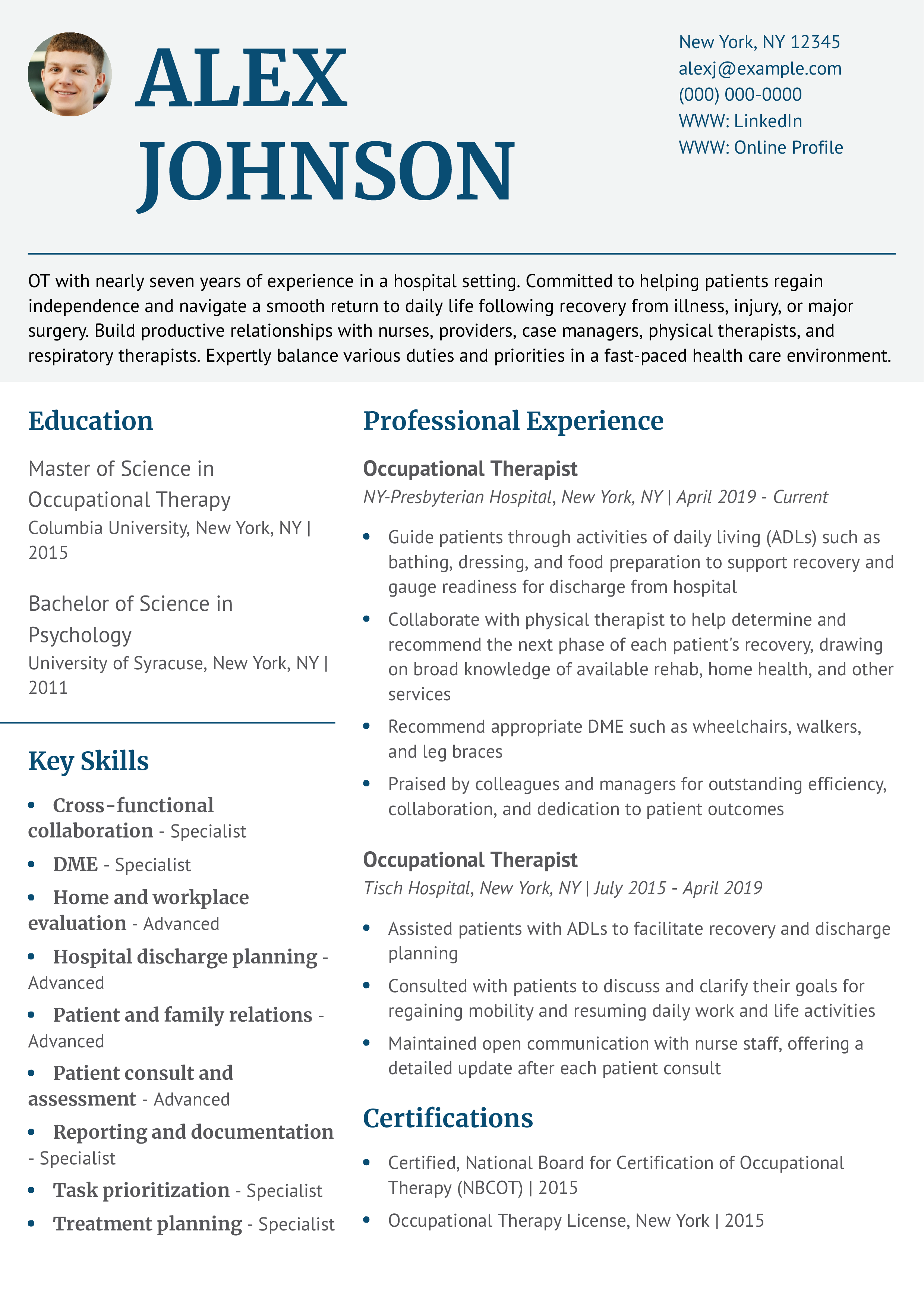
The resume demonstrates extensive experience in a hospital setting, with a clear focus on helping patients regain independence. Skills such as cross-functional collaboration and discharge planning are emphasized, showcasing the candidate’s ability to work well with multidisciplinary teams. The professional experience section highlights achievements that are key in health care, such as improving patient outcomes.
Senior Occupational Therapist Resume
Why This Resume Stands Out
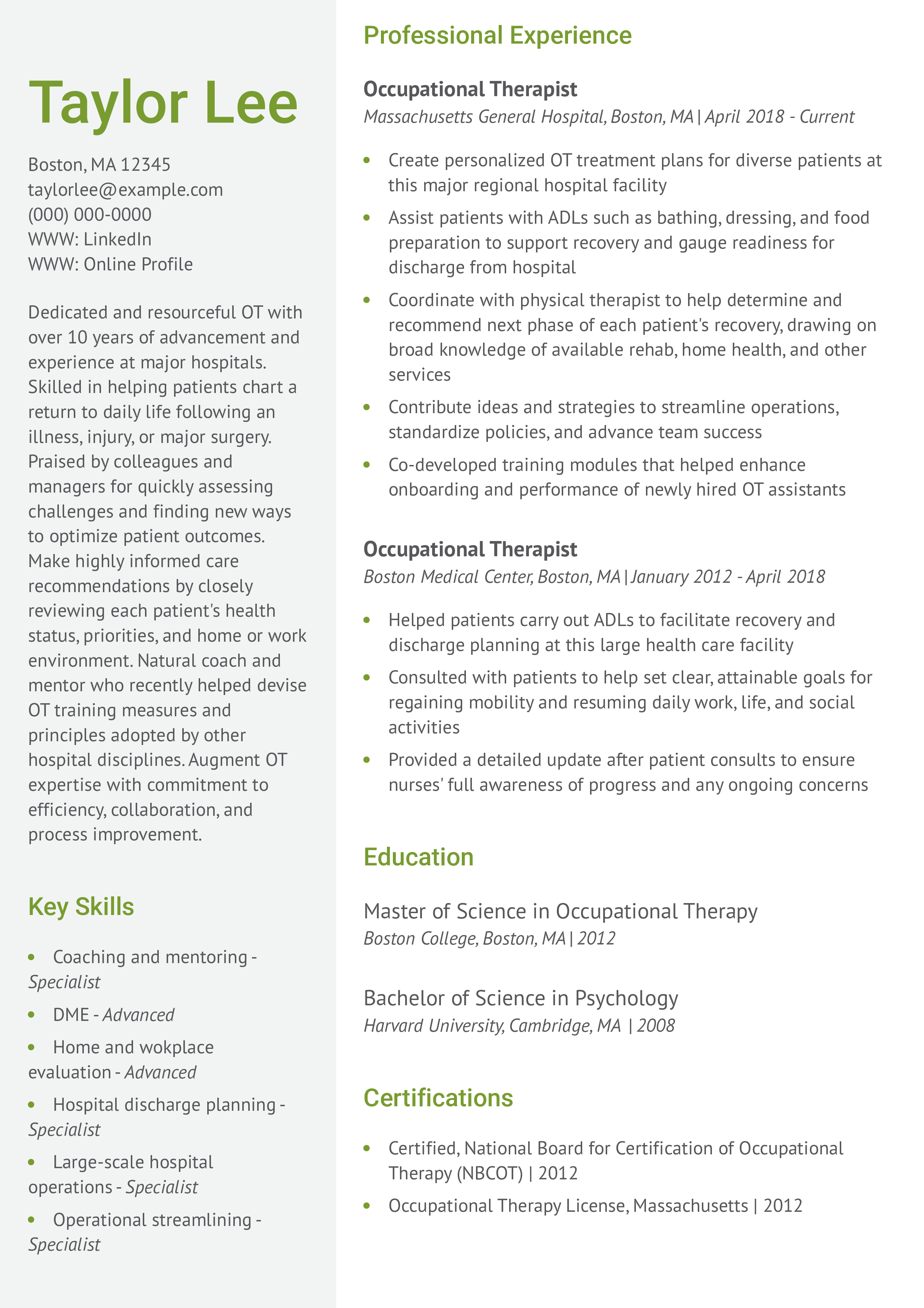
This resume emphasizes both leadership and expertise, showcasing the candidate's ability to coach others while delivering exceptional patient care. Key skills like operational streamlining and training development help position this candidate as a valuable asset to any hospital looking to improve its therapy team’s effectiveness.
Physical Therapist Resume
Why This Resume Stands Out
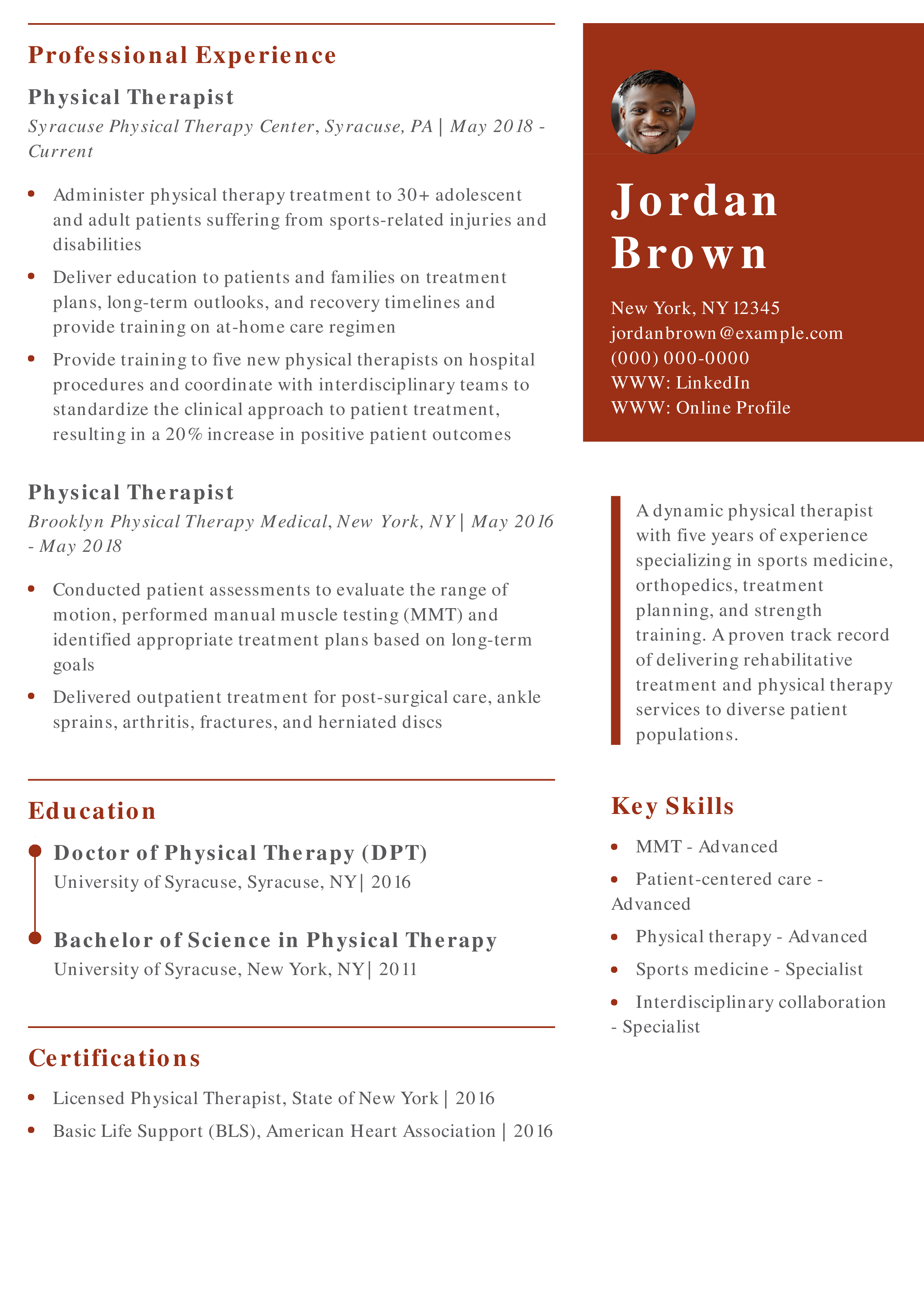
This resume demonstrates the candidate’s ability to deliver patient-centered care, with a focus on sports medicine and orthopedic recovery. By highlighting collaboration with interdisciplinary teams and leadership in training new physical therapists, it effectively communicates the candidate’s ability to enhance clinical practices and improve patient outcomes.
Pediatric Occupational Therapist Resume
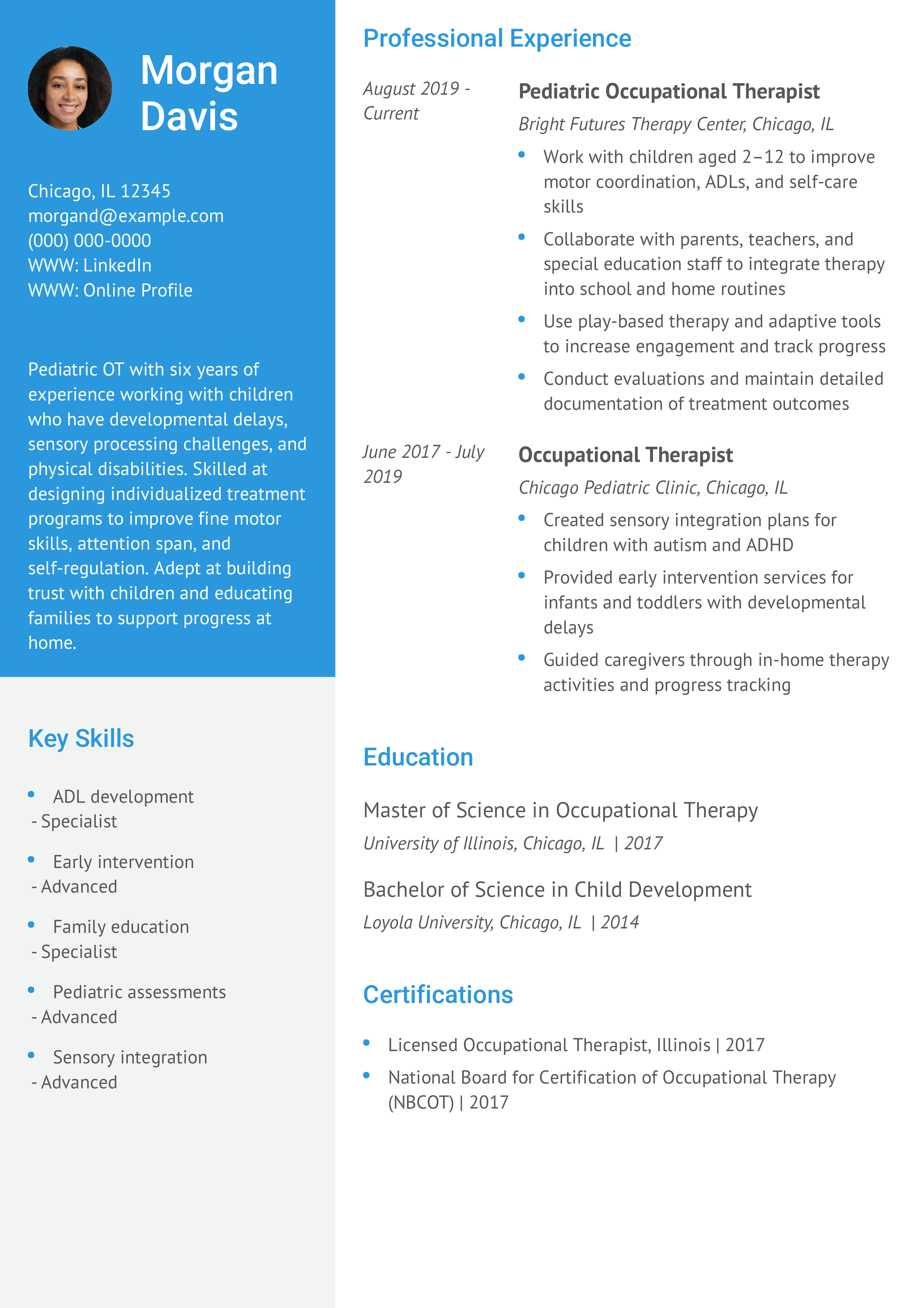
Why This Resume Stands Out
This resume highlights specialized experience with children and a family-centered approach, both essential in pediatric therapy. It also shows collaboration with school teams and parents.
Occupational Therapist Assistant Resume
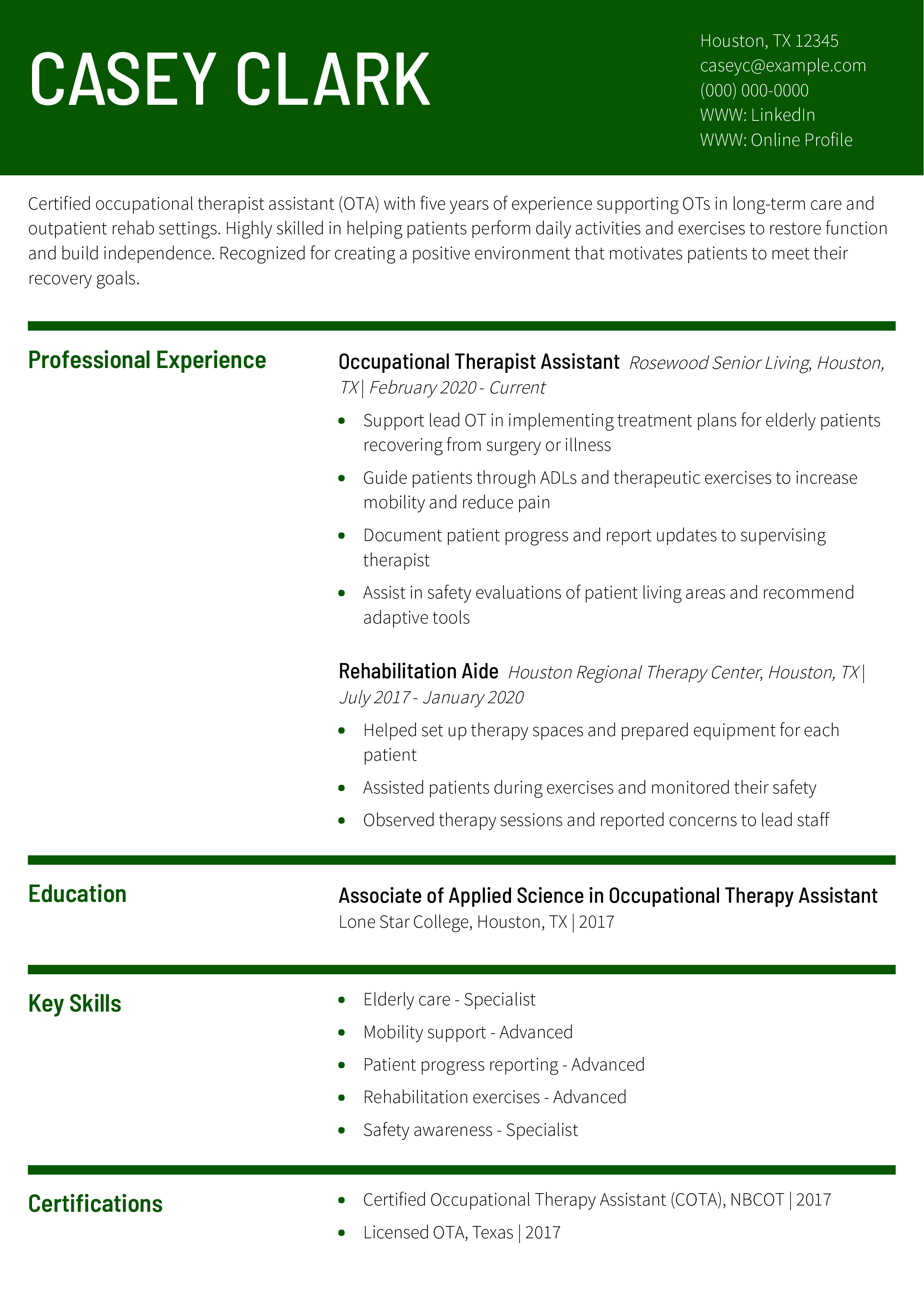
Why This Resume Stands Out
This resume clearly defines the OTA role and experience in elderly care, a critical area of need. It effectively shows how the candidate contributes to the OT team and supports patient goals.
Occupational Therapist – School Setting Resume
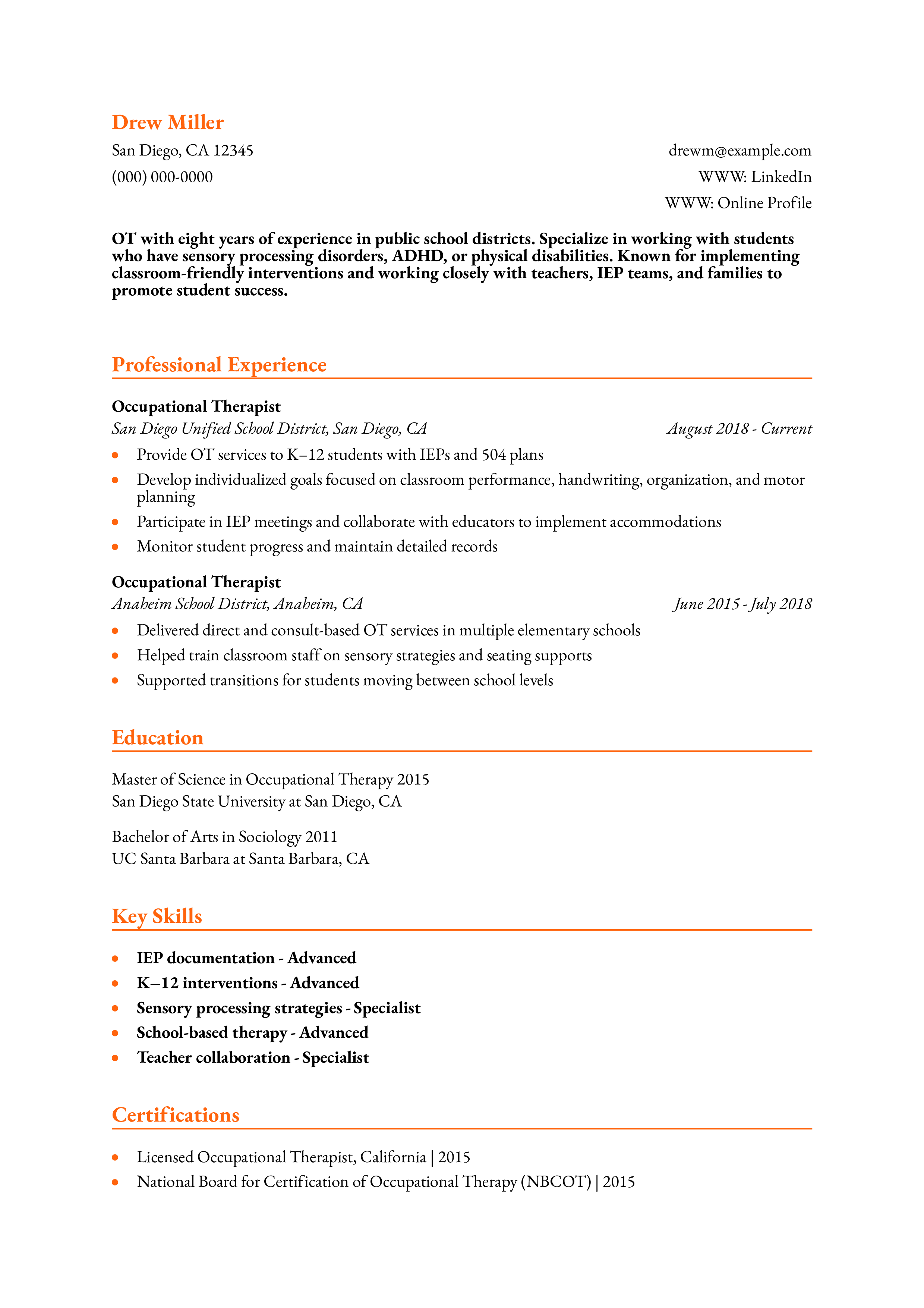
Why This Resume Stands Out
This resume focuses on a niche area: school OT. It communicates expertise in IEP development and classroom interventions, which are highly relevant to education settings.
Geriatric Occupational Therapist Resume
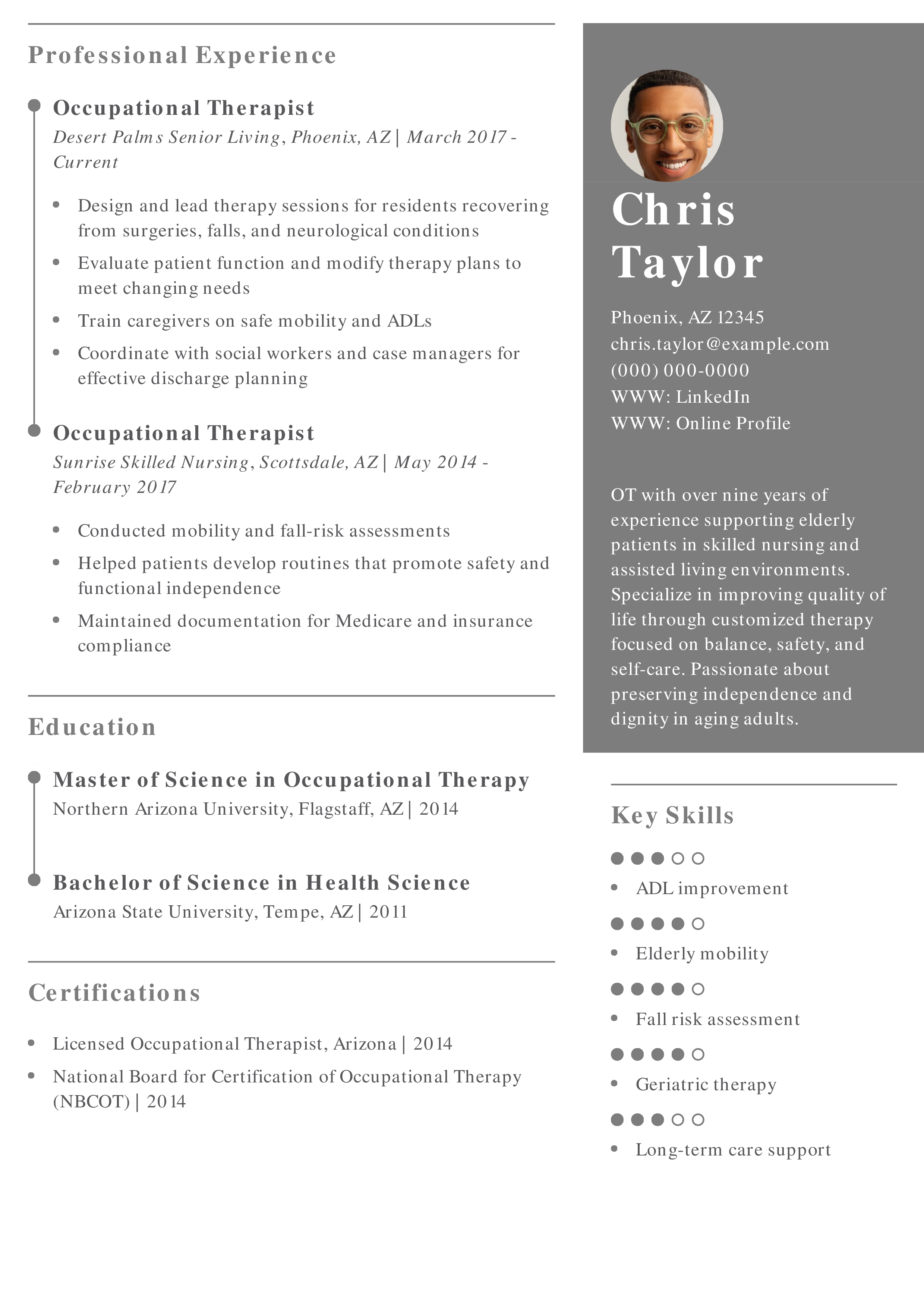
Why This Resume Stands Out
This resume showcases deep experience with older adults and highlights relevant care strategies like fall prevention and self-care training.
Mental Health Occupational Therapist Resume
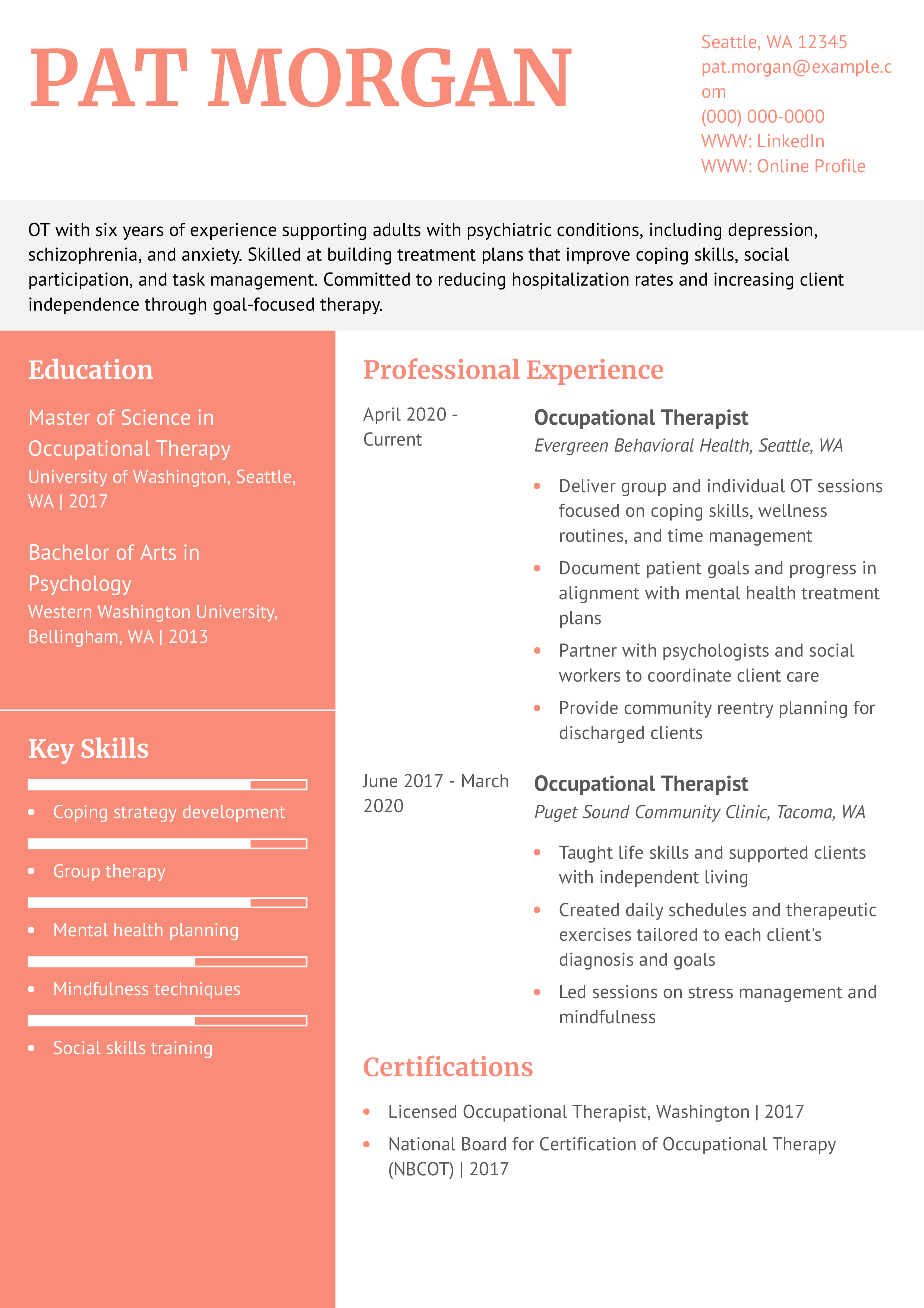
Why This Resume Stands Out
This resume offers a focused look at mental health treatment through occupational therapy. It highlights essential tools like group facilitation and community reentry planning.
Travel Occupational Therapist Resume
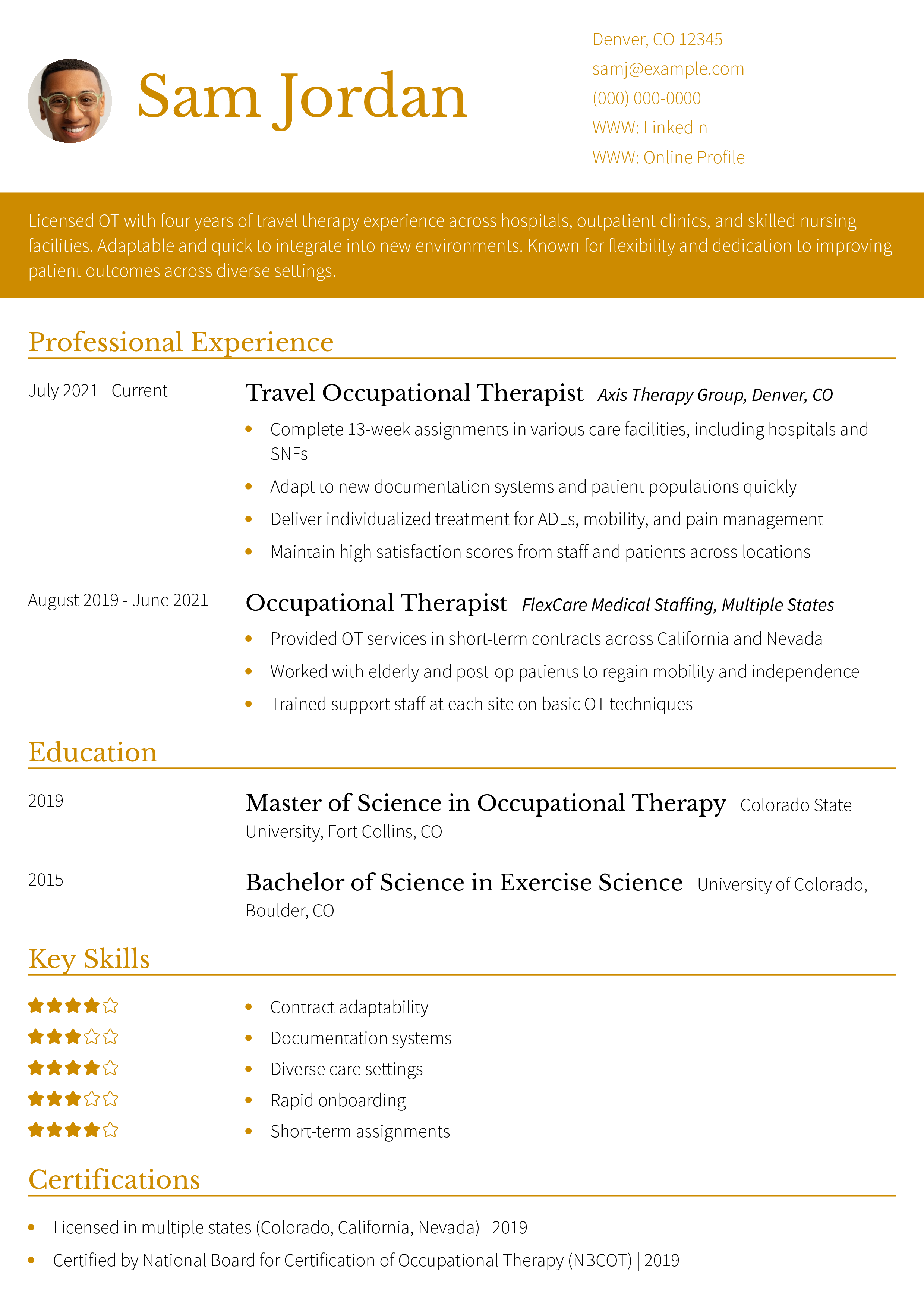
Why This Resume Stands Out
This resume communicates flexibility and competence across multiple settings, a key advantage in travel therapy. It shows success in adapting to new systems and patient needs quickly.
Acute Care Occupational Therapist Resume
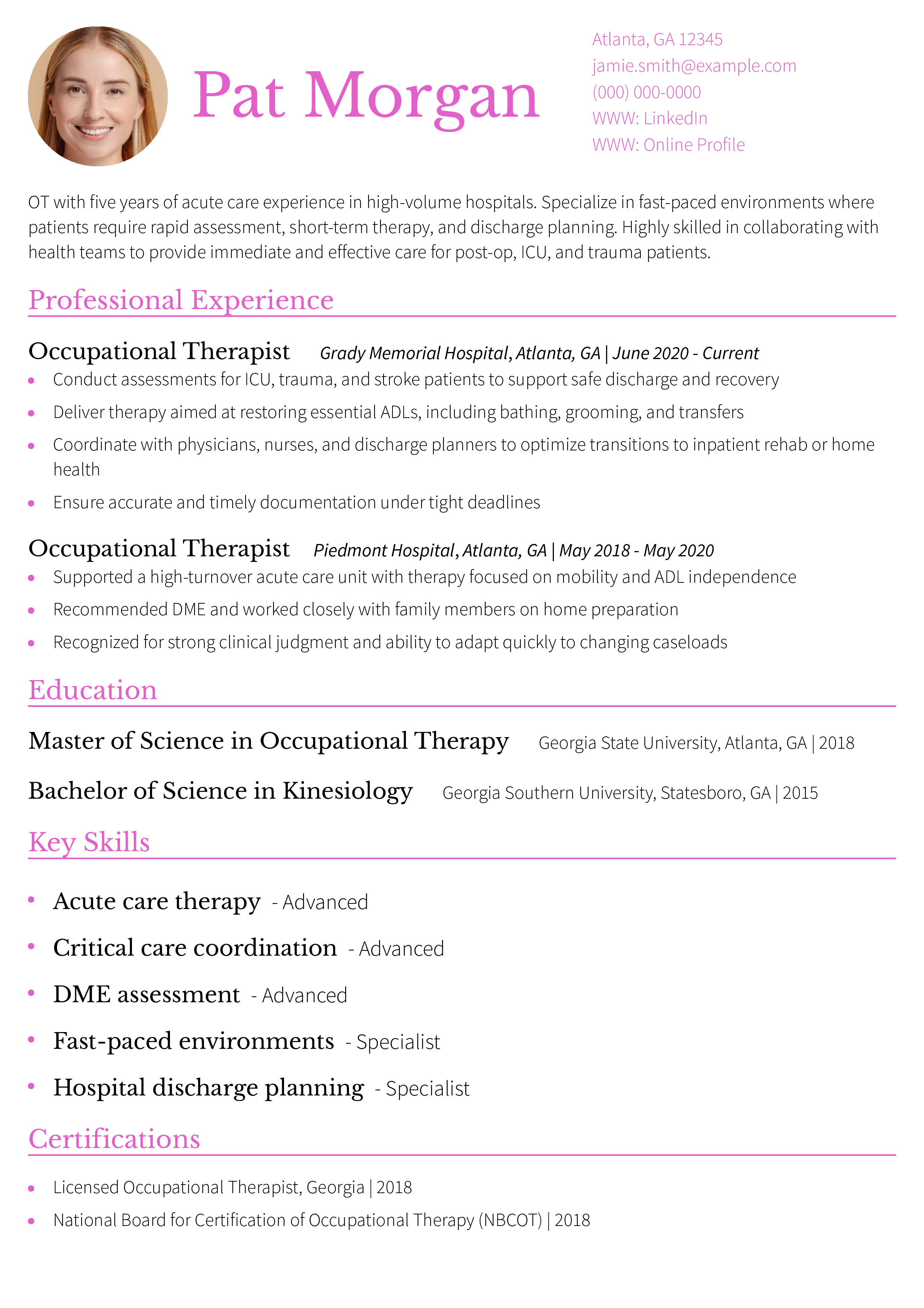
Why This Resume Stands Out
This resume highlights the ability to make rapid decisions and communicate effectively across interdisciplinary teams — essential skills in acute care settings. It clearly shows the therapist’s ability to manage critical cases and support fast discharges.
Occupational Therapist in Outpatient Clinic Resume
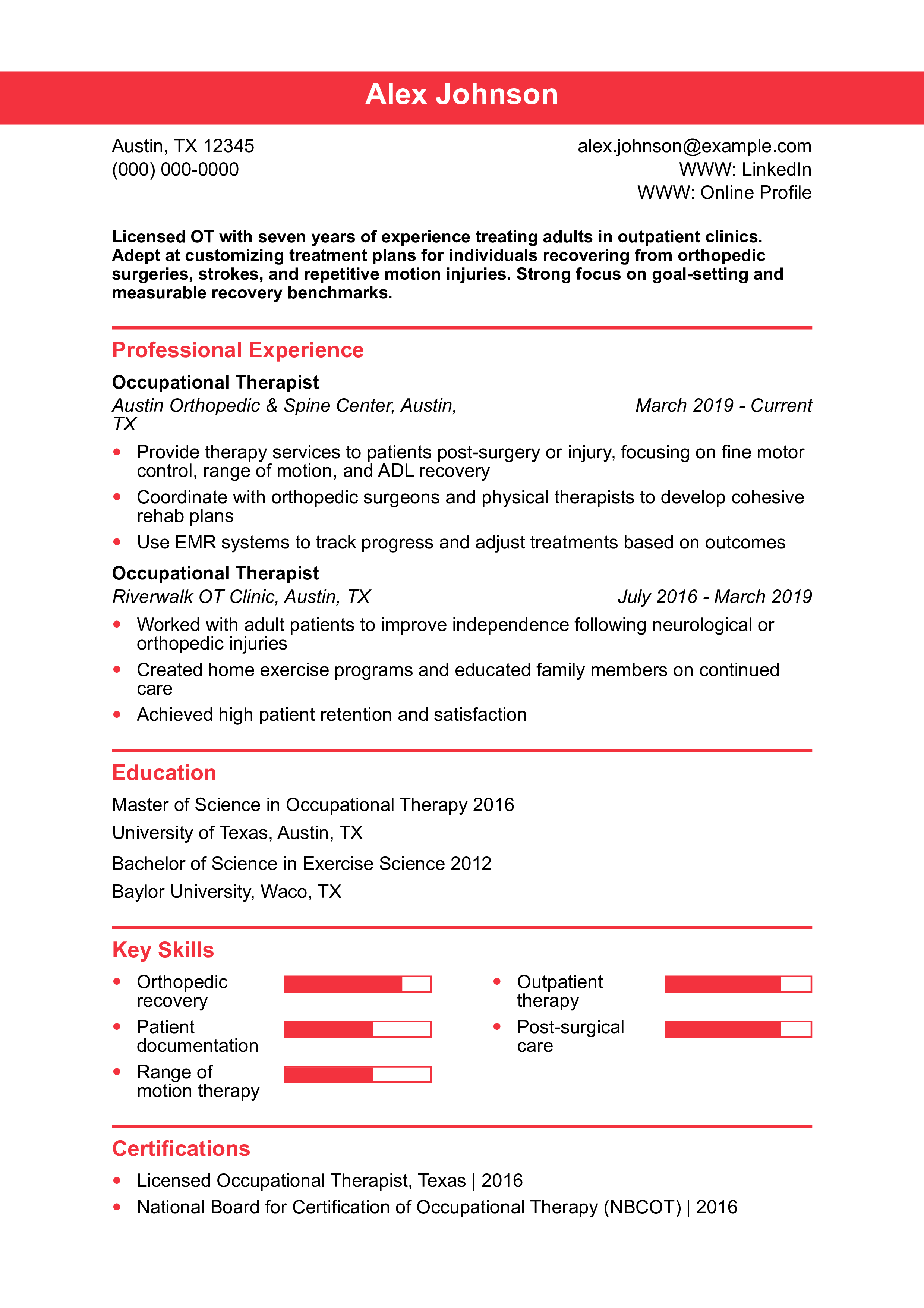
Why This Resume Stands Out
This resume effectively communicates experience with orthopedic and neuro rehab in outpatient settings, showing collaboration with specialists and a focus on results.
Neuro Occupational Therapist Resume
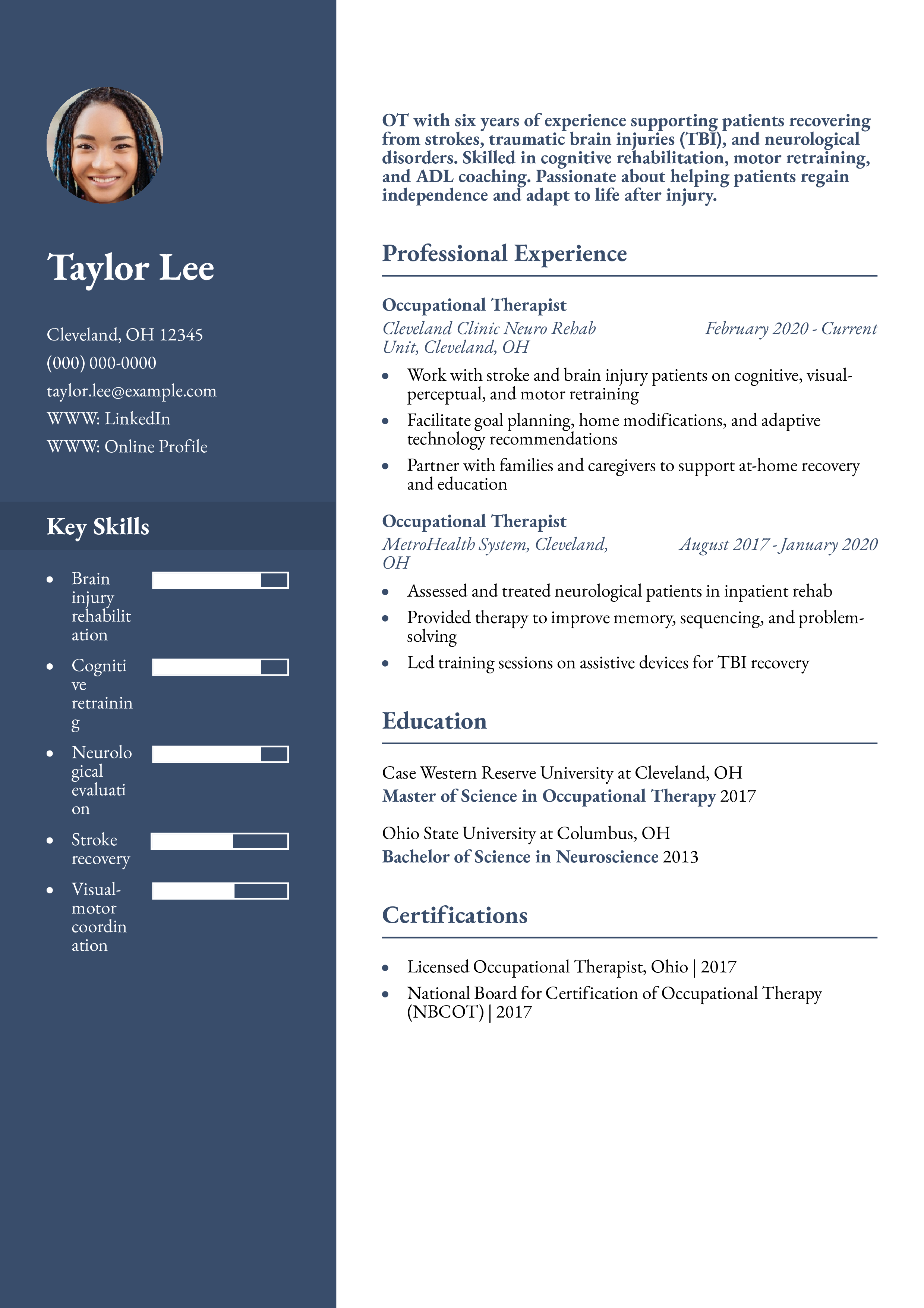
Why This Resume Stands Out
This resume clearly showcases expertise in neurological care, a highly specialized and in-demand area. It also demonstrates empathy through patient and family education.
Our templates are crafted by professional resume writers to make creating your resume quick, easy, and effective.
- Professional resume template downloads
- Customized cover letter generation
- AI resume writing support
- Career-building resources and advice
Occupational Therapist Text-Only Resume Templates and Examples
How To Write an Occupational Therapist Resume
Occupational therapist resumes are strongest when they show measurable functional gains, use of therapeutic modalities, and collaboration with families and care teams. Add caseload details and examples of improved mobility or independence.

1. Craft an outstanding profile with a summary of your occupational therapist qualifications
In a brief paragraph at the top of your resume, you can catch hiring managers’ interest by giving the key reasons you excel as an OT. Brainstorm your work strengths, then choose three to five that speak strongest to your target OT job. For instance, maybe you’re a natural collaborator who builds strong relationships with other OTs and health care team members. Or maybe you’re diligent in working with each patient to understand their mobility level or home environment.
Also, consider what sets you apart from other OT applicants, and express that in your profile. For instance, if you have foreign language fluency or extensive experience in the type of health care setting you’re now targeting.
Entry-Level Profile Example
Occupational therapist committed to helping patients regain and develop daily living skills and activities. Recently demonstrated success at a major regional hospital, engaging with diverse patients and collaborating with other OTs and OT assistants. Highly efficient and attentive to detail, drawing on prior work experience in the service industry.
Mid-Career Profile Example
Occupational therapist with nearly seven years of experience in a hospital setting. Committed to helping patients regain independence and navigate a smooth return to daily life following an illness, injury, or major surgery. Build productive relationships with nurses, providers, case managers, physical therapists, and respiratory therapists. Expertly balance various duties and priorities in a fast-paced health care environment.
2. Create a powerful list of your occupational therapist experiences
View your professional experience section as a chance to give examples of your OT background and success. Detailed examples help hiring managers envision you as a valued member of their health care team.
Review your recent work history, brainstorm experiences or achievements you’re proud of, and then choose the most OT-relevant ones to highlight on your resume. Most likely, these will relate to supporting patients’ recovery and helping them make a smooth return to daily life. Given the collaborative nature of your role, you may want to highlight your work with physical therapists, case managers, and patients’ family members and employers. Also, think about how you’ve improved health care facilities and services – maybe you found new ways to support OT assistants, or introduced home-based solutions for people with disabilities.
For any non-OT jobs you’ve held, keep your description short and focused on any transferable skills you gained, such as teamwork or complex problem-solving.
Professional Experience Example
Occupational Therapist, Massachusetts General Hospital, Boston, MA | April 2018 to present
- Create personalized OT treatment plans for diverse patients at this major regional hospital facility
- Assist patients with activities of daily living (ADLs) such as bathing, dressing, and food preparation to support recovery and gauge readiness for discharge from hospital
- Coordinate with physical therapist to help determine and recommend next phase of each patient’s recovery, drawing on broad knowledge of available rehab, home health, and other services
- Contribute ideas and strategies to streamline operations, standardize policies, and advance team success
- Co-developed training modules that helped enhance onboarding and performance of newly hired OT assistants
3. List any education and certifications relevant to occupational therapists
Assure hiring managers of your OT credentials by giving basic details on your bachelor’s degree, master’s degree, active certificate from National Board for Certification in Occupational Therapy, Inc (NBCOT), and state license. If your work experience is limited, you may also want to list college coursework on topics like treatment planning or assistive technology – this helps you capture the full range of knowledge you bring to your target OT role.
Below are templates and examples to help you format these details on your resume. Note: optional template areas appear in [brackets].
Education
Template
- Degree Name — [Major], School Name, City, ST | [Year] | [GPA]
- [Select Coursework]
Certification
Template
- Certification Name or Title, [Awarding Organization] | [Year]
- [Description]
4. Make a list of your occupational therapist-related skills and proficiencies
Include a key skills section to show the various ways you can contribute as an OT. This resume section is significant for your field, since OTs draw on many different medical, technical, therapeutic, and communication skills. Below are some of the skills and keywords you might feature.
| Key Skills and Proficiencies | |
|---|---|
| Assistive technology | Client care management |
| Coaching and mentoring | Cross-functional collaboration |
| Durable medical equipment (DME) | Family relations and education |
| Home and workplace evaluation | Hospital discharge planning |
| Hospital operations | Patient assessment |
| Patient consult | Patient relations and education |
| Process streamlining | Reporting and documentation |
| Task prioritization | Team leadership and collaboration |
| Training development | Treatment planning |
How To Pick the Best Occupational Therapist Resume Template
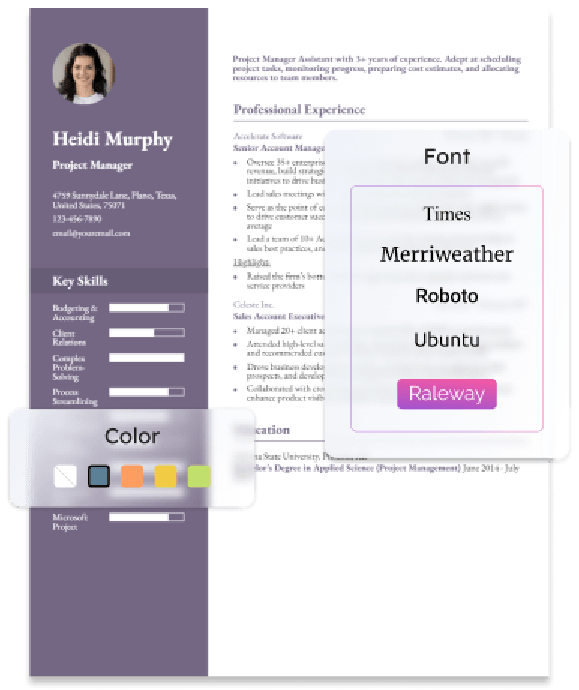
As with most vocations, OTs should use a resume template that’s clear and straightforward. Opt for a visual layout that lets the hiring manager quickly review your best career details. Select a traditional resume font, and avoid any template with colorful or elaborate design. Also, ensure the template complies with applicant tracking systems (ATS) used by employers to screen resumes.
Frequently Asked Questions: Occupational Therapist Resume Examples and Advice
Why should I use a Occupational Therapist resume example as a template for my own resume?-
A Occupational Therapist resume example provides a solid foundation for structuring your own resume. It showcases how to highlight achievements, use quantifiable metrics, and present your experience in an organized manner. You can personalize it by adding your unique qualifications and adjusting sections to better reflect your skills and career history.
What are common action verbs for occupational therapist resumes? -
One of the best ways to enhance your resume is by starting each bullet point with a strong action verb. Dynamic verbs help you keep the hiring manager’s attention and show the varied nature of your experience. The following list can help you find a good mix of action verbs for your OT resume:
| Action Verbs | |
|---|---|
| Adapted | Assessed |
| Collaborated | Consulted |
| Coordinated | Created |
| Demonstrated | Determined |
| Developed | Documented |
| Earned | Educated |
| Enabled | Evaluated |
| Facilitated | Generated |
| Guided | Improved |
| Instructed | Monitored |
| Organized | Pinpointed |
| Prevented | Recommended |
| Supported | Taught |
| Updated | |
How do you align your occupational therapist resume with a job posting?-
The Bureau of Labor Statistics forecasts that jobs for OTs will increase by about 14% between 2021 and 2031. This growth rate is much faster than the average for all U.S. vocations.
If you already have a specific job posting you’d like to apply for, try tailoring your resume to that opportunity. Revising your profile and key skills sections is a great (and pretty quick) way to do this. Read through your information in these sections closely, and delete any sentences or keywords that don’t seem to overlap with the job posting. Then look at the list of job requirements on the posting, and add any you possess but haven’t included already. For example, say the posting calls for an OT with strong knowledge of DME. If that’s something you can claim, include that term in your list of skills, and you’ll make the document more relevant to the job opening at hand.
What is the best occupational therapist resume format? -
In nearly all cases, you should use a combination (or hybrid) resume because it’s easiest for hiring managers to learn about your pertinent skills and experience – it’s also easiest for you to align with your job goals.
With the combination format, you highlight your most relevant skills and highlights in your professional experience section, and an intro section. (This combination of work history and intro content is where the format gets its name.) Your resume intro should include a profile summary and key skills section, but you may also add a career highlights or awards section. By carefully choosing intro details, you can position yourself for your target job, and give hiring managers a clear, quick view of what you offer.
How long should my occupational therapist resume be?-
A occupational therapist resume should typically be one page long, especially if you have less than 10 years of experience. A two-page resume may be appropriate for seasoned professionals with extensive achievements, but only if every detail adds value to your candidacy. Focus on conciseness and relevance by tailoring your resume to the job you're applying for. Highlight your most impactful accomplishments, certifications, and key skills rather than listing every career detail.
Including work experience from the last 10 to 15 years is generally recommended. Older positions can be summarized briefly or omitted unless highly relevant. Remember, your resume is a snapshot of your qualifications, not an exhaustive career history. Prioritize clarity and impact to make a strong impression.
Craft your perfect resume in minutes
Get 2x more interviews with Resume Builder. Access Pro Plan features for a limited time!

To increase your chances of an interview, write and submit a strong cover letter. The key to a good cover letter is tailoring it to each job opening. Read our Occupational Therapist (OT) Cover Letter Guide to learn how. For other related examples, see our Physical Therapist Assistant and Medical Assistant cover letter guides.