
Music teachers combine deep technical knowledge with strong pedagogical skills, motivating students to express themselves musically. But how do you capture those themes on a clear, concise resume? You may be unsure where to start.
Throughout this guide, we’ll provide expert tips and strategies, leading you to write a compelling music teacher resume. You’ll learn how to create an accomplishment-driven document demonstrating your ability to foster your students’ musical abilities through effective classroom management, curriculum development, and musical expertise.
“Music teacher resumes should showcase both instructional talent and musical expertise. Show how you help students grow artistically and academically. ”

The AI Skills Music Educator Roles Are Moving Toward
Music education hiring committees are starting to notice which candidates have integrated AI into their teaching practice. Notation software, practice apps, and composition tools now use AI-powered features that change how students learn rhythm, pitch, and theory. Candidates who can speak to how they’ve used these tools in actual lessons, not just listed them as skills, are standing out in a field where tech-savvy instruction wasn’t always the expectation. Here’s where your resume can get specific:
- Teaching students with AI-based practice apps like SmartMusic or Modacity, including how you used feedback loops to guide improvement.
- Arranging and transcription features used through AI-enabled notation software, including how they fit into your full lesson workflow, are.
Most Popular Music Teacher Resumes
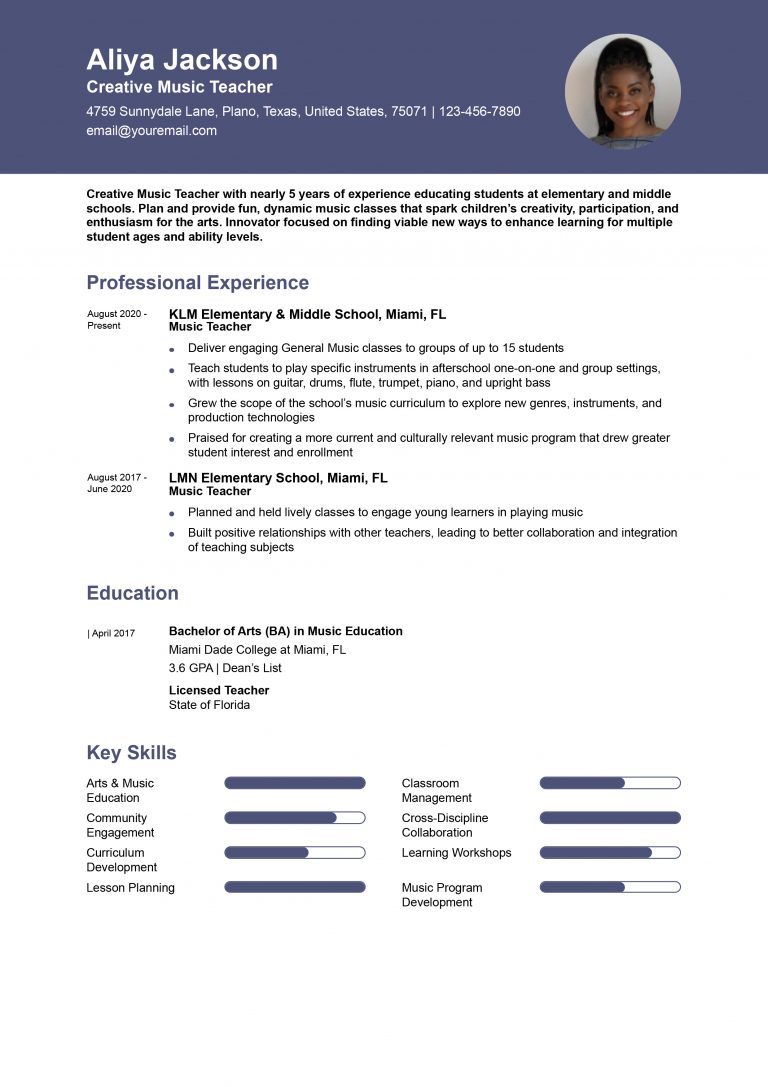
Middle School Music Teacher Resume
Why This Resume Stands Out
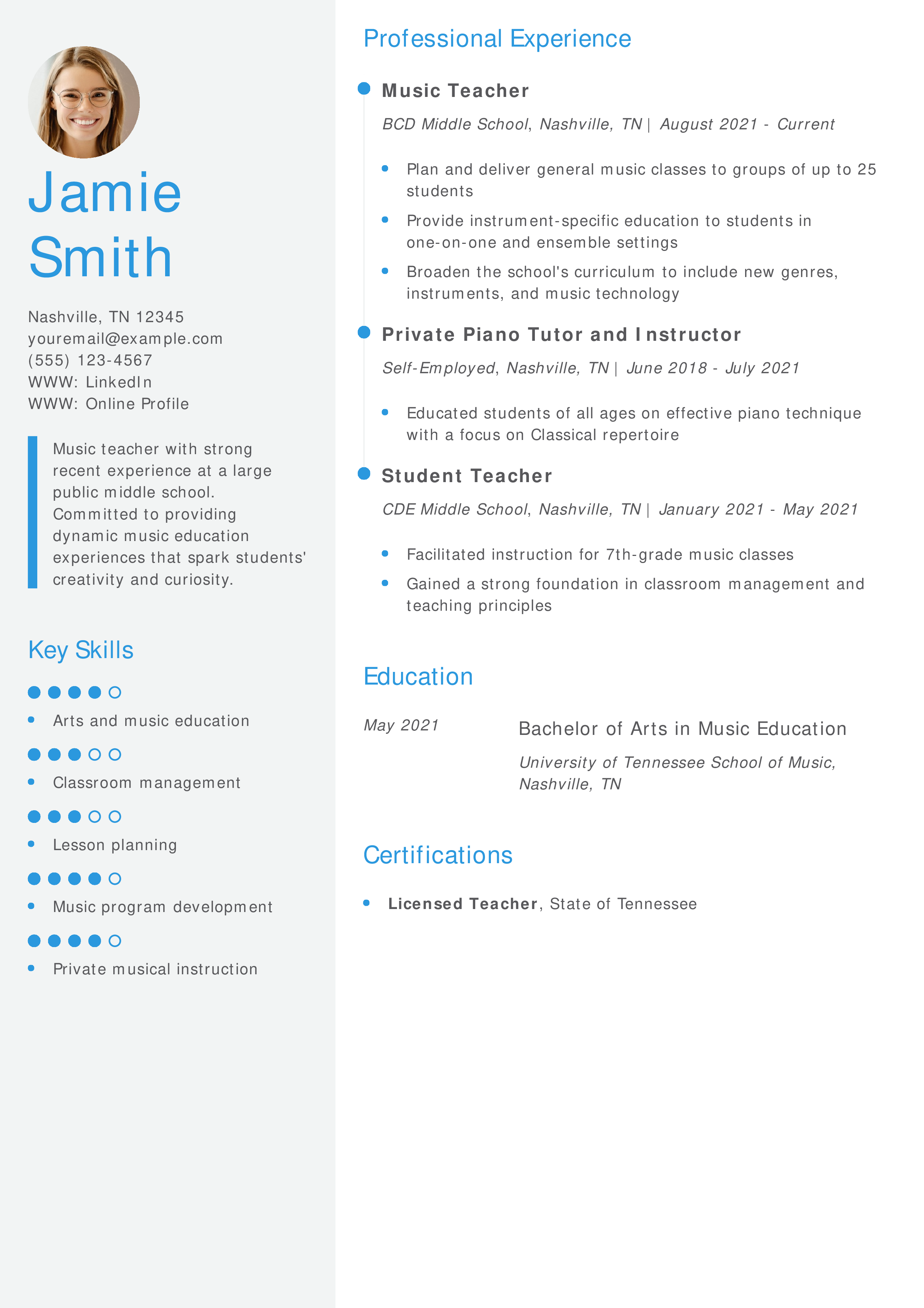
This resume is good because it balances classroom and private instruction, showing versatility in music education.
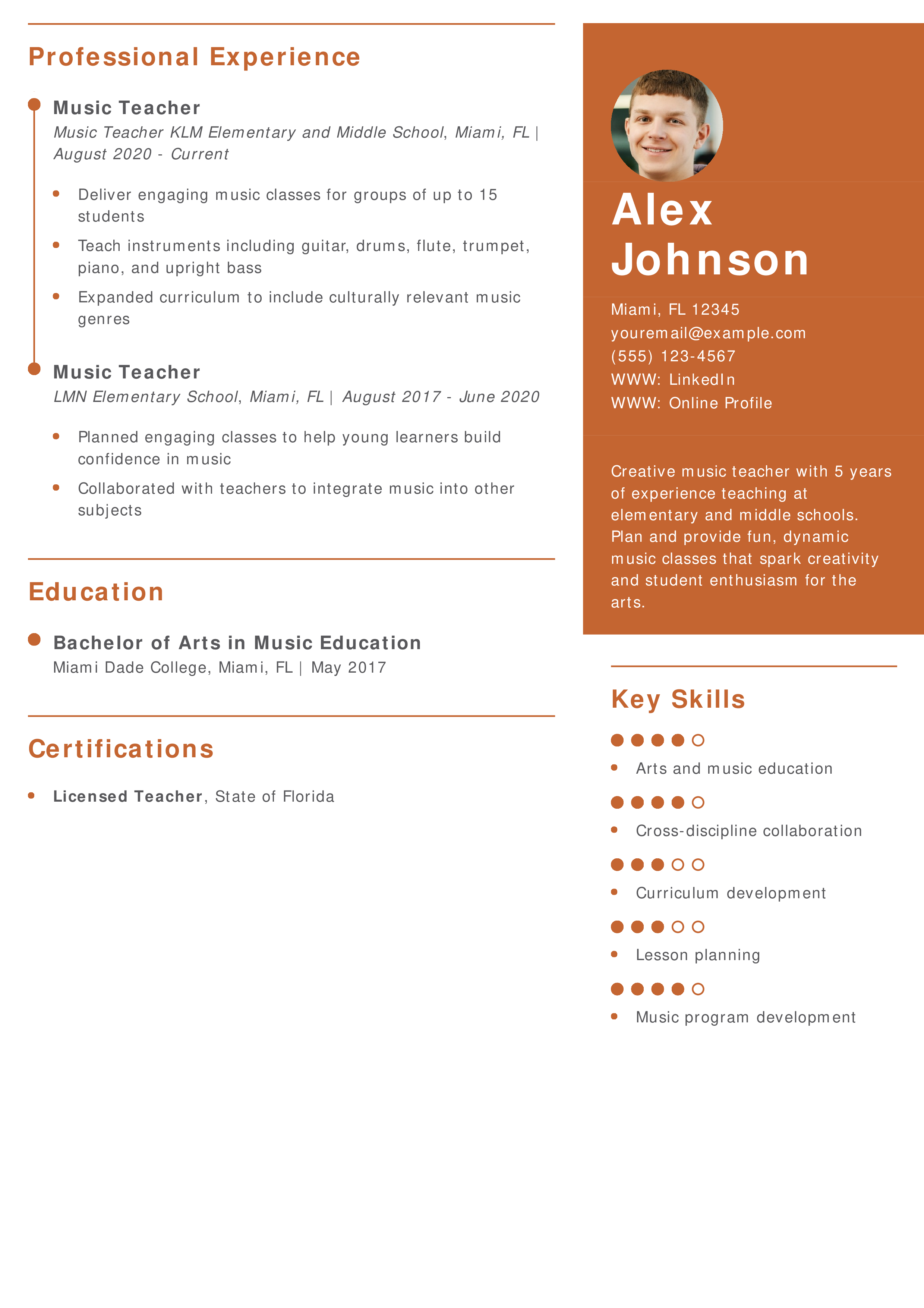
Elementary Music Teacher Resume
Why This Resume Stands Out
This resume is strong because it highlights curriculum innovation and student engagement.
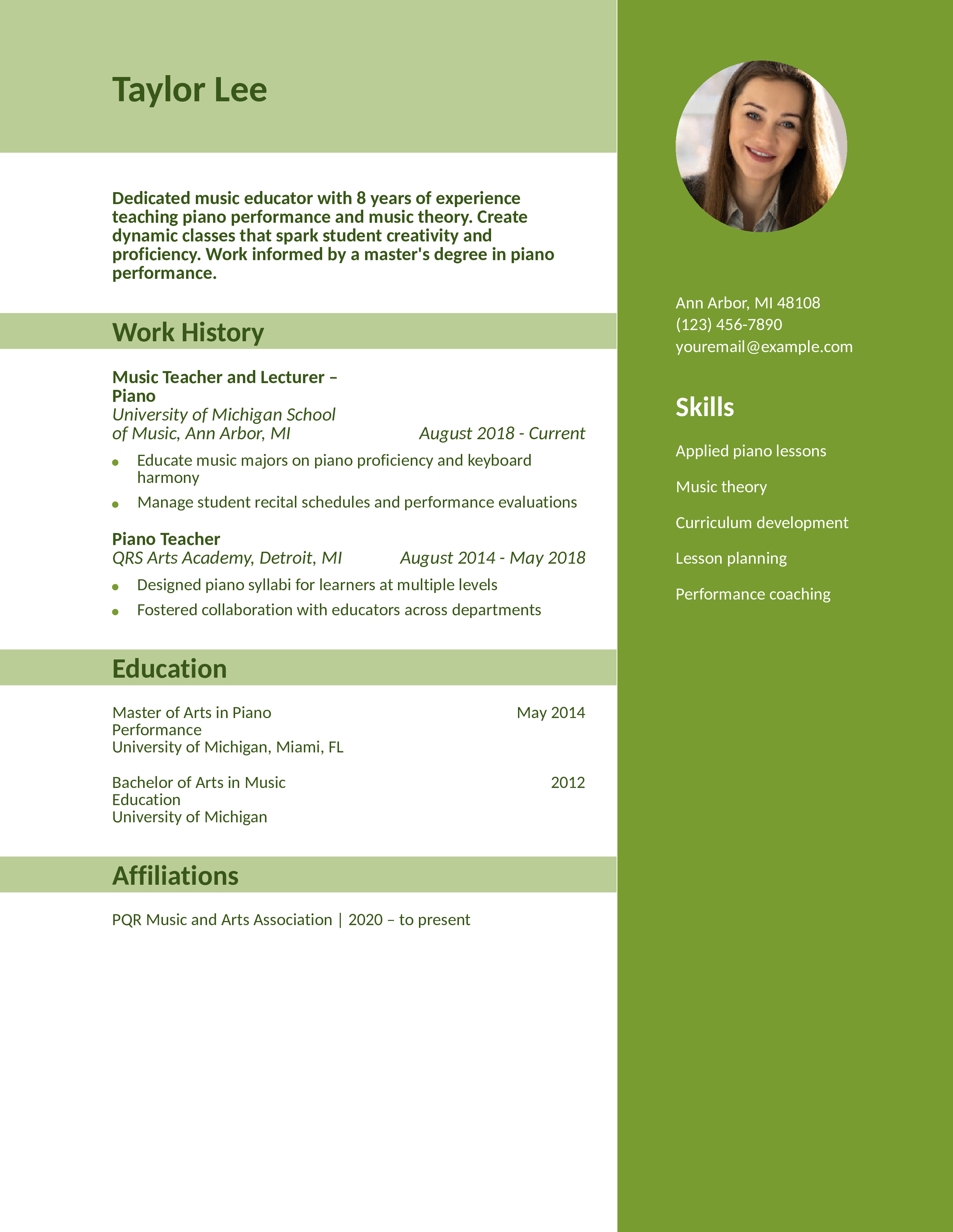
College Piano Instructor Resume
Why This Resume Stands Out
This resume is effective because it emphasizes advanced education and higher-level teaching.
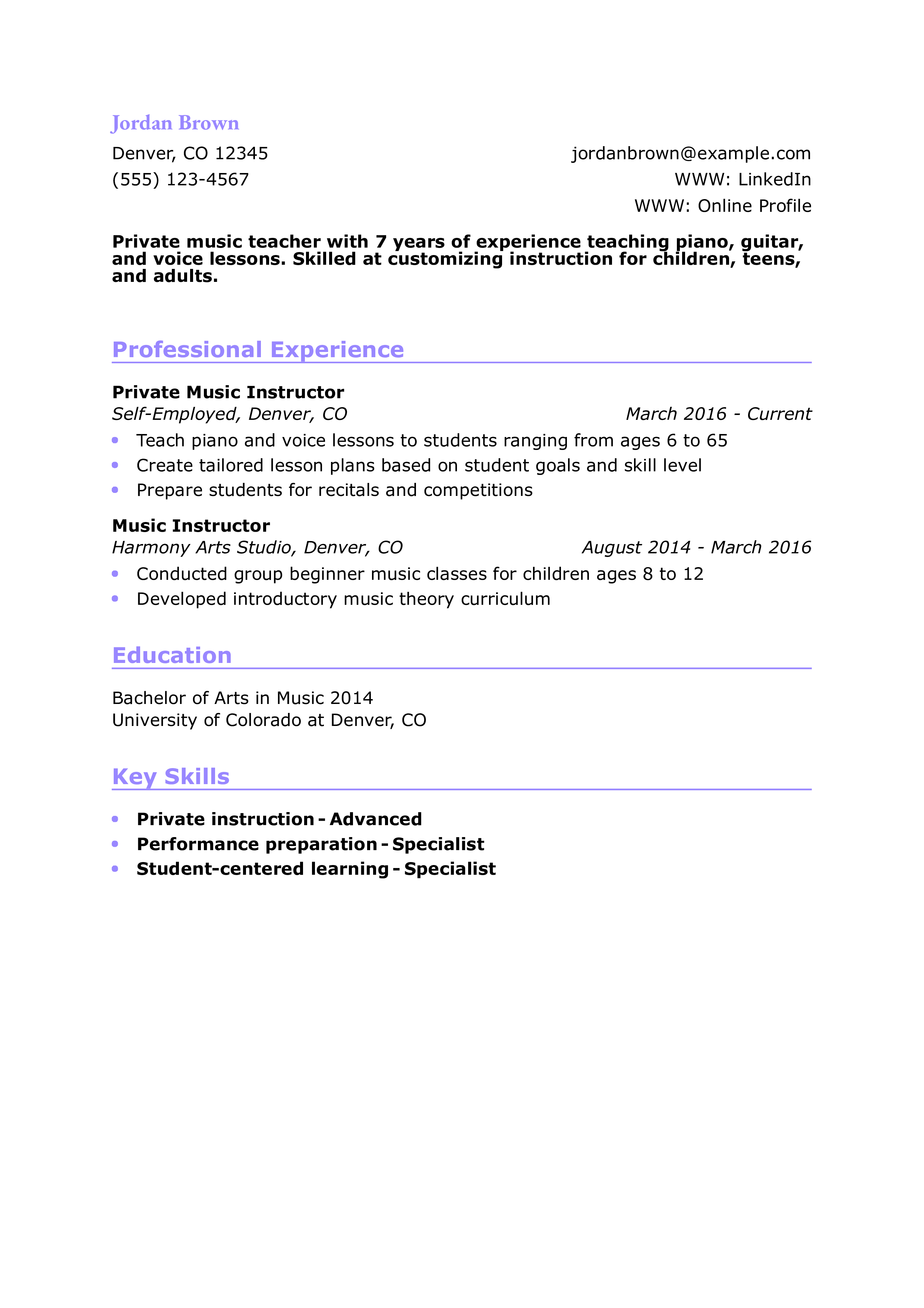
Private Music Teacher Resume
Why This Resume Stands Out
This resume is good because it highlights flexibility in working with students of different ages.
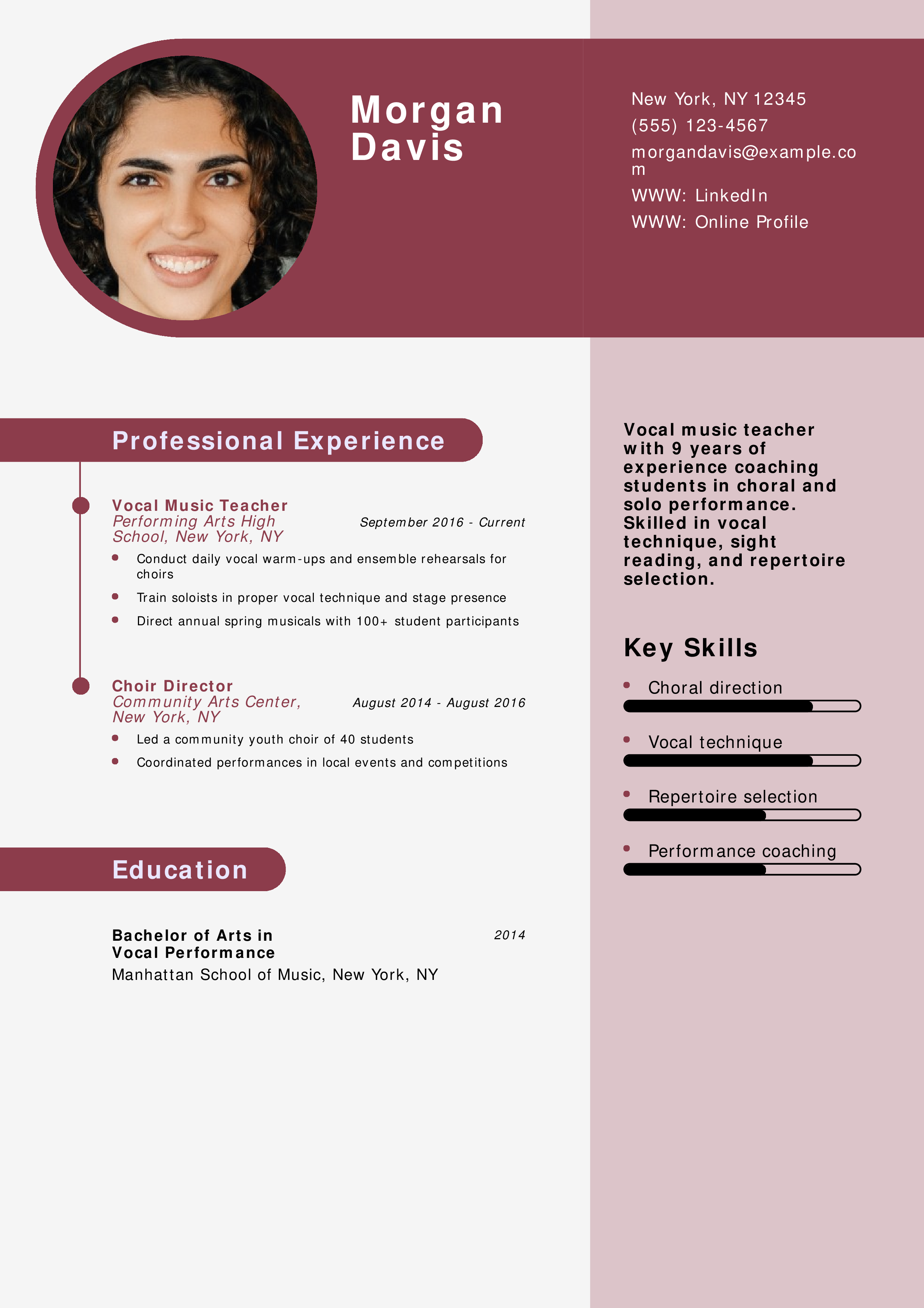
Vocal Music Teacher Resume
Why This Resume Stands Out
This resume is strong because it combines classroom teaching with performance direction.
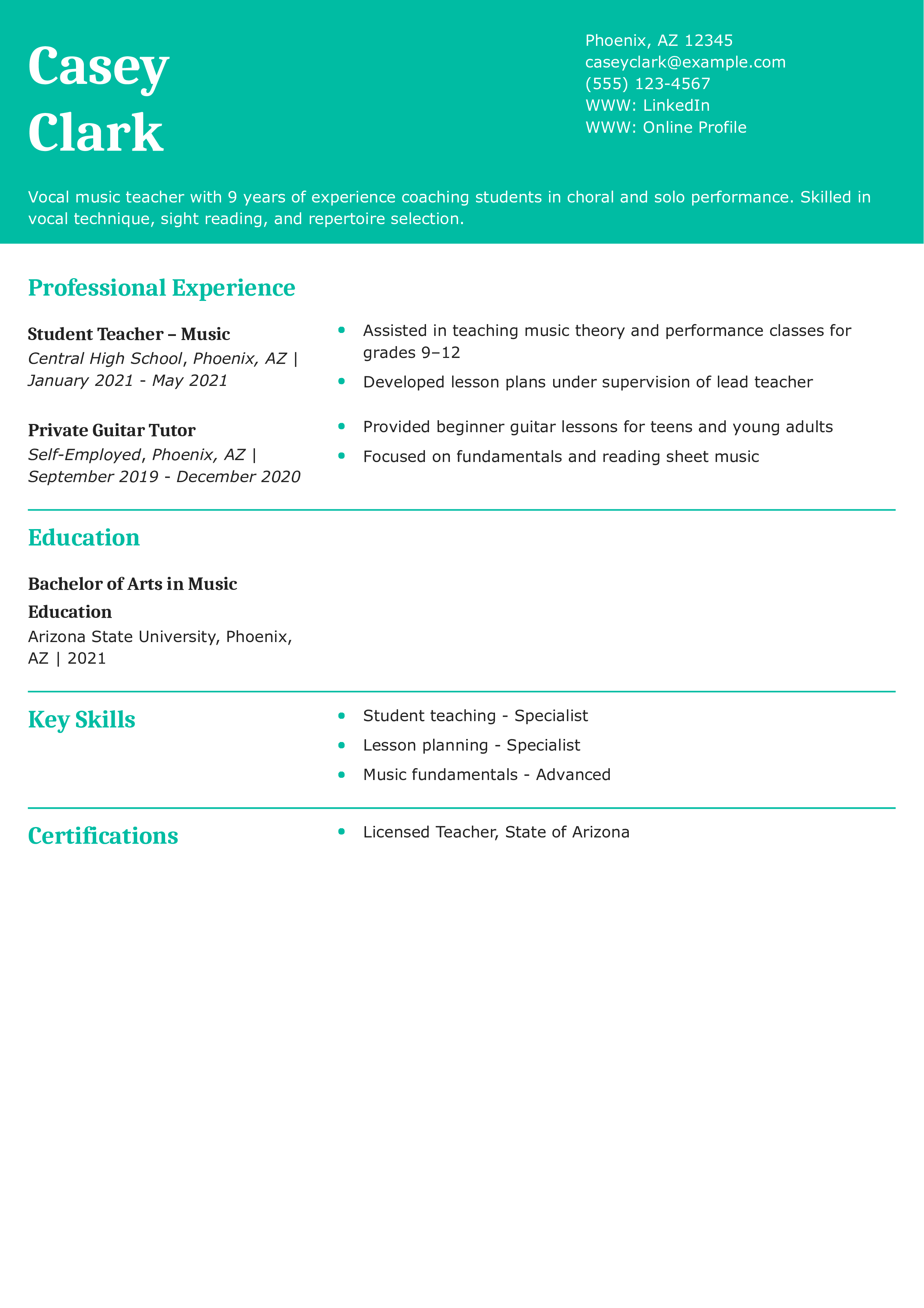
First-time Music Teacher Resume
Why This Resume Stands Out
This resume is good because it highlights teaching readiness despite limited formal experience.
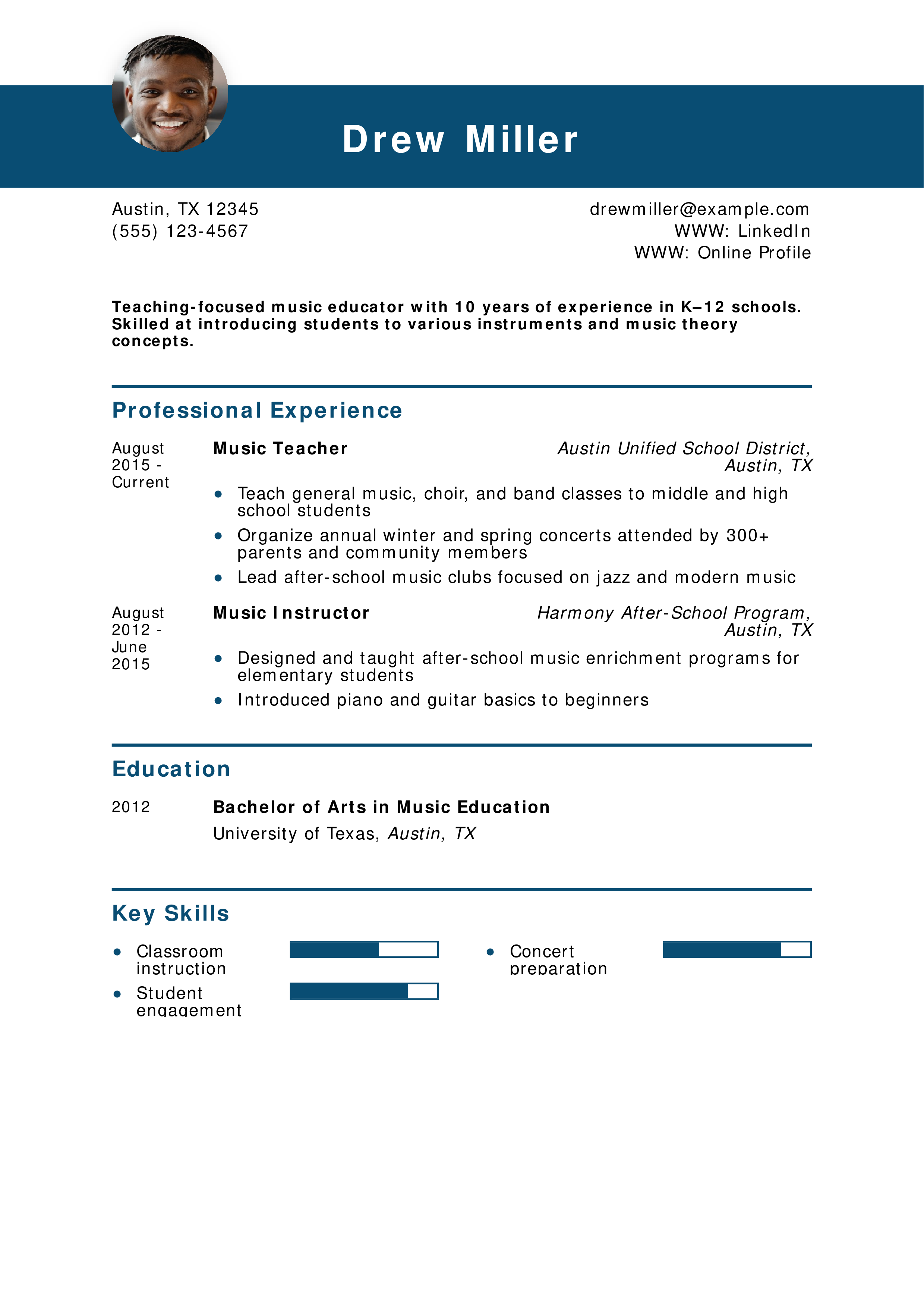
Teaching Music Teacher Resume
Why This Resume Stands Out
This resume effectively shows teaching across multiple age groups and ensembles.
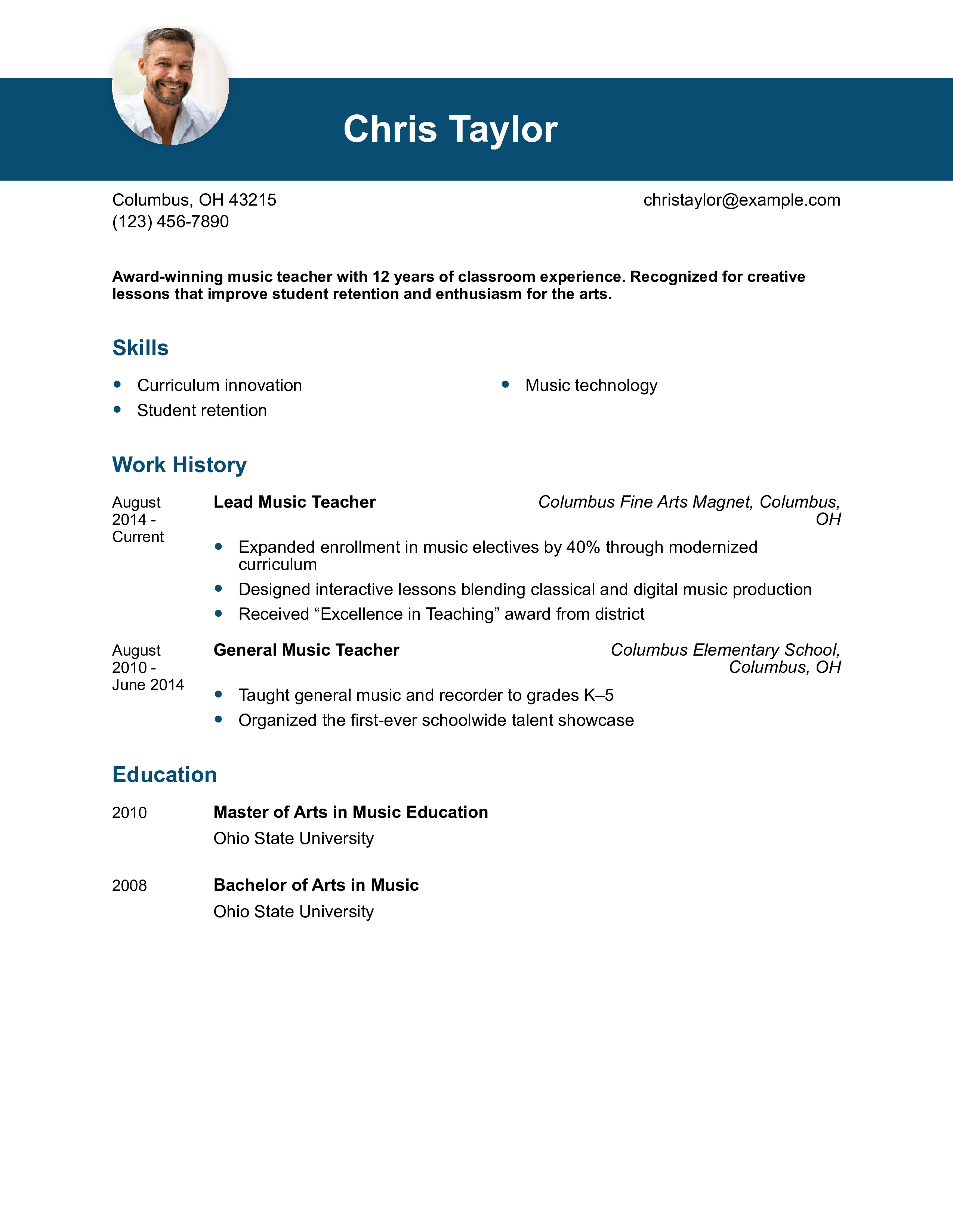
A+Music Teacher Resume
Why This Resume Stands Out
This resume is good because it highlights awards and measurable enrollment growth.
Acceptable Music Teacher Resume
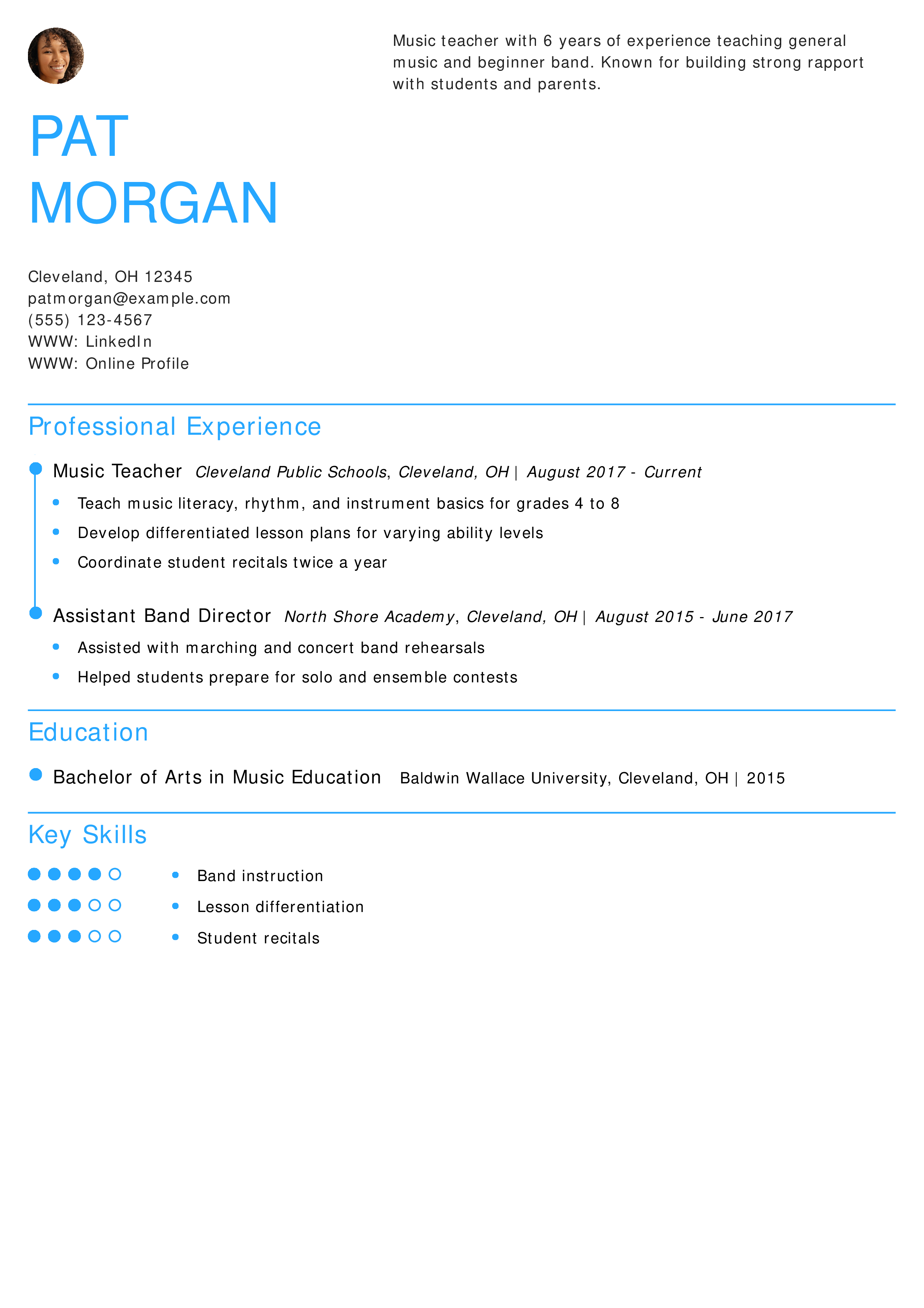
Why This Resume Stands Out
This resume is strong because it presents clear teaching experience with measurable outcomes.
Carnatic Music Teacher Resume
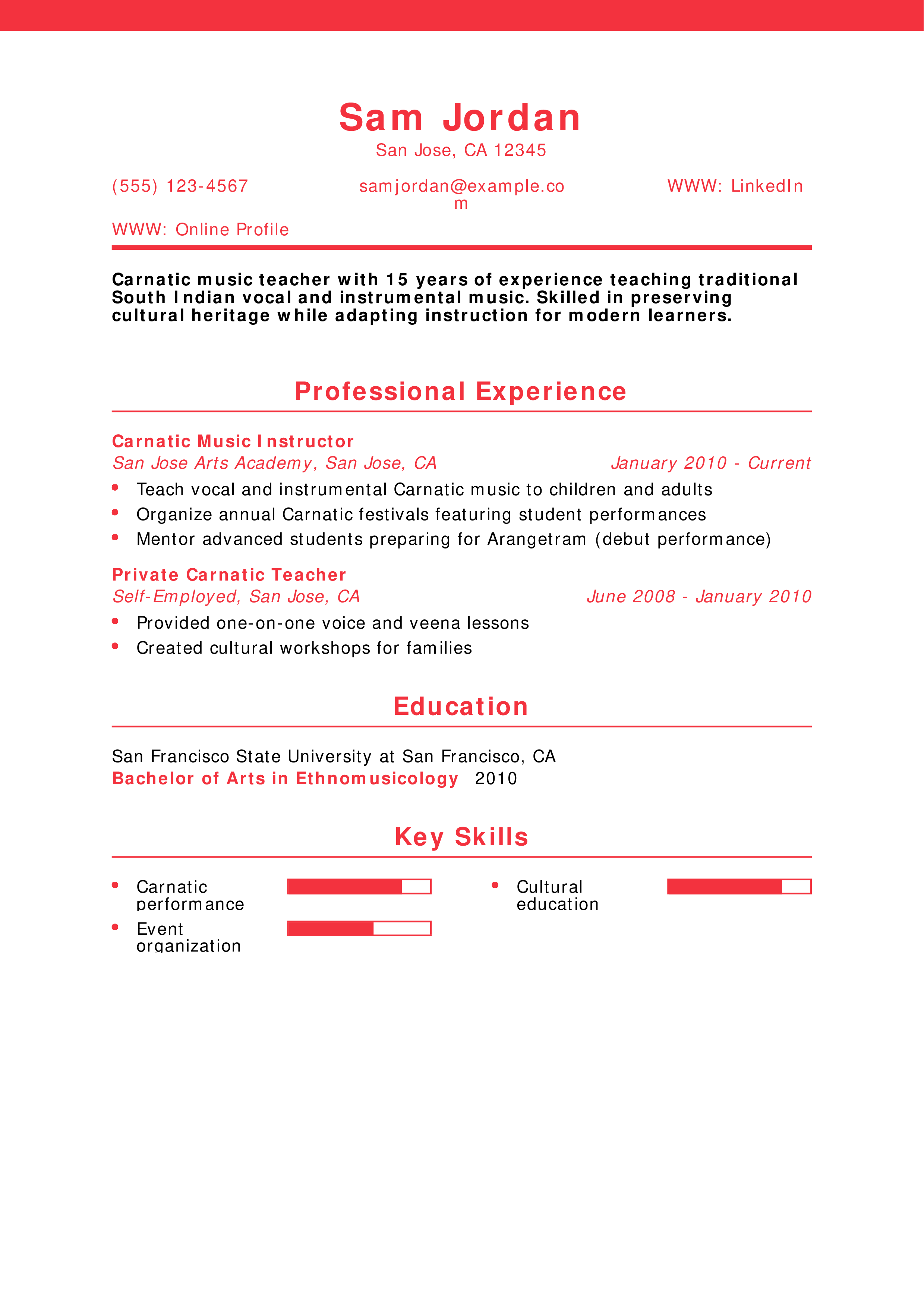
Why This Resume Stands Out
This resume is effective because it highlights cultural expertise and performance mentoring.
Choral Music Teacher Resume
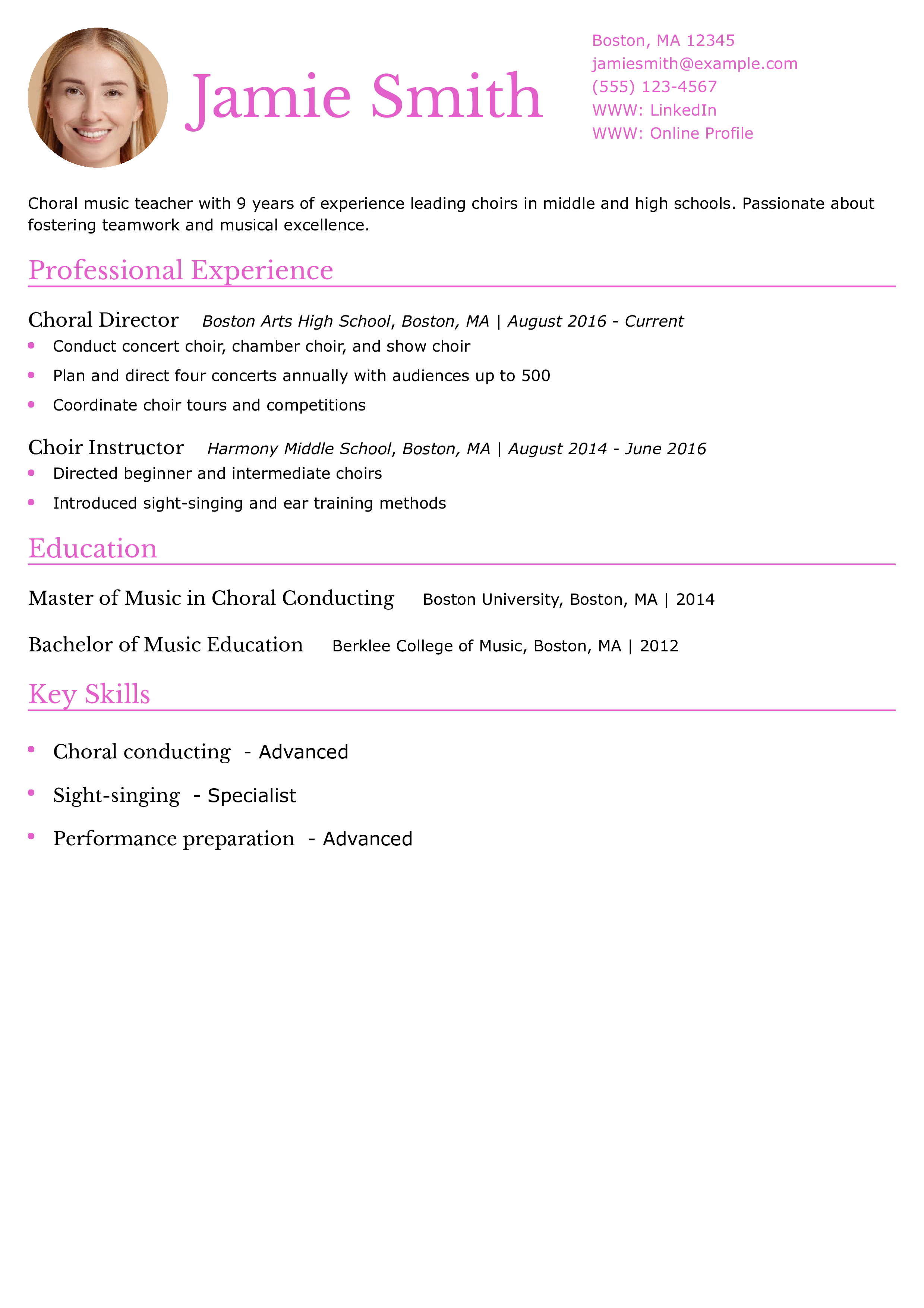
Why This Resume Stands Out
This resume is strong because it emphasizes leadership in performance groups.
College Music Teacher Resume
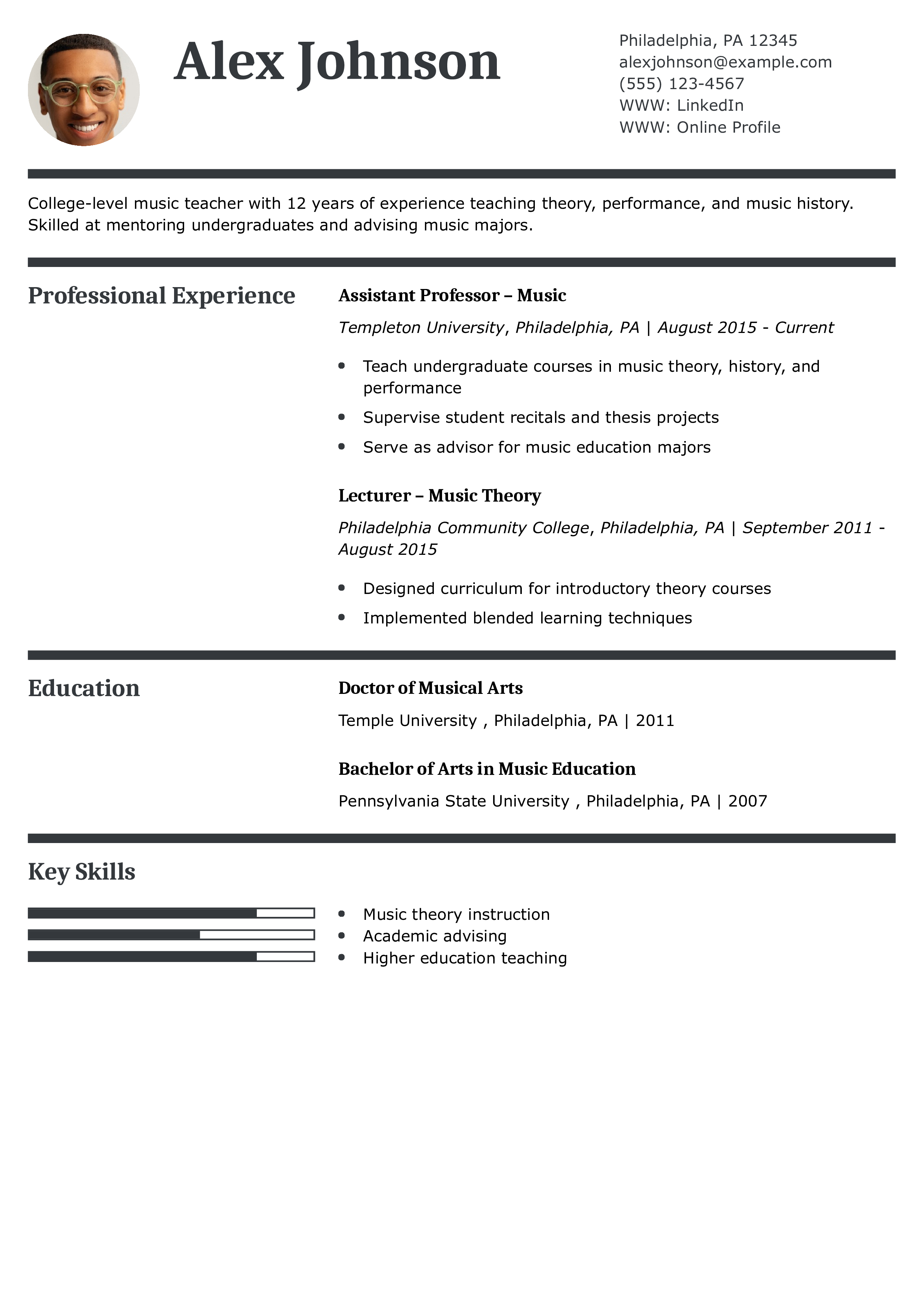
Why This Resume Stands Out
This resume is good because it shows progression from lecturer to professor.
High School Band Director Resume
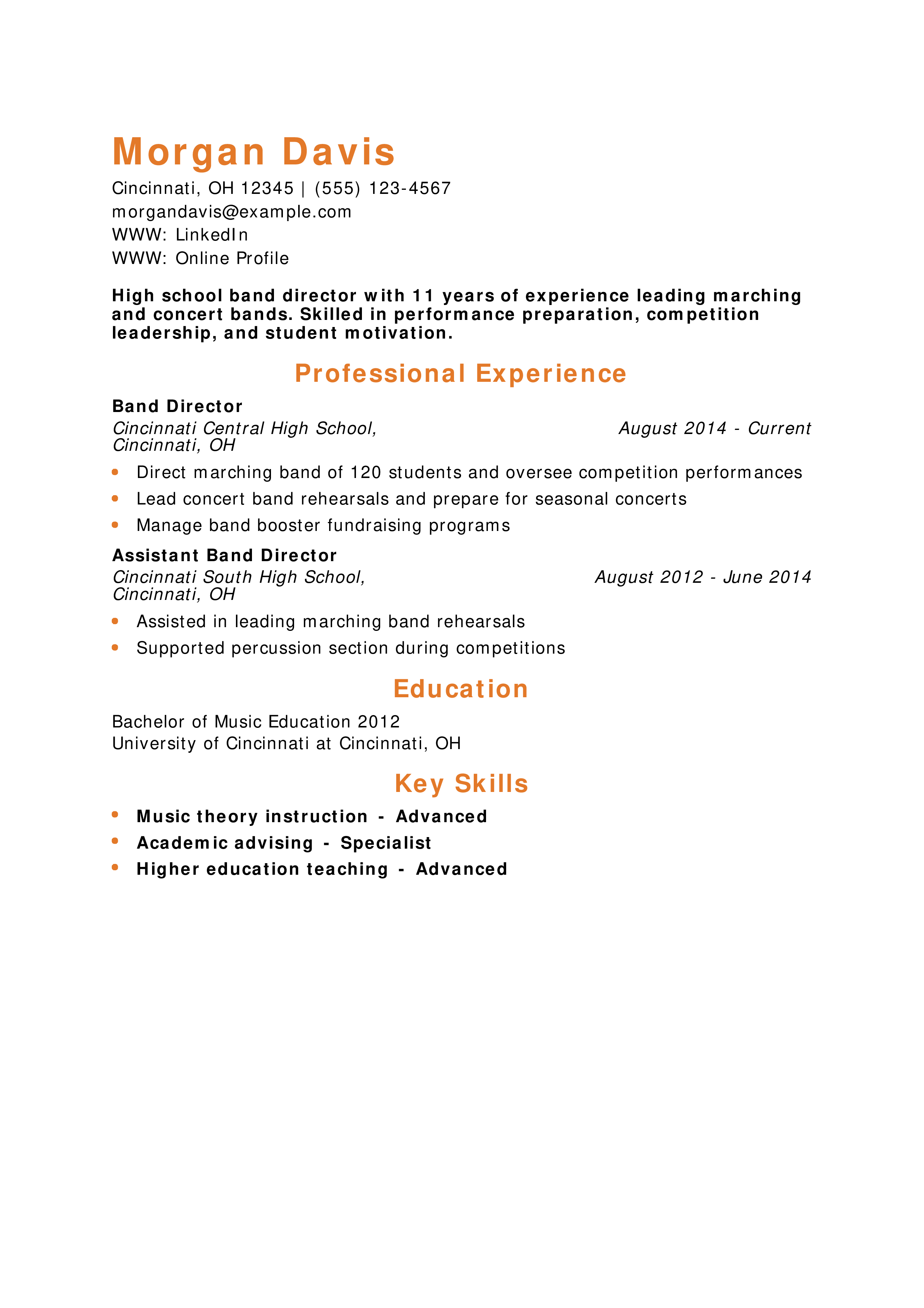
Why This Resume Stands Out
This resume is strong because it showcases leadership in competitive performance settings.
Elementary Choir Teacher Resume
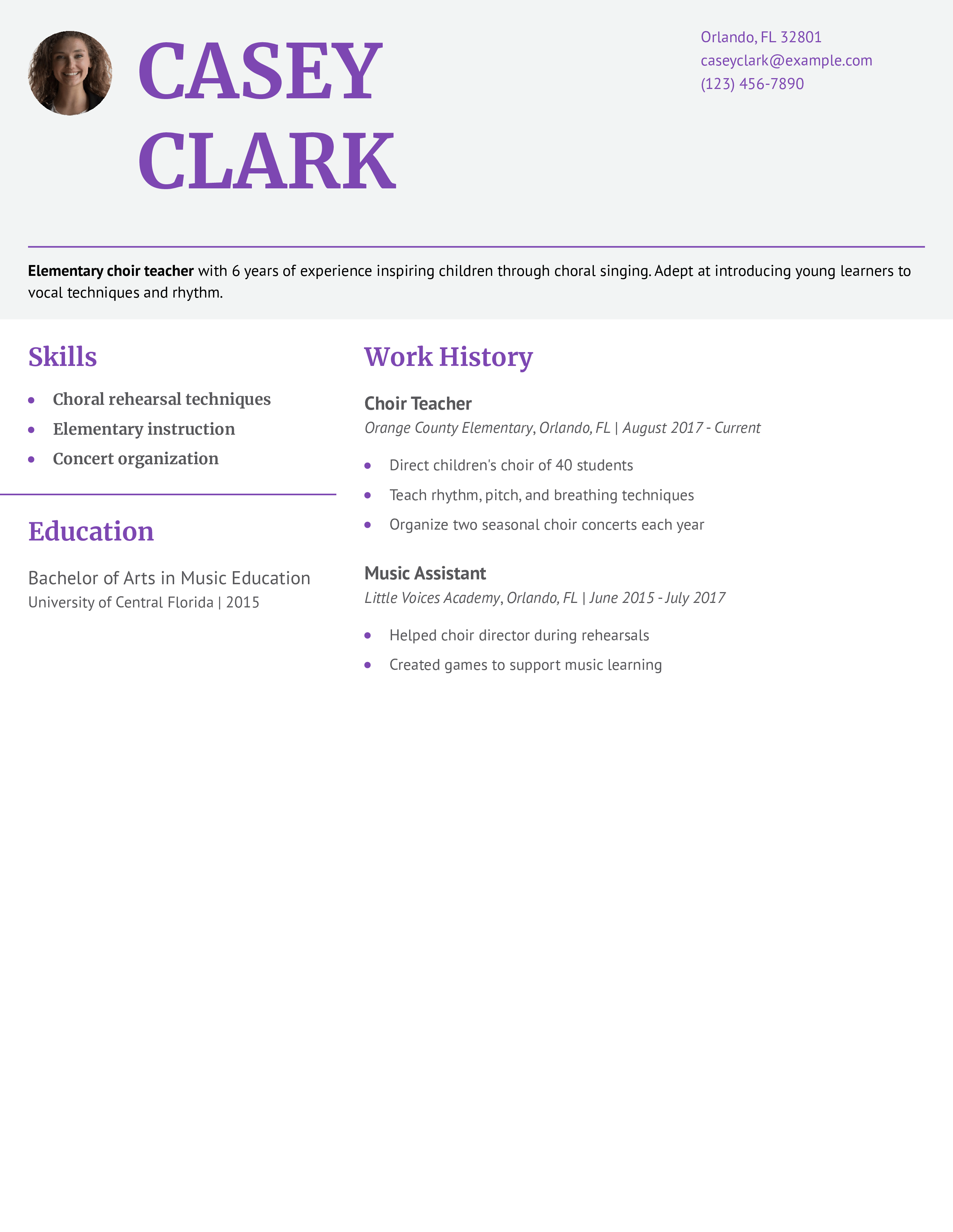
Why This Resume Stands Out
This resume is effective because it shows skill in age-appropriate instruction.
Orchestra Teacher Resume
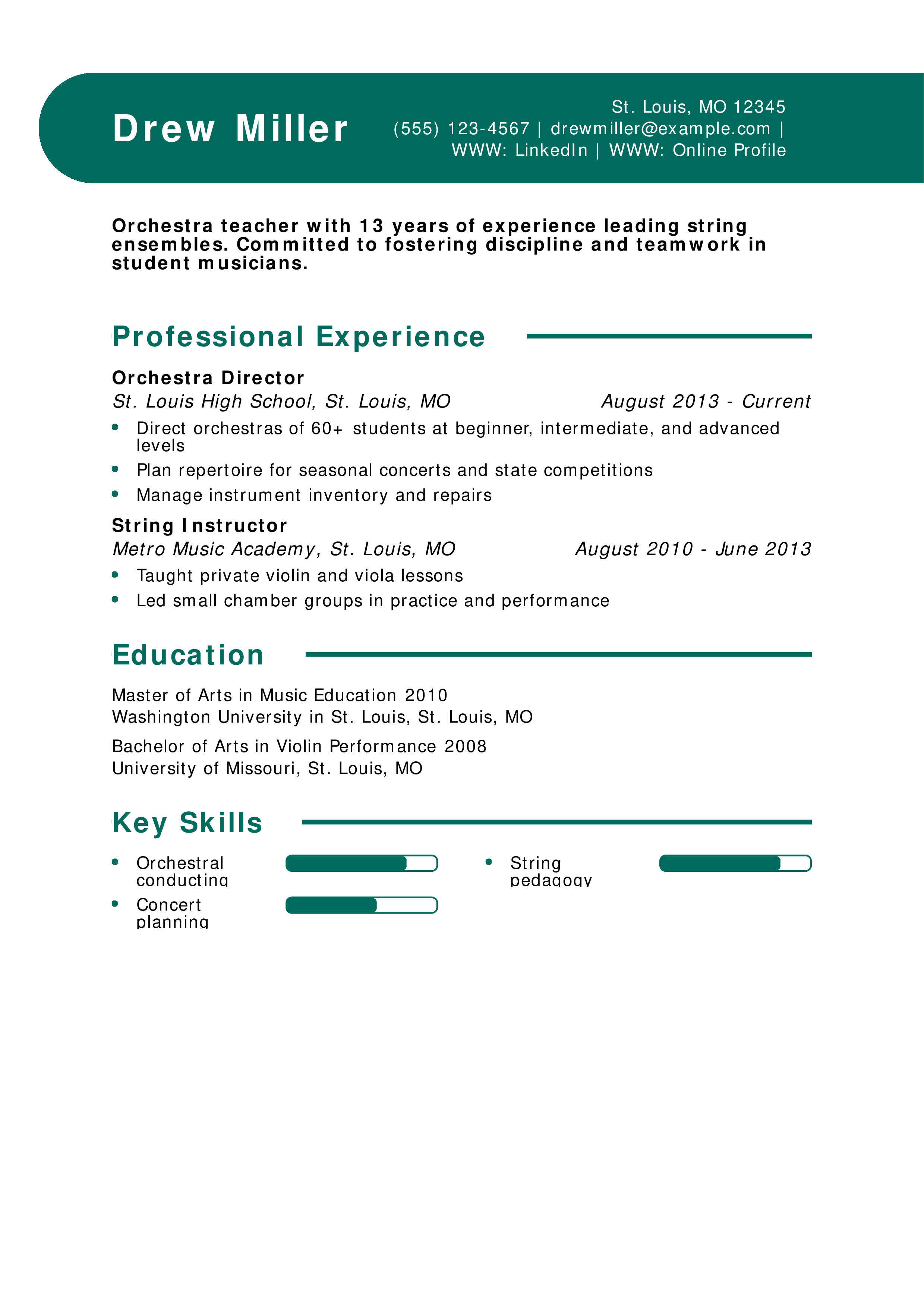
Why This Resume Stands Out
This resume is strong because it blends ensemble leadership with private teaching.
Jazz Ensemble Teacher Resume
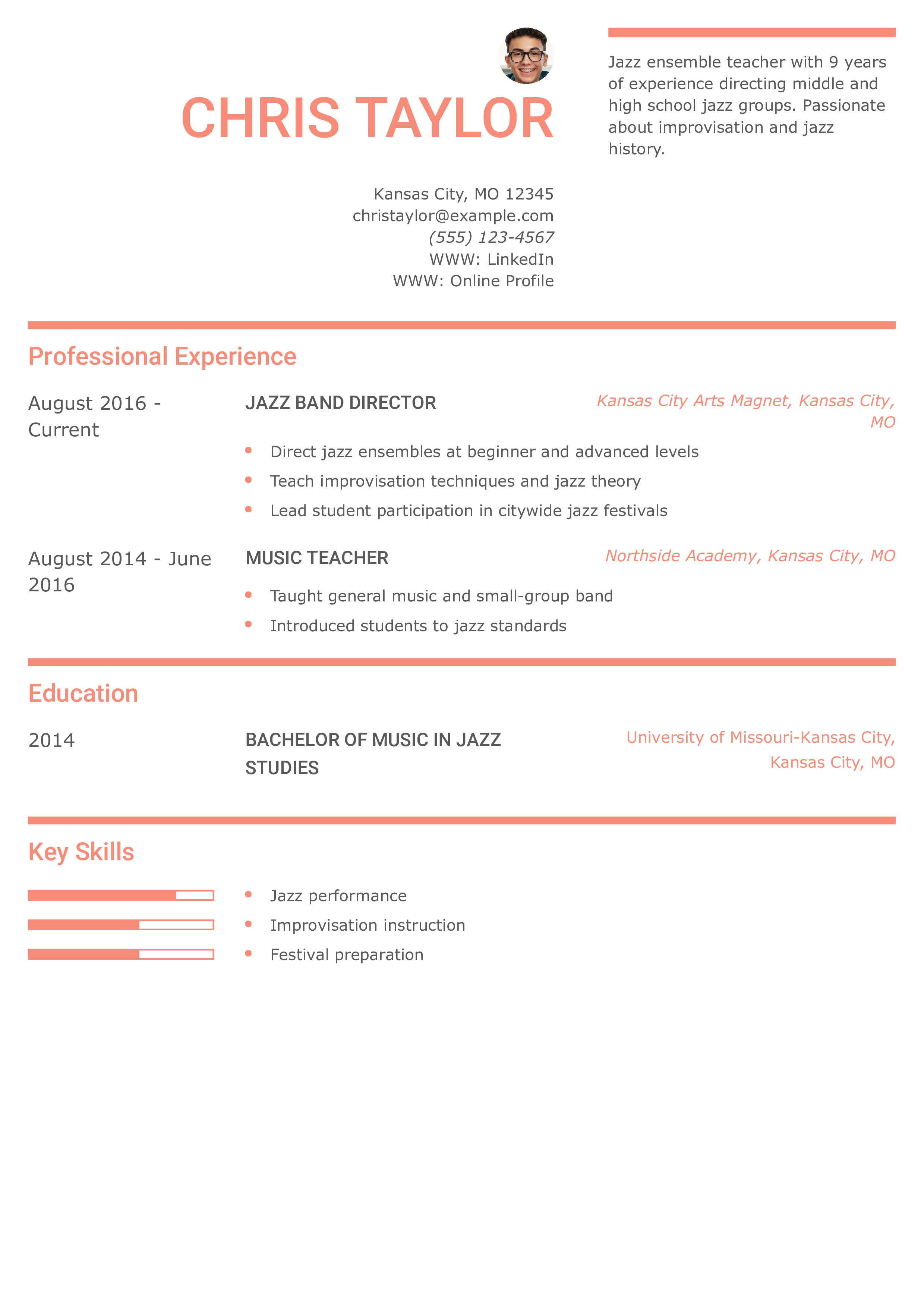
Why This Resume Stands Out
This resume is good because it connects classroom teaching with real-world performance.
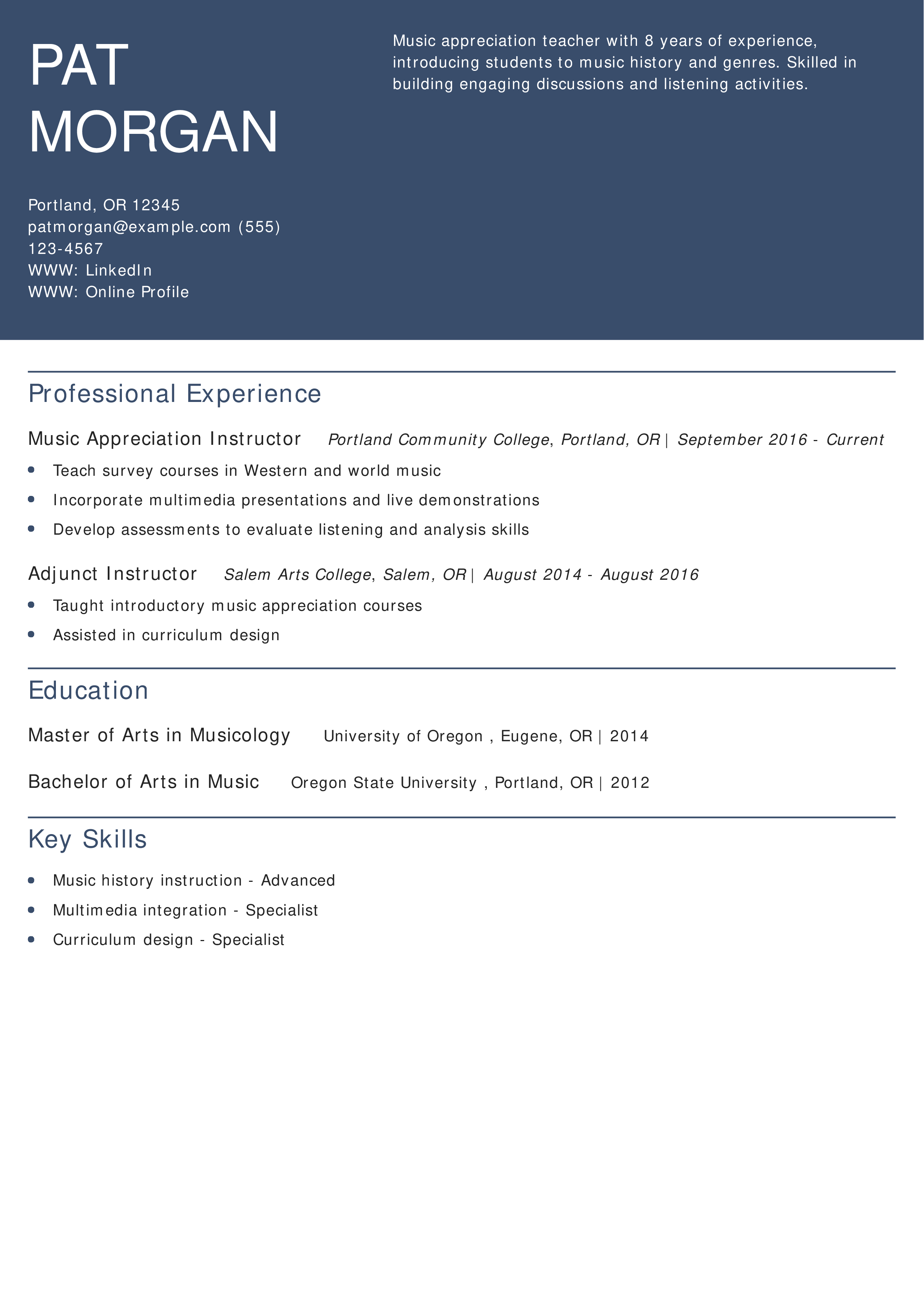
Music Appreciation Teacher Resume
Why This Resume Stands Out
This resume is strong because it emphasizes academic teaching and cultural breadth.
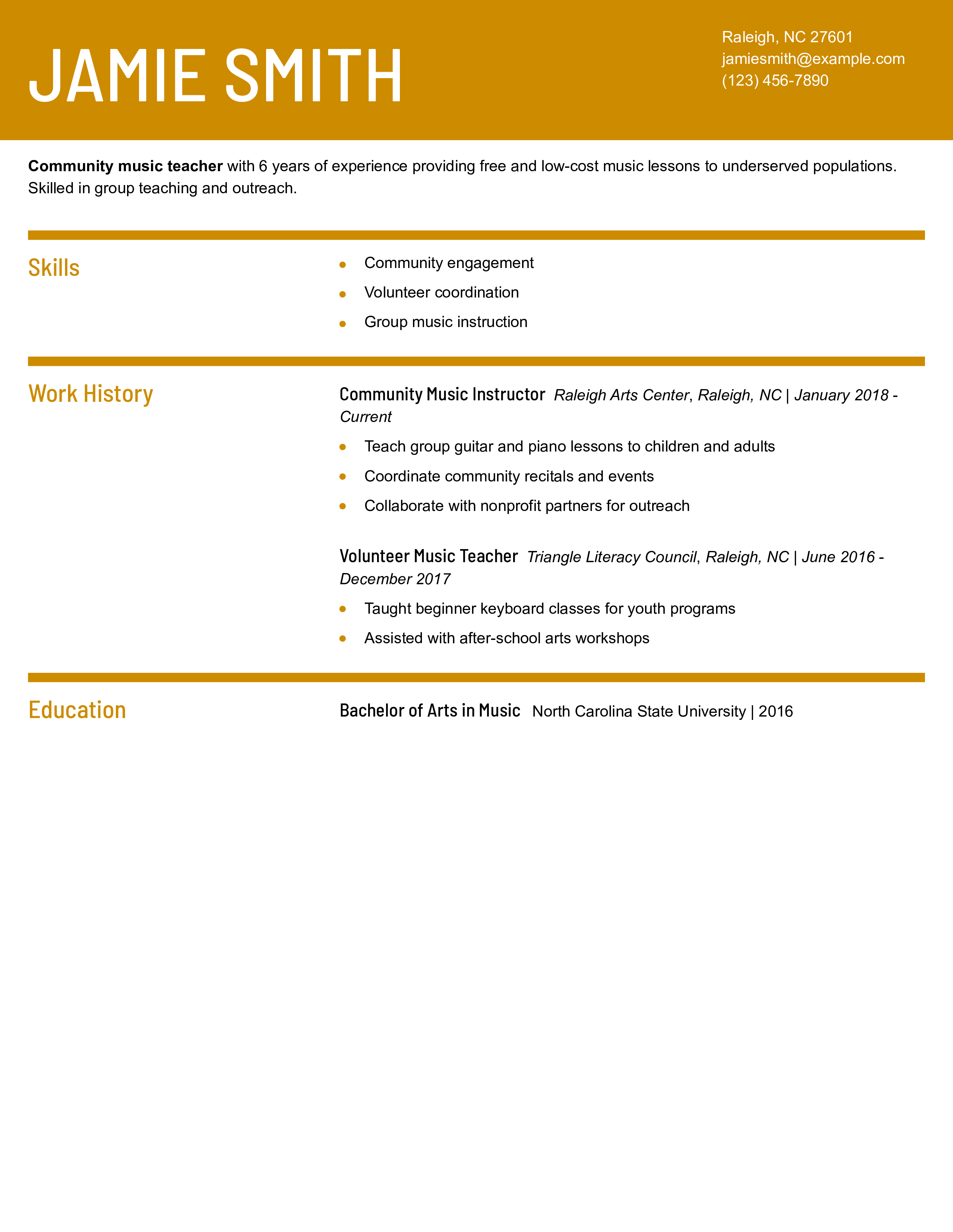
Community Music Teacher Resume
Why This Resume Stands Out
This resume is effective because it shows impact in both paid and volunteer roles.
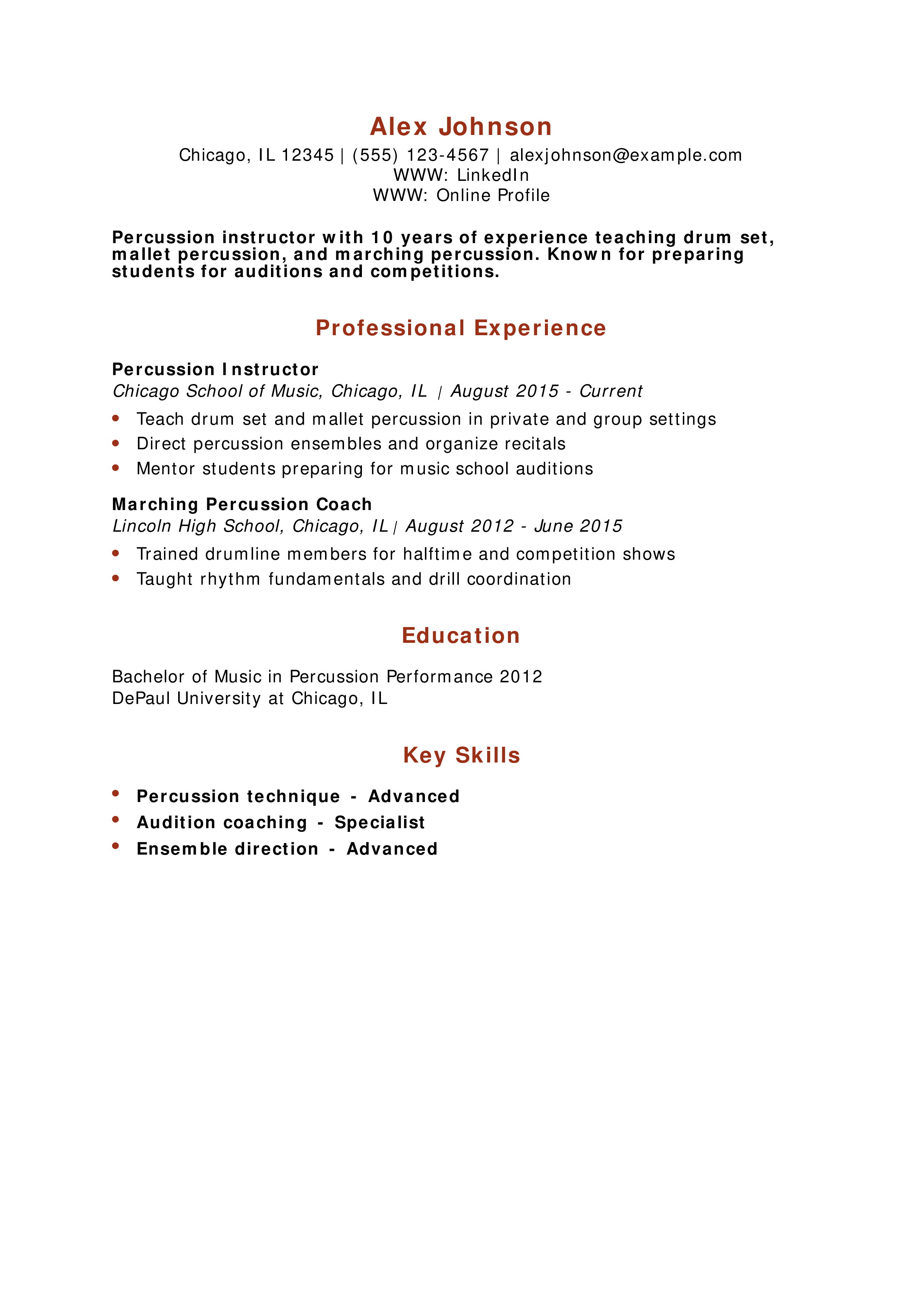
Percussion Instructor Resume
Why This Resume Stands Out
This resume is strong because it blends private lessons with ensemble leadership.
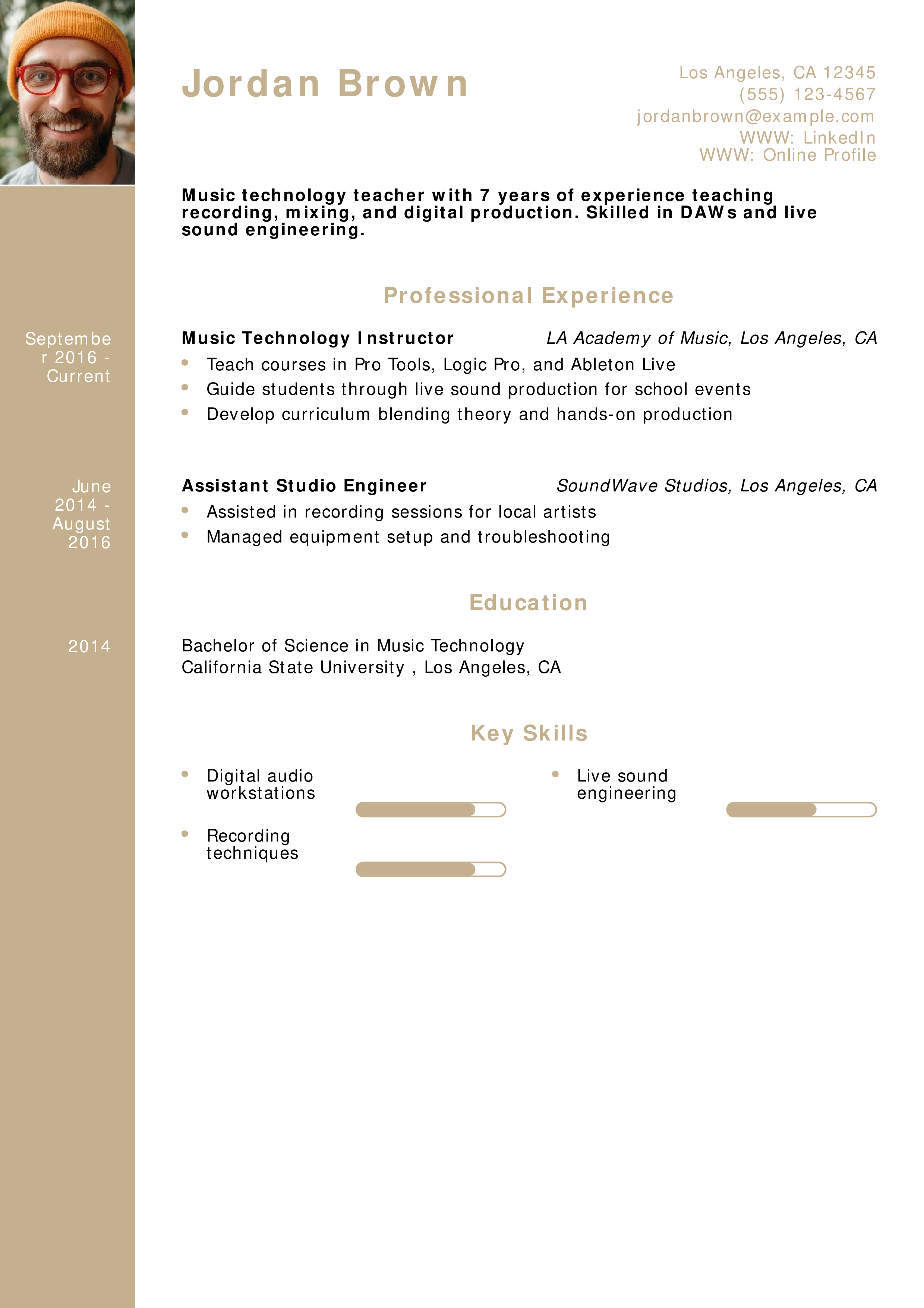
Music Technology Teacher Resume
Why This Resume Stands Out
This resume is effective because it combines classroom teaching with professional studio work.
Special Education Music Teacher Resume
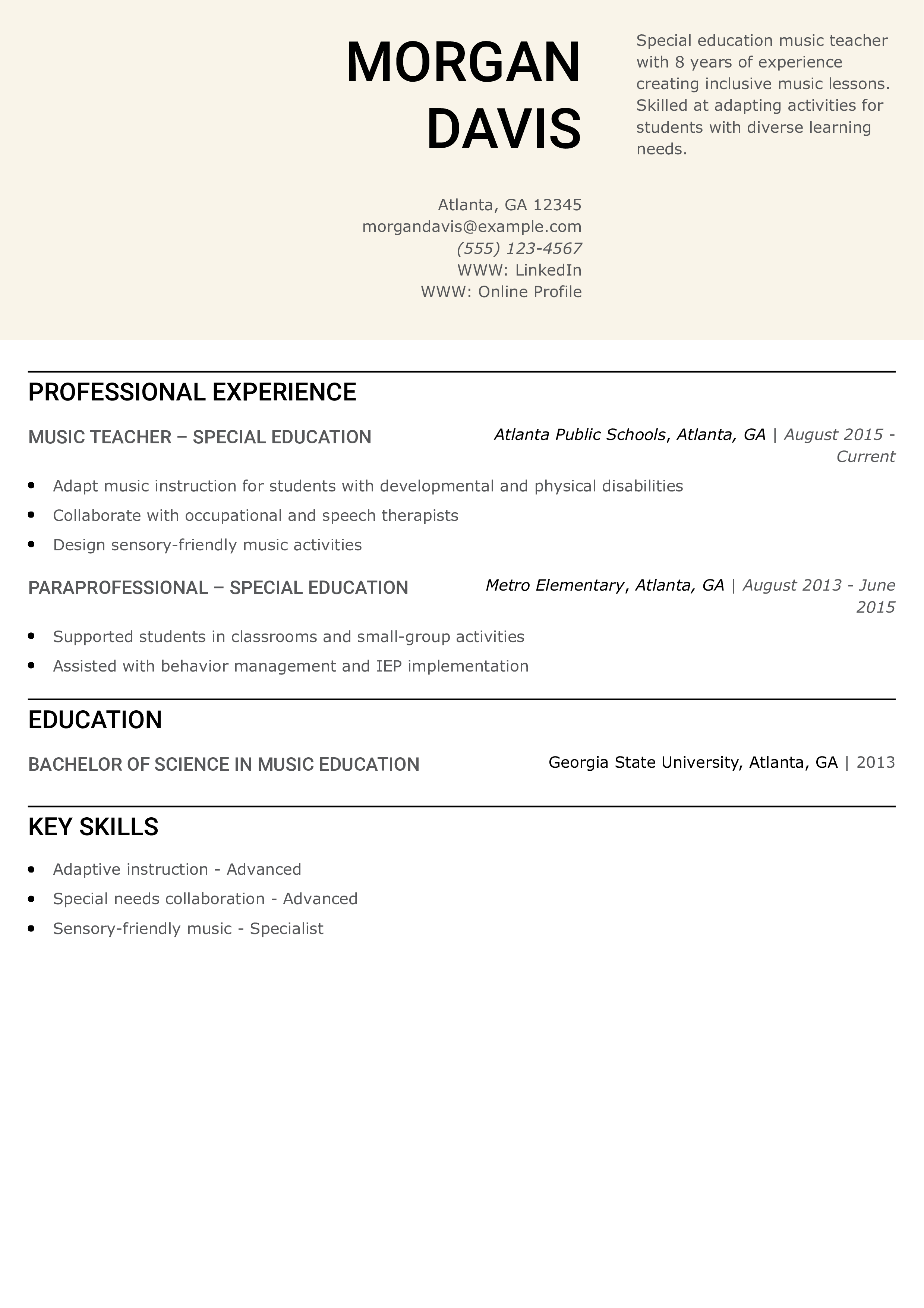
Why This Resume Stands Out
This resume is strong because it highlights inclusivity and collaboration.
Music Substitute Teacher Resume
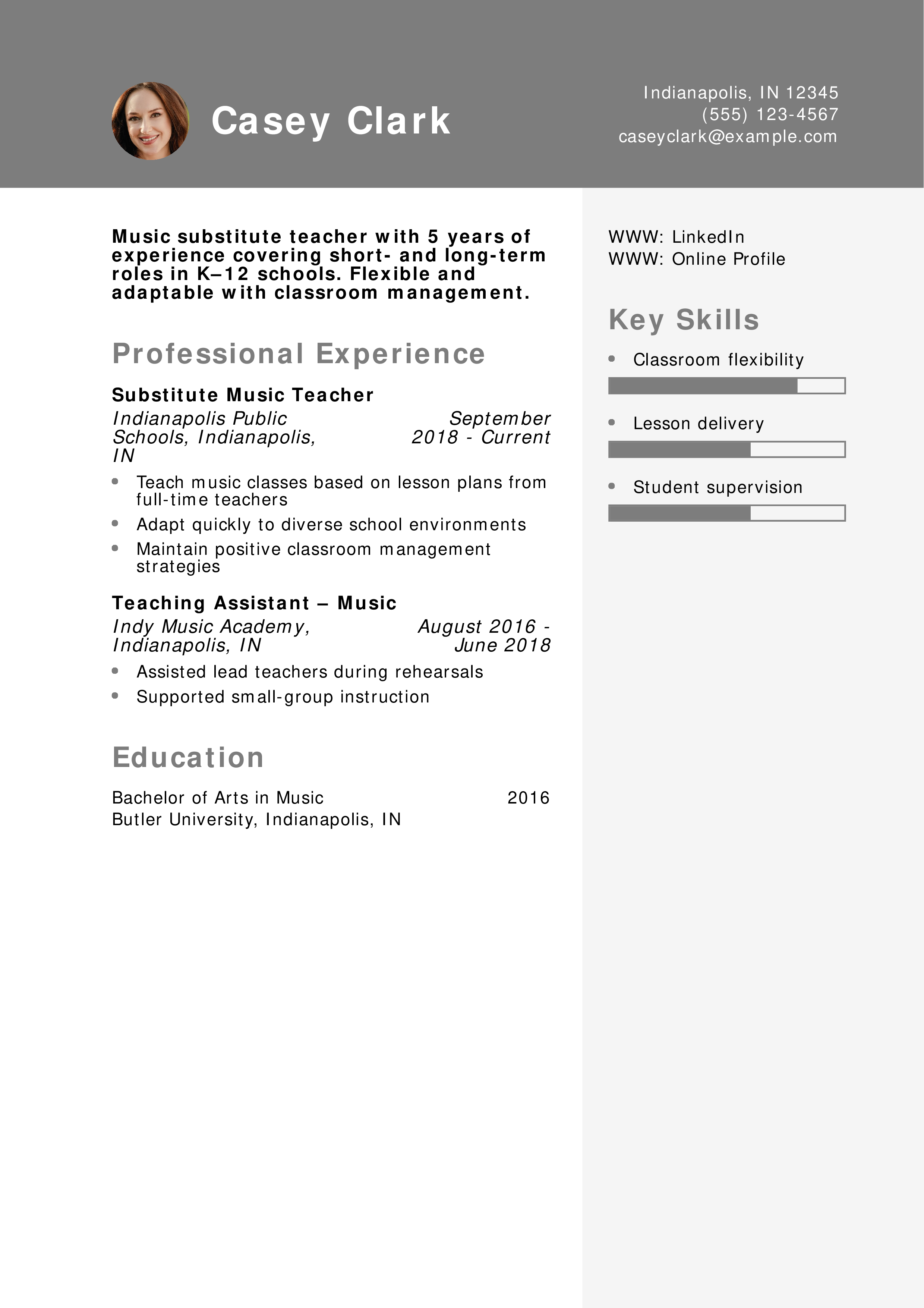
Why This Resume Stands Out
This resume is effective because it emphasizes adaptability in different classrooms.
Early Childhood Music Teacher Resume
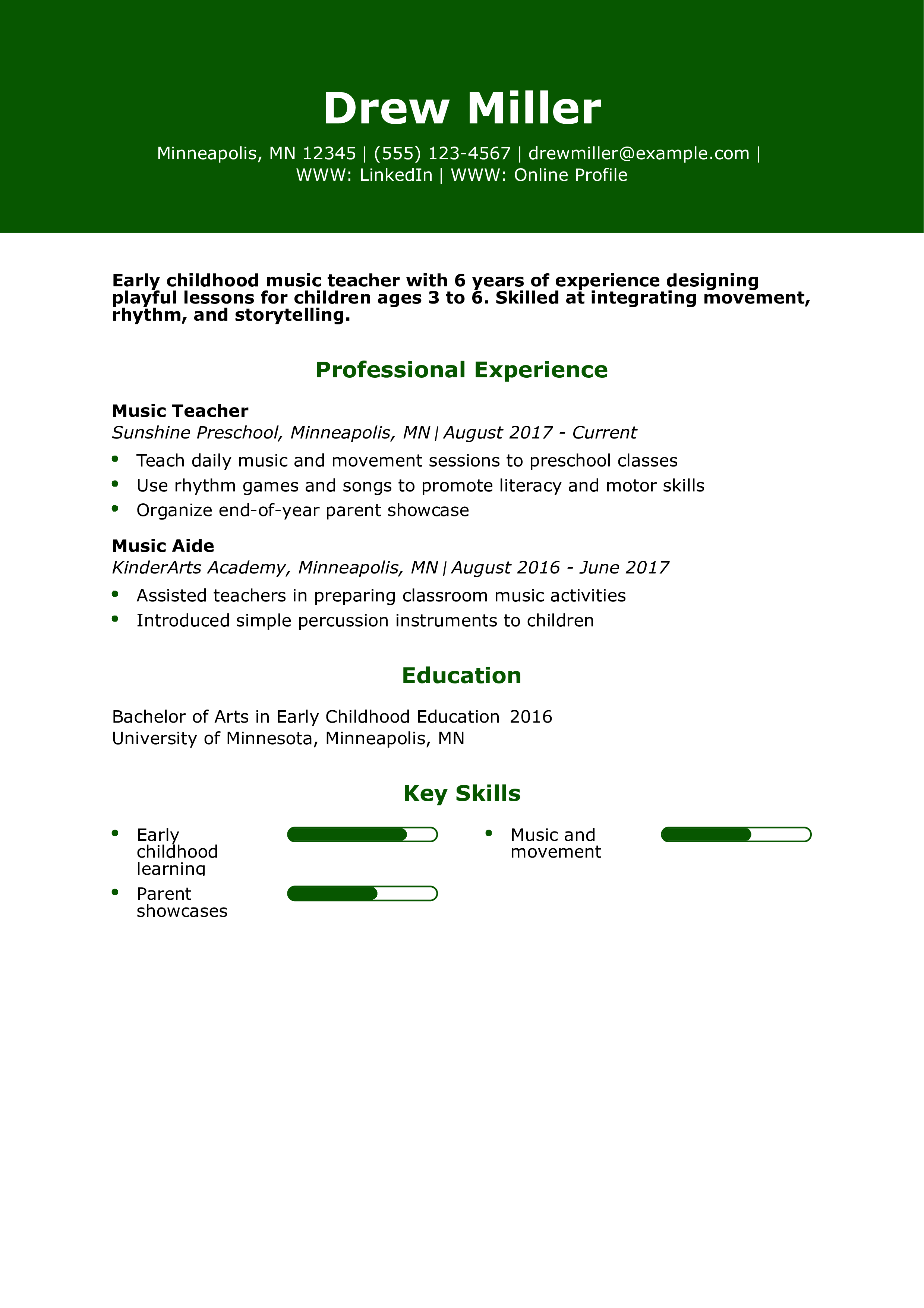
Why This Resume Stands Out
This resume is good because it emphasizes age-appropriate teaching methods.
Instrumental Music Teacher Resume
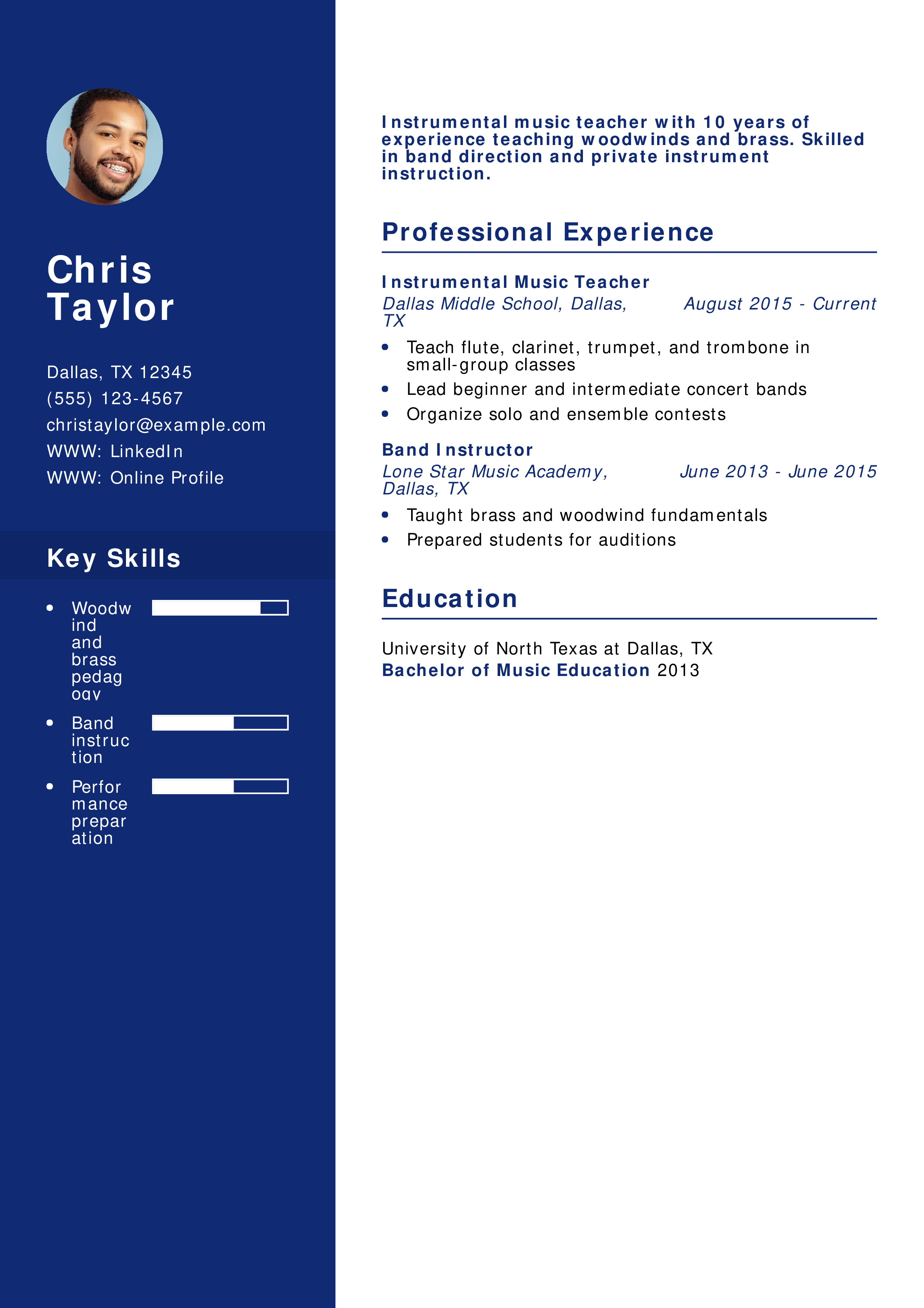
Why This Resume Stands Out
This resume is strong because it balances ensemble and individual instruction.
Music Theory Teacher Resume
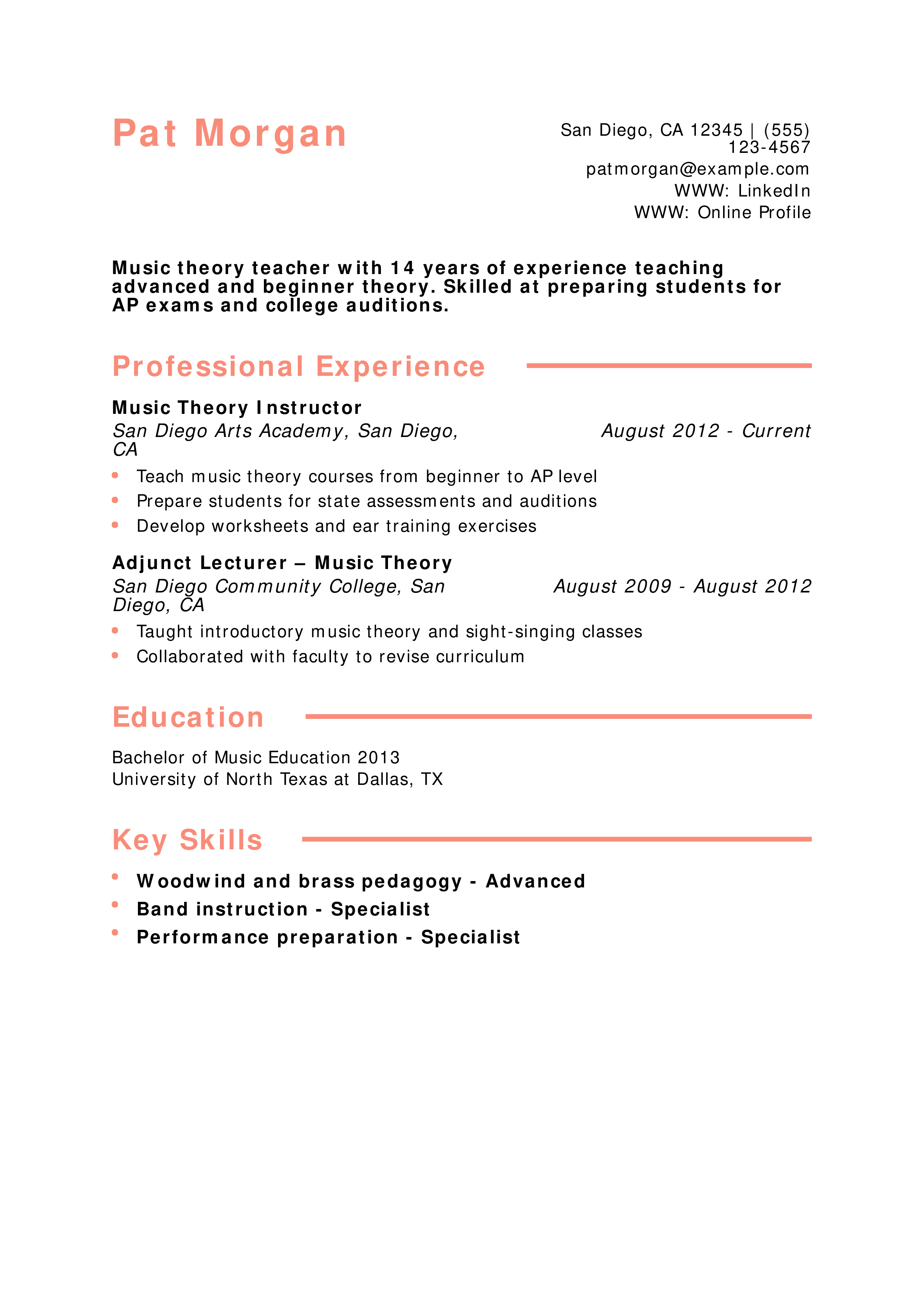
Why This Resume Stands Out
This resume is effective because it highlights both school-level and college-level teaching.
Our templates are crafted by professional resume writers to make creating your resume quick, easy, and effective.
- Professional resume template downloads
- Customized cover letter generation
- AI resume writing support
- Career-building resources and advice
Music Teacher Text-Only Resume Templates and Examples
How To Write a Music Teacher Resume
Music teachers should avoid describing passion and highlight curriculum design, measurable skill progress, and contributions to ensembles or performances. Schools want teachers who elevate both confidence and technique.

1. Create a profile by summarizing your music teacher qualifications
Draw readers in with a harmonious paragraph briefly describing your experience and record of success as a music teacher. Establish yourself as a dedicated educator passionate about sharing your love of music with students in elementary schools, universities, or private lessons. Begin your profile with a sentence stating your job title, years of experience, and key qualifications or specializations that align with the job posting.
Share your commitment to engaging students with creative lesson plans and innovative teaching methods that cater to different learning styles. Mention any instrument proficiencies that you have or are relevant to the job. Consider what makes you unique and qualified to be a music teacher and put it in your profile.
Senior-Level Profile Example:
Dedicated music educator with eight years of experience teaching piano performance and music theory. Create and deliver dynamic classes that spark students’ creativity and enthusiasm for building piano proficiency. Focus on finding new ways to help students develop strong piano techniques and musical fluency. Work informed by a Master’s degree in piano performance.
Entry-Level Profile Example:
Music teacher with strong recent experience at a large public middle school. Committed to providing dynamic music education experiences that ignite students’ creativity and curiosity.
2. Add your music teacher experience with compelling examples
Compose your professional experience section with your accomplishments in mind. Instead of listing your daily job duties, show hiring managers what you achieved in your past positions. Give them confidence in your ability to teach students. You can use numbers and action verbs to illustrate how you influenced your students to grow as musicians.
Talk about how you improved the program you were a part of or inspired your students to take their musical practice seriously. It takes an active and engaged music teacher to make a real impact, and hiring managers will appreciate a look into how you nurture students’ love of music.
Senior-Level Professional Experience Example:
Music Teacher and Lecturer — Piano, University of Michigan School of Music, Ann Arbor, MI | August 2018 – present
- Educate music majors and other art students on building and demonstrating proficiency with piano
- Instruct piano performance majors on advanced keyboard harmony and transposition
- Manage and update students’ piano performance schedules and attendance records
- Draw a strong link between class piano and the skills required for work in various professional music settings
Entry-Level Professional Experience Example:
Music Teacher, BCD Middle School, Nashville, TN | August 2021 – present
- Plan and deliver general music classes to groups of up to 25 students
- Provide instrument-specific education to students in one-on-one and ensemble settings
- Broadened the scope of the school’s music curriculum to include and explore new genres, instruments, and production technologies
3. Include music teacher-related education and certifications
If you’re a music teacher within a public or private school system, your education section is a vital part of your resume. Be sure to include your highest degree and any state licenses required for the job. In addition to your education and licensing, list any relevant certifications you may have earned during your career.
For example, a music certification in early childhood education would demonstrate your ability to tailor your lessons and teaching methods to younger students. Or, for more experienced teachers, including a Nationally Certified Teacher of Music (NCTM) credential could show employers your dedication to the field as a well-seasoned educator.
Education
Template
- [Degree Name]
- [School Name], [City, State Abbreviation] | [Graduation Month and Year]
Example
- Bachelor of Arts (BA) — Music Education
- Miami Dade College, Miami, FL | June 2017
Certifications
Template
- [Certification Name], [Awarding Organization], [Completion Year]
Example
- Licensed Teacher, State of Tennessee | 2021
4. List key music teacher skills and proficiencies
Music teachers combine strong subject knowledge and communication skills to excite people about music and the arts. For an effective music teacher resume, include a “Key Skills” section that gives the hiring manager an overview of your expertise. This also optimizes your resume for application tracking systems (ATS) that filter the documents for hiring managers. Including keywords from the job description in your resume will help you get through the initial screening. Consider including terms like those below:
| Key Skills and Proficiencies | |
|---|---|
| Adaptive teaching | Arts and music education |
| Assessment and evaluation | Classroom management |
| Classroom music pedagogy | Community engagement |
| Course materials and repertoire selection | Cross-discipline collaboration |
| Cultural and world music knowledge | Curriculum development |
| Instrumental expertise | Learning workshop facilitation |
| Lesson planning | Music composition and arranging |
| Music program development | Music theory |
| Musician coaching | Private musical instruction |
| Technology integration | Tutoring |
How To Pick the Best Music Teacher Resume Template
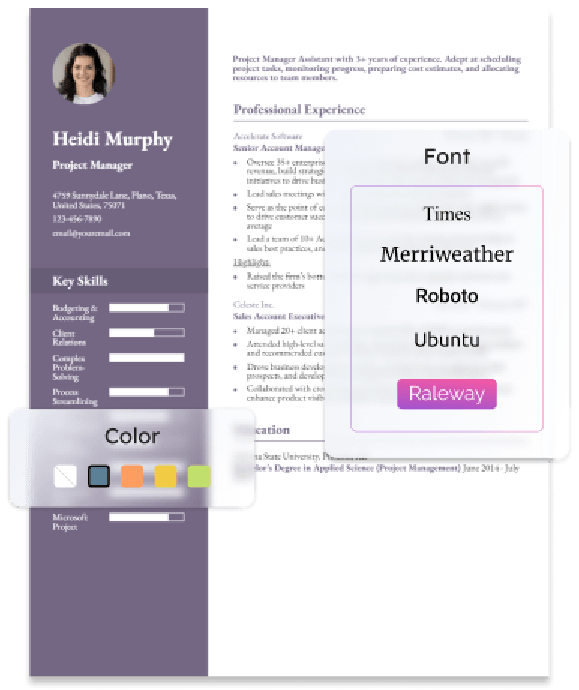
When it comes to picking the right resume template, it needs to strike the right chords with potential employers or schools. Opt for a template that reflects your creativity and professionalism, showing your passion for music and teaching. However, keep it clean and easy to read, just like a well-written sheet of music. Heavy use of colors and elaborate graphics may give a unique look, but they can distract the reader from the content of your resume.
Frequently Asked Questions: Music Teacher Resume Examples and Advice
How do I optimize my Music CV to get noticed by hiring managers?
To optimize your Music CV, begin by showcasing measurable achievements that demonstrate the value you’ve brought to previous employers. Use action verbs and specific examples to highlight your contributions. Incorporating industry-specific keywords, particularly in the skills and professional experience sections, will help your CV stand out, especially with ATS systems.
What are common action verbs for music teacher resumes?
Using action verbs in your resume is like adding rhythm to your qualifications. They help you concisely describe your past work experiences and add a dynamic element to your resume. You’ll find it easier to communicate your active involvement in music education and convey a sense of achievement. As you write your professional experience section, consider using the following action verbs:
| Action Verbs | |
|---|---|
| Coordinated | Created |
| Decreased | Developed |
| Educated | Eliminated |
| Engaged | Enhanced |
| Established | Generated |
| Improved | Increased |
| Initiated | Instructed |
| Introduced | Planned |
| Raised | Revitalized |
| Started | Uncovered |
How do you align your resume with a music teacher job description?
According to the Bureau of Labor Statistics, if you’re a K-12 educator or a postsecondary teacher, you can expect to see an upward trend in employment between 2022 and 2032. For public schools, this growth will depend on annual budgets and whether or not these educational institutions can afford to bring on more teachers. However, postsecondary schools will see more growth due to the demand for education that helps people meet their career goals.
To stand out from the competition and land the job you really want, you’ll need a resume that aligns with the job description of the role you’re applying for. You can increase your chances of landing an interview if you tailor your resume to meet school or client needs.
For instance, suppose a school is looking for a music teacher with expertise in ensemble leadership. You would then highlight your experience in conducting students and organizing performances. Discuss how you’ve contributed to student learning through school bands, orchestras, and choirs.
What is the best music teacher resume format?
A chronological resume is often the best choice for music teachers as it emphasizes a strong background in hands-on experience teaching students over a long period of time. Schools can easily see your career progression and everything you’ve accomplished for as long as you’ve been a music teacher. However, a combination format can be a good option for entry-level educators or those who would rather highlight their skills, education, and certifications over their work history.
What’s the ideal length for a music teacher resume?
A one-page resume is ideal for most music teacher positions, especially if you have less than 10 years of experience. For experienced professionals, a two-page resume may be appropriate, but only if it includes valuable, job-relevant content. Focus on showcasing your key achievements, certifications, and skills that align with the job description.
Aim to include work experience from the last 10 to 15 years. Older roles can be summarized or omitted unless they add significant value. Keeping your resume concise and relevant will leave a strong impression on hiring managers.
Craft your perfect resume in minutes
Get 2x more interviews with Resume Builder. Access Pro Plan features for a limited time!