
Science careers span industries and include various specialties, from hydrogeology to physics, health care research and development, and chemistry. When writing a science resume, focus on your area of study, experience, and career goals — and be sure to target the resume to the employer to show your relevance and value as a candidate.
Also, consider highlighting leadership, planning, and communication skills, which are not specific to science but can be important when working in a collaborative lab environment or overseeing lab assistants.
Review our below list of tips, including examples, that can help you level up your resume.
“Science resumes should focus on research methodology, lab skills, and data interpretation. Show your contributions to discovery and innovation.”

Science Resumes in the AI Era — What Employers Screen For
Science hiring across biology, chemistry, environmental science, and research roles is increasingly screening for computational and AI tool fluency alongside laboratory and scientific methodology expertise. AI-assisted data analysis platforms, automated experimental tools, and machine learning applications in scientific research are becoming part of how research is conducted at leading institutions and biotech and pharmaceutical companies. Candidates who name the specific scientific software and data analysis platforms they have worked in and show how AI-assisted analysis contributed to their research outcomes are consistently standing out from those who present scientific credentials without addressing the technology context.
- Scientific analysis and informatics platforms you use by name specific to your science discipline
- AI-assisted data analysis, automated experimental tools, or ML methods applied in your scientific work
- Research contributions, publications, patents, or applied science outcomes with context for their significance
- Scientific credentials: degree, licensure, and any specialty certifications relevant to your scientific field
- Experimental design rigor, data analysis accuracy, and scientific communication quality in written and oral contexts
Most Popular Science Resumes
Physicist Resume
Why This Resume Stands Out
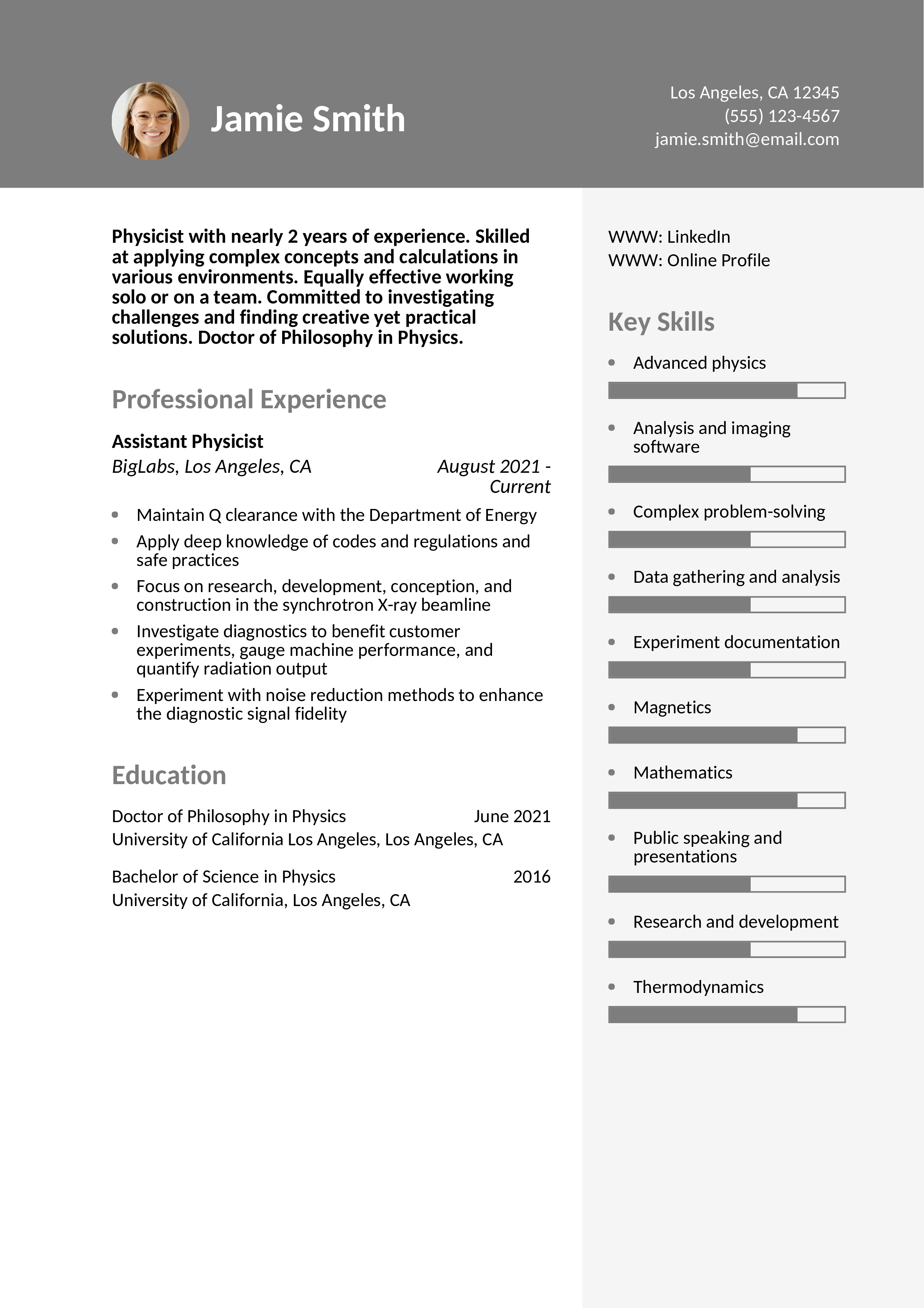
This resume is good because it showcases the candidate’s research and technical competencies while aligning with academic and industrial physics standards. The structure keeps things accessible for both technical reviewers and hiring managers.
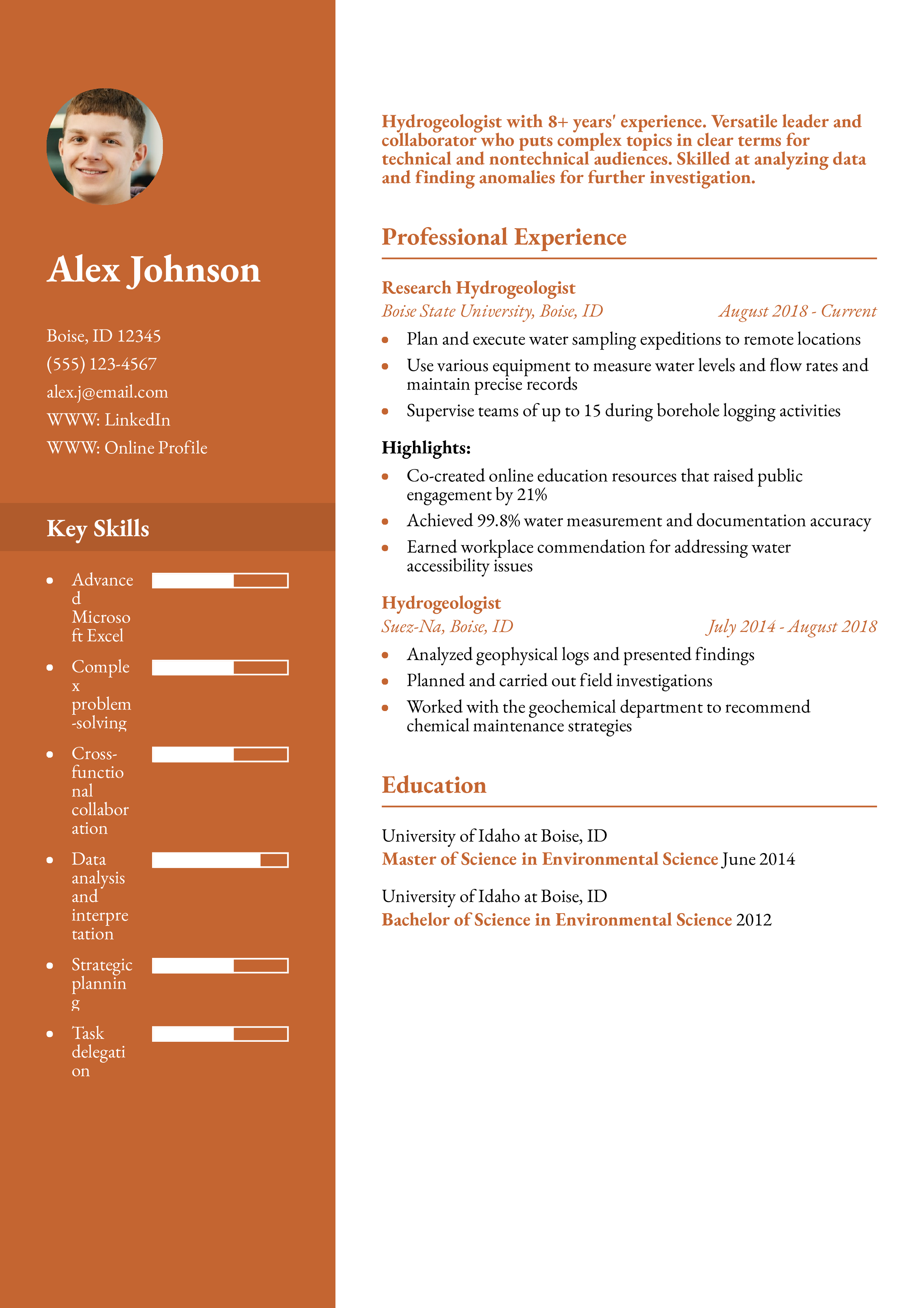
Hydrogeologist Resume
Why This Resume Stands Out
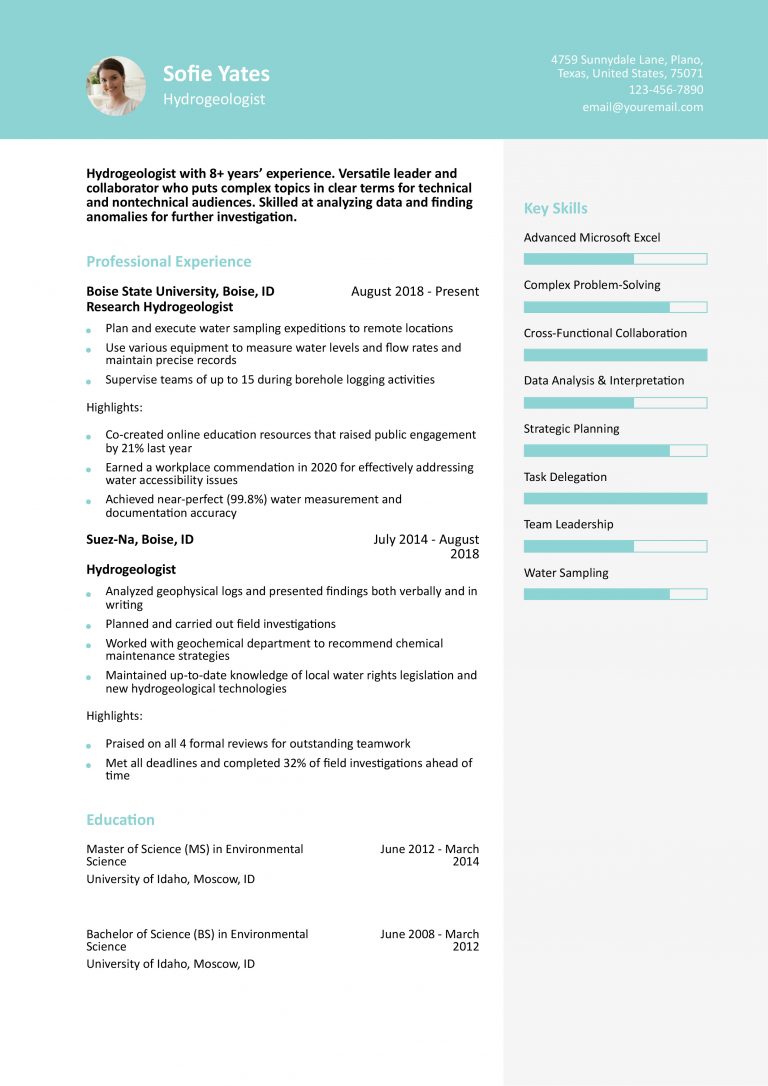
This resume is good because it balances technical field expertise with leadership and communication strengths. Each bullet delivers measurable impact.
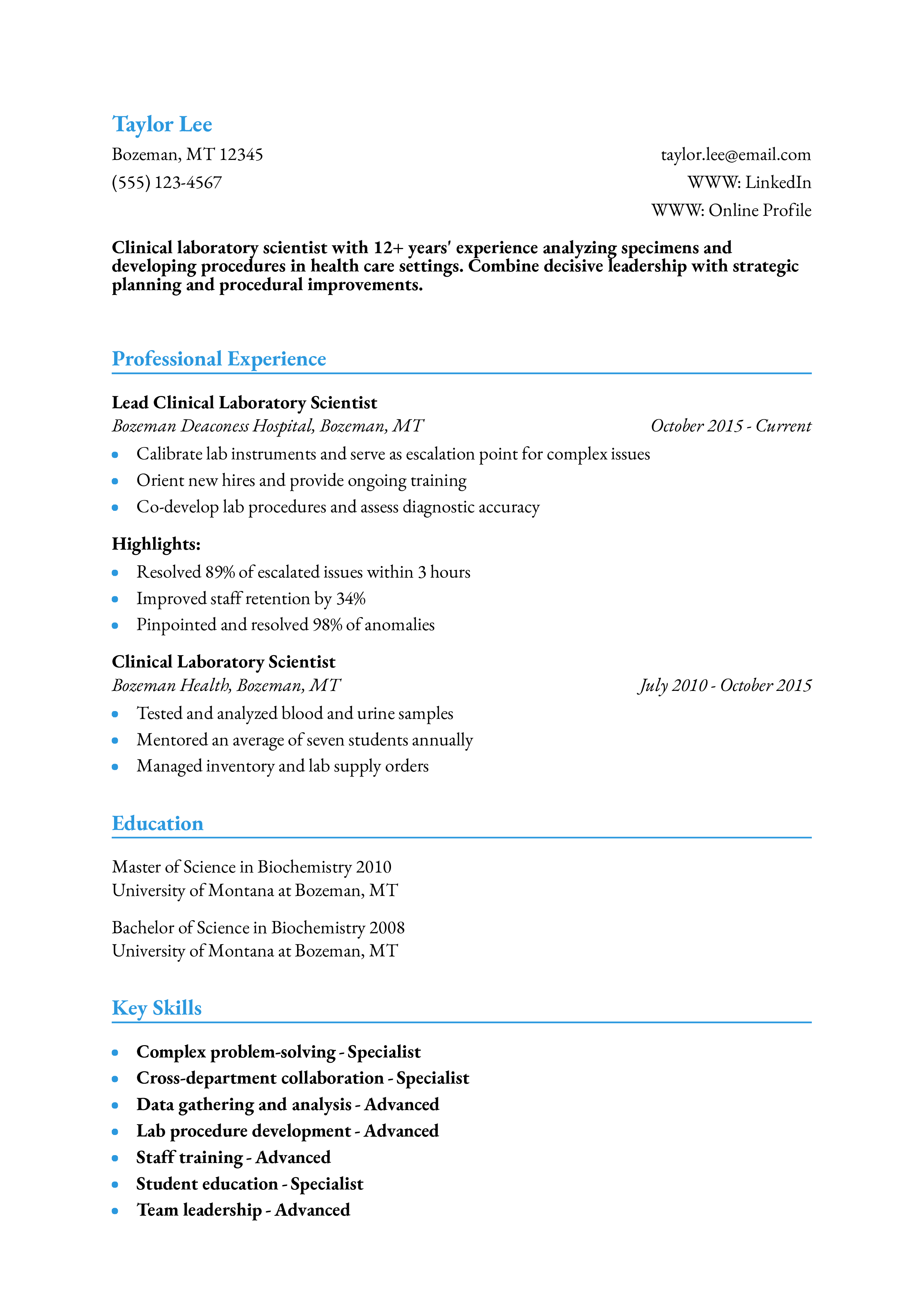
Clinical laboratory Scientist Resume
Why This Resume Stands Out
This resume is good because it demonstrates leadership, quantifiable achievements, and high technical accuracy — all crucial in laboratory environments.
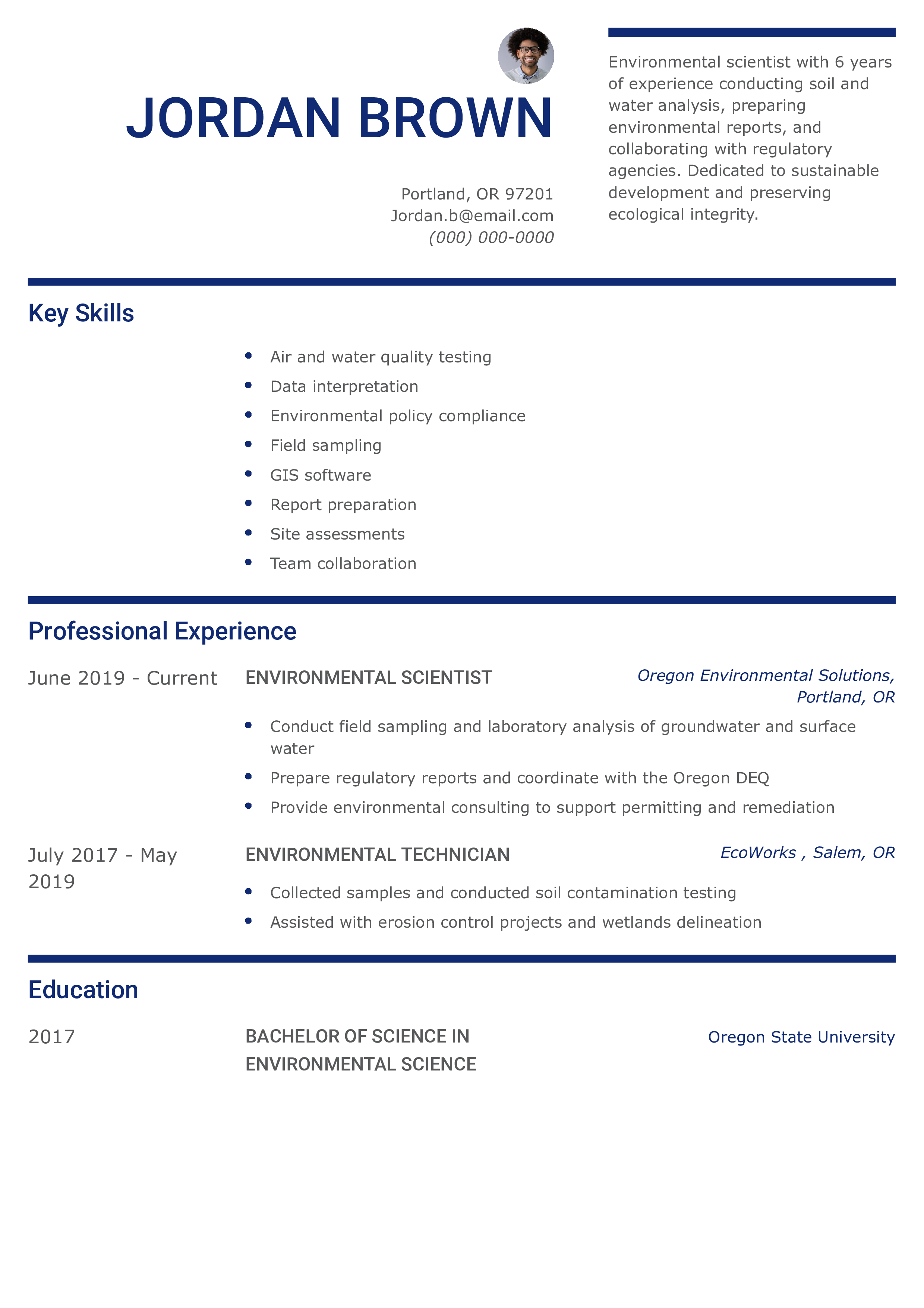
Environmental Scientist Resume
Why This Resume Stands Out
This resume is good because it includes measurable contributions and regulatory experience, making it highly relevant for environmental consulting or government roles.
Science Teacher Resume
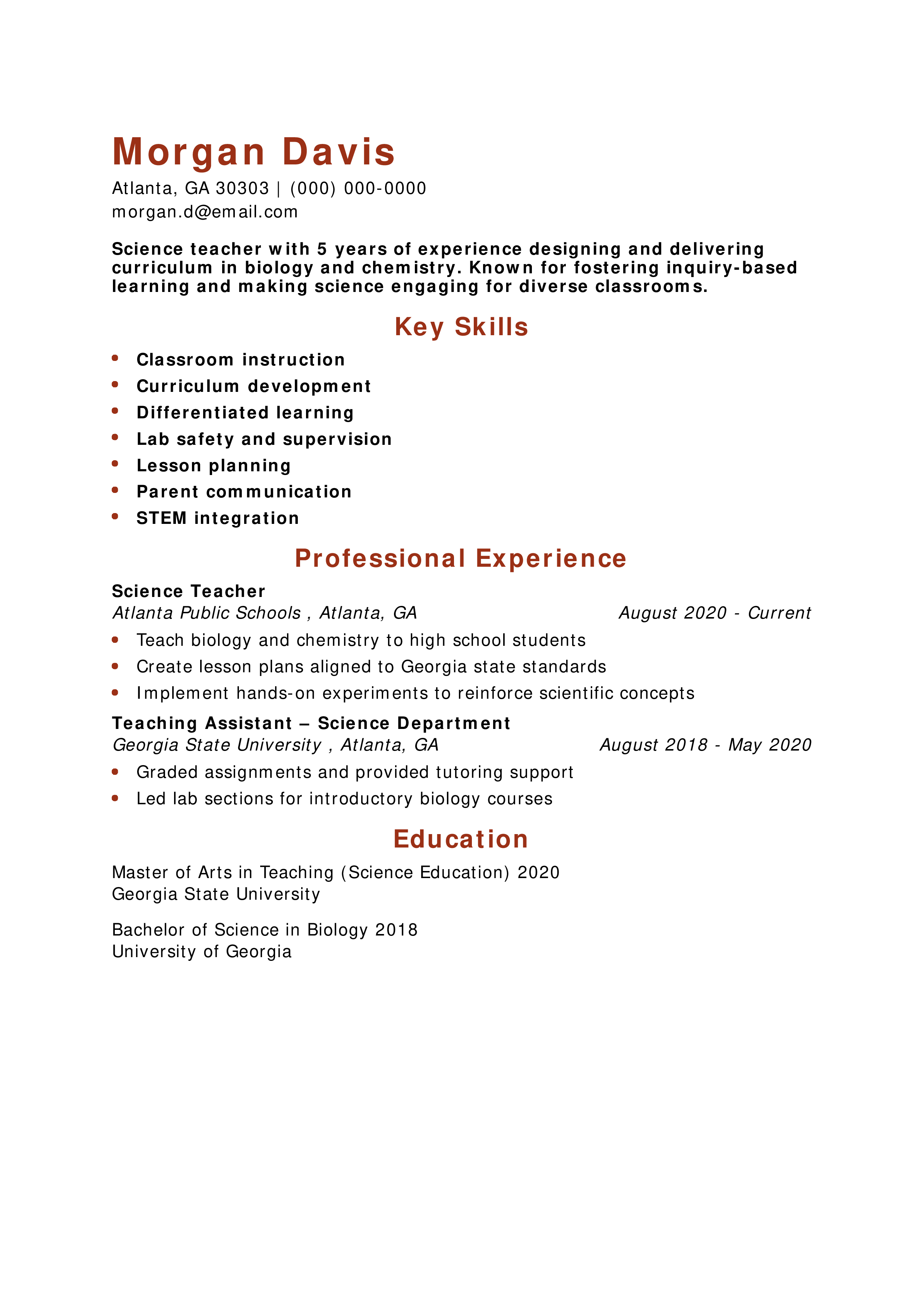
Why This Resume Stands Out
This resume is good because it blends classroom teaching with academic lab support, showing readiness for a full teaching load.
Medical Science Liaison Resume
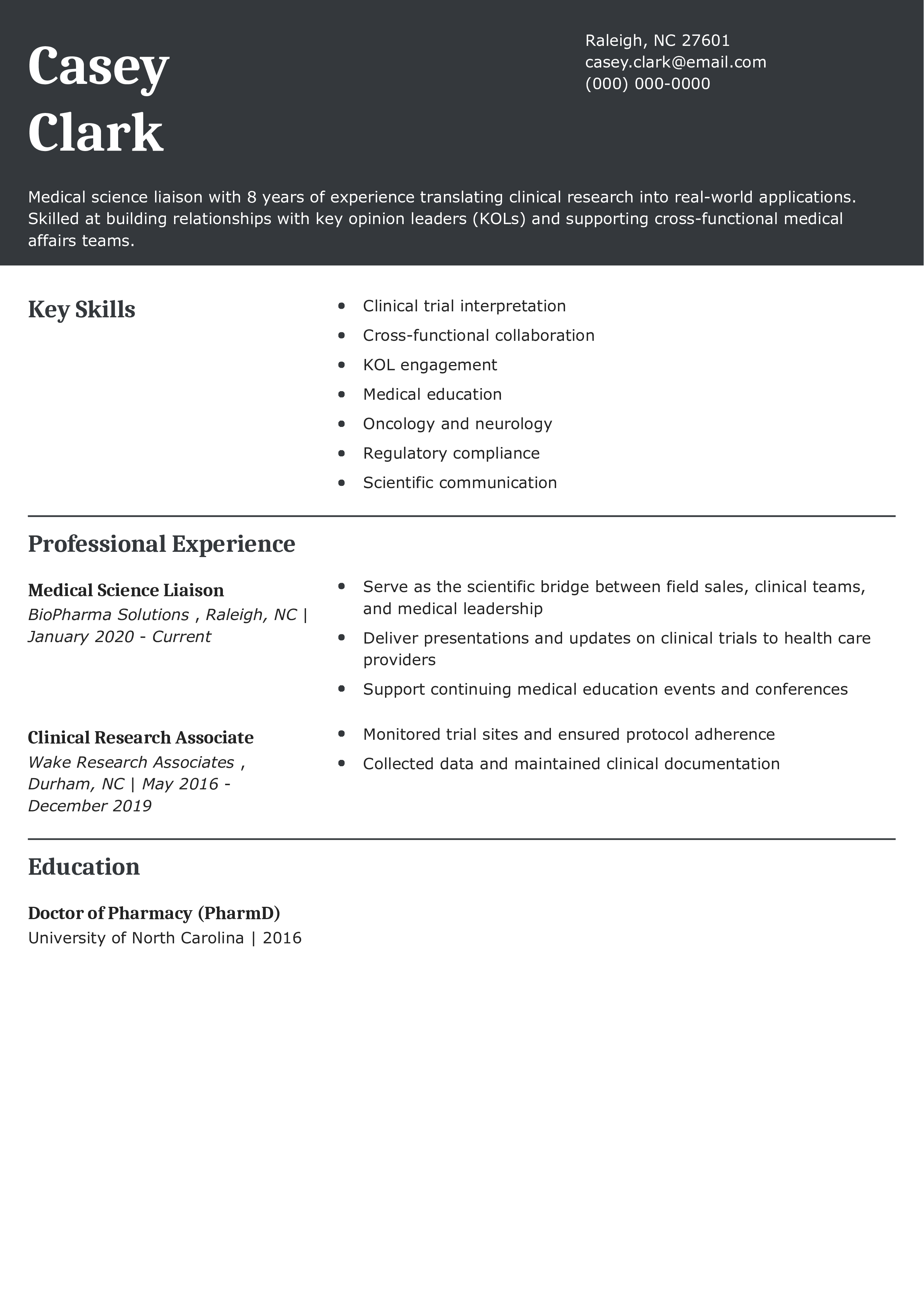
Why This Resume Stands Out
This resume is good because it shows strong industry experience and clear communication skills, which are critical for liaison roles in pharmaceutical companies.
Science Research Assistant Resume
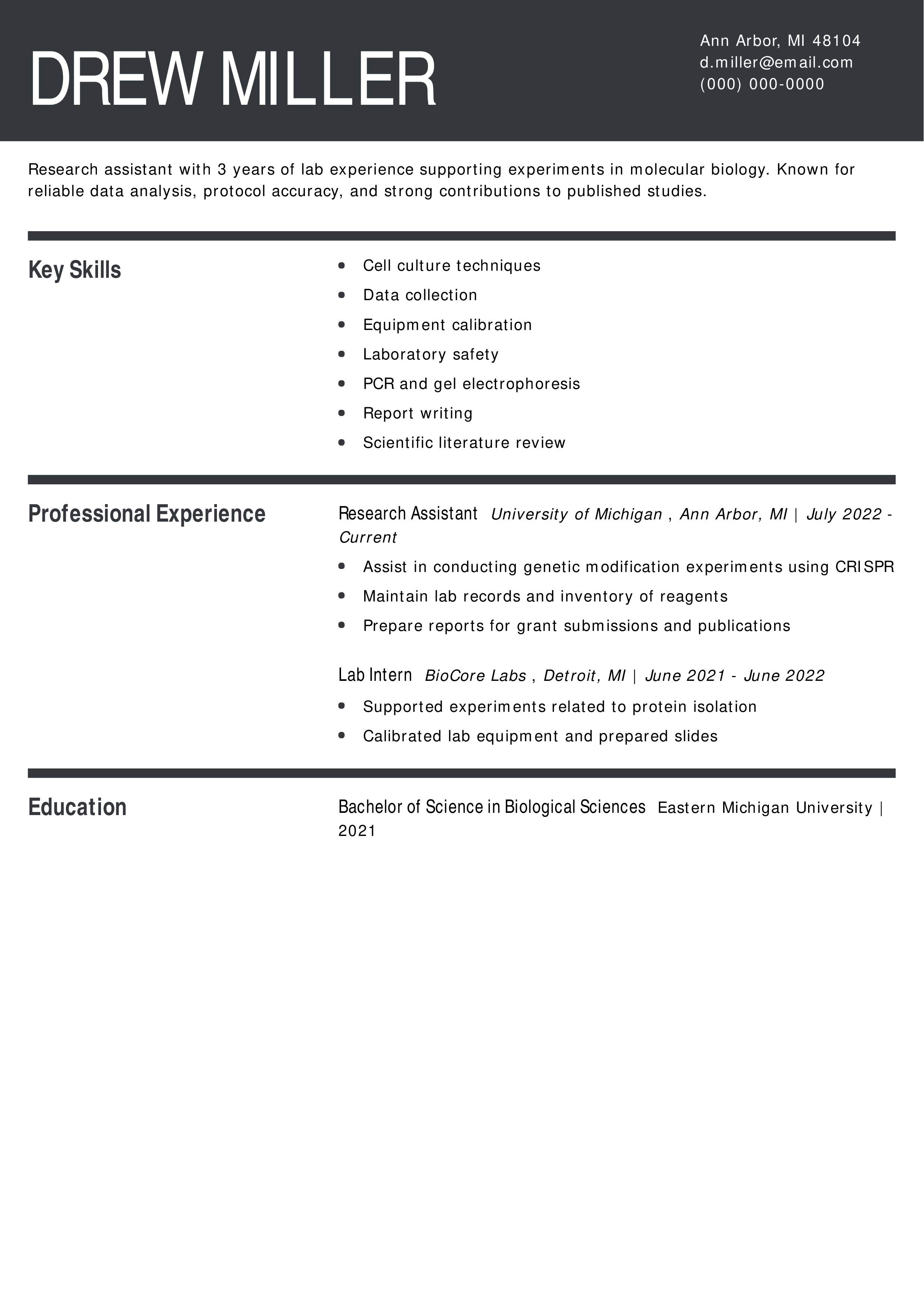
Why This Resume Stands Out
This resume is good because it focuses on core lab skills and university research, which helps early-career candidates compete for lab technician and grad school roles.
Associate of Science Resume
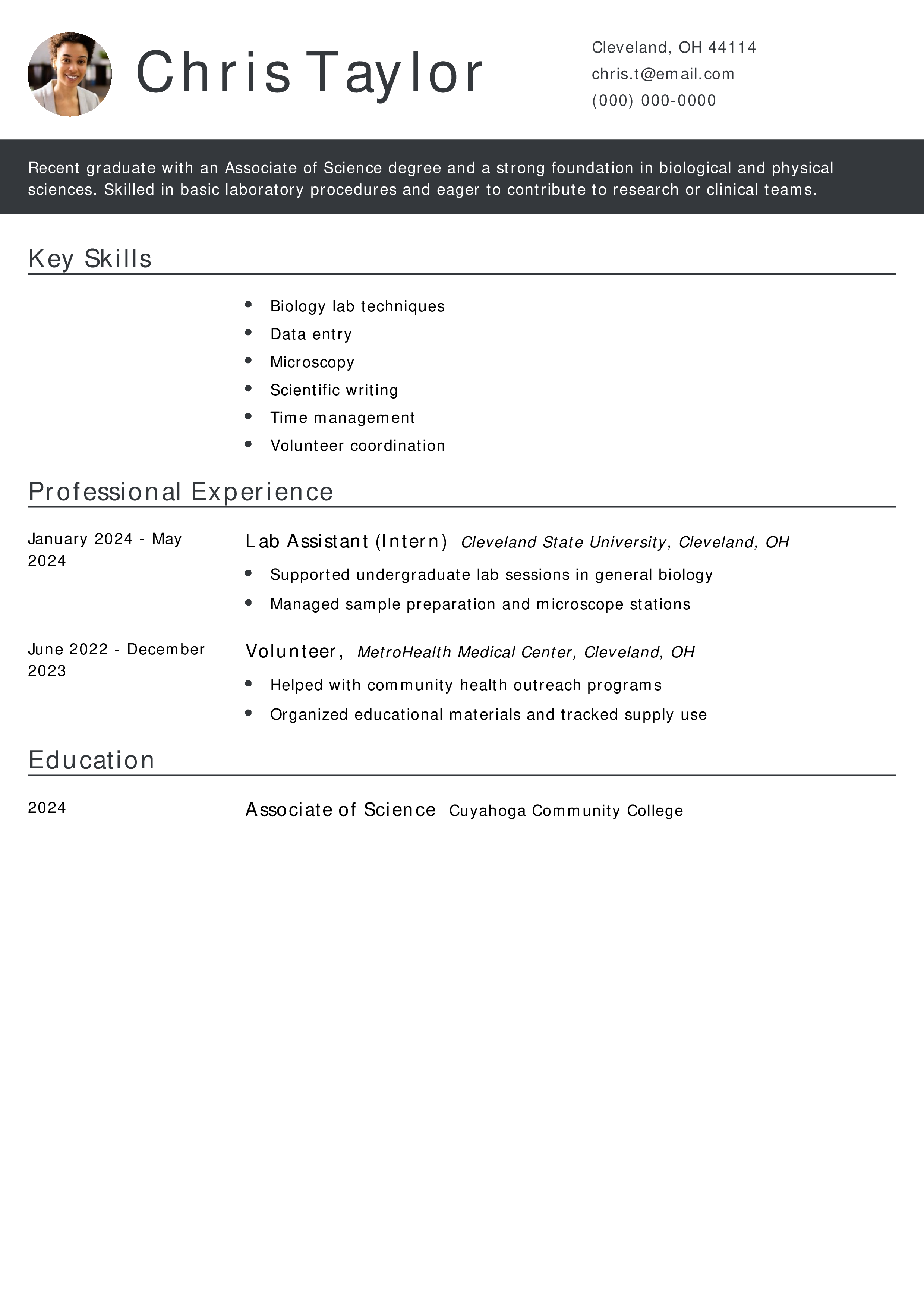
Why This Resume Stands Out
This resume is good because it focuses on foundational experience and relevant coursework — perfect for an early-career job or transfer opportunity.
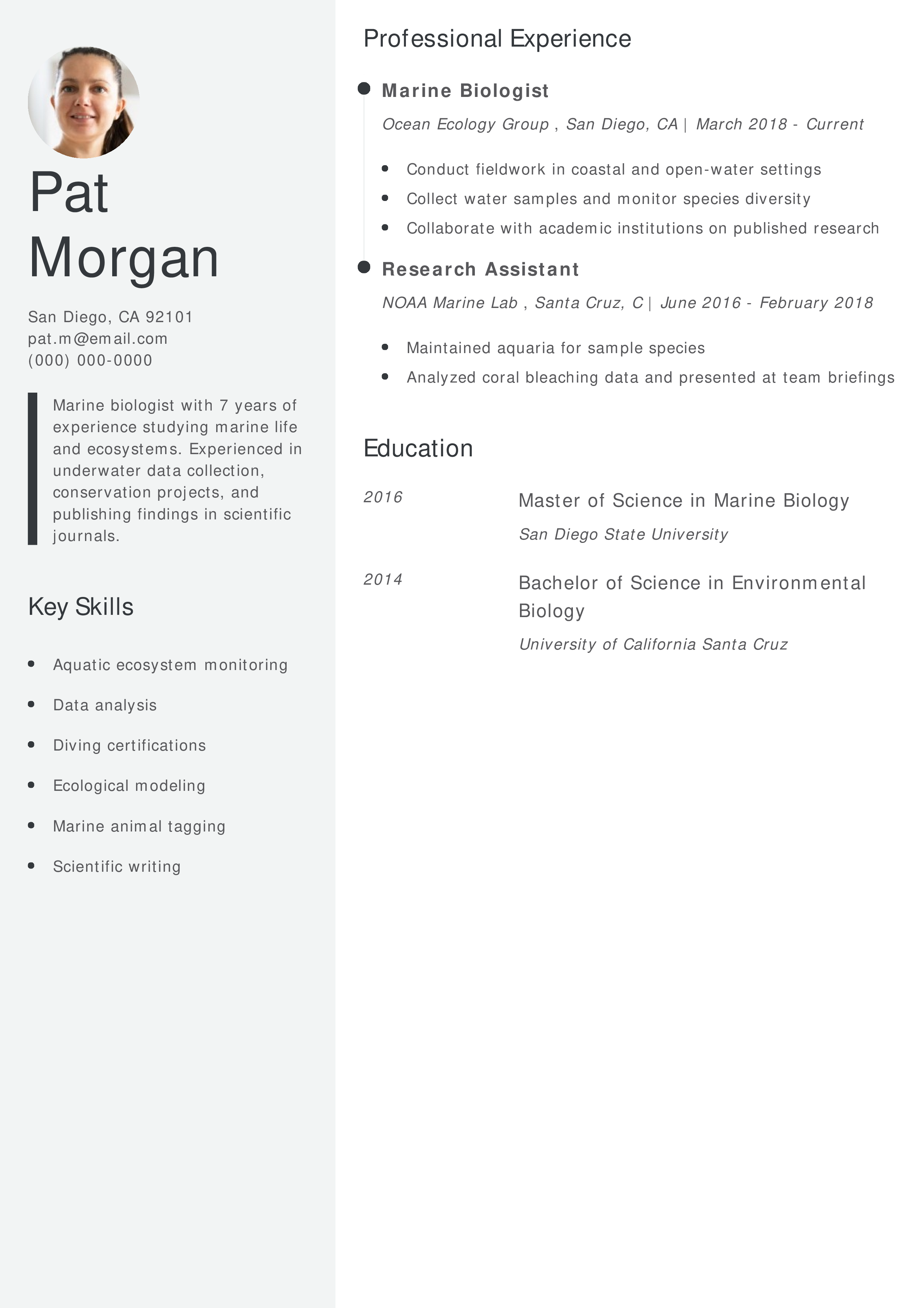
Marine Biologist Resume
Why This Resume Stands Out
This resume is good because it highlights both field and academic research, with a clear focus on conservation impact.
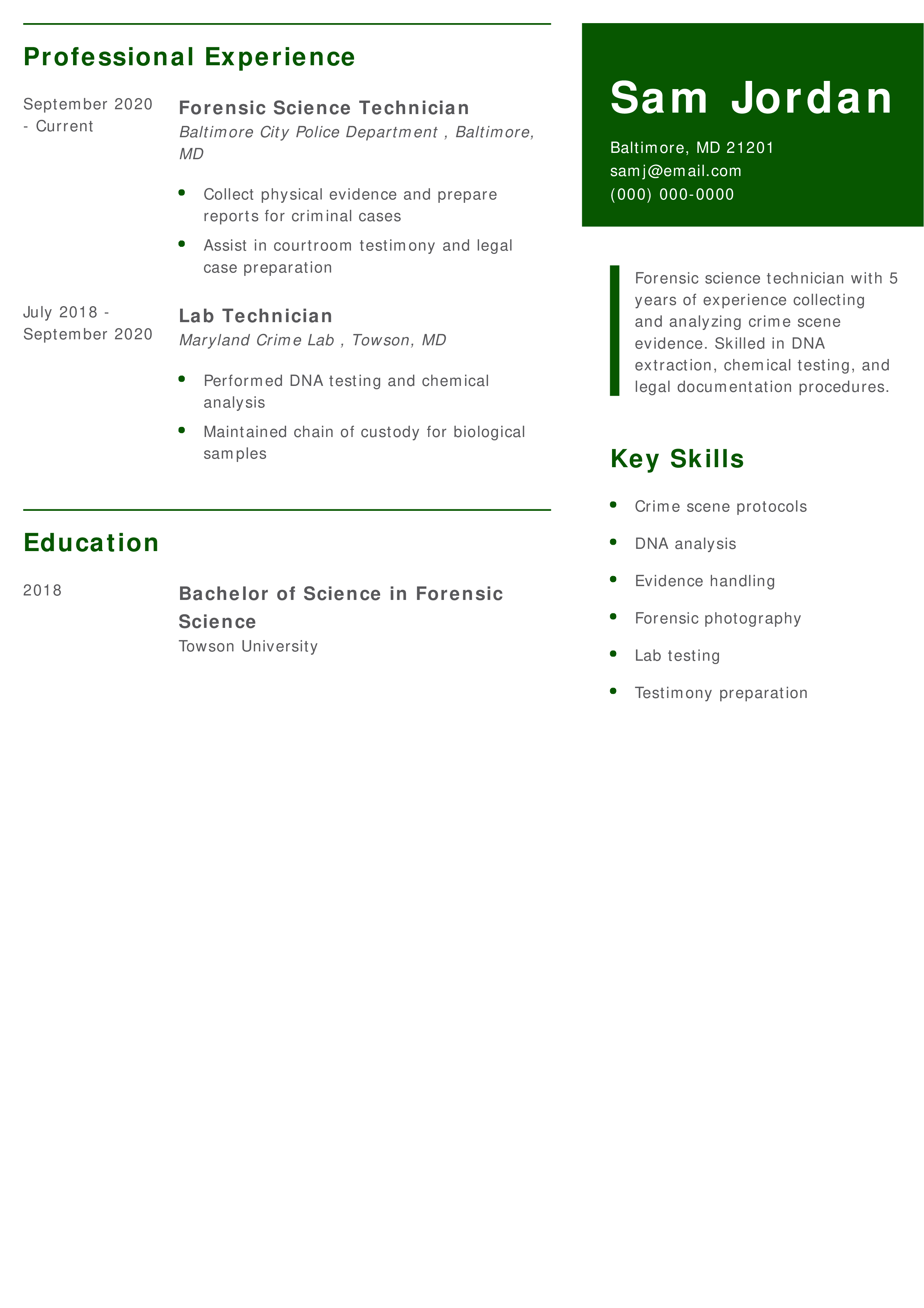
Forensic Science Technician Resume
Why This Resume Stands Out
This resume is good because it shows the candidate’s ability to balance lab precision with courtroom responsibility, a rare and valuable skill set.
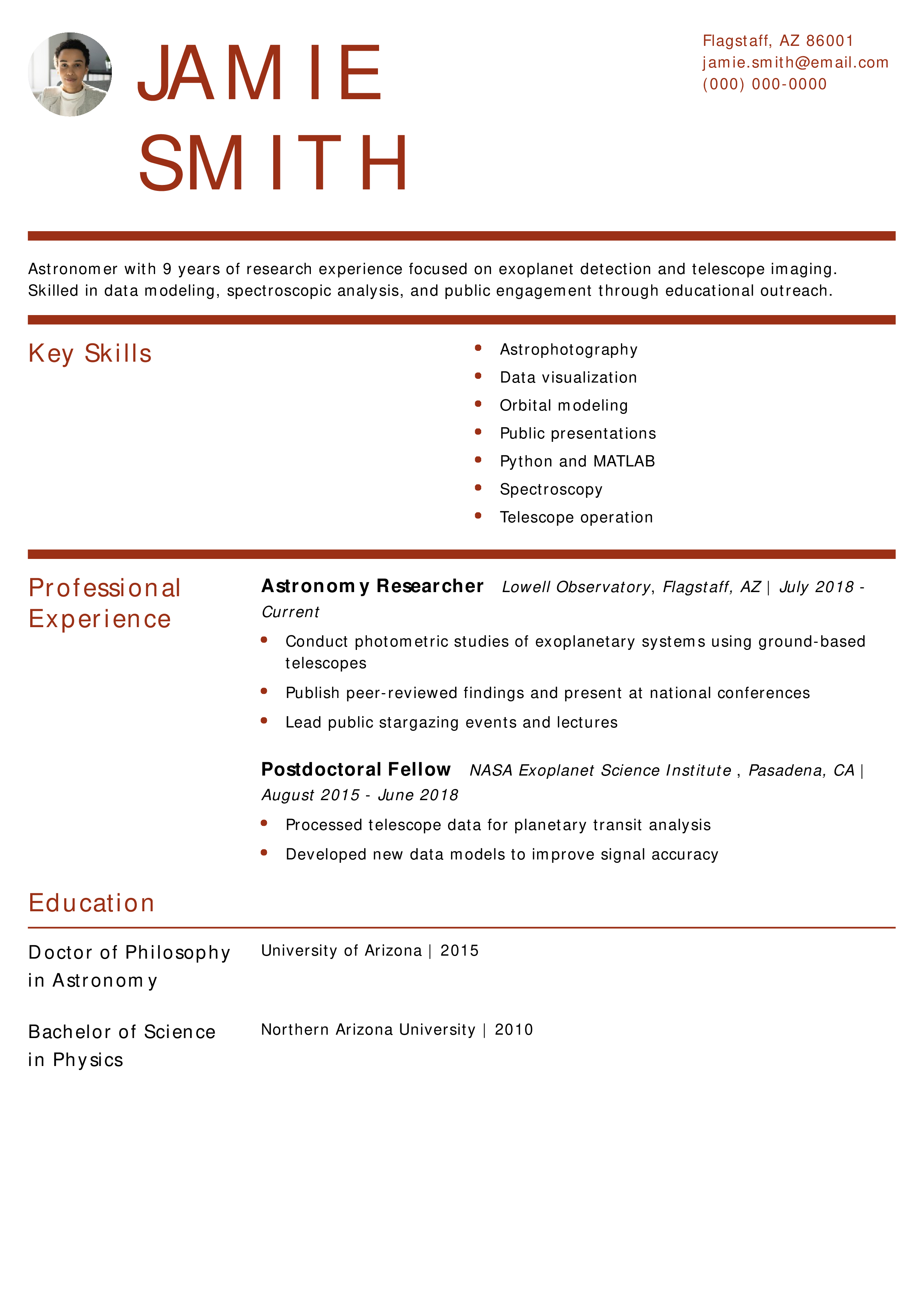
Astronomer Resume
Why This Resume Stands Out
This resume is good because it balances technical research, publications, and outreach — all valuable in academic or institutional settings.
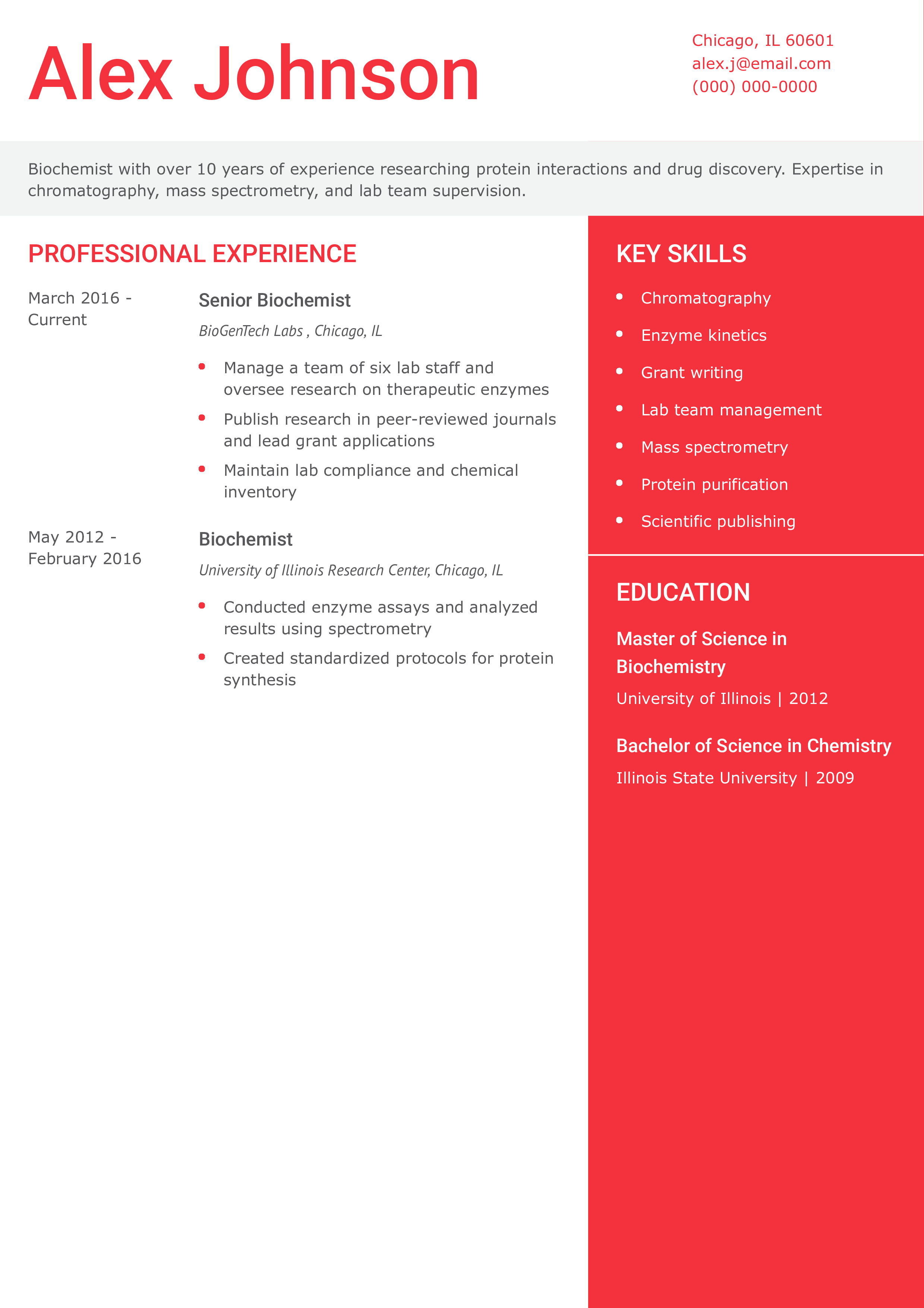
Biochemist Resume
Why This Resume Stands Out
This resume is good because it includes advanced technical skills and supervisory experience, making it suitable for industry and research roles.
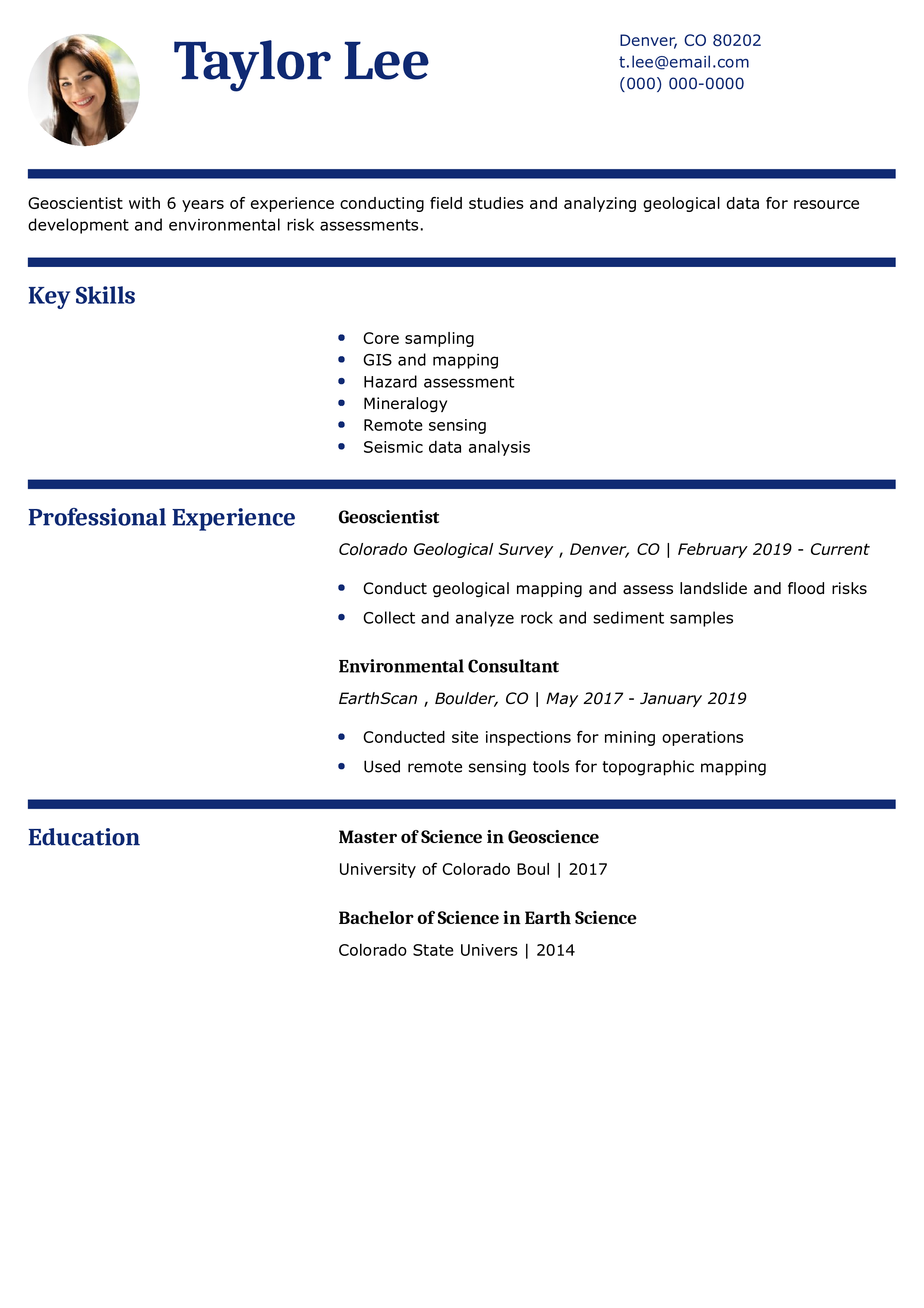
Geoscientist Resume
Why This Resume Stands Out
This resume is good because it focuses on specialized tools and geological analysis methods, showing readiness for fieldwork and consultancy.
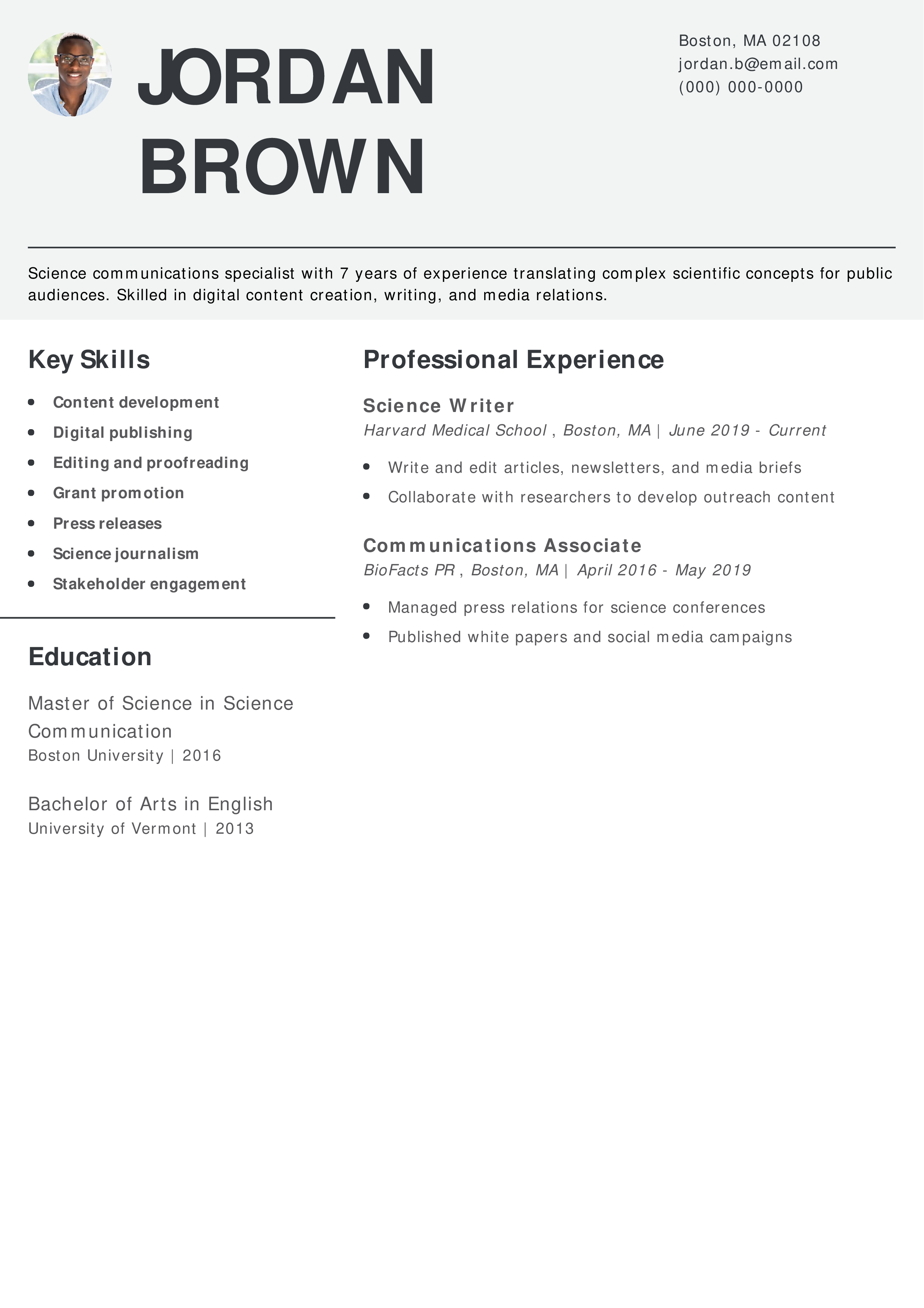
Science Communications Specialist Resume
Why This Resume Stands Out
This resume is good because it demonstrates how to apply communication skills to technical content, which is critical for public health and academia.
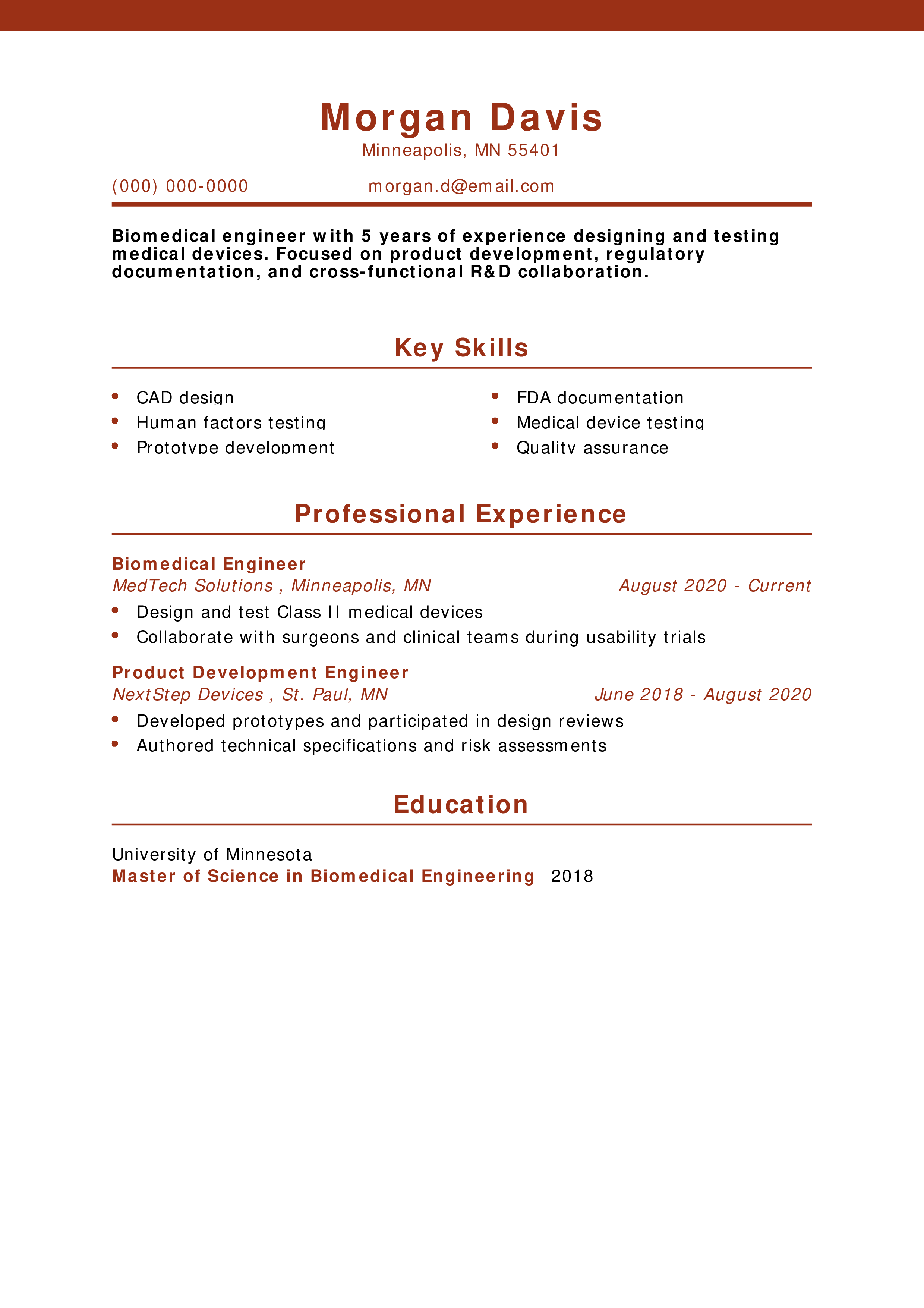
Biomedical Engineer Resume
Why This Resume Stands Out
This resume is good because it includes engineering, medical, and compliance competencies, key areas in biomedical innovation.
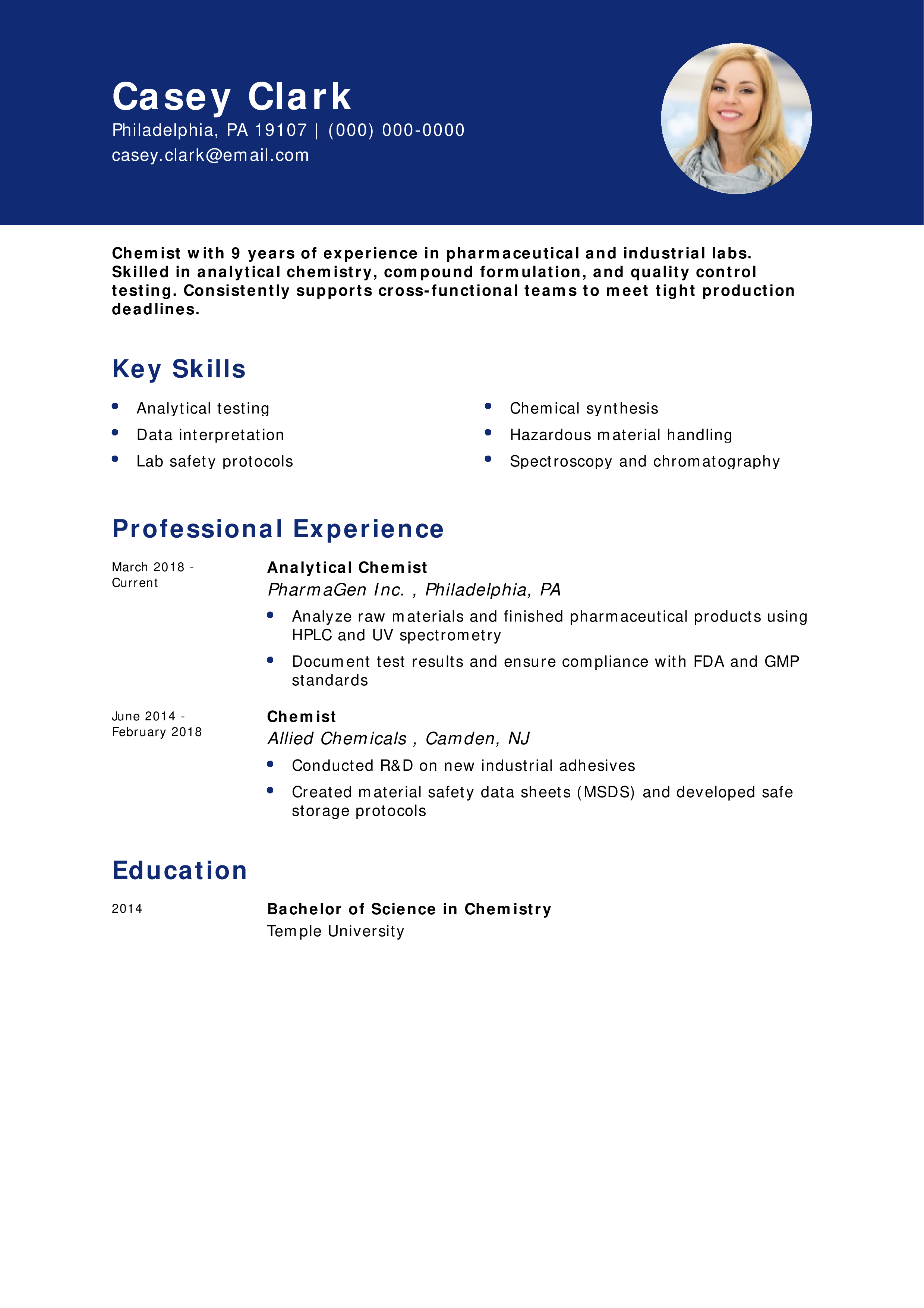
Chemist Resume
Why This Resume Stands Out
This resume is good because it showcases practical lab skills and industry knowledge that align with FDA-regulated environments. It demonstrates how the candidate contributes to both safety and innovation.
Data Scientist Resume
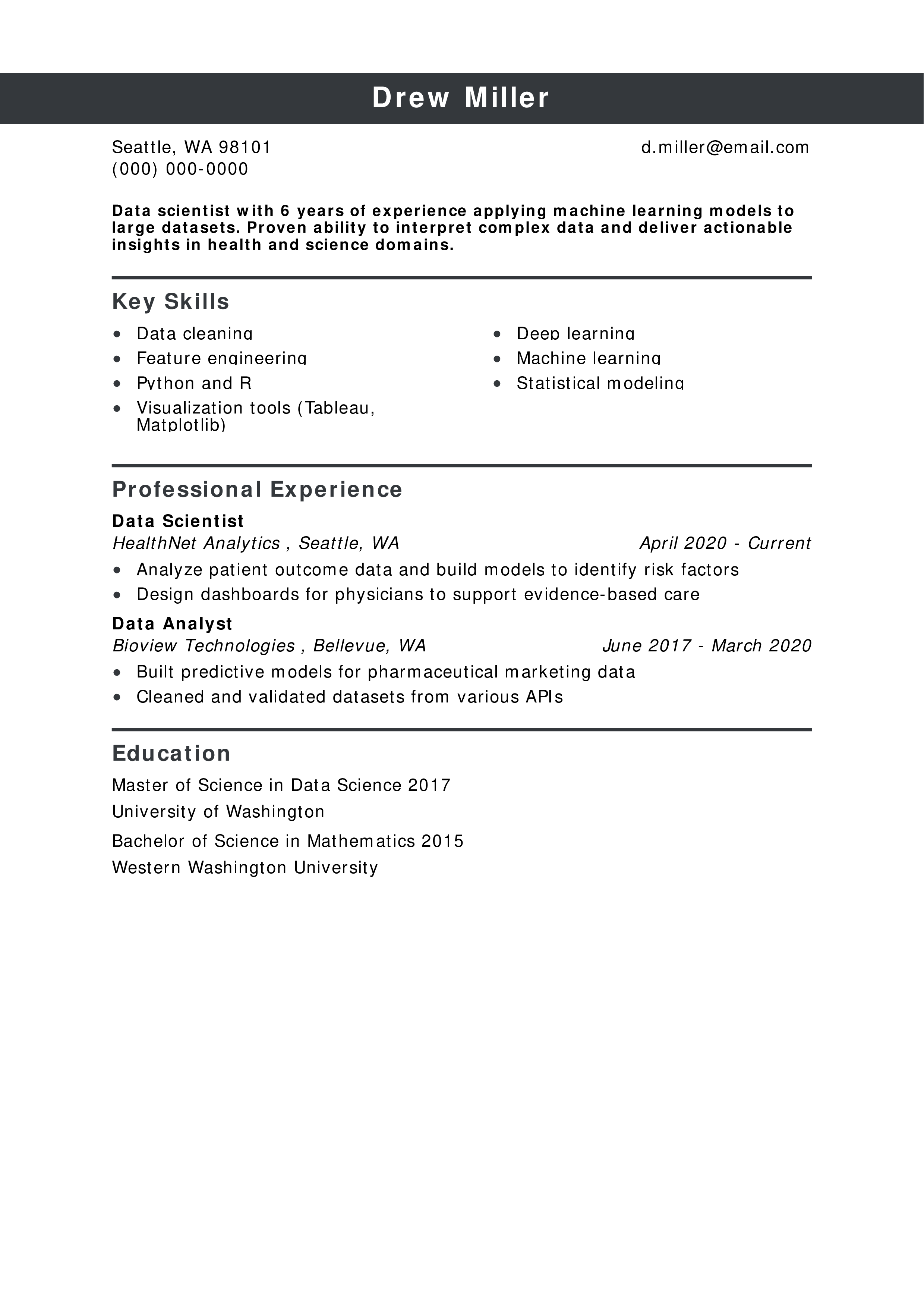
Why This Resume Stands Out
This resume is good because it includes both statistical expertise and real-world application. It shows measurable results and cross-functional impact.
Ecologist Resume
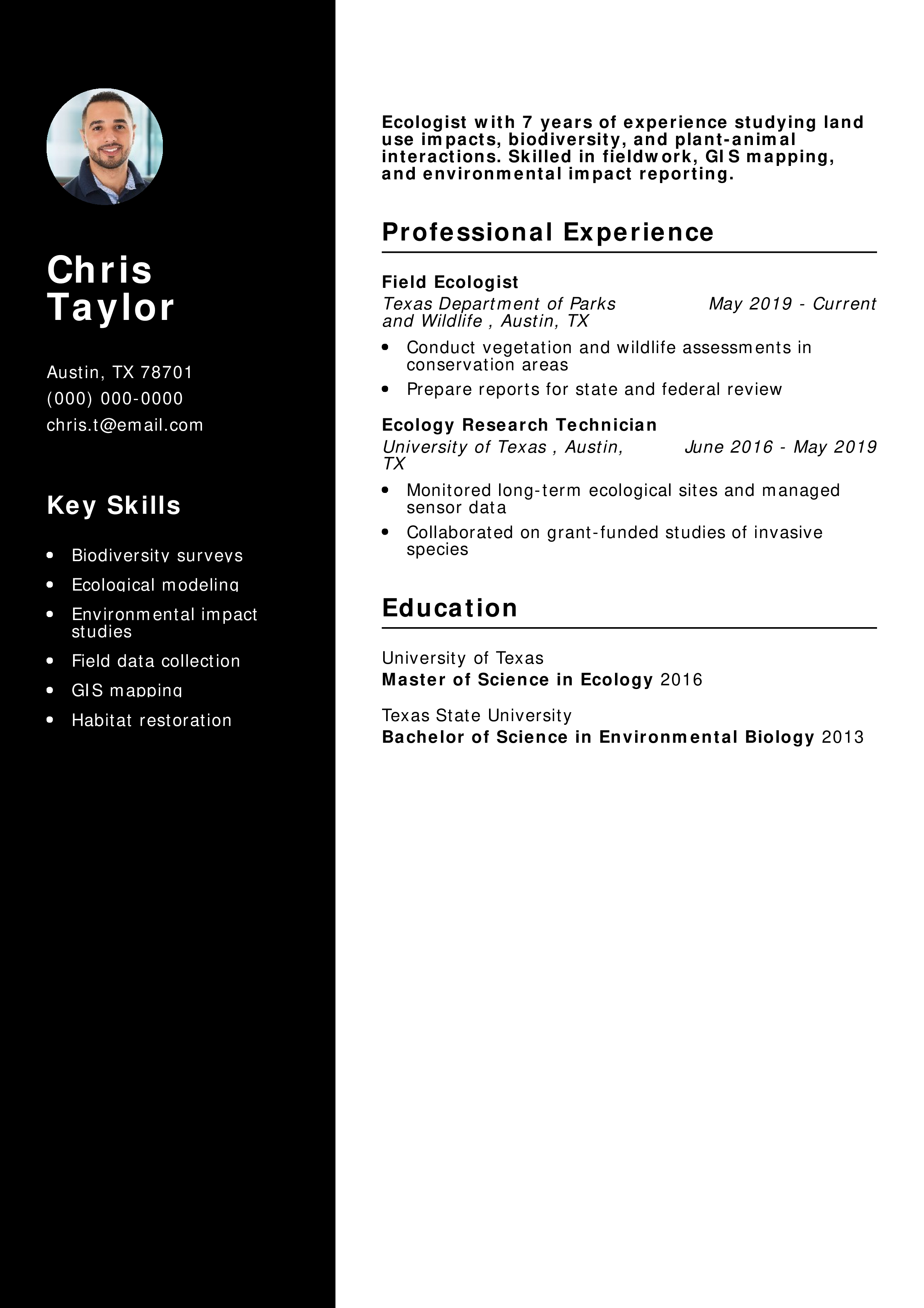
Why This Resume Stands Out
This resume is good because it highlights field experience and scientific reporting, essential in government and academic ecology roles.
Laboratory Technician Resume
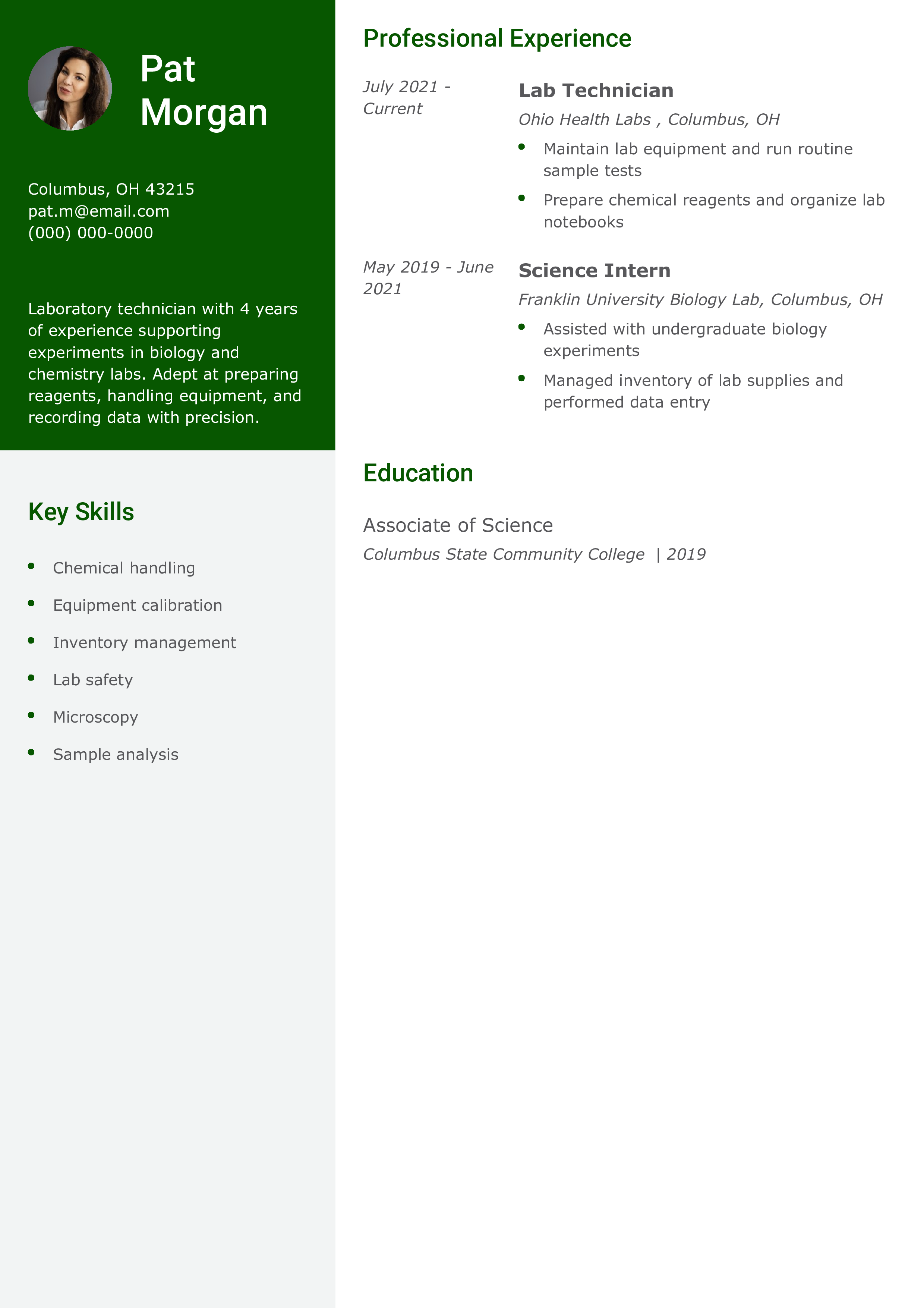
Why This Resume Stands Out
This resume is good because it clearly snapshots the candidate’s practical lab support experience — ideal for early-career positions in research or diagnostics.
Geneticist Resume
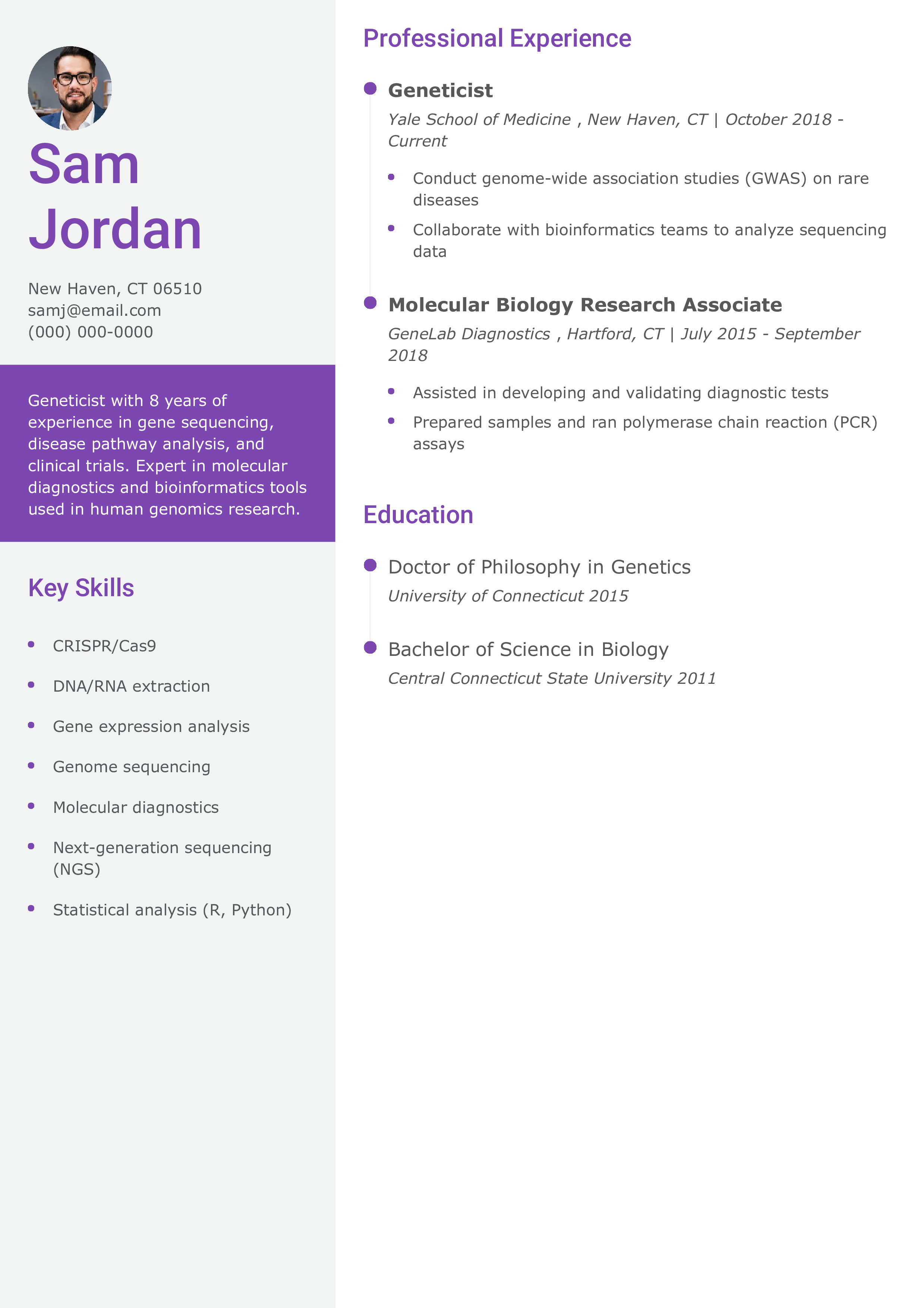
Why This Resume Stands Out
This resume is good because it showcases deep subject matter expertise and laboratory specialization, plus it’s packed with technical tools that matter in genomics.
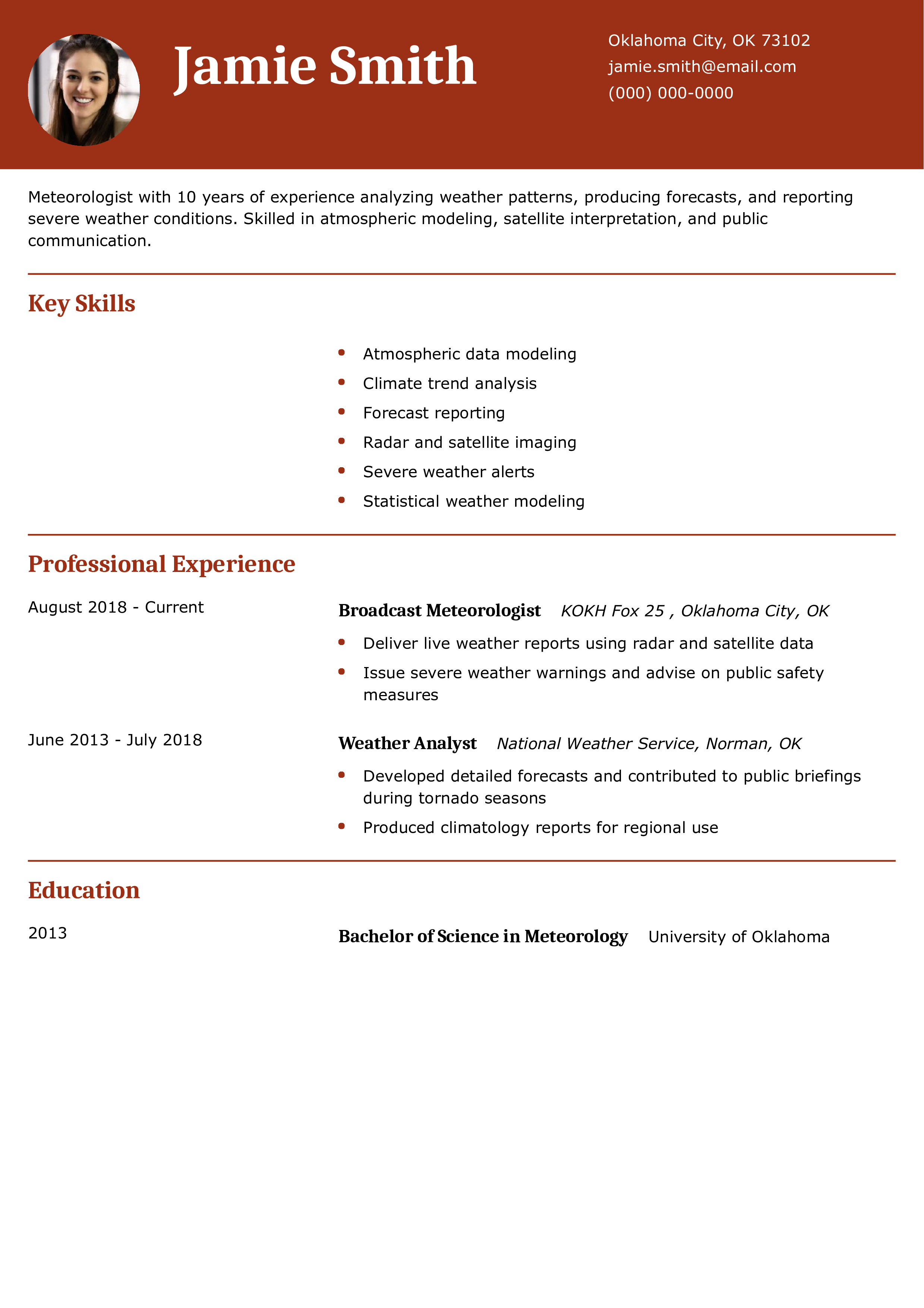
Meteorologist Resume
Why This Resume Stands Out
This resume is good because it pairs scientific expertise with communication experience important for both public and government weather services.
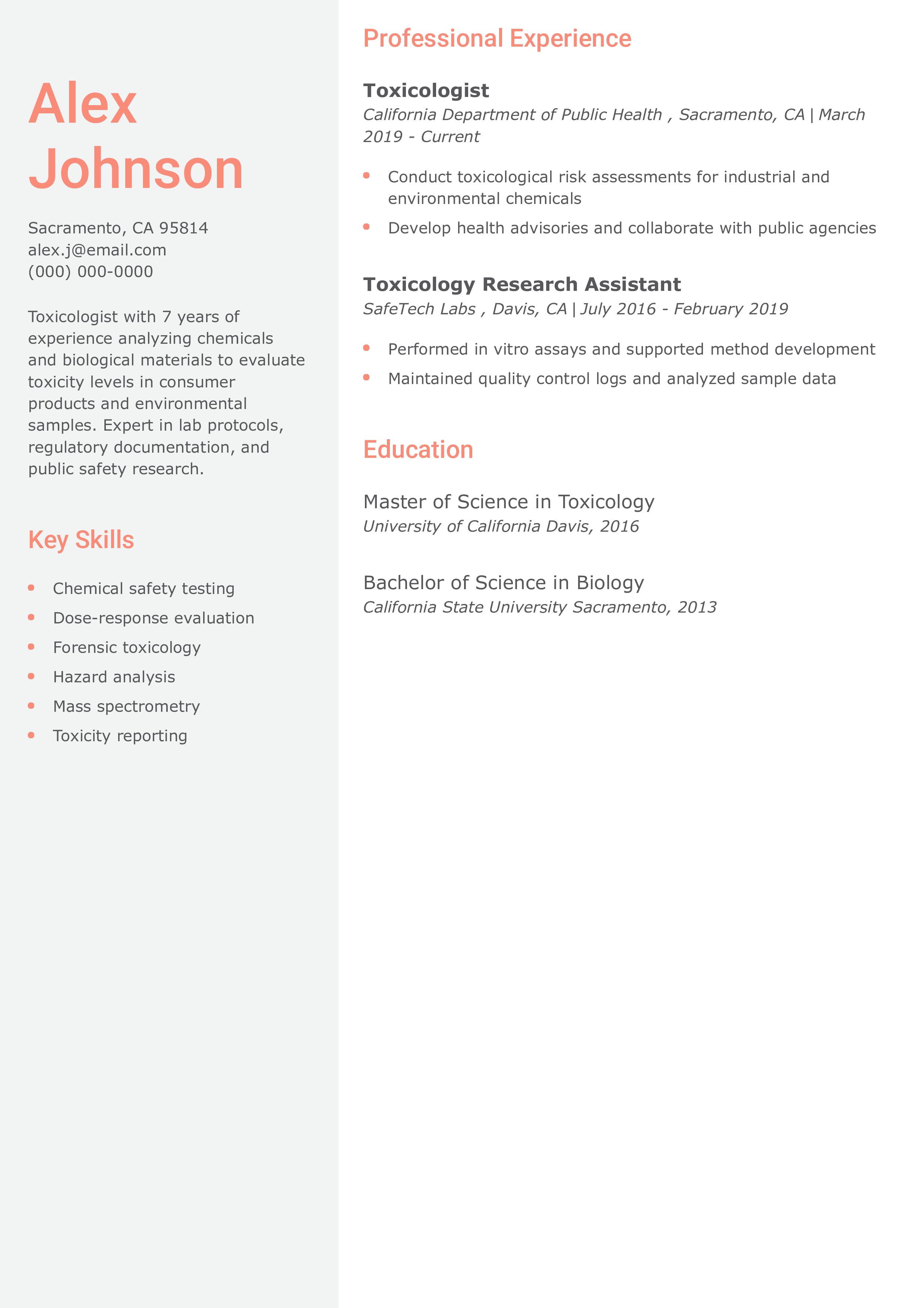
Toxicologist Resume
Why This Resume Stands Out
This resume is good because it showcases public health impact and research experience, which are central to toxicology roles.
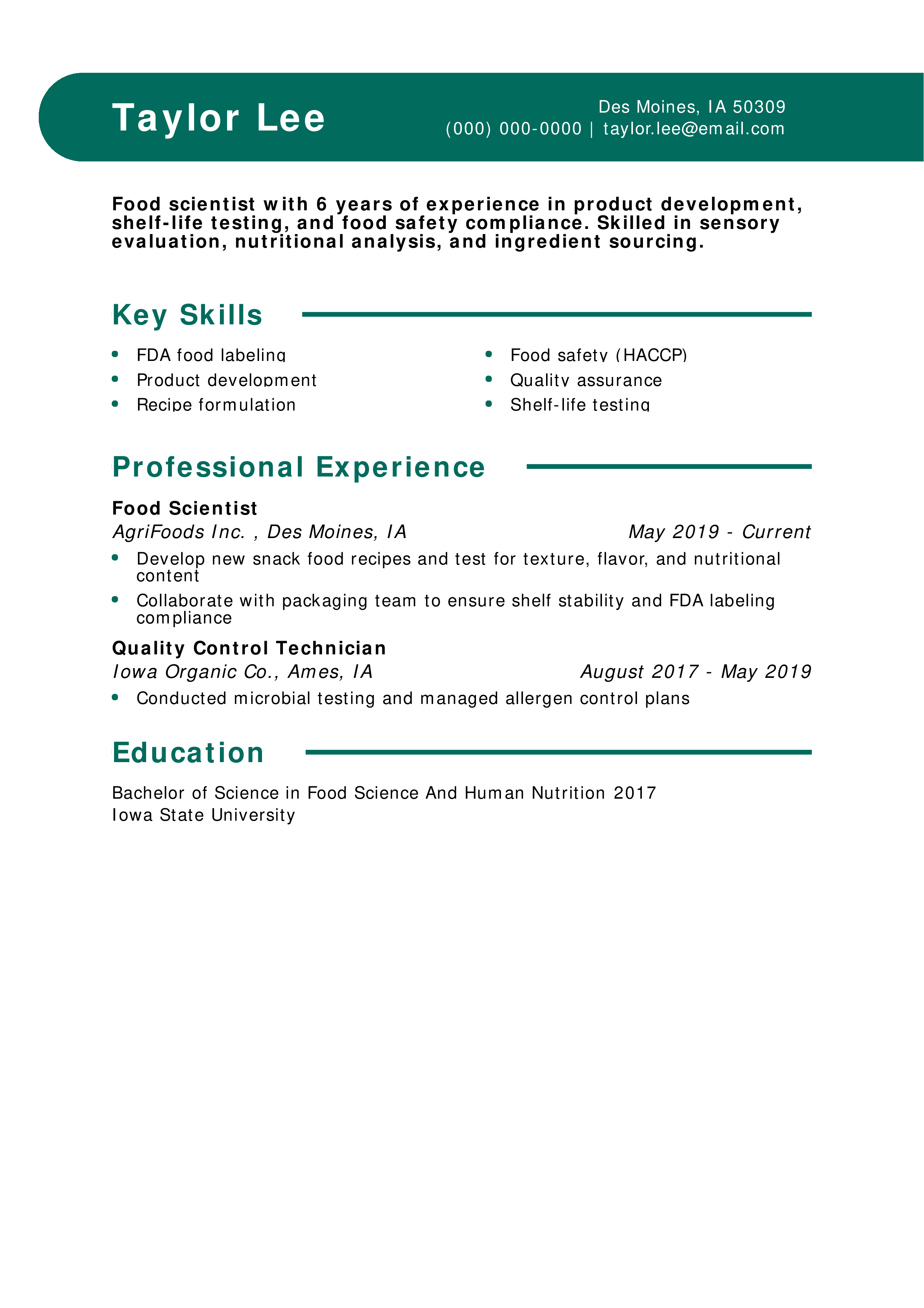
Food Scientist Resume
Why This Resume Stands Out
This resume is good because it shows a clear career path in food science with a mix of development and regulatory expertise.
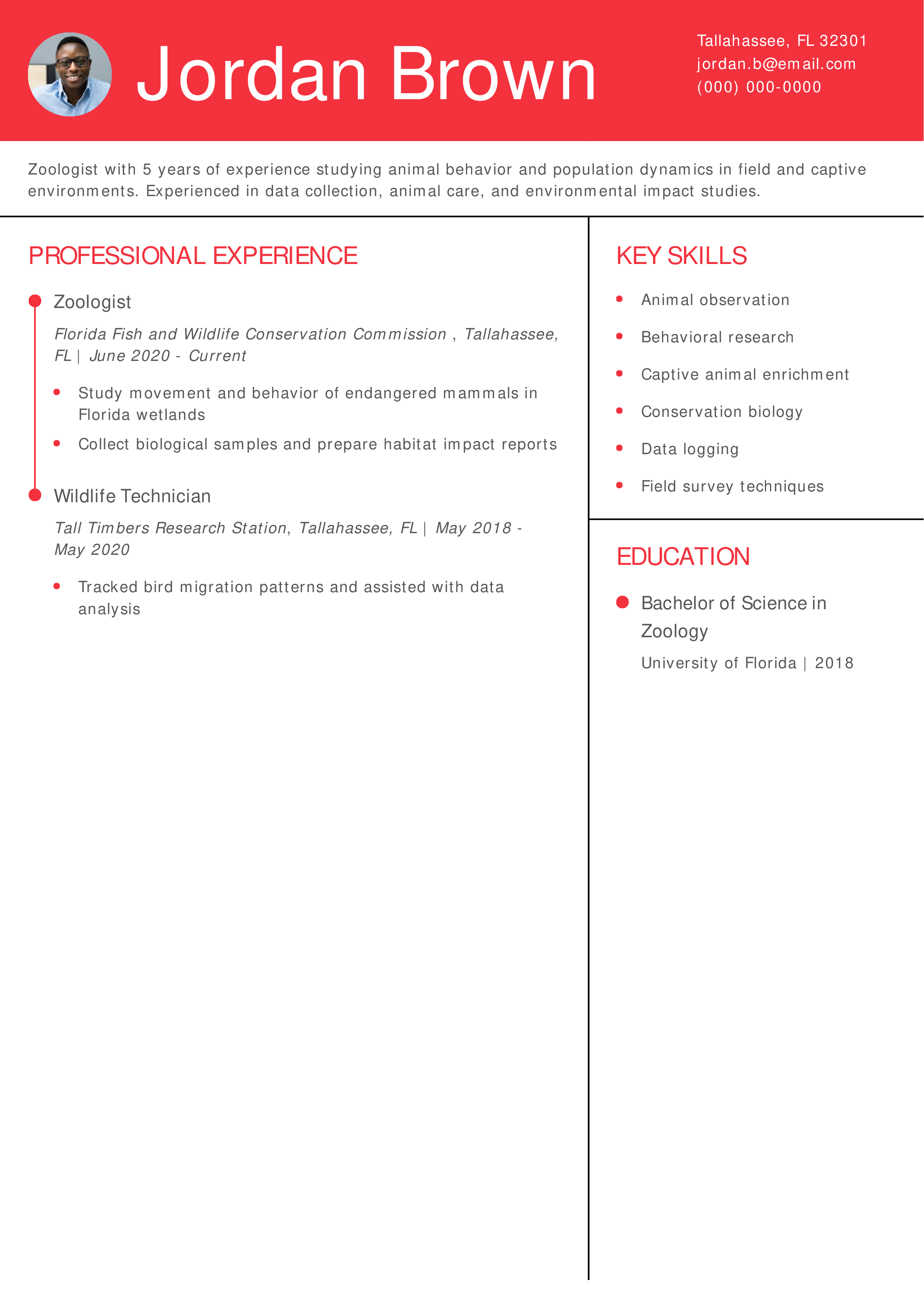
Zoologist Resume
Why This Resume Stands Out
This resume is good because it shows experience in field research and conservation policy, which is valuable for government and nonprofit positions.
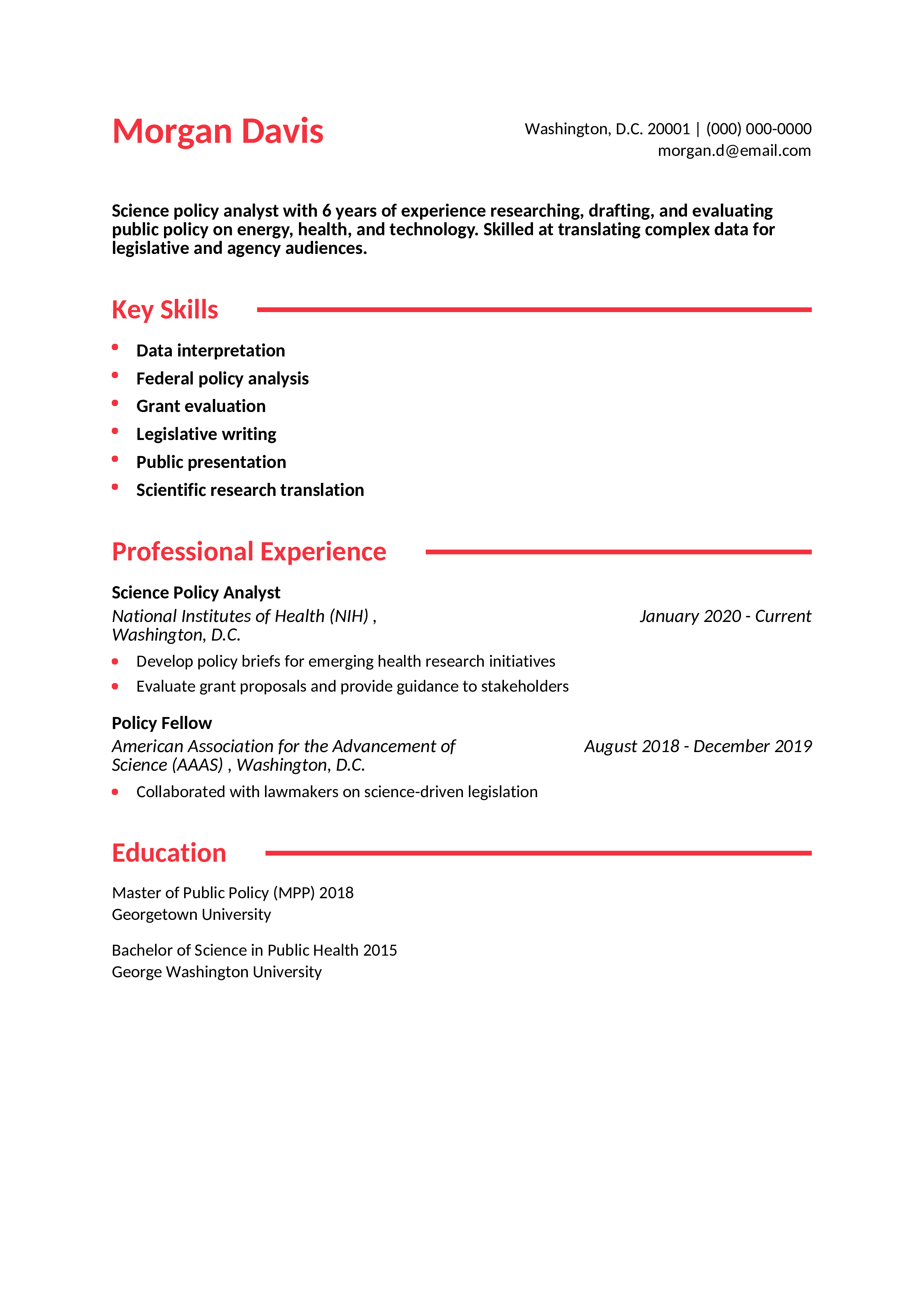
Science Policy Analyst Resume
Why This Resume Stands Out
This resume is good because it bridges science and government, showing writing, evaluation, and analysis skills essential for policy roles.
Our templates are crafted by professional resume writers to make creating your resume quick, easy, and effective.
- Professional resume template downloads
- Customized cover letter generation
- AI resume writing support
- Career-building resources and advice
Science Text-Only Resume Templates and Examples
How To Write a Science Resume
Science resumes should avoid rehashing coursework and instead showcase lab techniques, instrumentation proficiency, and meaningful contributions to research outcomes. Hiring managers want candidates who can troubleshoot experiments, analyze data cleanly, and work well in collaborative labs.

1. Create a profile by summarizing your science qualifications
An engaging snapshot of your science career will draw in hiring managers and show them the value you can bring to their workplace. Start by listing your job title, years of experience, and several specializations that align with the job posting — keep it relevant. Then, present yourself as an expert in your space. For instance, you might write that you have a track record of finding 99% of anomalies because of your problem-solving and analysis skills.
Entry-Level Profile Example
Physicist with nearly two years of experience. Skilled at applying complex concepts and calculations in various environments. Equally effective working solo or on a team. Committed to investigating challenges and finding creative yet practical solutions. Doctor of Philosophy in Physics.
Senior-Level Profile Example
Clinical laboratory scientist with over 12 years’ experience analyzing specimens and developing procedures in health care settings. Combine decisive, supportive leadership style with a talent for strategic planning and deployment. Master of Science in Biochemistry.
2. Add a compelling section featuring your science experience
To create a strong professional experience section for your science resume, describe your career achievements, not just job responsibilities. Employers want to see measurable results, so use relevant numbers to quantify your successes when possible. Demonstrate the bottom-line value of your contributions by including data, metrics, and monetary figures, such as winning $1 million in new contract business or reducing lab waste by 50%.
Consider highlighting your ability to collaborate with cross-functional teams and translate complex technical concepts into accessible language, along with your problem-solving skills. Tout mentorship strengths if you oversee teams, and note any strategic planning experience.
Mid-Career Professional Experience Example
Research Hydrogeologist, Boise State University, Boise, ID | August 2018 to present
- Plan and execute water sampling expeditions to remote locations
- Use various equipment to measure water levels and flow rates and maintain precise records
- Supervise teams of up to 15 during borehole logging activities
Highlights:
- Co-created online education resources that raised public engagement by 21% last year
- Earned a workplace commendation in 2020 for effectively addressing water accessibility issues
- Achieved near-perfect (99.8%) water measurement and documentation accuracy
Senior-Level Professional Experience Example
Lead Clinical Laboratory Scientist, Bozeman Deaconess Hospital, Bozeman, MT | October 2015 to present
- Calibrate lab instruments and serve as an escalation point for complex issues
- Orient new hires and continually train existing staff
- Co-develop and oversee lab procedures, and interrogate results
Highlights:
- Solved 89% of escalated problems within three hours
- Improved staff retention by 34% in three years
- Pinpointed and resolved 98% of anomalies in 2020
- Won a workplace award for excellent teamwork in 2019
3. List your science education and certifications
Aside from a bachelor’s and/or master’s degree in a science specialty, you may have earned certifications that can set your resume apart from competing candidates. While most employers are focused on professional experience, additional credentials could improve your chances of landing an interview.
For instance, a Medical Laboratory Technician (MLT) certification from The National Accrediting Agency for Clinical Laboratory Science shows you understand and practice the latest laboratory best practices and safety measures.
Education
Template
- [Degree Name]
- [School Name], [City, State Abbreviation] | [Graduation Year]
Example
- Master of Science (M.S.) Biochemistry
- University of Michigan, Ann Arbor, MI | 2010
Certifications
Template
- [Certification Name], [Awarding Organization] | [Completion Year]
Example
- Lab Technician Certification, American Society for Clinical Pathology (ASCP) | 2019
4. List your key science skills and proficiencies
Most organizations rely on some form of applicant tracking system (ATS) to identify qualified candidates for job openings. To get your resume through the initial screening process and into the hiring manager’s hands, incorporate keywords from the job posting into your profile, professional experience, and skills section. Below, you’ll find a list of key terms and skills that you may encounter while applying for science positions:
| Key Skills and Proficiencies | |
|---|---|
| Advanced physics | Analysis and imaging software |
| Assays: Blood coagulation factors, enzyme, infectivity, and other assays | Cell fractionation |
| Characterization and purification of enzymes | Complex problem-solving |
| Conjugation | Data gathering and analysis |
| Experiment documentation | Magnetics |
| Managing lab personnel | Mathematics |
| Mutagenesis | Mutation testing |
| Peptide analysis | Problem-solving |
| Public speaking and presentations | Research and development |
| Thermodynamics | |
How To Pick the Best Science Resume Template
When selecting a science resume template, prioritize readability. Ultimately, hiring managers want to learn about your experience and qualifications— they are focused on content, not design. Heavy use of color and graphics can distract readers from what matters most: the value you can bring to their workplace. Look for a template that organizes content effectively, is clean, and uncluttered.
Frequently Asked Questions: Science Resume Examples and Advice
What is the best way to highlight my experience in my Science CV?-
The best way to highlight your experience in your Science CV is by emphasizing specific achievements in each role. Use bullet points to make your experience scannable and focus on results-driven accomplishments, such as improving processes or saving costs. Include quantifiable data like percentage increases or revenue growth to reinforce the impact of your work.
What are common action verbs for science resumes?-
We know it’s easy to get stuck when writing the experience section of a resume. You might start to run out of action verbs to describe your work. These verbs are important because they help hiring managers visualize your contributions and how you work in a science setting and with teams. To help you with this challenge, we put together the below list of common action verbs that can describe science roles.
| Action Verbs | |
|---|---|
| Adapt | Analyze |
| Assess | Calibrate |
| Collaborate | Communicate |
| Dissect | Experiment |
| Implement | Manage |
| Manipulate | Mentor |
| Prepare | Present |
| Report | Research |
| Speak | Study |
| Synthesize | Test |
How do you align your resume with a science job posting?-
According to the Bureau of Labor Statistics (BLS), jobs for clinical laboratory scientists are projected to grow at an average rate of 7% from 2021 to 2031, keeping pace with most other occupations. The environmental science job outlook is 5% growth, according to BLS, though evolving regulations and government funding can always impact the growth of this and other science sectors. Overall, science is a stable industry with a positive outlook for job seekers who are qualified.
Despite steady growth, you must align your resume with the job posting to secure interviews for the most lucrative opportunities with valuable employee benefits. Science can be a competitive field. Tailor your resume to individual job postings so your experience and knowledge stand out and grab the attention of hiring managers. For example, if an employer is looking for a laboratory scientist who can develop procedures and protocols, you’d highlight your experience in that area and describe the outcome of your contributions.
What is the best science resume format?-
Most job seekers should use the combination (or hybrid) format for their resume. True to its name, this format combines two important features of other resume formats: the chronological format’s experience section and the functional format’s profile section. (The resume examples on this page all use combination format, as do most other resumes on Resume Builder.)
A combination resume offers the best of both worlds by fusing these two features. The experience section lets you overview your recent work history – essential information for most employers. At the same time, the profile section lets you showcase your career highlights at the top, regardless if they’re from that work history or another part of your background. The resulting resume is straightforward yet strategic. It gives hiring managers the clearest possible view of your experience and relevant strengths, so they can decide to call you for an interview.
How many pages should my science resume be?-
Generally, a science resume should be one page for candidates with fewer than 10 years of experience. A two-page resume is acceptable if you’re a seasoned professional with extensive accomplishments—but only if it provides meaningful details that strengthen your application. Tailor your content to the job, focusing on your most relevant qualifications.
Work history should typically cover the last 10 to 15 years. Older positions can be excluded or briefly summarized unless they’re highly relevant. A concise, focused resume demonstrates your ability to prioritize and communicate effectively.
Craft your perfect resume in minutes
Get 2x more interviews with Resume Builder. Access Pro Plan features for a limited time!

After completing your science resume, write a corresponding cover letter that serves as an introduction and case for why you are an ideal candidate for the job. You can think of the cover letter as a longer form of the profile at the top of your resume. Be sure to customize the cover letter for every job you pursue and relate how your experience and qualifications meet the employers’ needs.
Feeling stuck with writing a cover letter? Read our cover letter guide to learn how. For other related cover letter examples, check out our data scientist and computer science cover letter guides.