
Including a strong summary at the top of your resume is essential for making a strong first impression on potential employers. Start with an opening sentence that lists your title, years of experience, and three to four specializations that align with the organization’s needs. Provide insights into your clinical knowledge and unique approach to mental health care. Paint a compelling snapshot of who you are as a therapist and how you’ve improved the quality of life for your patients.
How AI Has Raised the Bar for Psychology Candidates
AI-assisted documentation, assessment scoring, and treatment planning tools have become standard in many clinical settings, and hiring managers now expect candidates to show they can work alongside these systems rather than around them. Whether you’re in private practice, hospital-based care, or research, the ability to demonstrate hands-on experience with AI-integrated workflows gives your resume more weight than listing theoretical knowledge. Here’s where specificity pays off:
- Psychology candidates with AI-scored assessment experience, including how results were contextualized for treatment decisions, are more specific than most clinical applicants.
- Progress notes drafted by AI in EHR systems, including how you verified clinical accuracy before signing off, tell hiring managers more than platform familiarity alone.
Most Popular Psychology Resumes
Family Psychologist Resume
Why This Resume Stands Out
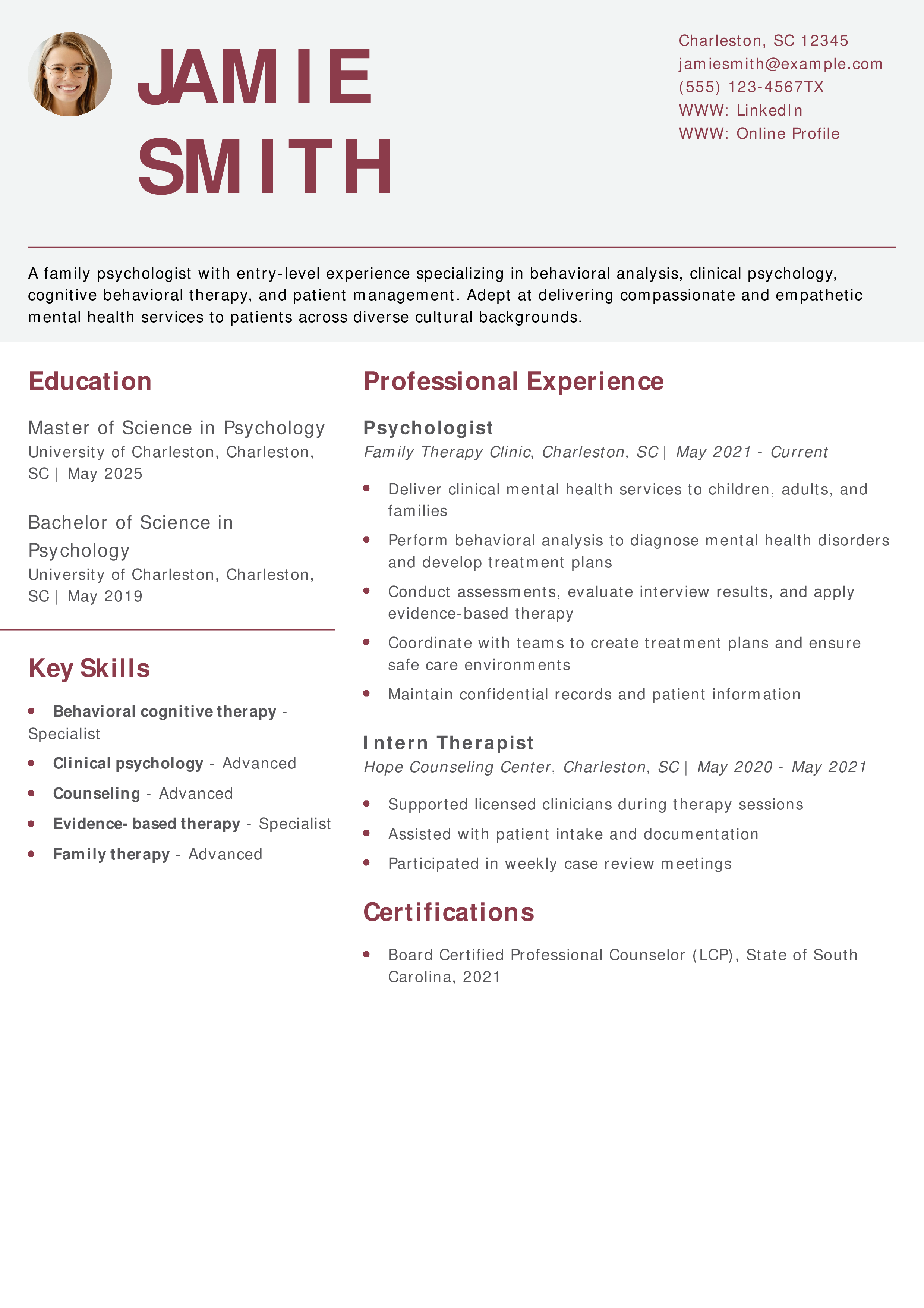
This resume is strong because it highlights relevant education and clinical experience, even for someone early in their career. It demonstrates an understanding of treatment planning and mental health assessment while maintaining a clear and concise structure.
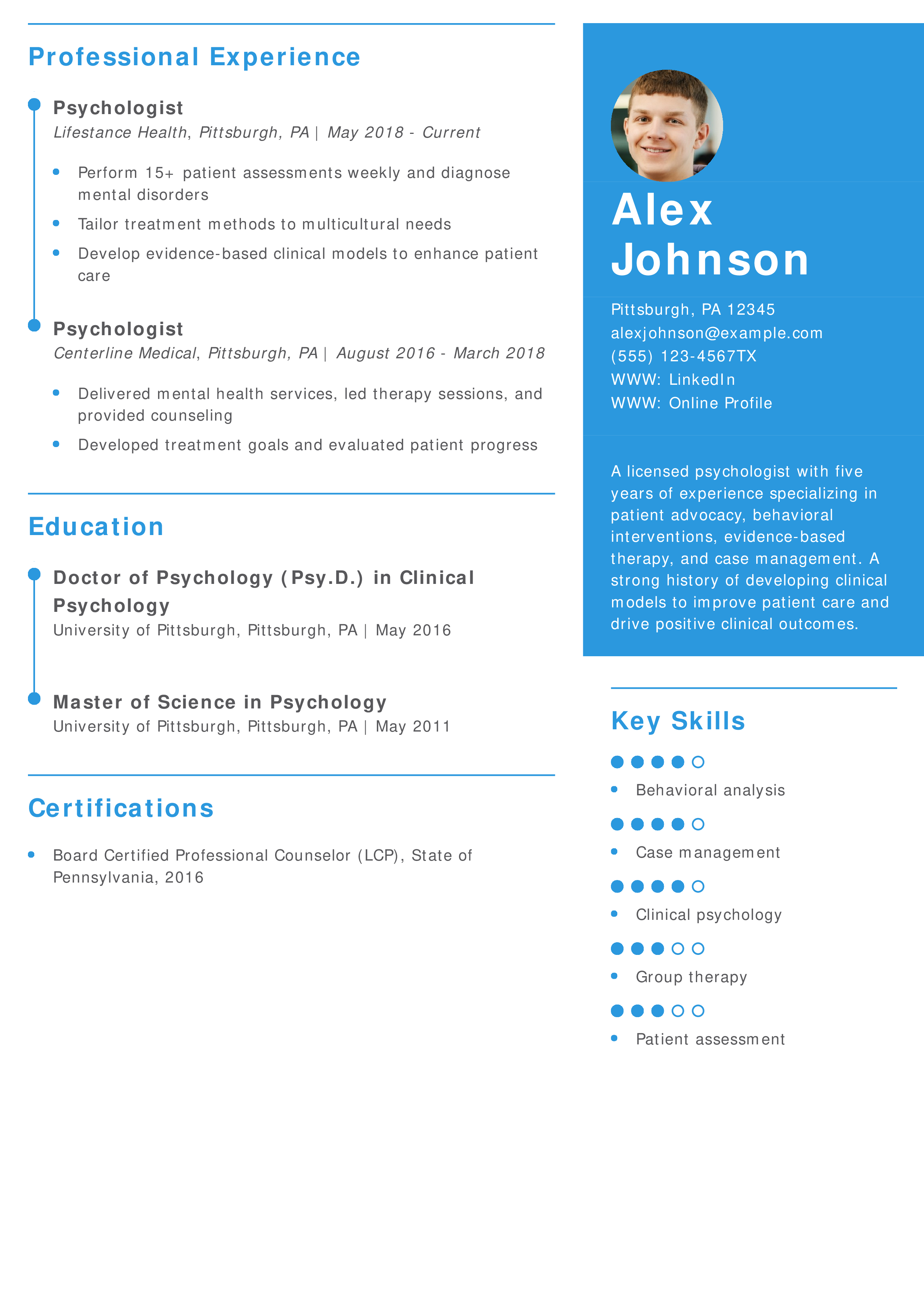
Licensed Psychologist Resume
Why This Resume Stands Out
This resume clearly demonstrates strong professional progression and a focus on evidence-based therapy models. Using metrics like “15+ assessments weekly” gives employers insight into workload capacity.
Child Psychologist Resume
Why This Resume Stands Out
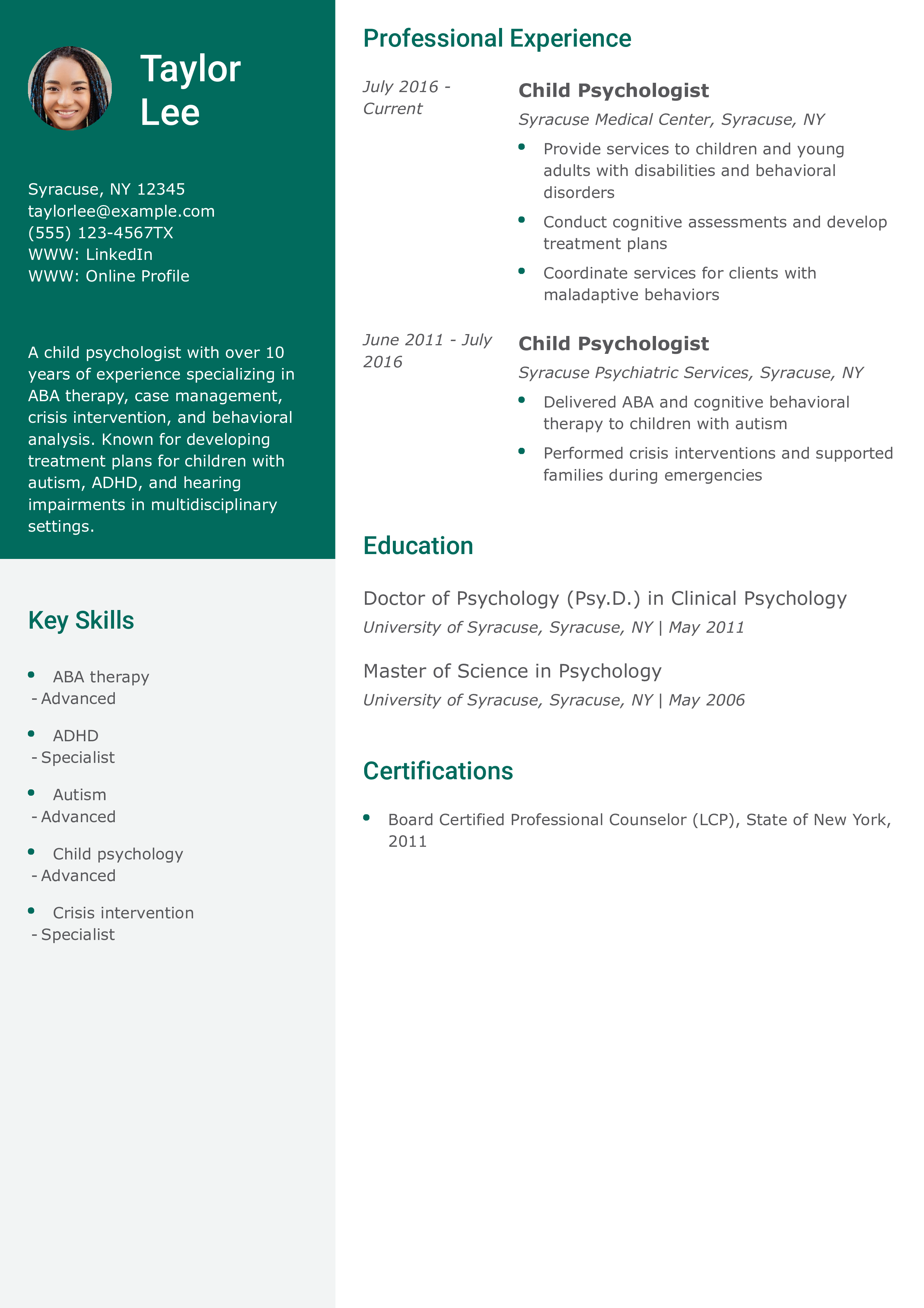
This resume shines by showing consistent career development in child psychology. The applicant highlights specific populations worked with and methods used.
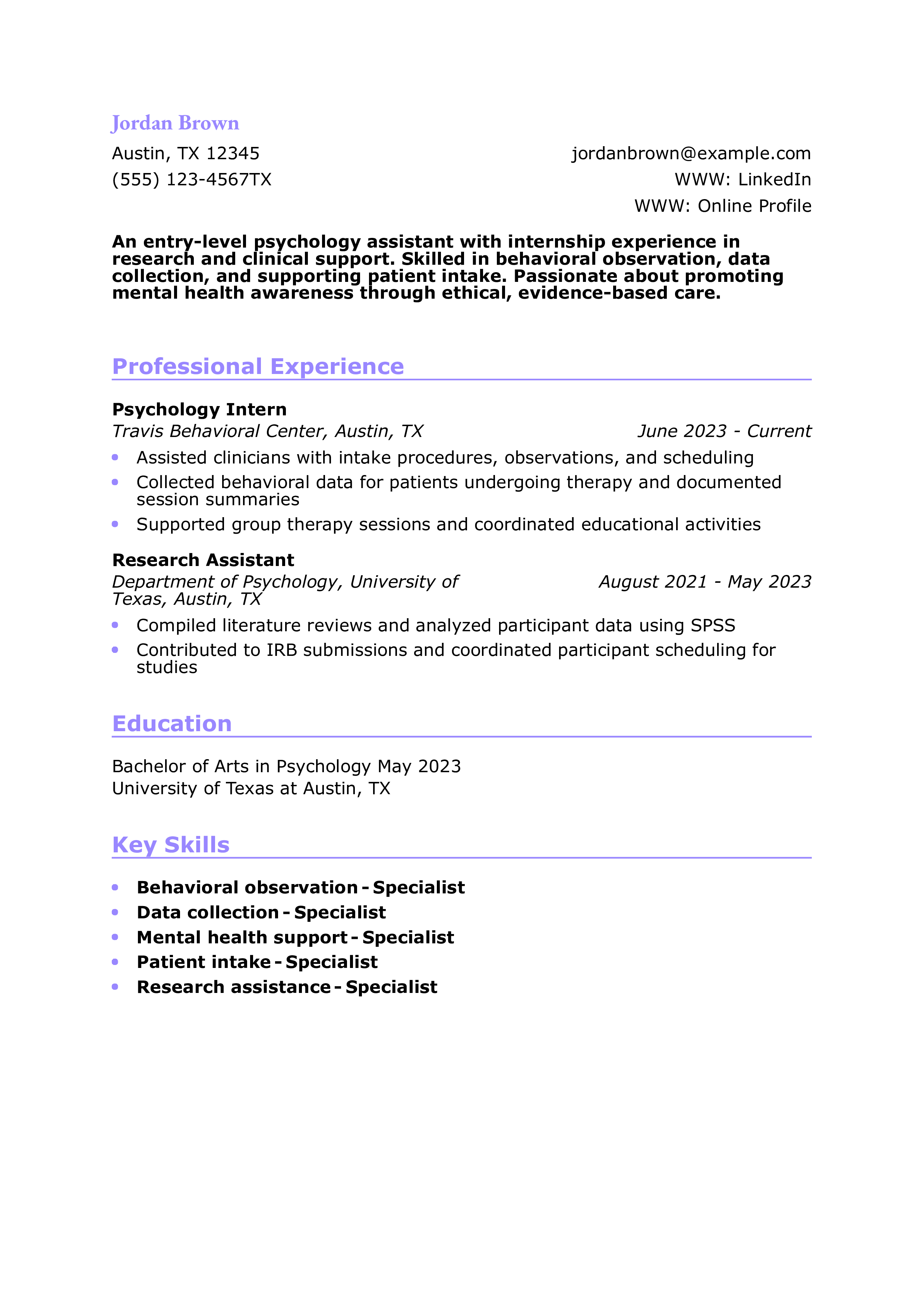
Entry-Level Psychologist Resume
Why This Resume Stands Out
This resume is effective for an entry-level candidate because it makes the most of internship and academic experience. Even without full-time roles, the accomplishments clearly show initiative and skill.
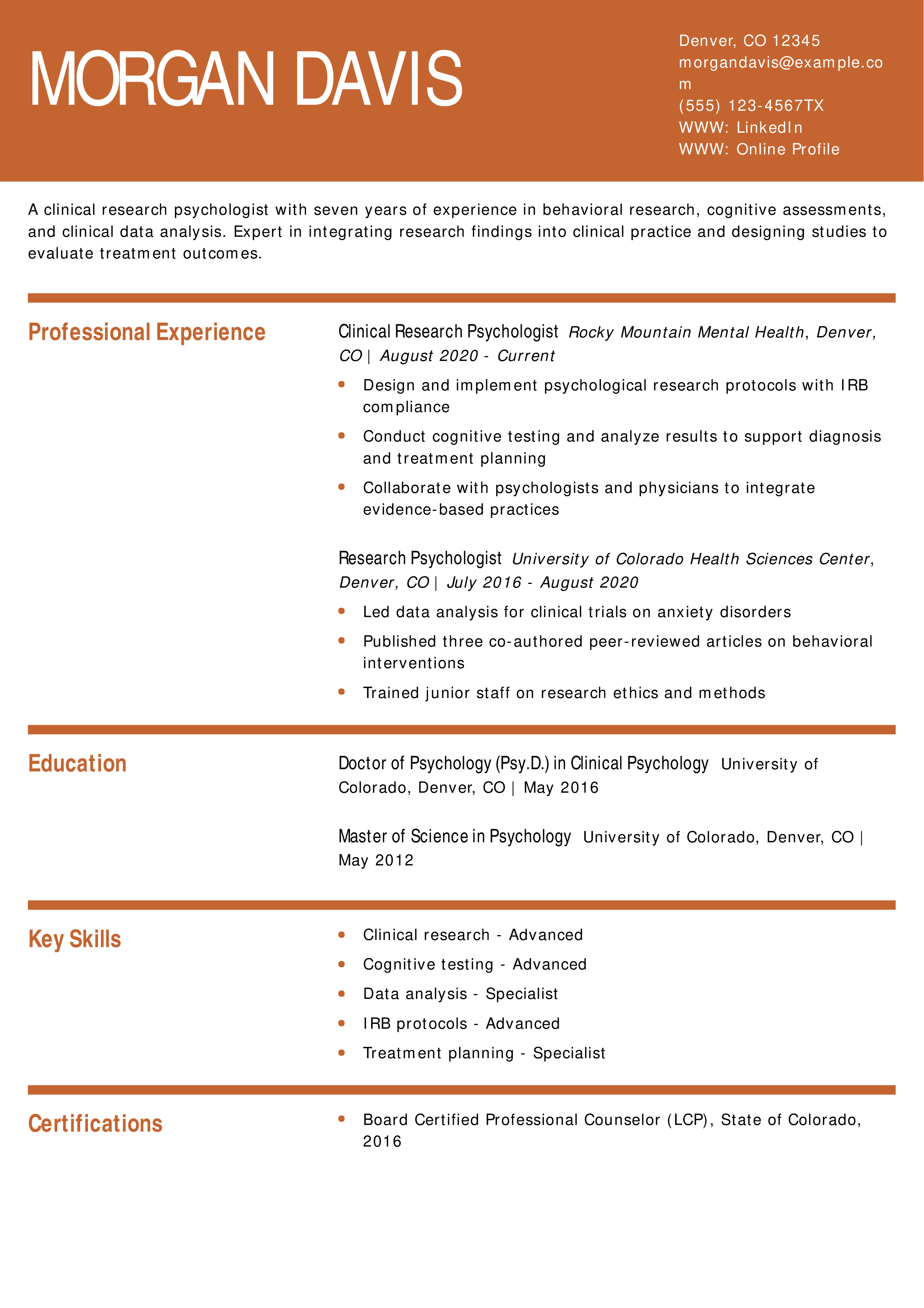
Clinical Research Psychologist Resume
Why This Resume Stands Out
This resume stands out for blending clinical expertise with research credentials. The use of published work and collaborations highlights both independence and teamwork.
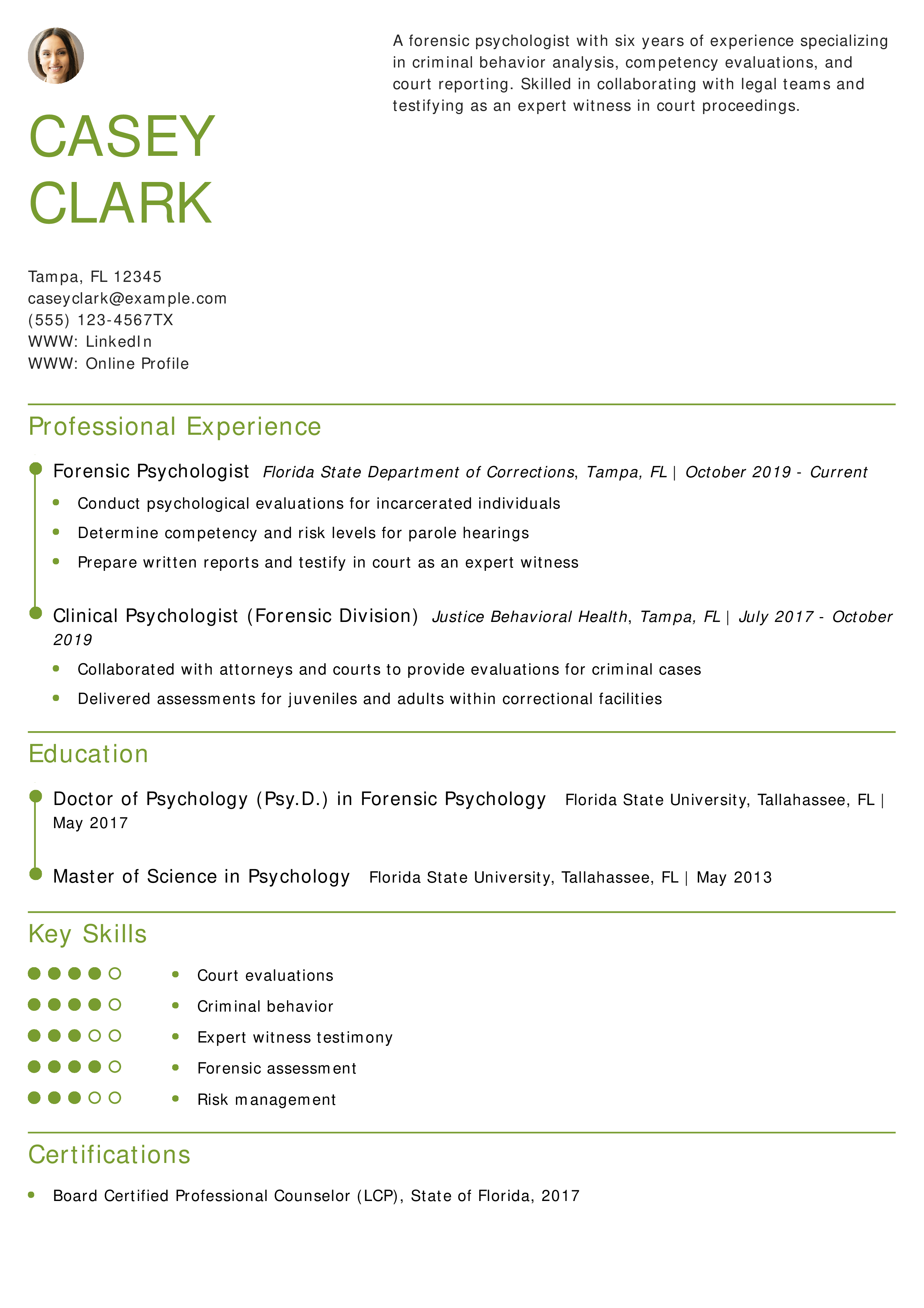
Forensic Psychologist Resume
Why This Resume Stands Out
This resume is effective because it aligns psychological skills with legal system requirements. Including court testimony and risk assessments strengthens credibility in this unique field.
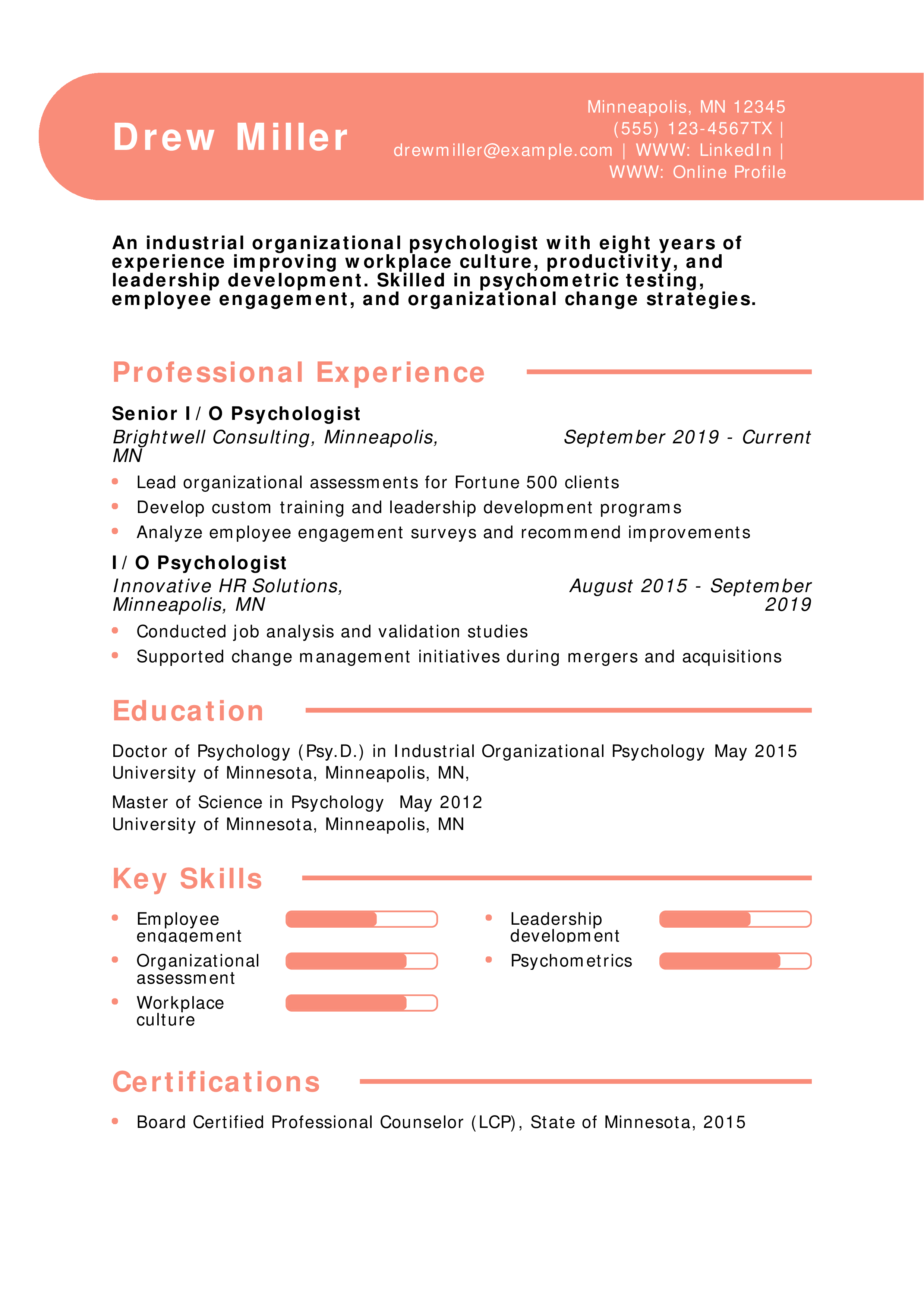
Industrial Organizational Psychologist Resume
Why This Resume Stands Out
His resume highlights business-focused psychological expertise and demonstrates the ability to influence employee outcomes. Quantifiable corporate experience and specific tools used make the resume especially effective.
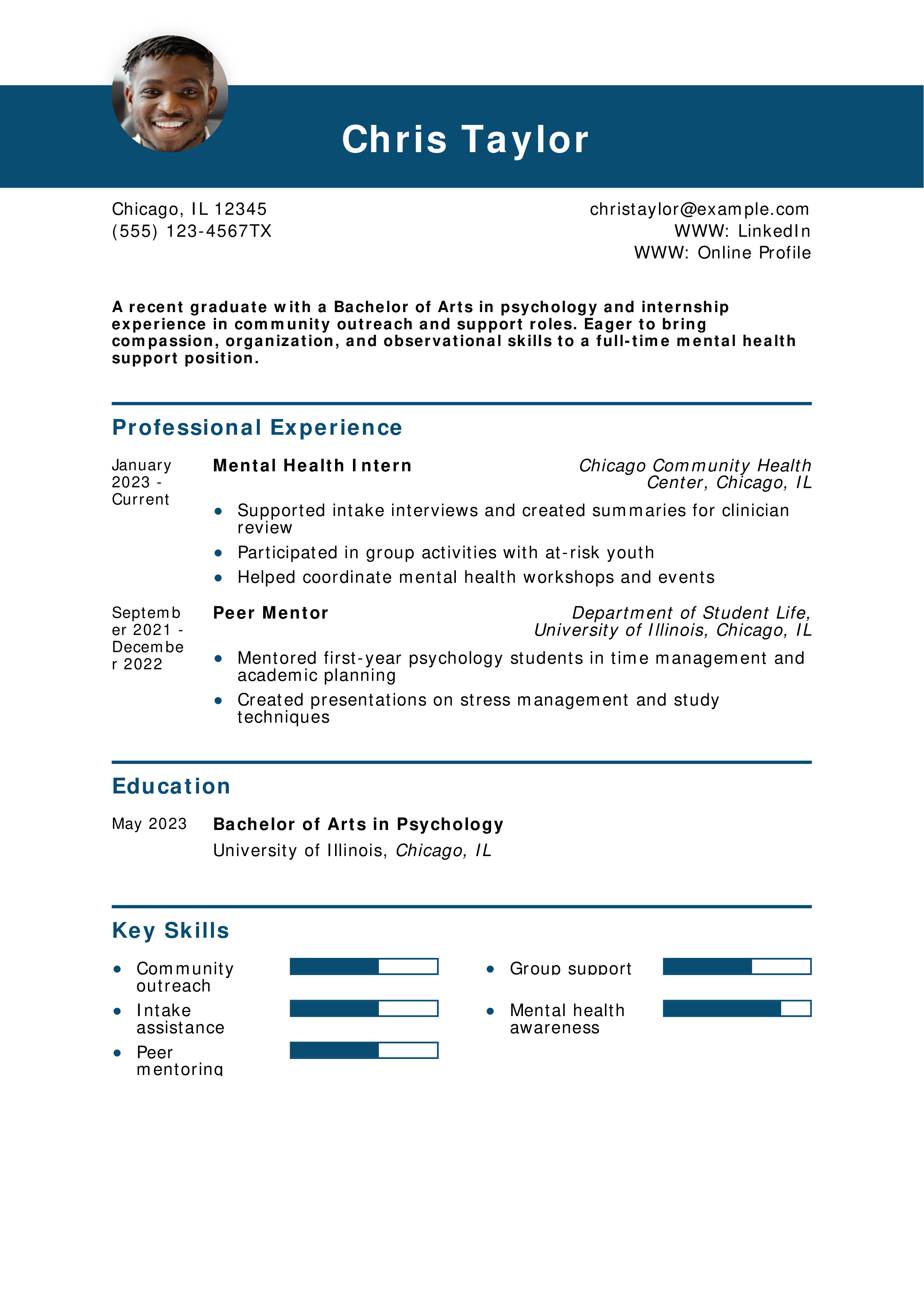
BA Psychology Graduate Resume
Why This Resume Stands Out
This resume is strong because it frames student involvement and internships in a professional light. The candidate shows real-world contributions even without long-term roles.
Behavioral Therapist Resume
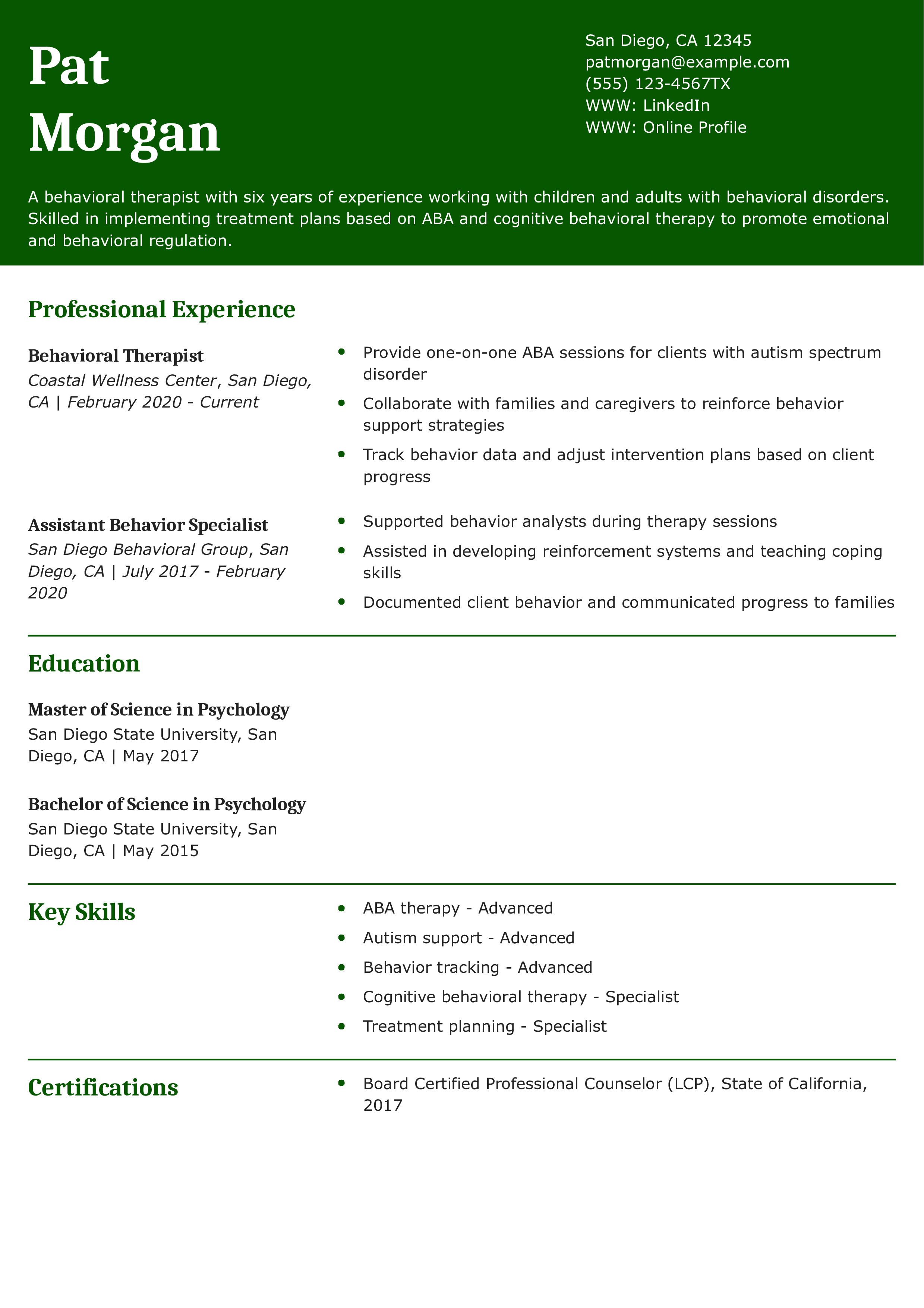
Why This Resume Stands Out
This resume effectively outlines experience in both support and lead roles. It clearly demonstrates growth in the behavioral therapy field while highlighting collaboration with families.
Psychiatric Technician Resume
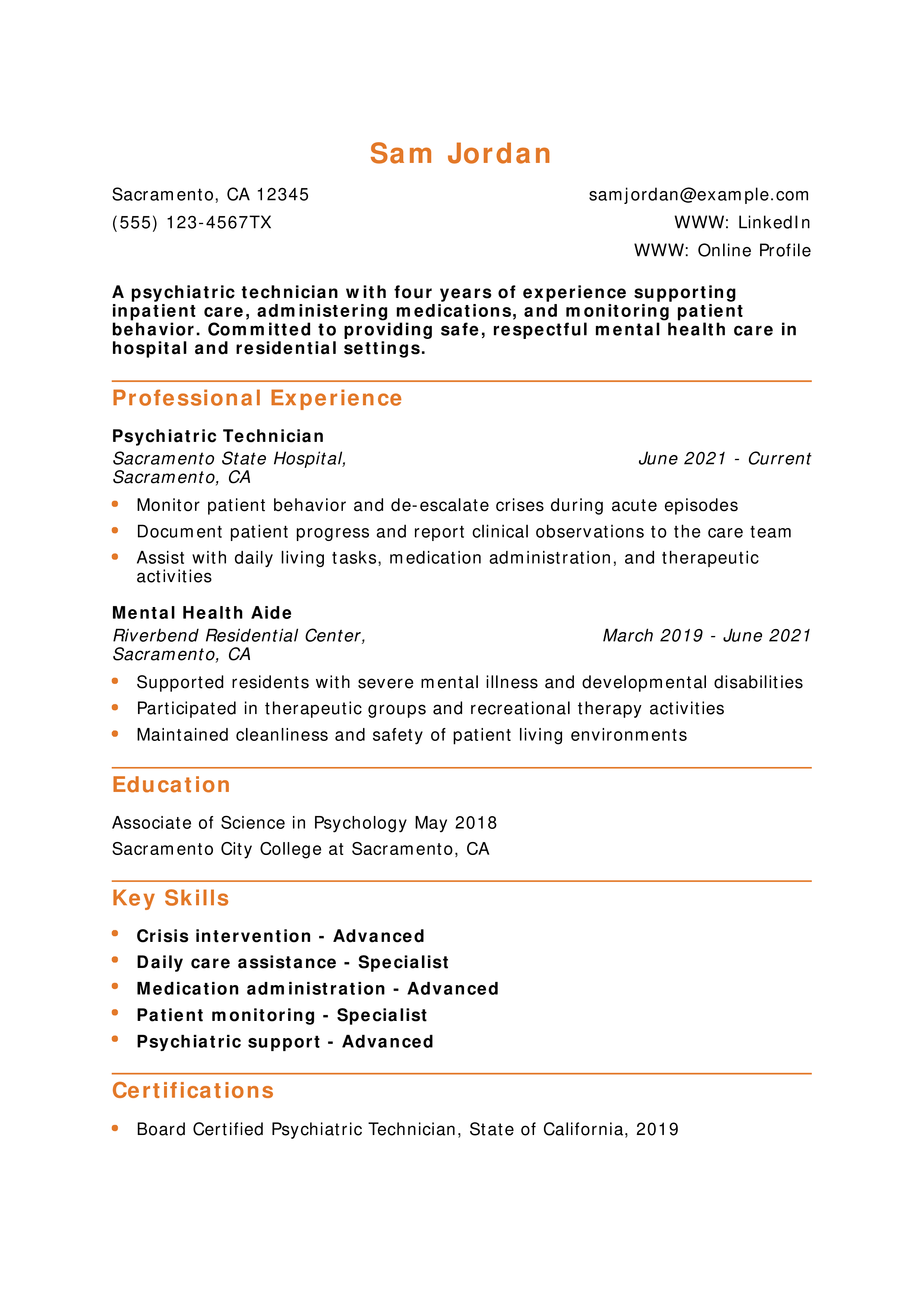
Why This Resume Stands Out
This resume works well because it highlights key technical skills needed for a clinical support role. It also demonstrates hands-on patient care, which is essential in psychiatric environments.
Substance Abuse Counselor Resume
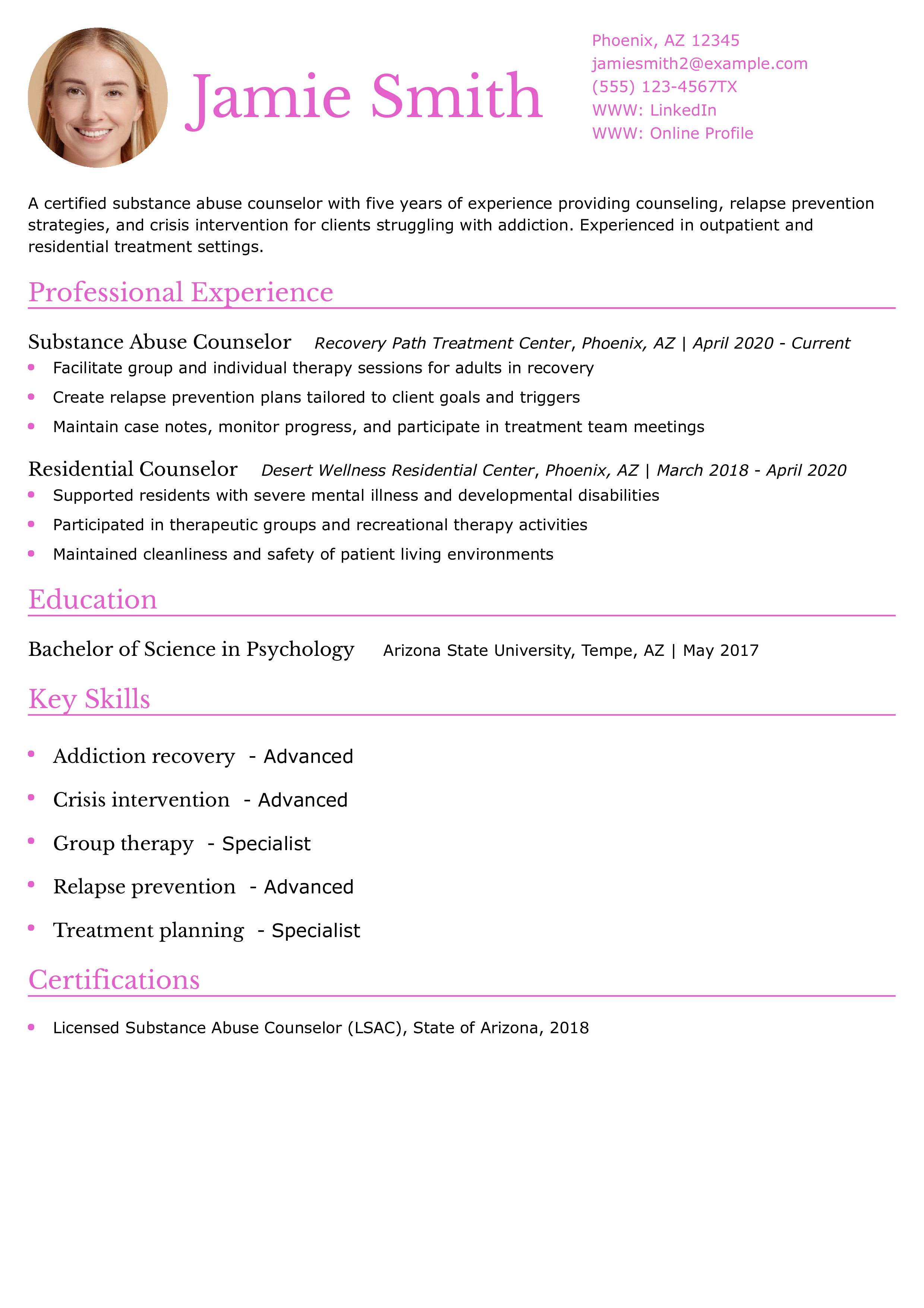
Why This Resume Stands Out
This resume clearly emphasizes clinical and counseling responsibilities in both outpatient and residential care settings. It effectively showcases certifications and treatment expertise.
Psychology Research Assistant Resume
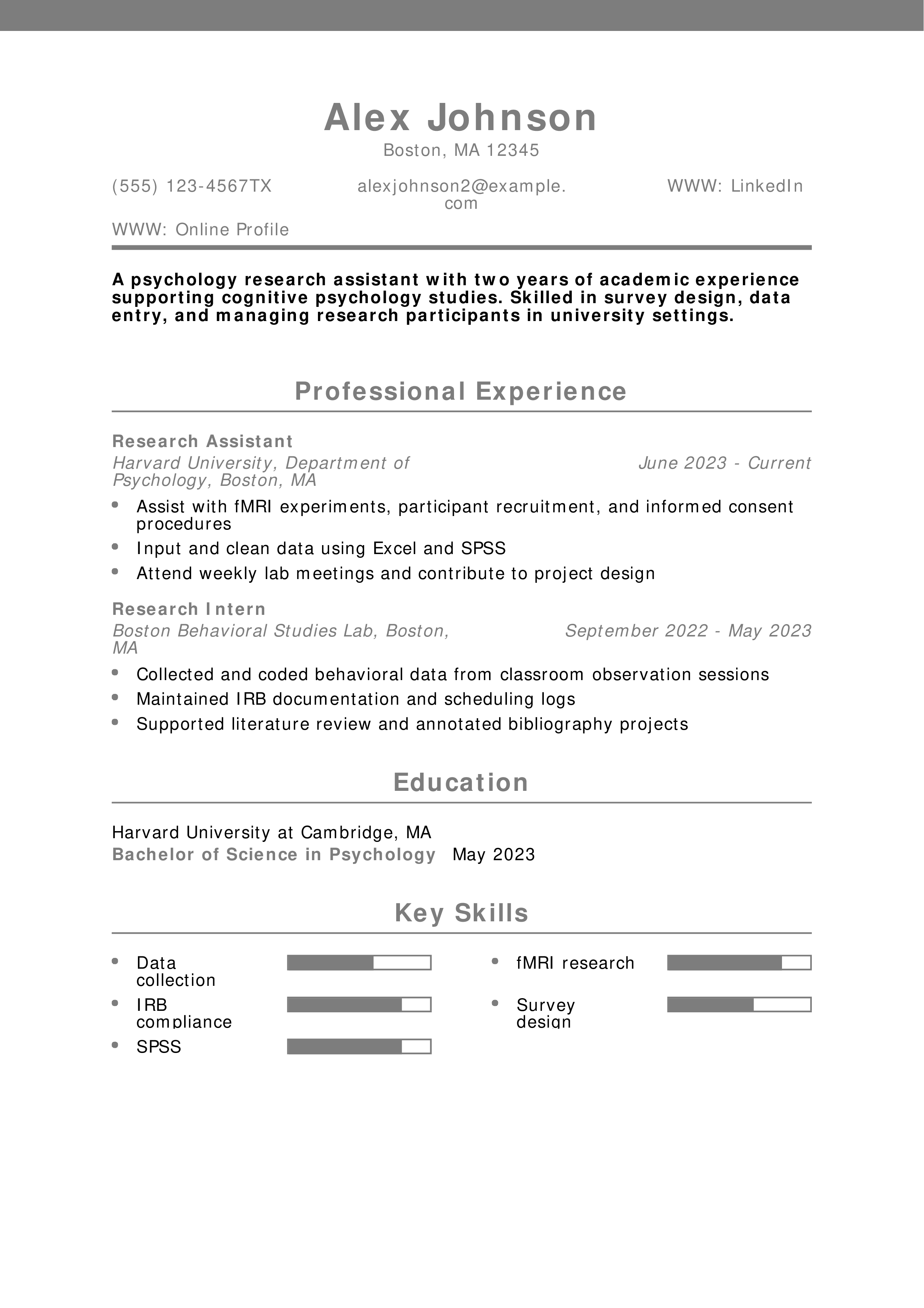
Why This Resume Stands Out
This resume stands out by combining technical research skills with hands-on lab experience. The inclusion of specific tools like SPSS strengthens credibility.
Mental Health Counselor Resume
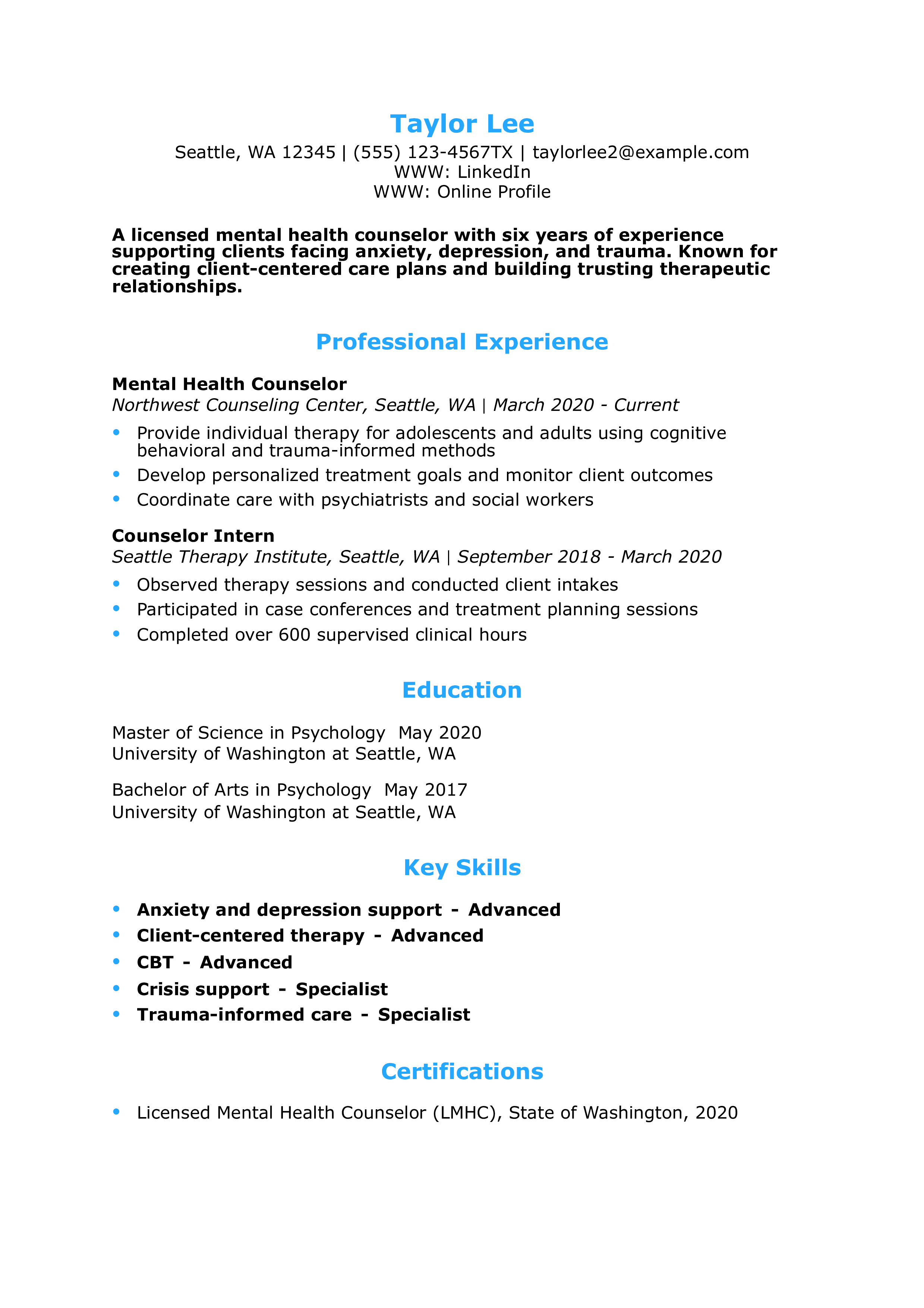
Why This Resume Stands Out
This resume works because it emphasizes clinical expertise and licensure in a therapy setting. It also shows a clear path from education through internship to full-time counseling.
Crisis Counselor Resume
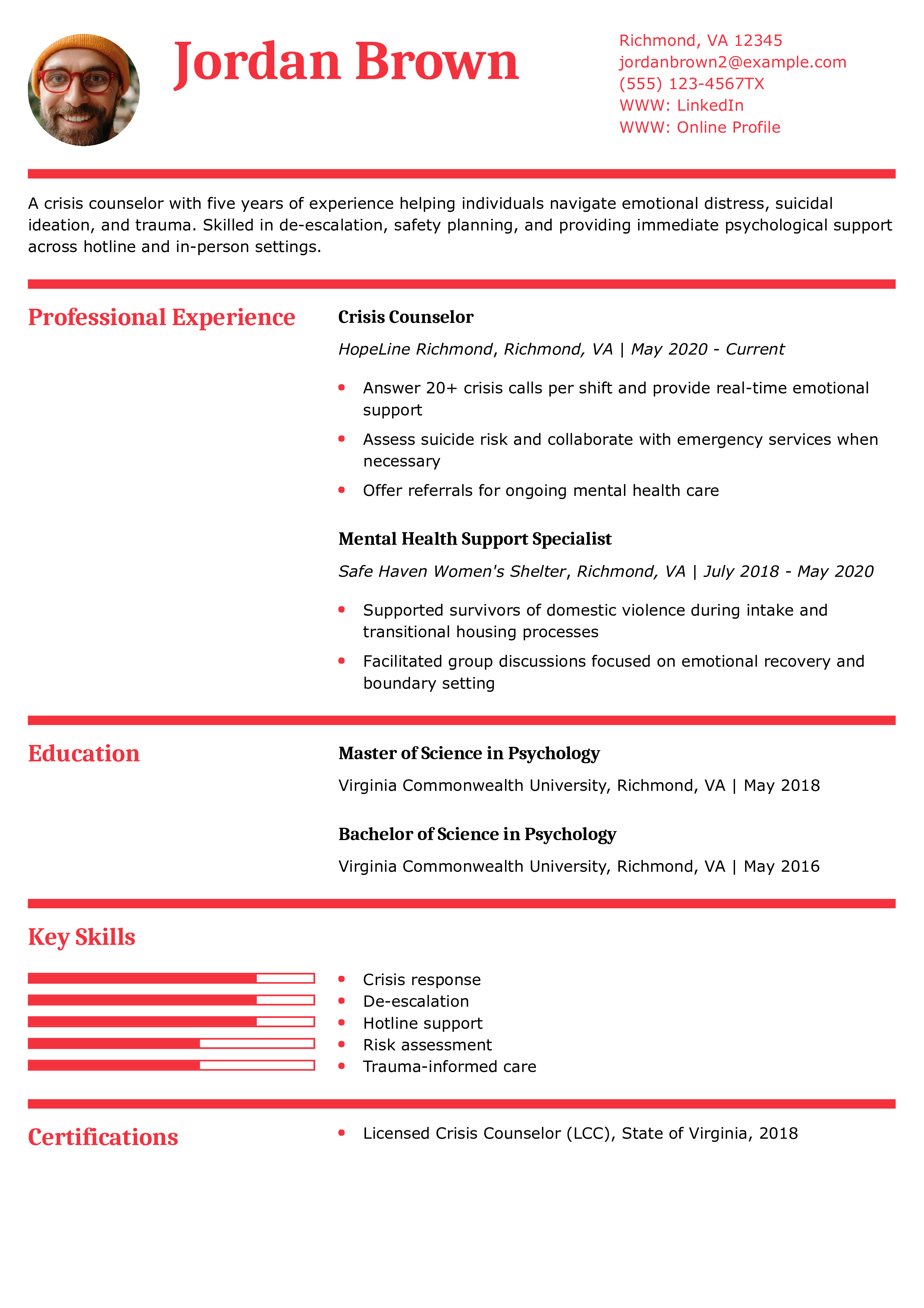
Why This Resume Stands Out
This resume clearly reflects the fast-paced, emotionally demanding nature of crisis work. It highlights the ability to stay calm under pressure and connect clients with critical resources.
Cognitive Psychologist Resume
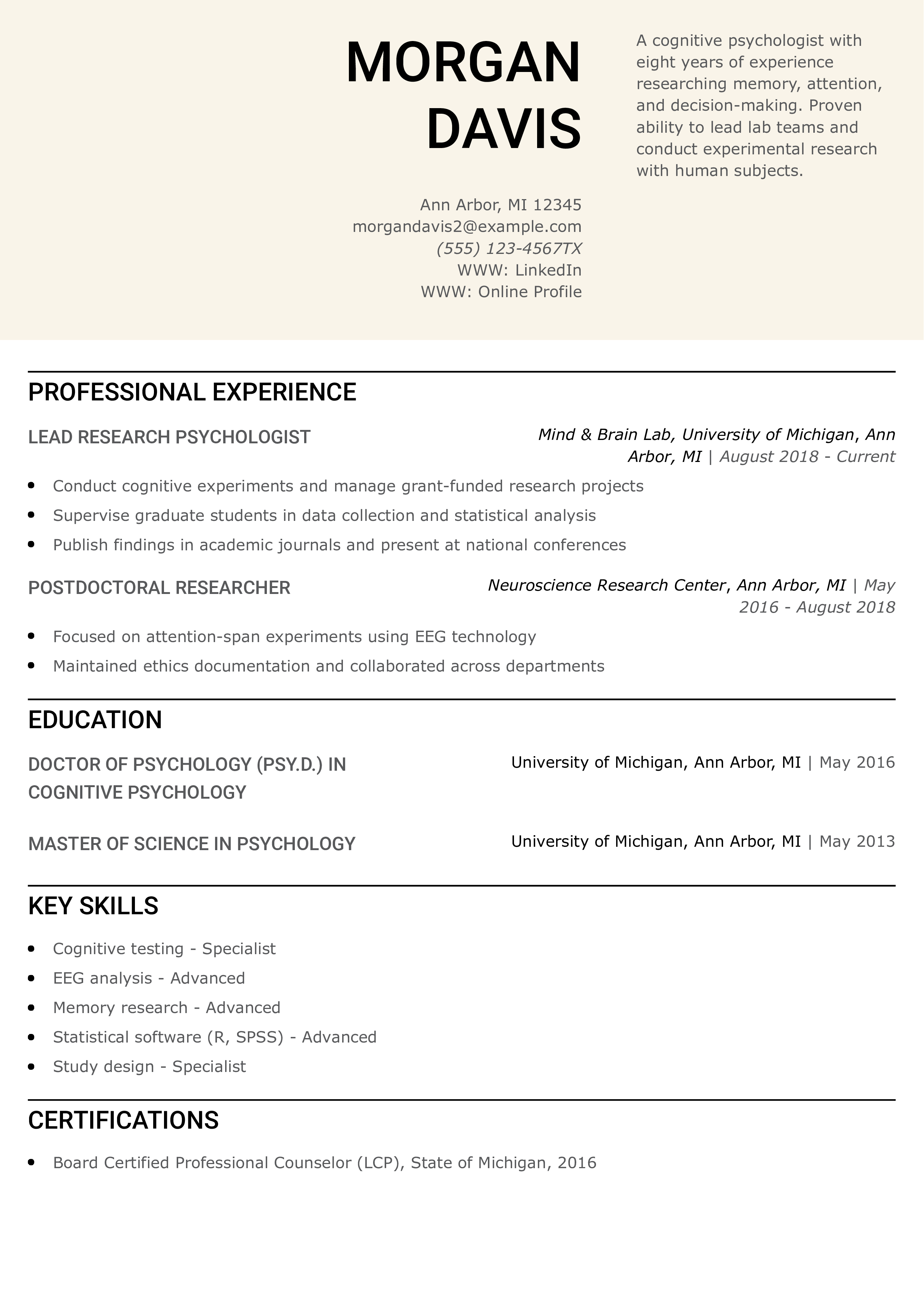
Why This Resume Stands Out
This resume is strong because it blends academic research with leadership and mentorship roles. It also reflects expertise in both technical tools and cognitive theory.
Rehabilitation Counselor Resume
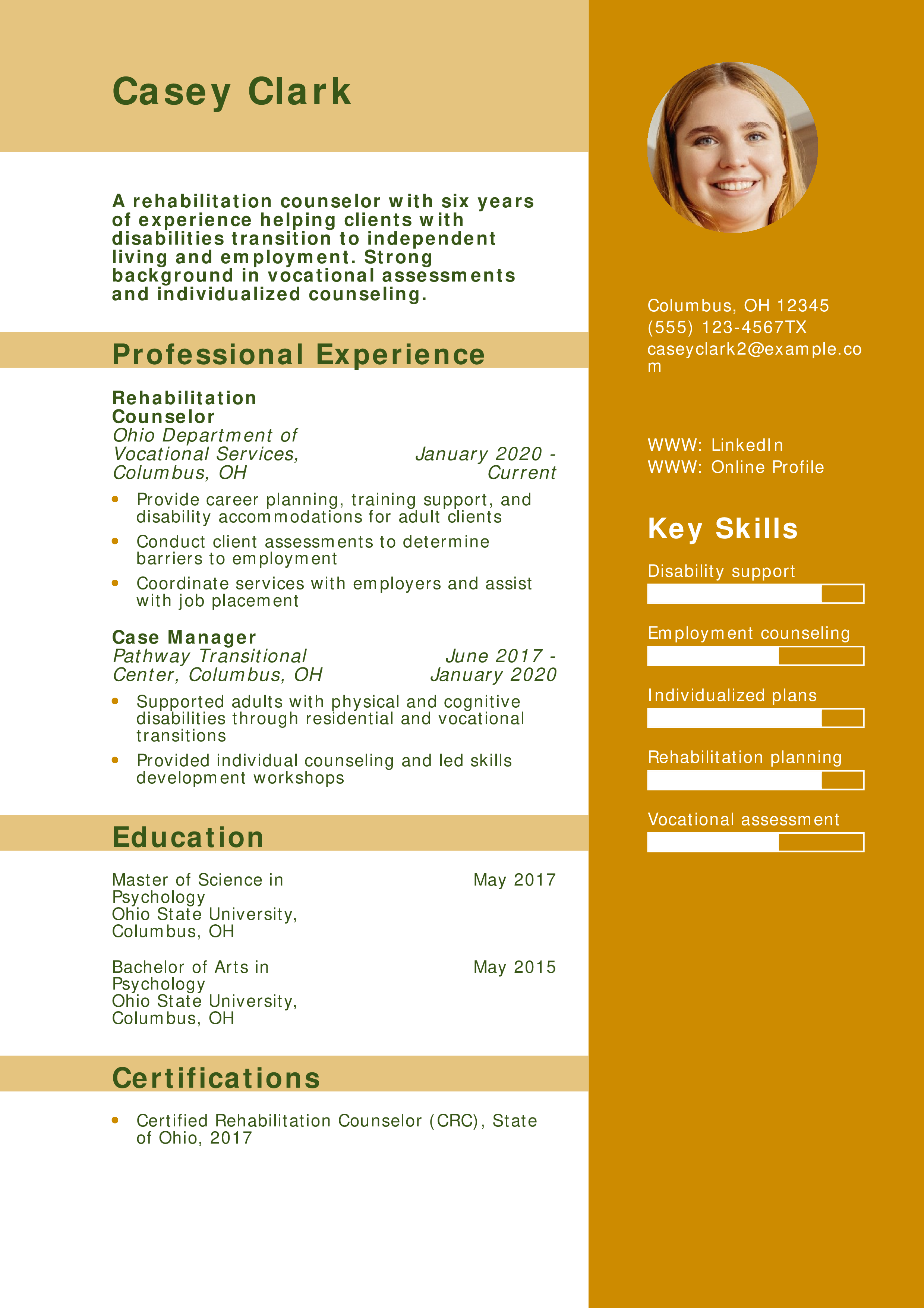
Why This Resume Stands Out
This resume works well because it emphasizes a specialty — vocational rehabilitation — and clearly demonstrates how the candidate supports people with disabilities toward independence.
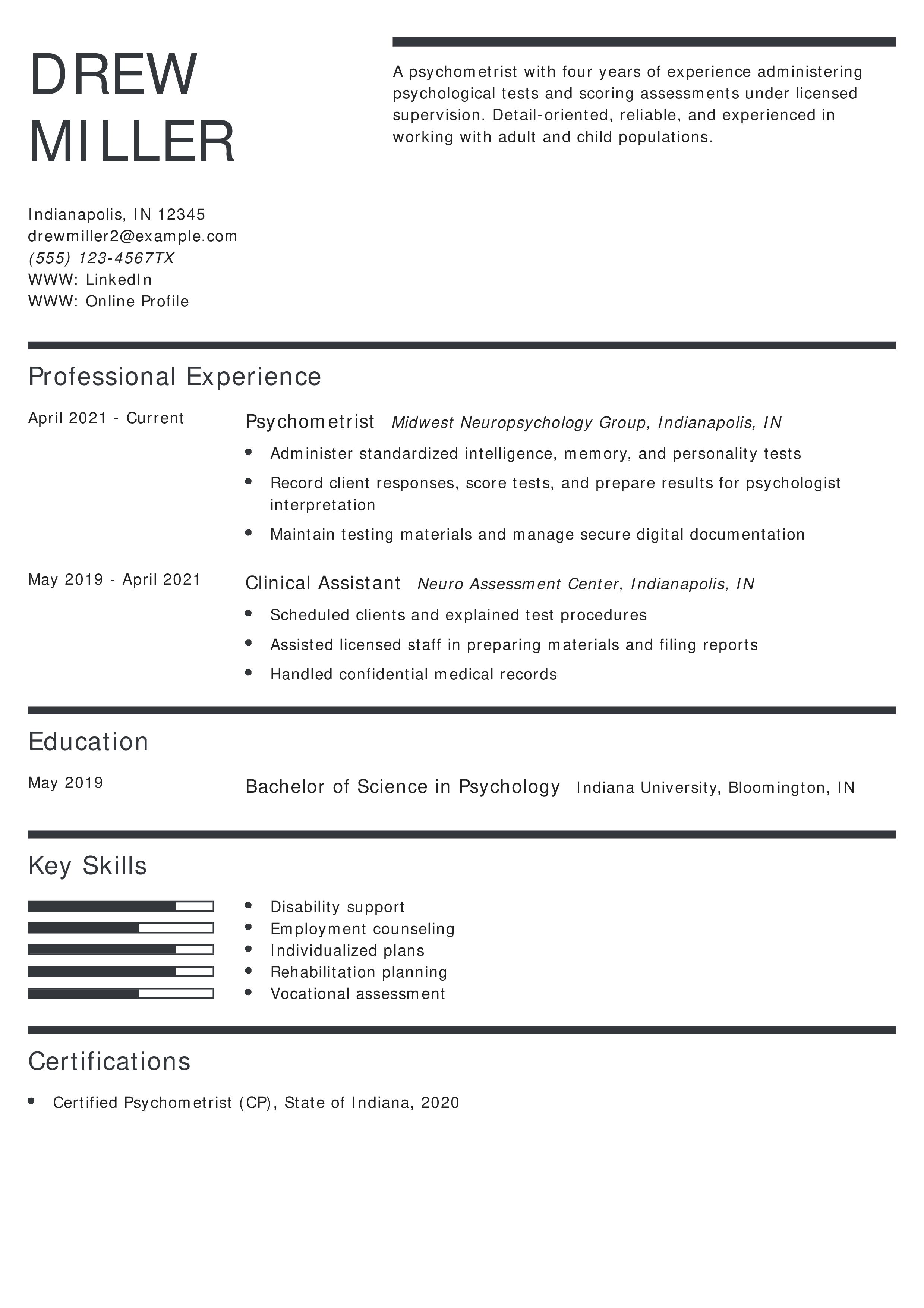
Psychometrist Resume
Why This Resume Stands Out
This resume stands out because it highlights specialized technical skills related to psychological testing and documentation. It shows growth from assistant to certified role.
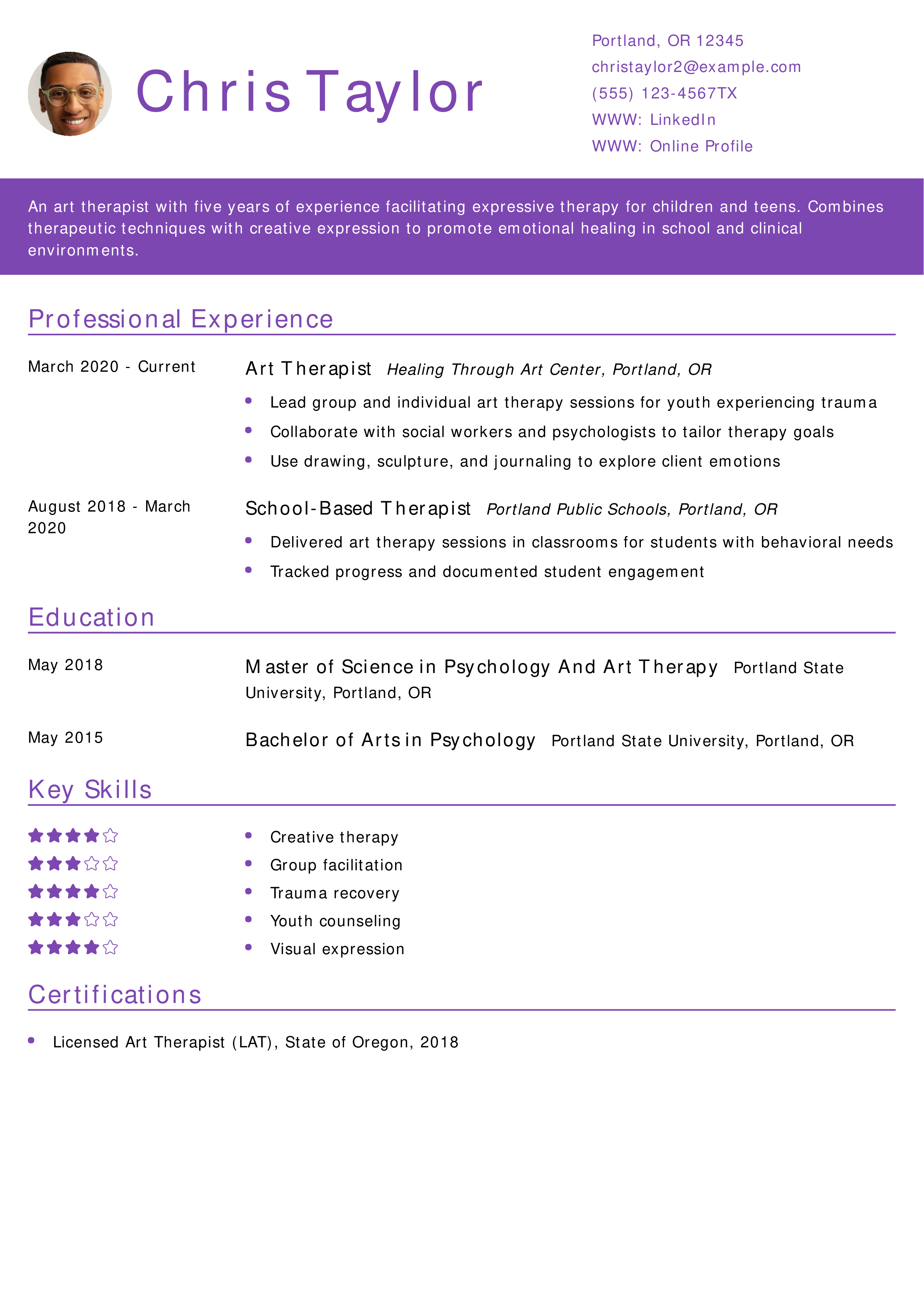
Art Therapist Resume
Why This Resume Stands Out
This resume is powerful because it focuses on a unique therapy approach and clearly outlines how art supports emotional healing.
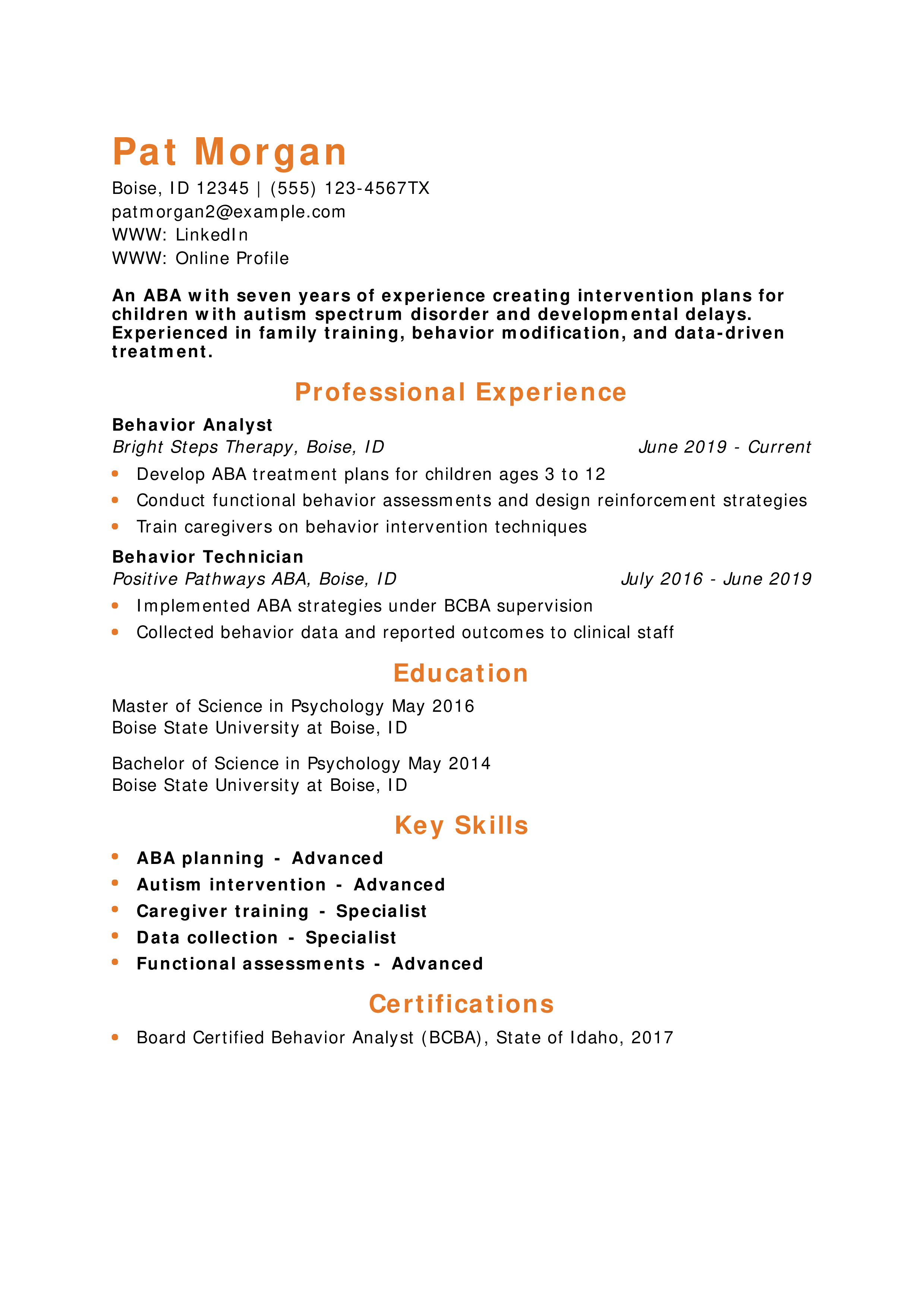
Applied Behavior Analyst Resume
Why This Resume Stands Out
This resume clearly shows a progression from technician to certified analyst and highlights essential ABA techniques. It’s also well-structured and easy to follow.
Health Psychologist Resume

Why This Resume Stands Out
This resume is strong because it shows how psychology can be applied to physical health care. It clearly outlines collaboration with medical providers.
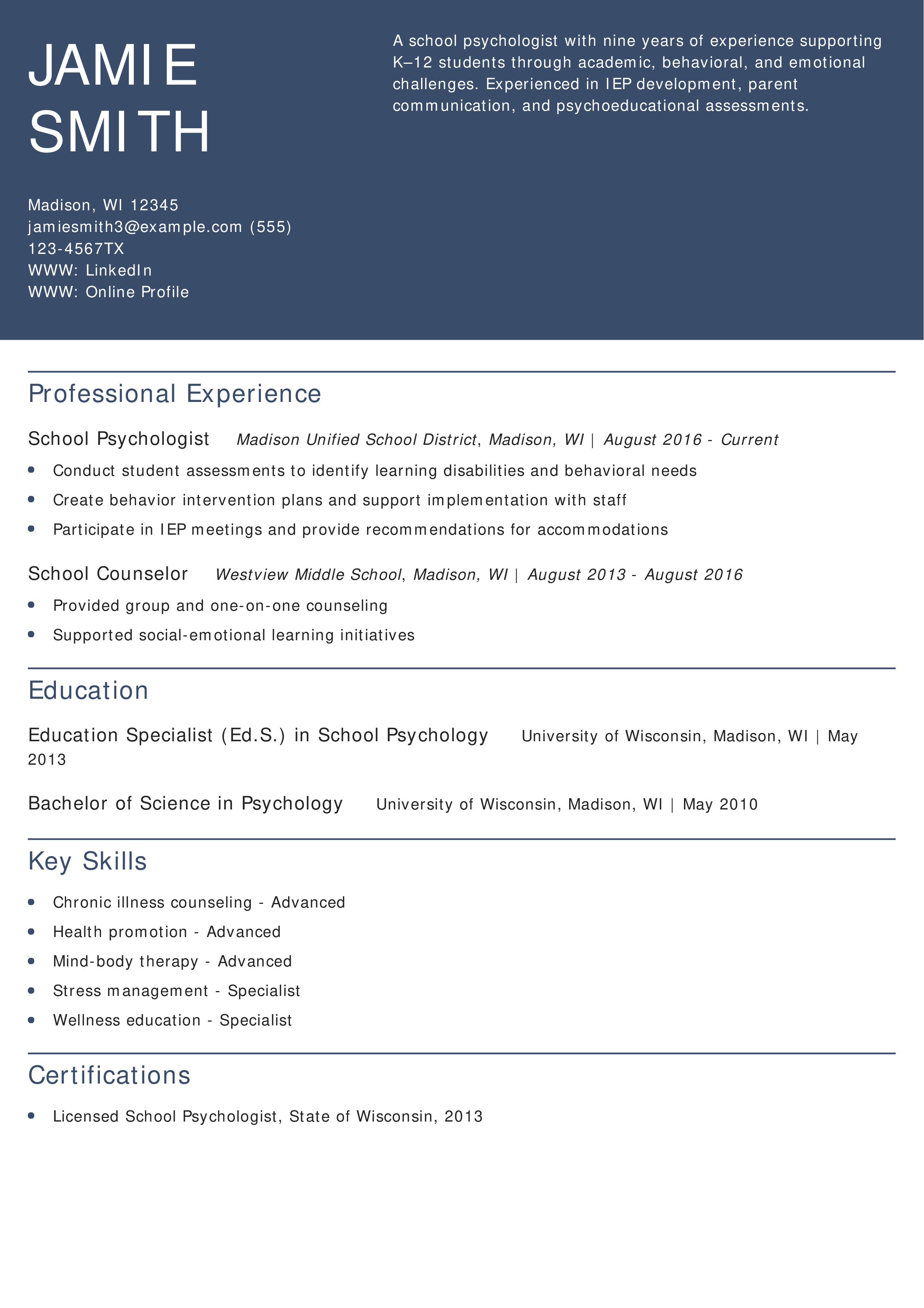
School Psychologist Resume
Why This Resume Stands Out
This resume highlights a strong foundation in educational psychology and student advocacy. It also shows collaboration across teams.
Counseling Psychologist Resume
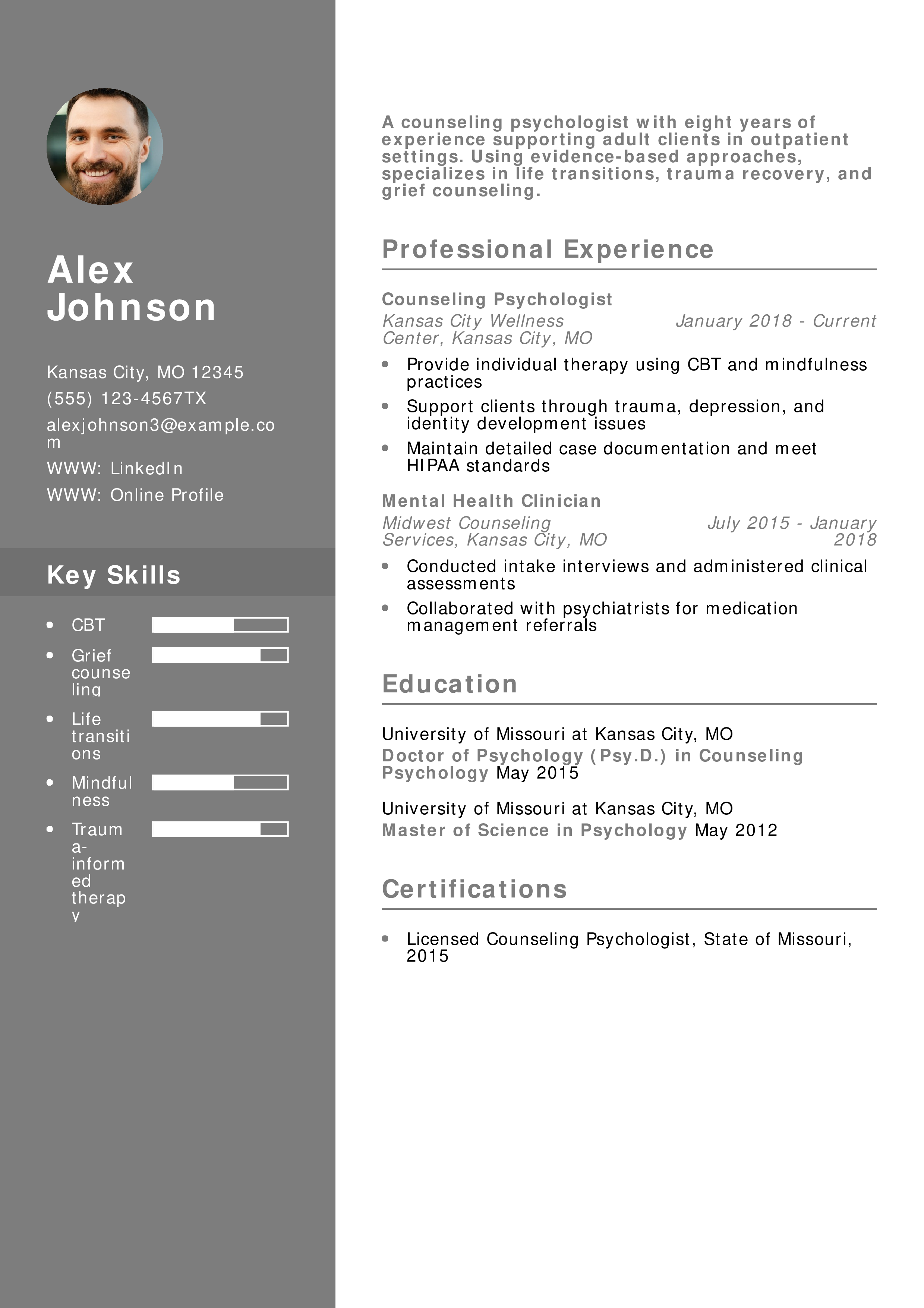
Why This Resume Stands Out
This resume highlights clinical competence and a deep understanding of sensitive mental health topics. The blend of therapy styles is also a strength.
Developmental Psychologist Resume
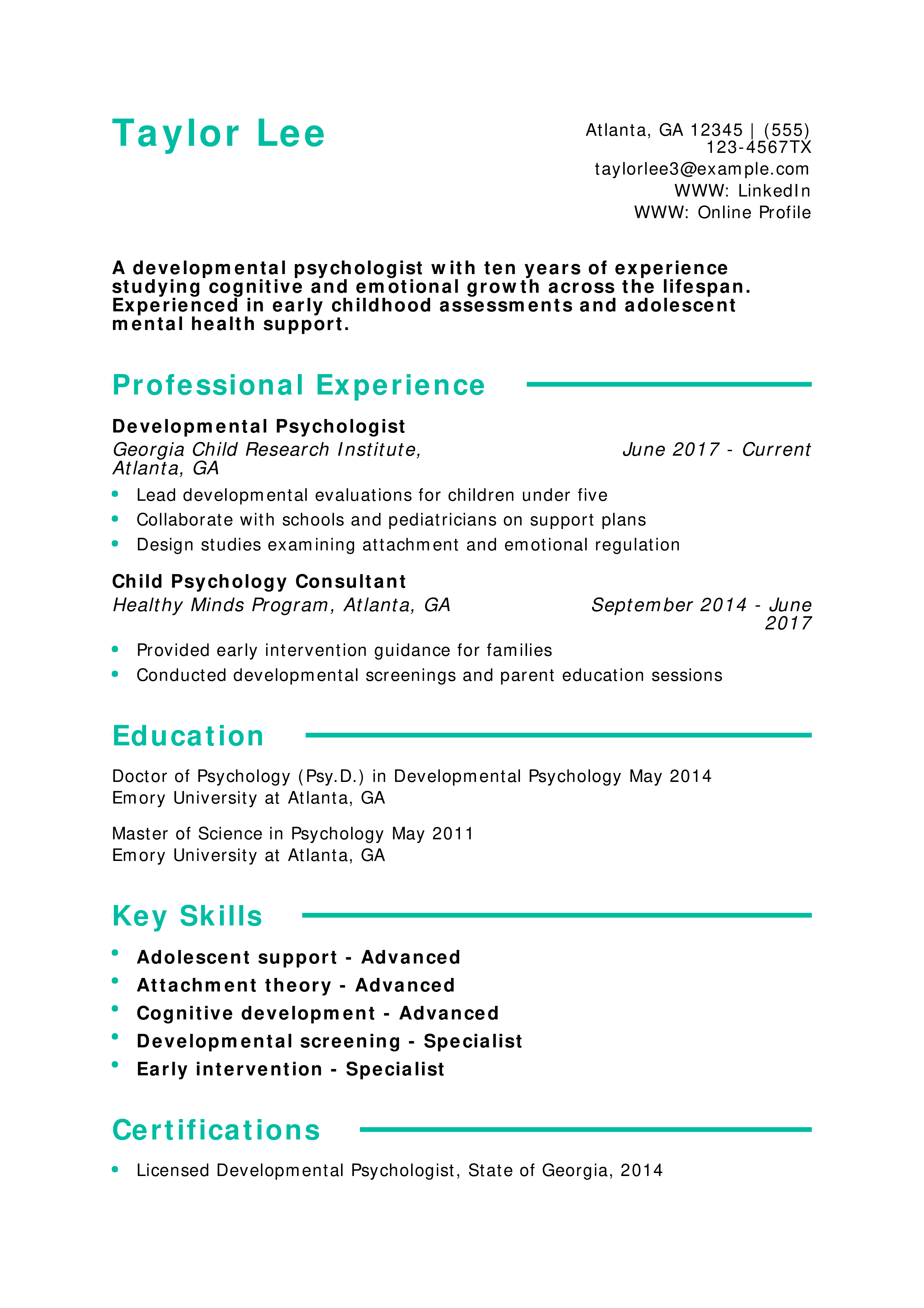
Why This Resume Stands Out
This resume seamlessly blends research and applied psychology. It shows real-world impact on children and families.
Experimental Psychologist Resume
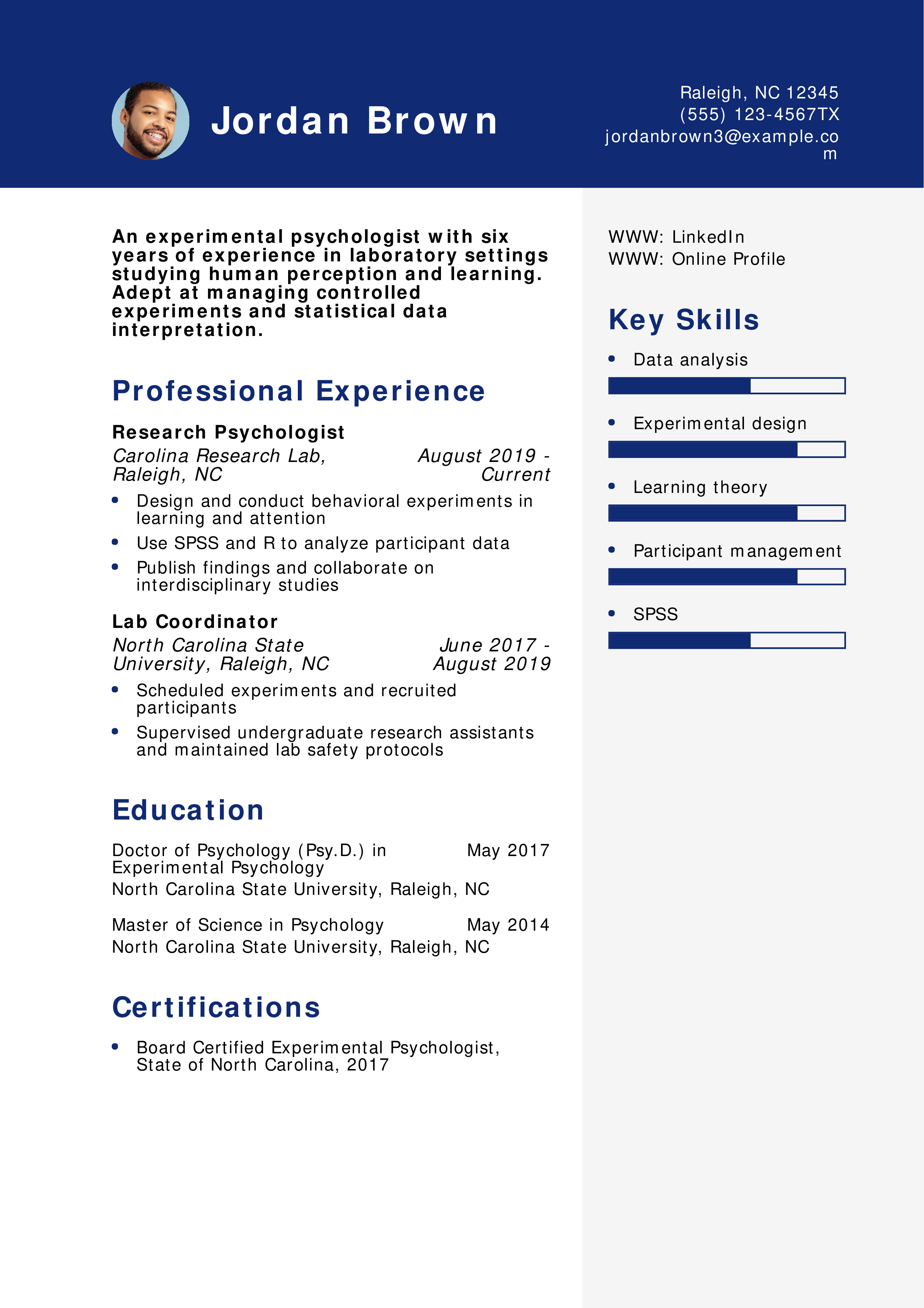
Why This Resume Stands Out
This resume is excellent for showing research-focused work. It includes specific tools, clear study focus areas, and lab leadership.
Sports Psychologist Resume
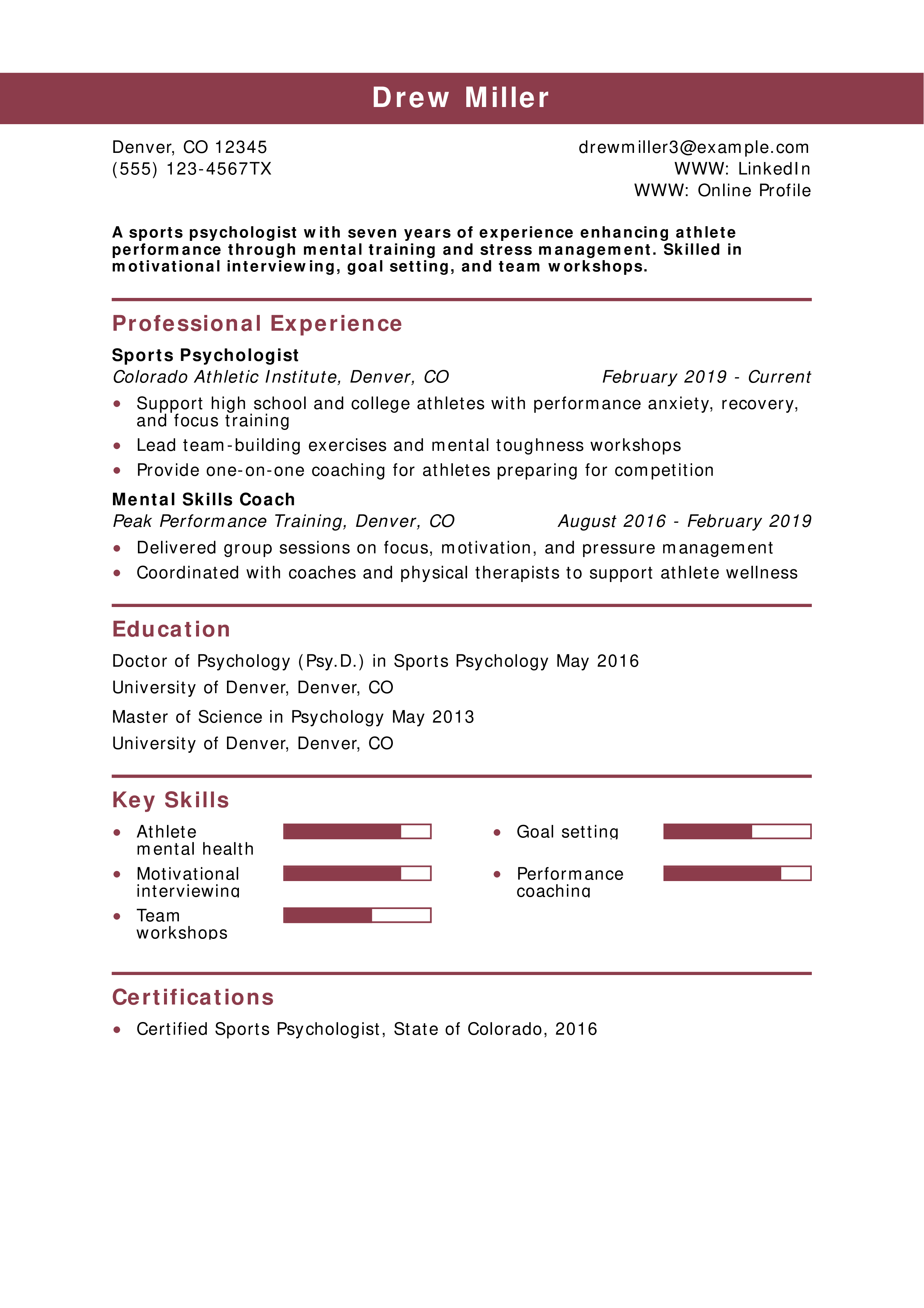
Why This Resume Stands Out
This resume connects mental health with athletic performance, a growing area in psychology. The structure shows clear impact on teams and individuals. Need help showcasing your specialty?
Our templates are crafted by professional resume writers to make creating your resume quick, easy, and effective.
- Professional resume template downloads
- Customized cover letter generation
- AI resume writing support
- Career-building resources and advice
Psychology Text-Only Resume Templates and Examples
How To Write a Psychology Resume
Psychology resumes should use the top to clarify whether you lean research, clinical, or applied. Summarize your focus areas, key methods, and main populations so hiring teams do not have to guess how your training maps to their roles.

Your psychologist resume should showcase your knowledge, communication skills, and critical thinking and illuminate your capacity to make a profound impact on the lives of individuals and communities. Whether you’re an experienced psychologist seeking new opportunities or a budding therapist ready to make your mark in the world of mental health, read on to see how to craft a resume that opens doors and conveys your dedication to enhancing the human experience.
1. Write a brief summary of your psychology qualifications
Senior-Level Profile Example
A Child Psychologist with 10+ years of professional experience, specializing in ABA therapy, case management, crisis intervention, and behavioral analysis. A proven track record of providing quality mental health services to children who have autism, ADHD, and hearing impairments.
Entry-Level Profile Example
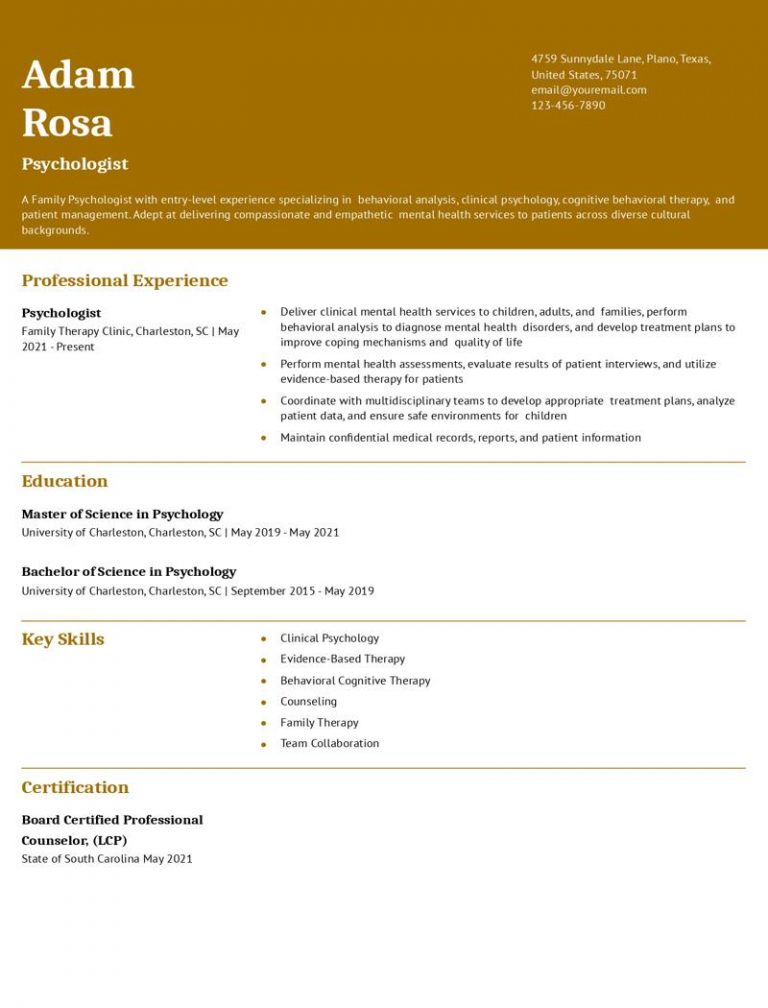
A Family Psychologist with entry-level experience specializing in behavioral analysis, clinical psychology, cognitive behavioral therapy, and patient management. Adept at delivering compassionate and empathetic mental health services to patients across diverse cultural backgrounds.
2. Add your psychology experience with compelling examples
As a licensed psychologist, you’ll be interfacing with multidisciplinary teams, families, and patients on a daily basis. Employers value candidates who thrive while collaborating with diverse groups. Highlight your ability to build relationships with team members and patients across cultural backgrounds. This will send a clear message to hiring managers that you’re the ideal fit for the organization’s work culture.
Frame your bullet points as accomplishments rather than job duties. It can be helpful to think of things you were particularly proud of in your previous jobs and distill those into easily understandable achievements. Whenever possible, include clinical metrics to show hiring managers you have a proven track record of success as a psychologist.
Senior-Level Professional Experience Example
Child Psychologist, Syracuse Medical Center, Syracuse, NY
July 2016 – Present
- Deliver mental health services to children and young adults with disabilities and behavioral disorders within a multidisciplinary setting
- Perform psychological tests for children and young adults, create cognitive assessment reports, analyze findings, and identify appropriate treatment plans
- Coordinate with multidisciplinary teams to facilitate client’s access to services for clients with severe maladaptive behaviors and aggression
Entry-Level Professional Experience Example
Psychologist, Family Therapy Clinic, Charleston, SC
May 2021 – Present
- Deliver clinical mental health services to children, adults, and families, perform behavioral analysis to diagnose mental health disorders, and develop treatment plans to improve coping mechanisms and quality of life
- Perform mental health assessments, evaluate results of patient interviews, and utilize evidence-based therapy for patients
- Coordinate with multidisciplinary teams to develop appropriate treatment plans, analyze patient data, and ensure safe environments for children
- Maintain confidential medical records, reports, and patient information
3. Include your education and certifications relevant to psychology
In addition to your formal education, several certifications may be required in the field of psychology. Even when not expressly required, they’ll still look impressive on a resume. Many certifications can be useful for a psychologist to have.
Some of the most in-demand certifications include the Board Certified Behavior Analyst (BCBA), which is offered by the Behavior Analyst Certification Board (BACB). It is designed for professionals who work in behavior analysis. Also, the Certified Cognitive Behavioral Therapist (CCBT) certification by the Academy of Cognitive Therapy is made for professionals who work in cognitive behavioral therapy.
Education
Template
- [Degree Name]
- [School Name], [City, State Abbreviation] | [Graduation Year]
Example
- Master of Science (M.S.) Psychology
- University of Central Oklahoma, Edmond, OK, | September 2018
Certifications
Template
- [Certification Name], [Awarding Organization], [Completion Year]
Example
- Certified Cognitive Behavioral Therapist (CCBT), the Academy of Cognitive Therapy | June 2010
- Board Certified Behavior Analyst (BCBA), the Behavior Analyst Certification Board | April 2005
4. Make a list of your psychology-related skills and proficiencies
To ensure compliance with applicant tracking systems (ATS), you must integrate specific key skills and action verbs from the job description into your resume. During the initial ATS scan, your document will be tracked for specific keywords that match the organization’s needs. If you don’t have enough of these qualifications in your resume, you won’t advance to the next phase of the hiring process.
An effective strategy for making a strong first impression on the hiring manager is incorporating key terms that the company values. Below is a list of potential keywords you may encounter during your job search:
| Key Skills and Proficiencies | |
|---|---|
| ADHD | Applied Behavior Analysis (ABA) therapy |
| Autism | Behavioral analysis |
| Behavioral intervention | Case management |
| Child psychology | Clinical models |
| Clinical psychology | Cognitive behavioral therapy |
| Counseling | Couples counseling |
| Crisis intervention | Emotionally-focused therapy |
| Evidence-based therapy | Family therapy |
| Group therapy | Marriage counseling |
| Multidisciplinary | Patient advocacy |
| Patient assessment | Patient care |
| Psychotherapy treatment plans | |
How To Pick the Best Psychology Resume Template
When choosing a psychology resume template, it’s important to remember the content of your resume is more important than the design. A well-written resume with relevant experience and qualifications will be more effective than a poorly written one with an eye-catching design. When in doubt, always opt for a simple, elegant design that maximizes the readability of your content.
Frequently Asked Questions: Psychology Resume Examples and Advice
How can I customize my Psychology CV for a specific job role?-
Customizing your Psychology CV involves closely analyzing the job description and ensuring that you include the relevant skills and accomplishments that align with the employer’s needs. Use specific keywords from the job posting, and focus on tailoring your profile summary and professional experience sections to match the responsibilities of the position you're applying for.
What are common action verbs for psychology resumes?-
Action verbs are important for a psychology resume because they help create an impact when you’re delivering information to someone else. Leading each bullet point with a strong, active verb gives the reader a clear understanding of what is happening and can greatly enhance the impact of your content. The verbs illustrate the extent of your vocabulary in the language and help grab the reader’s attention, motivating them to read the document thoroughly.
Here are some examples of action verbs that can be used in a psychology resume:
| Action Verbs | |
|---|---|
| Analyzed | Collaborated |
| Conducted | Coordinated |
| Created | Delivered |
| Developed | Diagnosed |
| Enhanced | Evaluated |
| Examined | Identified |
| Implemented | Led |
| Managed | Performed |
| Provided | Resolved |
| Supported | |
How do you align your resume with a psychology job description?-
According to data from the Bureau of Labor Statistics, the average annual salary for psychologists was $85,330 in 2022. Job openings within this field are projected to grow by 8% over the next decade, faster than the national average. Despite these positive indicators, you’ll still need to align your resume with the job description to generate interviews on the open market.
For example, if a company is seeking a psychologist with a strong background in family therapy, heavily emphasize this aspect of your experience throughout your document. If an organization is seeking a candidate who specializes in ABA therapy or emotionally-focused therapy, be sure to include these clinical terms directly in your profile. By tailoring your resume towards each individual opportunity, you’ll maximize your chances of landing your next job.
What is the best psychology resume format?-
The reverse chronological resume format is widely considered the best choice for psychology resumes. This format lists your work experience in reverse chronological order, starting with your most recent job and working backward. It is preferred because it highlights your most recent and relevant work experience, making it easier for recruiters to quickly identify your qualifications. Additionally, this format is easy to read and understand, making it a popular choice among recruiters and hiring managers.
What’s the recommended length for a psychology resume?-
The recommended length for a psychology resume is one page, especially for professionals with under 10 years of experience. A two-page resume can work for those with substantial accomplishments or a longer career, but only if it’s concise and highly relevant to the role. Tailoring your resume to the job and highlighting your strongest qualifications are key to success.
Stick to listing work experience from the last 10 to 15 years, as this period is most relevant to employers. Summarize or omit older positions unless they’re crucial for your application. A focused and streamlined resume will help capture the hiring manager’s attention.

Once you’re done with your resume, a good way to finish it before sending it off to your prospective employer is to add a cover letter. This is a great opportunity to speak directly to the hiring manager and make a case for why you’re the best candidate for the job.
Remember, a cover letter should be fairly succinct. Don’t exceed more than 400 words — 250 to 300 is ideal. For more information and ideas, view our health care worker cover letter examples.
Craft your perfect resume in minutes
Get 2x more interviews with Resume Builder. Access Pro Plan features for a limited time!