In This Guide
- Coursework, internships, volunteer experience, and extracurricular activities can all help demonstrate your core competencies when you don’t have formal work experience.
- When reviewing entry-level resumes, employers look for adaptable candidates who can learn new skills, tools, and responsibilities.
- A combination resume can help first-time job seekers emphasize relevant skills and education while still presenting their experience clearly.
- Writing a tailored, well-structured resume helps employers quickly see how your skills and qualifications fit the job.
Writing a resume with no experience can feel like a catch-22: Employers want experience, but you need a job to get it. If you’re staring at a blank page wondering what to include, you’re not alone, and you probably have more relevant qualifications than you think.
For entry-level roles, hiring managers aren’t only looking at past job titles. They also want to see the skills, knowledge, and potential you offer.
In this guide, we’ll cover how to make a resume with no experience, what to include in each section, and how to connect your background to your target job to get noticed by recruiters and secure more interviews.
What Do Employers Look for in First-Time Candidates?
Employers hiring candidates without experience often look beyond job history to evaluate skills, adaptability, effort, and potential. You can demonstrate these qualities through school projects, volunteer work, internships, coursework, extracurricular activities, and other responsibilities.
Here’s what employers often look for in candidates with no experience:
- Adaptability: Employers want to know that you can learn new processes, tools, and responsibilities. Highlight experiences where you learned something unfamiliar, adjusted to change, or took on a new challenge.
- Soft skills: Communication, teamwork, organization, problem-solving, and time management are valuable across industries. Rather than simply listing these skills, show how you’ve used them through specific projects, activities, or responsibilities.
- A track record of effort: Your accomplishments don’t have to come from a paid job. Completing a demanding course, leading a group project, balancing school with other commitments, or volunteering can demonstrate reliability, initiative, and follow-through.
- Enthusiasm to grow: Employers understand that entry-level candidates are still developing their skills. Show that you’re ready to learn by highlighting relevant coursework, certifications, or other steps you’ve taken to prepare for your target role.
How to Write Your No-Experience Resume in 7 Steps
To write a professional resume without formal work experience, start with a simple, ATS-friendly format, then build each section around your education, skills, projects, and relevant activities.
Learn how to make a resume with no work experience in seven simple steps below:
Step 1: Choose the Right Resume Format
The right resume format—chronological, functional, or combination—can help you emphasize what you bring to the table. Each layout organizes your qualifications differently, so consider your background and the type of position you’re targeting before choosing one.
Here’s an overview to help you select the best resume format for your experience:
- Chronological resume: This format lists your work experience in reverse-chronological order, starting with your most recent position. It’s the most familiar format for employers, but it can be challenging to use when you have little or no employment history.
- Functional resume: This format emphasizes skills and abilities rather than work history. It can be a strong choice when you lack experience, but some employers prefer more context about where and how you developed those skills.
- Combination resume: Also called a hybrid resume, this format combines elements of chronological and functional resumes. It gives you more room to emphasize relevant skills and education while still presenting your experience in a clear, structured format.

Tip!
Tip!
For many first-time job seekers, a combination format offers a useful middle ground, giving relevant skills and education more visibility while keeping your experience in clear chronological order. This approach helps you create a machine-readable resume that applicant tracking systems (ATS) and recruiters can interpret more easily.
Step 2: Add Your Contact Information
Start your resume with your name and current contact information so employers can reach you easily. Place these details prominently at the top of the page, using a professional email address and a phone number you check regularly.
Here’s what to include in your resume header:
- Full name
- Phone number
- Professional email address
- City and state (zip code optional)
- LinkedIn profile, if relevant
- Portfolio or personal website, if relevant
Don’t include personal information such as your age, date of birth, marital status, or a photo (unless specifically asked for). Keeping your contact section focused helps keep your resume clean and leaves more space for qualifications that matter for the position.
Step 3: Write a Compelling Entry-Level Summary
Your resume summary should quickly explain what you bring to the role, even when you haven’t held a full-time position before. Instead of using an outdated objective statement to describe what you hope to gain from a job, use a value-focused summary to highlight your skills, education, relevant experience, and career direction.
Keep your summary to about two to four sentences, and tailor it to the position you’re targeting. Focus on qualifications that show how you could contribute to the employer, such as relevant coursework, technical skills, academic achievements, projects, or volunteer work.
Here are summary examples for different types of first-time job seekers:
High School Student
Motivated high school student with volunteer experience supporting a local food pantry, including organizing and distributing more than 200 food boxes to community members. Maintained a 3.7 GPA while serving as treasurer of the Environmental Club, managing fundraising activities and tracking a $1,500 student budget. Recognized for strong teamwork skills, with a proven ability to take initiative and follow through on responsibilities.
Recent College Graduate
Marketing graduate with internship experience supporting social media campaigns and creating content for multiple digital channels. Increased Instagram engagement by 28% during a three-month internship by developing and scheduling targeted content. Skilled in content creation, market research, Google Analytics, and social media management, with a strong foundation in digital marketing.
Career Changer
Operations professional transitioning into project management, with six years of experience coordinating schedules, managing competing priorities, and communicating with cross-functional teams. Led a process improvement initiative that reduced administrative processing time by 20% and recently completed a project management certification. Skilled in project coordination, stakeholder communication, Microsoft Excel, and Asana.
Step 4: Frame Your Education as a Key Asset
When you have limited work experience, your education section can help demonstrate the knowledge and skills you’ve developed. Instead of listing only your school and degree, expand the section with details that relate to the position you’re targeting.
Here’s what you can include in your education section:
- Degree and field of study: List your degree, major, school, location, and expected graduation date.
- Relevant coursework: Include classes that directly relate to the job, particularly when you have little professional experience in the field.
- Academic achievements: Highlight significant projects, research, presentations, or other accomplishments that demonstrate relevant skills.
- Honors and awards: Include distinctions such as Dean’s List, scholarships, academic awards, or honors programs.
- GPA: Consider including your GPA if it’s 3.5 or higher, particularly when you’re a current student or recent graduate.
For example, a college student applying for an entry-level marketing position could format their education section like this:
Education
Bachelor of Arts in Marketing
University of Colorado Boulder, Boulder, CO
Expected May 2027 | GPA: 3.7/4.0
- Relevant Coursework: Digital Marketing, Consumer Behavior, Marketing Analytics, Content Strategy
- Academic Project: Developed a social media campaign for a local nonprofit that increased Instagram engagement by 32% over six weeks
- Honors: Dean’s List, Fall 2025 and Spring 2026
Step 5: Include Relevant Experience Beyond Paid Work
You don’t need a traditional employment history to show that you can contribute in the workplace. Volunteer work, freelance projects, gig work, club leadership, virtual externships, and other unpaid experiences can demonstrate skills that employers value.
Treat these experiences like professional experience by describing what you did, the skills you used, and the results you achieved. When adding these experiences to your resume:
- Use a clear title. Choose a title that accurately describes your role, such as Volunteer Coordinator, Freelance Graphic Designer, Student Treasurer, or Virtual Marketing Intern.
- Name the organization or client. Include the organization, business, school group, or client associated with the experience.
- Include the date range. List the month and year you completed the work, just as you would for paid employment.
- Start bullets with action verbs. Use words such as “coordinated,” “created,” “organized,” “researched,” or “supported” to show what you accomplished.
- Quantify results when possible. Make your contributions more concrete by including figures such as the number of people served, funds raised, or projects completed.
For example, a college student applying for an entry-level social media position could include volunteer experience like this:
Volunteer Experience
Social Media Volunteer
Community Food Network, Denver, CO | January 2026–Present
- Created and scheduled three weekly Instagram and Facebook posts promoting food drives and community events.
- Increased average Instagram engagement by 25% over three months by testing new content formats and posting times.
- Designed promotional graphics using Canva and coordinated content with a team of four volunteers.
- Promoted a spring food drive that collected more than 1,200 food items.
Step 6: Highlight Relevant Hard & Soft Skills
When you don’t have work experience, your skills section shows employers what you can contribute to the role. Use it to highlight abilities you’ve developed through school, projects, volunteer work, internships, or other experiences.
Include a mix of hard skills, such as software, technical knowledge, and job-specific abilities, and soft skills, such as communication, teamwork, and organization.
Start by reviewing the job posting and noting the skills and qualifications the employer mentions. Where they accurately describe your abilities, use the same or similar terminology in your resume. Including relevant keywords helps ATS identify your qualifications and makes it easier for recruiters to see how your background aligns with the position.
For example, if a job posting asks for Microsoft Excel, data entry, attention to detail, and time management, a candidate with those skills could craft the following skills section:
Skills
- Microsoft Excel
- Google Sheets
- Data entry
- Canva
- Attention to detail
- Written communication
- Time management
- Teamwork
Step 7: Add Optional Sections to Strengthen Your Resume
Optional sections can give employers a fuller picture of your qualifications when you have limited work experience. Add them when they provide relevant information that isn’t already covered elsewhere on your resume.
Consider adding the following to your resume:
- Languages: List languages you speak and your level of proficiency, particularly when the position involves communicating with diverse customers, clients, or teams.
- Projects: Include personal, academic, or portfolio projects that demonstrate skills related to the position. Describe what you created or accomplished, the tools you used, and any measurable results.
- Certifications: Add relevant credentials or certifications that demonstrate job-specific knowledge or skills.
- Hobbies and interests: Consider including hobbies when they connect naturally to the role or demonstrate relevant skills. A student applying for a social media position might mention running a personal photography or content-creation account.
Here’s an example project section for a college student applying for an entry-level graphic design position:
Projects
Student Organization Branding Project
University of Colorado Boulder | Spring 2026
- Designed a logo, color palette, and social media graphics for a student organization as part of a graphic design course.
- Created 12 digital assets using Adobe Illustrator and Photoshop, incorporating feedback from organization leaders.
- Developed a consistent visual identity used across the organization’s Instagram and event materials.
Campus Event Poster Series
University of Colorado Boulder | Fall 2025
- Created a series of promotional posters for three campus events using Adobe InDesign.
- Adapted designs for print and digital formats while maintaining consistent typography, layout, and branding.
- Presented final designs to a class of 25 students and incorporated feedback into the final versions.
No-Experience Resume Template (Copy & Paste)
Use the no-experience resume template below as a starting point, then tailor each section to the job you want and replace the placeholders with your own information:
[FULL NAME]
[City, State] | [Phone Number] | [Professional Email Address]
[LinkedIn URL] | [Portfolio or Personal Website, if relevant]
PROFESSIONAL SUMMARY
Motivated [student/recent graduate/career changer] with [relevant experience, coursework, project work, volunteer experience, or transferable background]. Skilled in [skill], [skill], and [skill], with experience [briefly describe how these skills have been applied]. Seeking an entry-level [job title] position where [relevant qualification or strength] can contribute to [employer goal or type of work].
SKILLS
- [Hard or technical skill]
- [Hard or technical skill]
- [Software or tool]
- [Soft skill]
- [Soft skill]
- [Job-specific skill]
EDUCATION
[Degree or Diploma] in [Field of Study]
[School Name], [City, State] | [Expected Graduation Month Year or Graduation Month Year]
- Relevant coursework: [Course], [Course], [Course]
- Academic project: [Brief description of a relevant project and result]
- Honors/Awards: [Honor, scholarship, or academic achievement]
- GPA: [GPA], if relevant
RELEVANT EXPERIENCE
[Role or Experience Title]
[Organization, School, Client, or Company], [City, State] | [Month Year–Month Year]
- [Action verb] [responsibility or accomplishment related to the target position].
- [Action verb] [task or project], resulting in [measurable outcome, if available].
- [Action verb] [relevant skill or responsibility].
- [Action verb] [contribution or achievement].
[Role or Experience Title]
[Organization, School, Client, or Company], [City, State] | [Month Year–Month Year]
- [Action verb] [responsibility or accomplishment].
- [Action verb] [task or project using a relevant skill or tool].
- [Action verb] [achievement with a measurable result, if available].
PROJECTS
[Project Name] [School, Personal, or Portfolio Project] | [Month Year]
- [Describe what you created, completed, or contributed to.]
- [Mention relevant tools, technical skills, or methods used.]
- [Include a measurable result or outcome, if available.]
CERTIFICATIONS
- [Certification Name] | [Issuing Organization] | [Month Year or Year]
- [Certification Name] | [Issuing Organization] | [Month Year or Year]
ADDITIONAL INFORMATION
- Languages: [Language] — [Proficiency Level]
- Awards: [Relevant Award or Recognition]
- Professional Associations: [Organization, if relevant]
- Interests: [Relevant Hobby or Interest, if it supports your application]
Resume Examples for First-Time Job Seekers
The following examples show how to make a good resume with no experience for different entry-level positions. Each sample shows how to highlight relevant skills, education, projects, and other experiences to demonstrate job-relevant qualifications.
High School Student
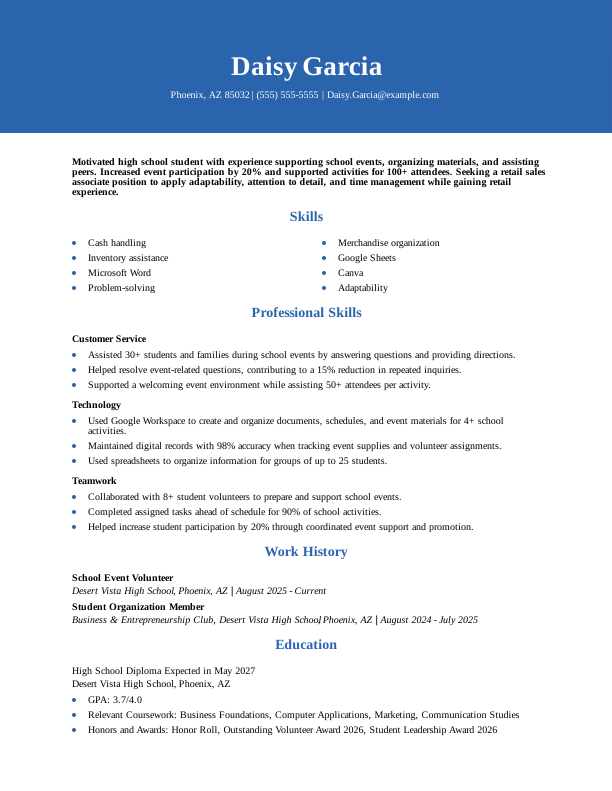
This example shows how a current high school student can create a targeted resume for a retail sales associate position without previous employment. It emphasizes relevant skills, school activities, volunteer work, and measurable accomplishments that demonstrate customer service, communication, teamwork, and reliability.

College Student
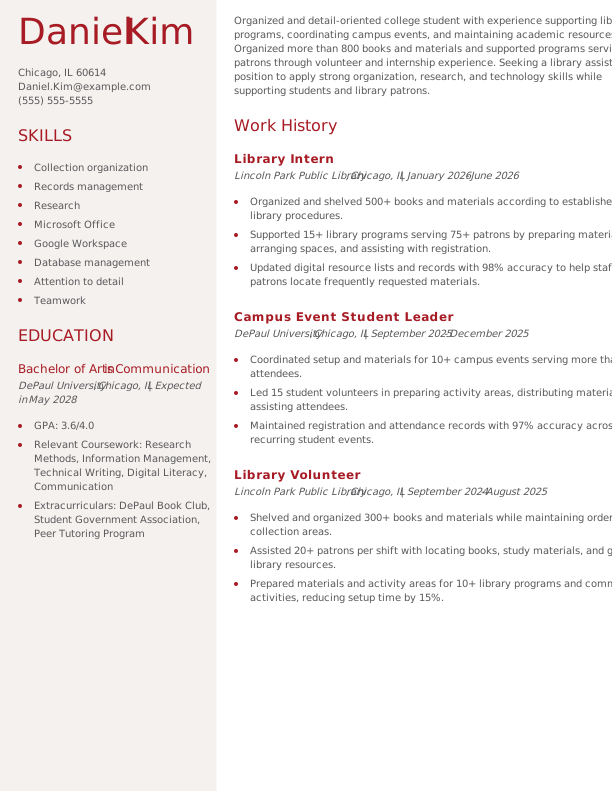
This example shows how a college student can tailor a resume for a library assistant position without previous work experience. It highlights relevant coursework, academic projects, campus involvement, and skills such as organization, research, technology, and attention to detail.
Recent Graduate
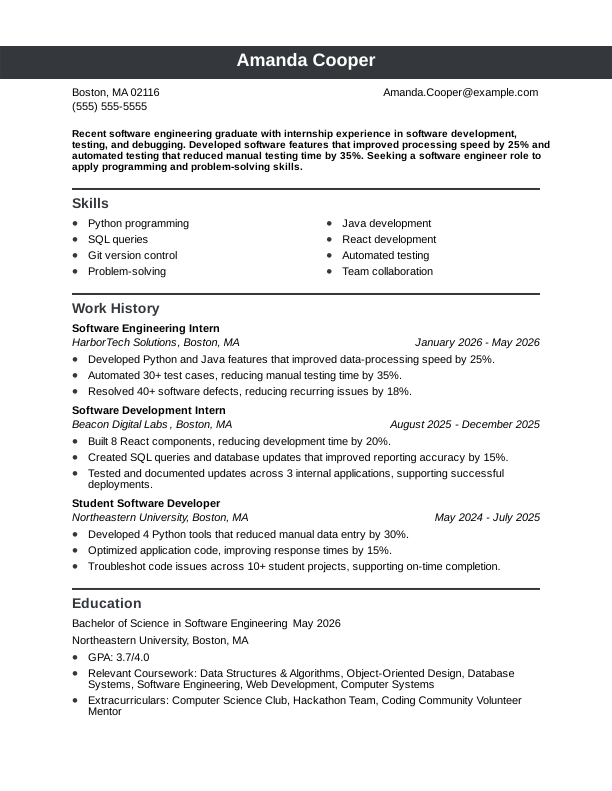
This example shows how a recent college graduate can create a resume for an entry-level software engineer position without professional work experience. It focuses on technical skills, relevant coursework, and measurable results to demonstrate readiness for an entry-level role.
Formatting Checklist for Your No-Experience Resume
A well-formatted resume makes your qualifications easier for employers and ATS to read. Before submitting your resume, use this checklist to confirm the layout is clean, consistent, and professional:
- Keep it to one page. For first-time job seekers, a one-page resume is enough to highlight relevant skills, education, and experience without unnecessary details.
- Use 1-inch margins. Standard margins provide enough white space to keep your resume easy to scan without wasting valuable space.
- Choose a clean font. Use a professional, easy-to-read font at 10 to 12 points. Keep the same font throughout your resume, and use formatting such as bold text to distinguish section headings and job titles.
- Maintain consistent formatting. Use the same spacing, date format, bullet style, and alignment throughout the document.
- Proofread carefully. Check for spelling, grammar, punctuation, inconsistent formatting, and placeholder text before submitting. Reading your resume aloud or having someone else review it can help catch errors you might miss.
- Save it as a PDF. Export your resume as a PDF to preserve formatting across devices, unless the job posting requests another file type.
Build a Resume That Shows Your Potential
You don’t need a long employment history to start applying for jobs. What matters is presenting your qualifications in a way that makes sense for the role you want and gives employers a clear reason to consider your application.
If you’re unsure where to start, our Resume Builder can simplify the process with professional templates, guided sections, and tools that help you create a polished, job-ready resume. As your experience grows, your resume can grow with it, giving you more opportunities to highlight your professional progress and get noticed by recruiters.
Frequently Asked Questions
What do I put under experience if I’ve never had a job?
If you’ve never had a job, use the experience section of your resume to highlight relevant unpaid or informal experience, such as volunteer work, internships, freelance projects, school activities, or leadership roles. Include a clear title, the organization or project name, dates, and three to five bullets describing what you did and the skills you used.
How do I write a resume summary with no experience?
If you don’t have formal work experience, write your resume summary around the skills, education, projects, and other relevant experience you can bring to the role. Start by identifying your strongest qualifications, then connect them to the position you’re targeting, focusing on what you can contribute rather than what you hope to gain.
How can you showcase education on an entry-level resume?
If you’re writing an entry-level resume, showcase your education by including your degree or diploma, field of study, school, graduation date, and relevant academic achievements.
You can also add coursework, projects, research, honors, or a strong GPA when they relate to the position. These details can show employers the knowledge and skills you’ve developed, especially when you have limited professional experience.
What are five common mistakes people make on their resumes?
Common resume mistakes include using a generic resume, including irrelevant information, making formatting errors, and failing to proofread before submitting.
For resumes with no experience, be honest about your background, and include only skills you can support with examples from your education, projects, volunteer work, or other experiences. Instead, tailor your resume to the position, use specific examples to support your qualifications, and keep the formatting clear and consistent.
What is the 30-second rule for a resume?
The 30-second rule for a resume is a general guideline that hiring managers and recruiters may spend 30 seconds or less scanning a resume during an initial review. This means your most relevant qualifications should be easy to find quickly.
Clear section headings, concise descriptions, relevant keywords, and a well-organized layout can help readers understand your background at a glance.
Craft your perfect resume in minutes
Get 2x more interviews with Resume Builder. Access Pro Plan features for a limited time!